

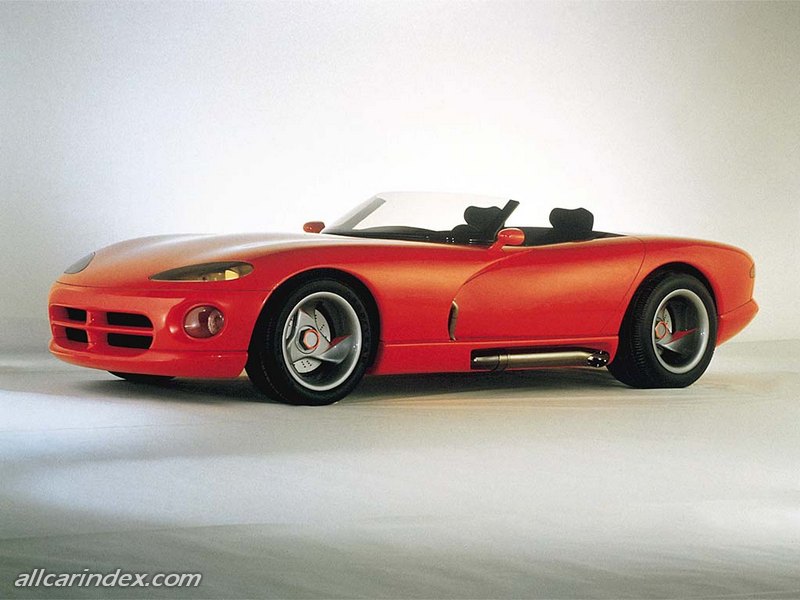
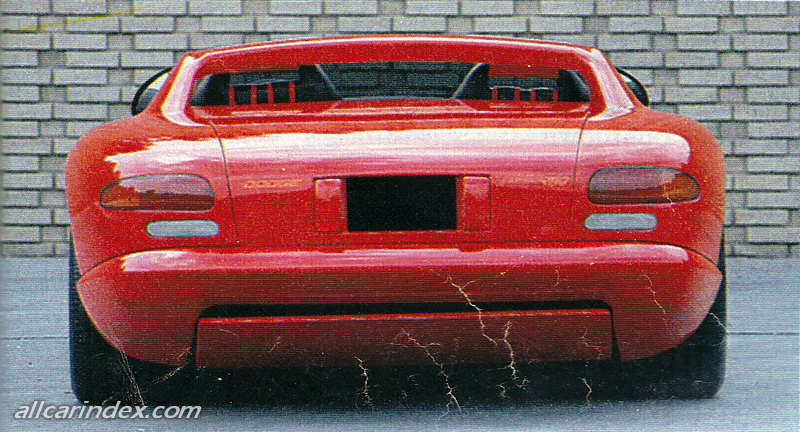
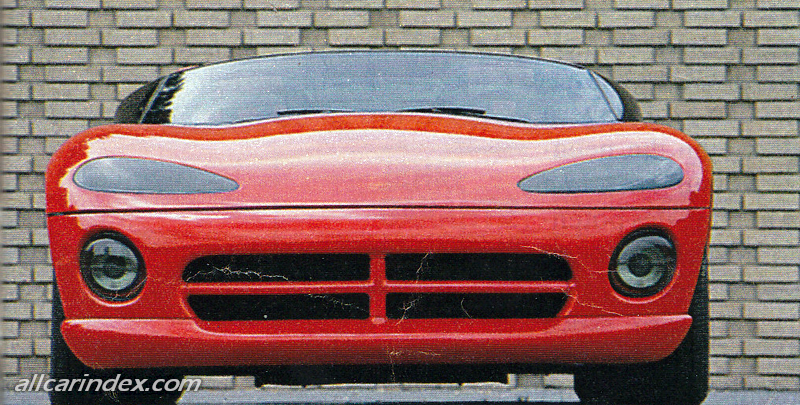
The Dodge Viper R/T 10 was a two-door, two-seat sports roadster developed by the American manufacturer Dodge, first shown as a design study in early 1989 before evolving into a production vehicle. Its styling deliberately evoked the AC Cobra, the Ford V8-powered derivative of the British AC sports car that racing driver Carroll Shelby introduced in the autumn of 1962 and which had been competitive against Ferrari in top-level sports car racing. The R/T 10 name stood for Road and Track, and the car was created by a team led by Chrysler chairman Robert A. Lutz, with contributions from Chrysler vice president of vehicle engineering François Castaing, vice president of product design Tom Gale, and longtime Chrysler consultant Carroll Shelby.
Rumors that the concept was a disguised production prototype circulated soon after its debut, and speculation persisted for some time before Chrysler chairman Lee A. Iacocca confirmed in Los Angeles in May 1990 that the car would enter series production. In February 1991 it was announced that manufacturing would begin that November, with output initially projected at 500 units for 1992, potentially rising to as many as 5000 units annually. Chrysler's financial position at the time was weak, and the company relied on support from parts suppliers interested in the project.
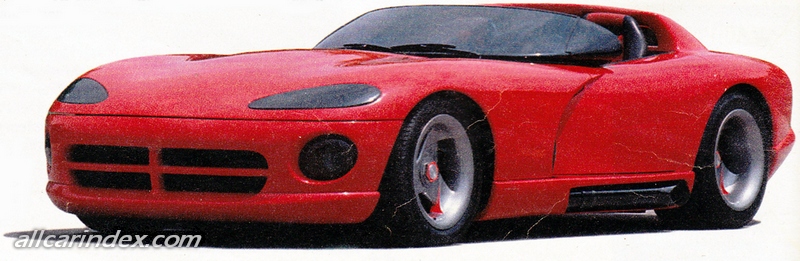
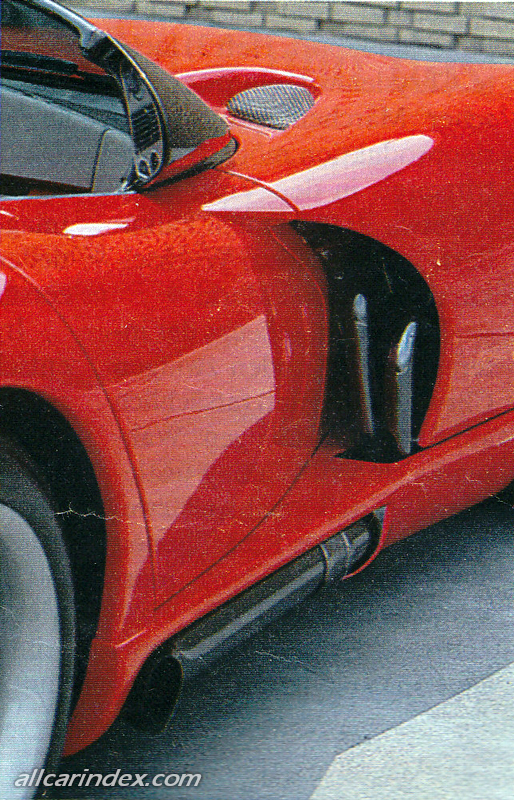
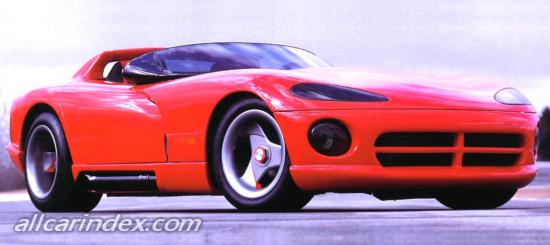
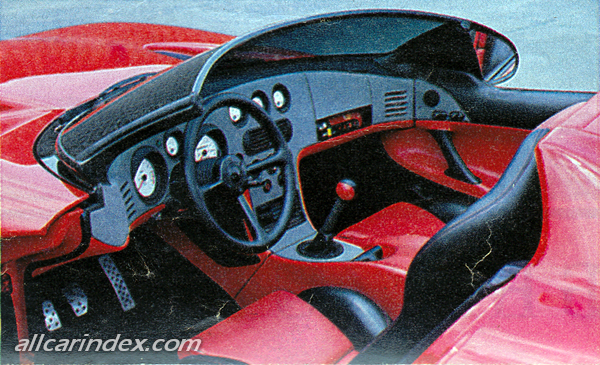
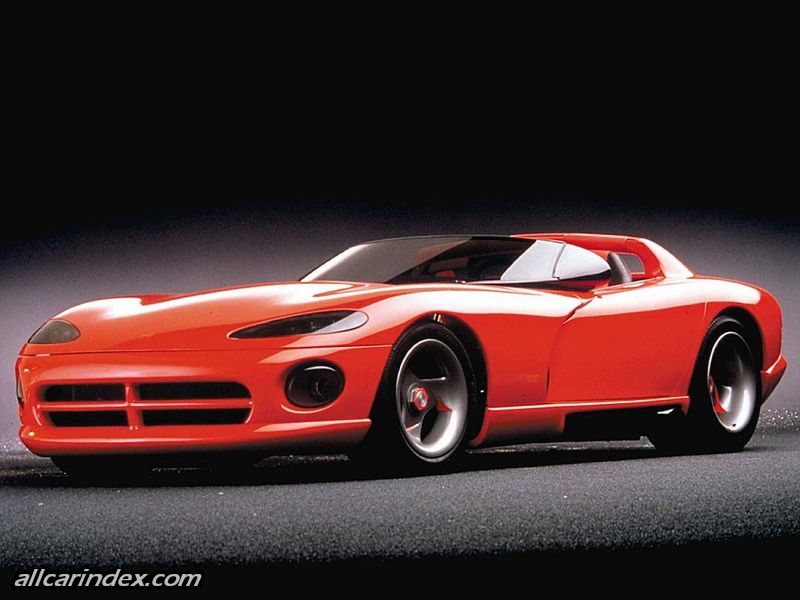
The design featured a wide body with a beltline arching over the wheels, a vertically curved air-exit crease ahead of the front door edge, and a deep, spoiler-equipped oval front air intake divided by a cross-shaped bar forming the Dodge emblem. Headlights sat beneath aerodynamic plexiglass covers, and the windshield was low without an upper frame. Side-exit exhaust pipes ran beneath the doors ahead of the rear wheel arches. The second version, shown in 1990, added a wide roll bar and a near semicircular windshield blending into the mirrors, along with front double-wishbone independent suspension with coil-over struts. Seventeen-inch wheels with a rotor-style design carried 275/40 ZR 17 front and 335/35 ZR 17 rear tires, while the cabin featured bucket seats with harness belts, knee padding on the center console for hard cornering, and six round white-faced instruments on a dashboard following the curve of the windshield.
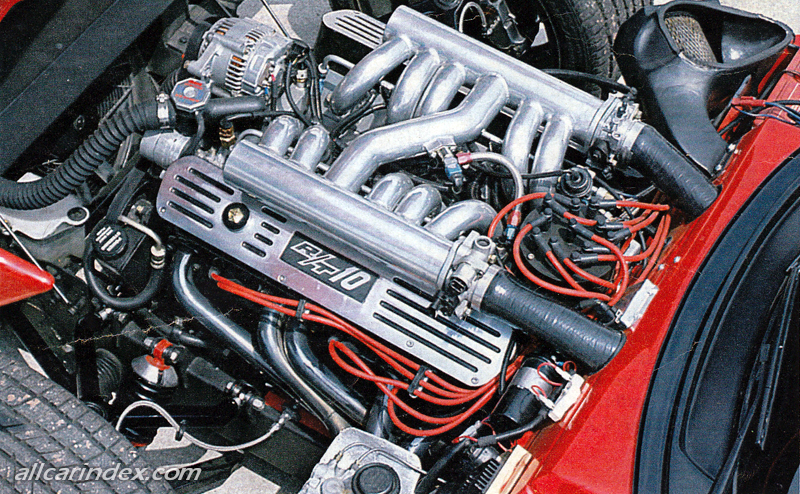
Power came from a 7.9-liter V10 engine, derived from a new unit originally developed by Dodge's Truck Division, making the R/T 10 the first road-going sports car fitted with a V10, a configuration that had recently gained prominence in Formula One. The engine was later confirmed to be produced in aluminum in cooperation with Chrysler subsidiary Lamborghini, producing around 400 hp and 615 Nm of torque. The car measured 436 cm in length, 192 cm in width, and 117 cm in height, with a wheelbase of 244 cm.
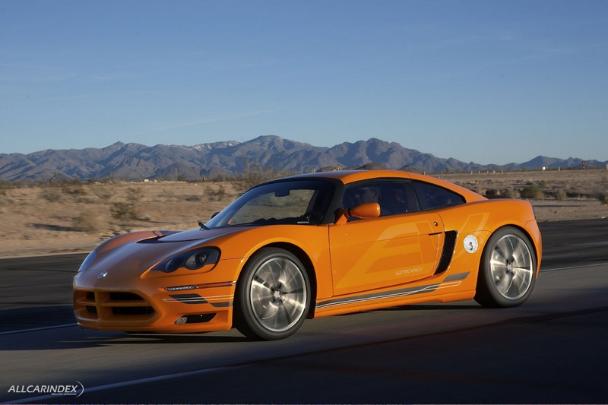
![Dodge Avenger Concept [2] (2006)](/img/models/a/dodge-1-avenger-concept-1_001.jpg?w=720&h=405)