

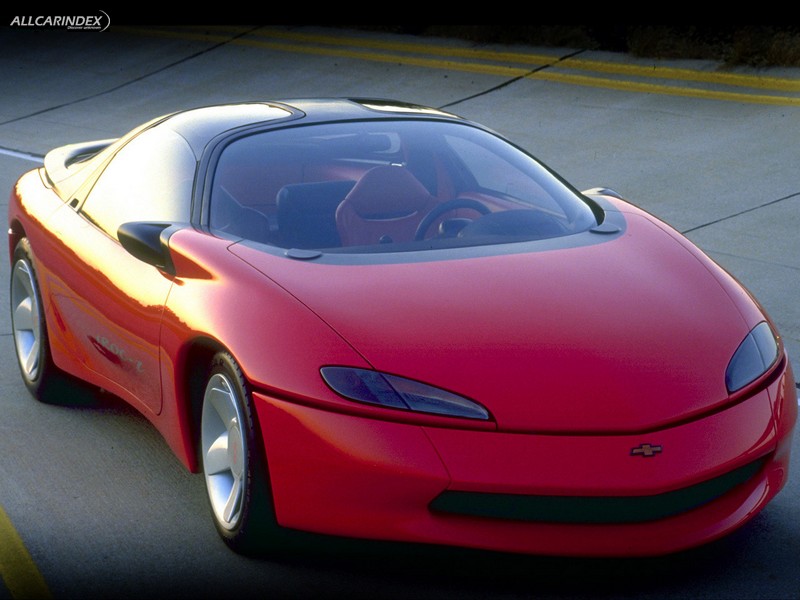
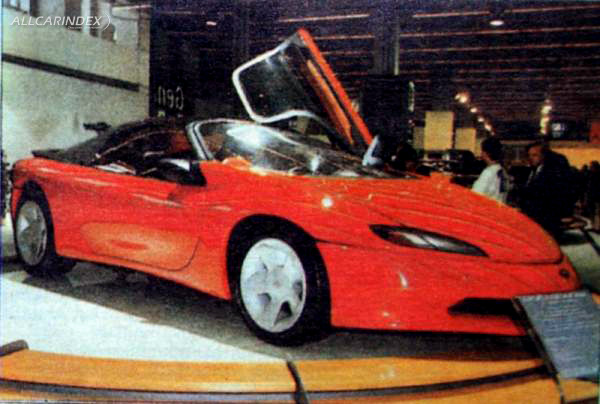
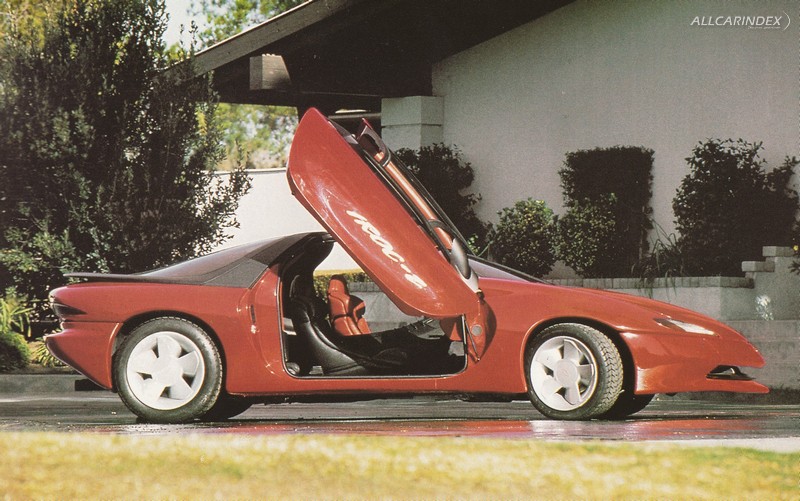
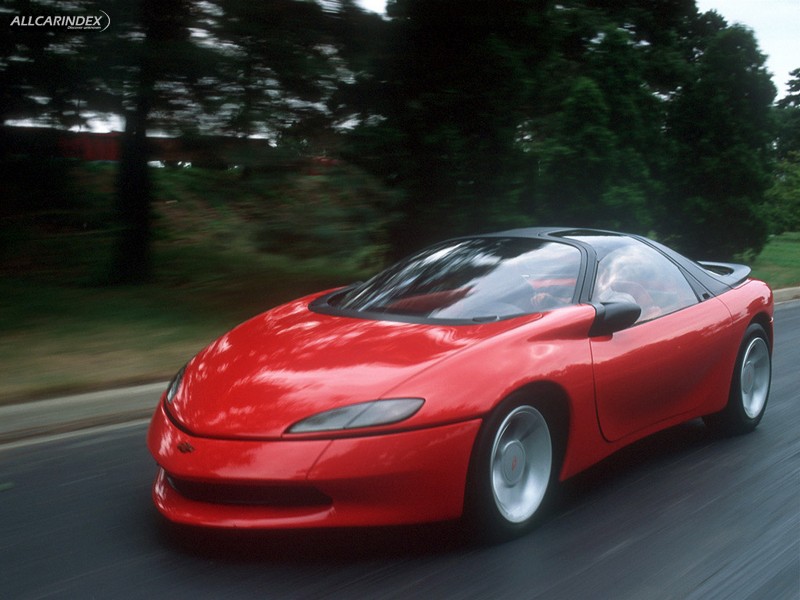
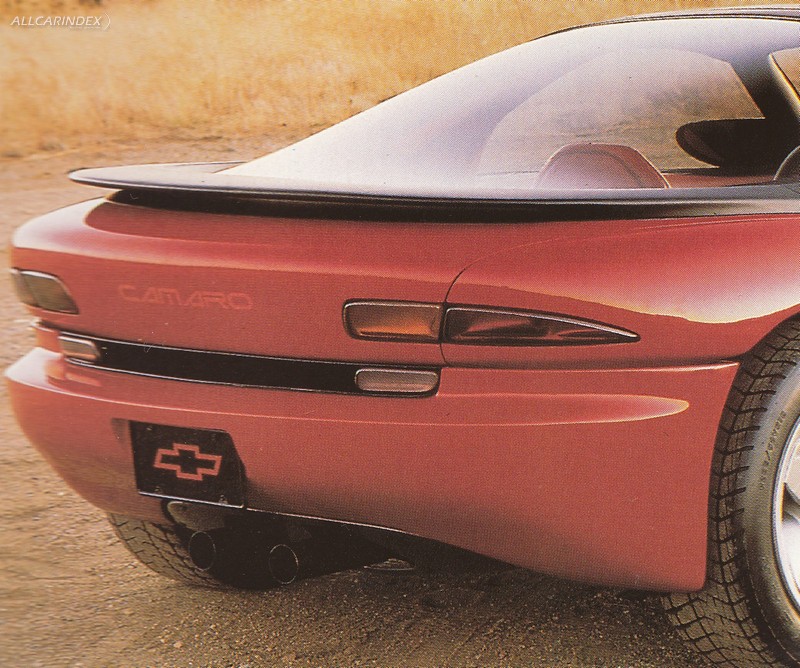
The Chevrolet California Camaro Iroc-Z was a concept car developed by General Motors' Advanced Design Concept Center in Santa Barbara, California, from which it took its unofficial name. It was created to explore a possible future 2+2 sports car derived from the Camaro. John Schinella, head of the Santa Barbara studio, described the car as a rolling design study, and its body was formed from steel sheet rather than fiberglass. The fully running prototype was completed by a team of fifty people within six months of the finished scale model.
Compared with the production Camaro, the concept's wheelbase was stretched to 264 cm, though its overall length of 472 cm was shorter than the 487.5 cm production 1989 Camaro, giving it a short rear overhang and a compact, muscular stance. Distinctive features included slanted gullwing-style doors cut up to a T-roof bar, mirrors integrated into the front fenders, and a three-tier rear treatment combining bumper, taillight housings, and a wraparound rear wing. Inside, the driver's seat was upholstered in red while the other seats were black, and the seat, steering wheel, and pedals were all adjustable. Instruments followed a Formula One-inspired layout, and the console included a built-in small vacuum cleaner.
The car retained rear-wheel drive, with front MacPherson struts and a rear independent suspension replacing the old live axle, and handmade turbine-style wheels on Goodyear tires. Power came from a DOHC V6 rather than the production Iroc-Z's V8.