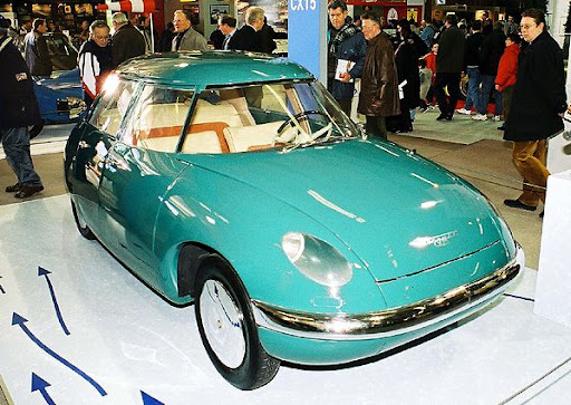
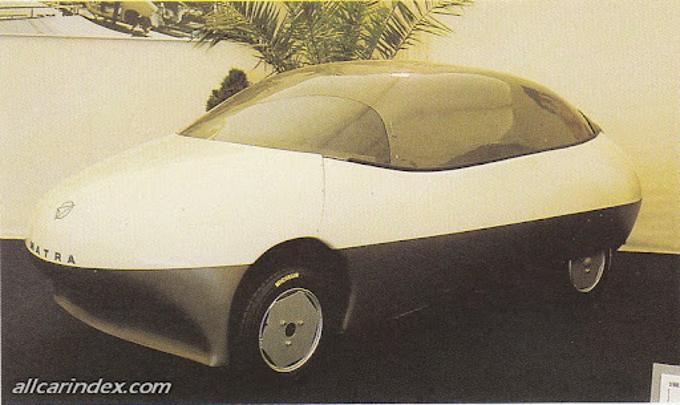

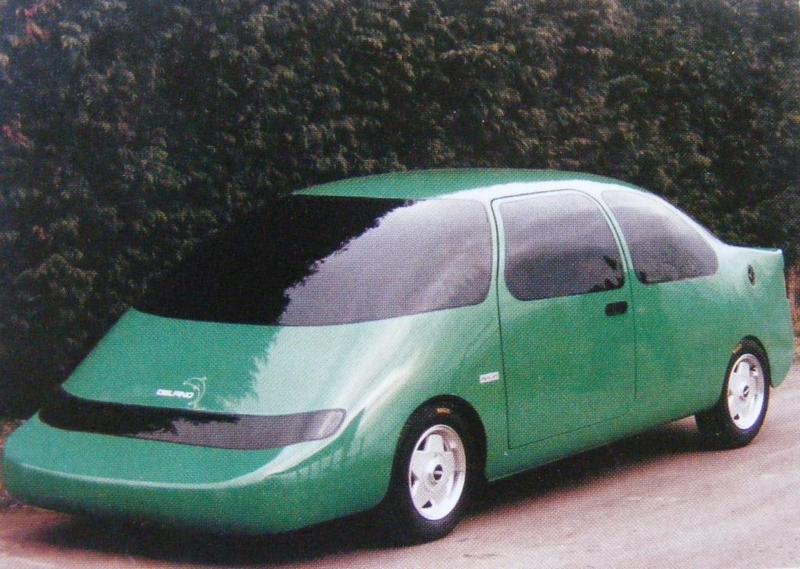
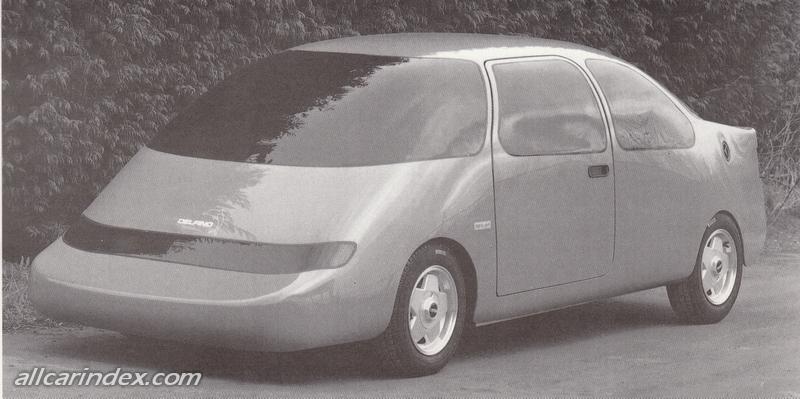
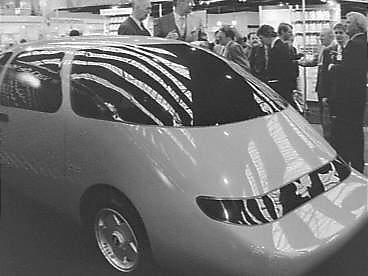
The Delfino was a one-off aerodynamic concept car built in the Netherlands under the direction of John Hugenholtz, a designer known internationally for his work on racing circuits and president of FIVA, the international veteran car federation, from 1960 to 1966. A full-size model of the Delfino was shown at a Dutch motor show in 1988, the result of an idea Hugenholtz had pursued in some form since shortly after the Second World War.
His original streamlined car project began with a 1:5 scale model tested in the wind tunnel of the National Aerospace Laboratory (NLL) in Amsterdam, which achieved a drag coefficient of 0.32 with bumpers fitted, but the plan was shelved for lack of interest. The idea resurfaced in 1980 when an updated 1:10 scale model won an award in a model car competition, and it was displayed again at the Amsterdam motor show in early 1985 as part of a retrospective on streamlining. Convinced of the future importance of fuel economy, Hugenholtz pursued the concept seriously, working with the aerospace engineering faculty at Delft University. Wind tunnel testing carried out by engineering student Eric Weyters in December 1987 and January 1988 refined the shape, including changes to the nose and boot, and produced a drag coefficient of 0.157 in the tunnel, with a full-size car expected to achieve 0.20 to 0.21 including unfaired wheels, bumpers and mirrors.
Construction of the full-size model began in 1987, with paint sponsored by Akzo's Sikkens division and interior work handled by Peter Jansen. Developed with his son John Hugenholtz Jr., the Delfino was a three-door, four-seat one-volume saloon with a lightweight fibreglass body, front-wheel drive, and an Alfa Romeo 33 sourced 1717 cc four-cylinder boxer engine producing 115 hp at 5800 rpm and 145 Nm at 3500 rpm, geared for economical cruising.