


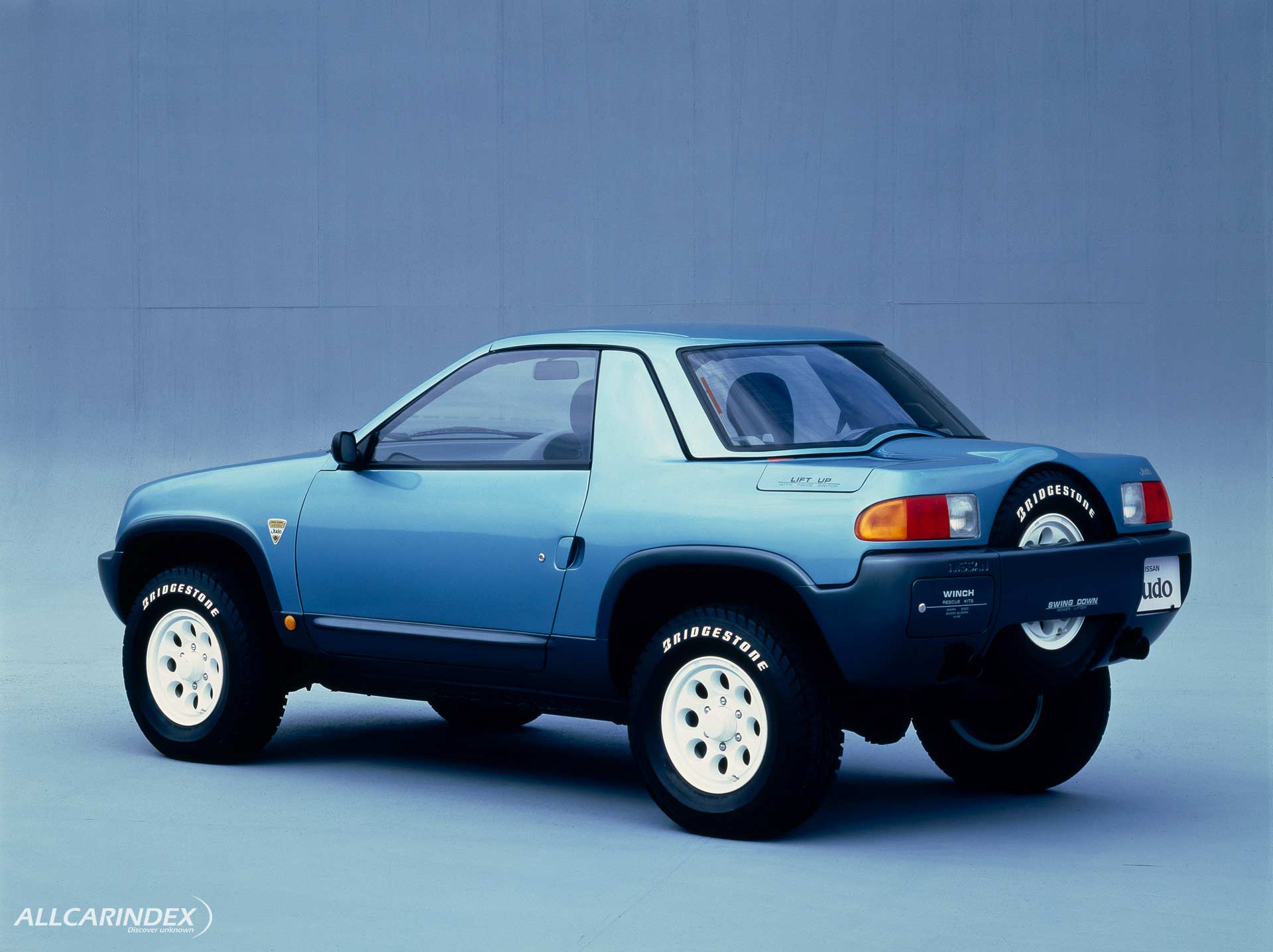
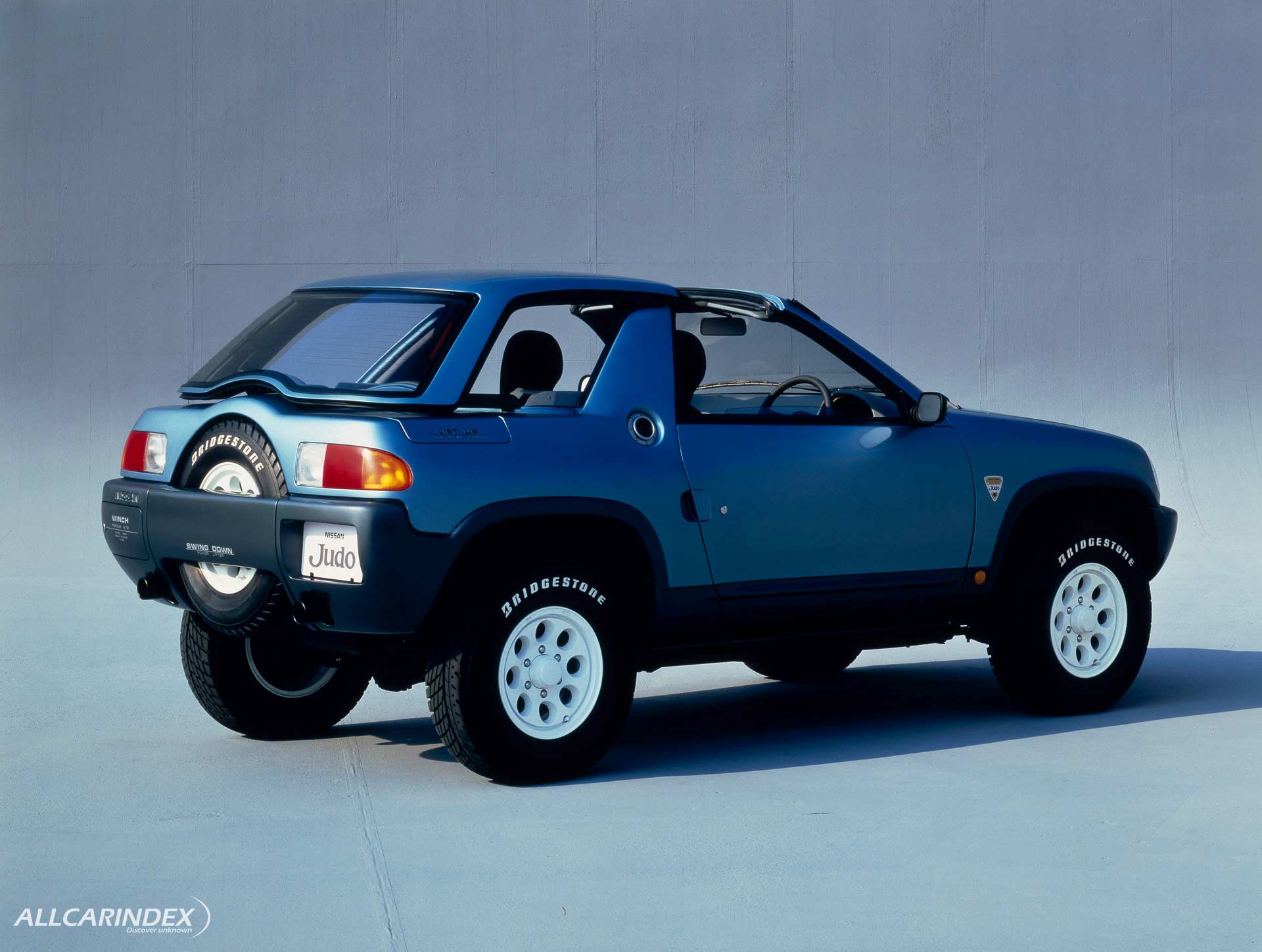

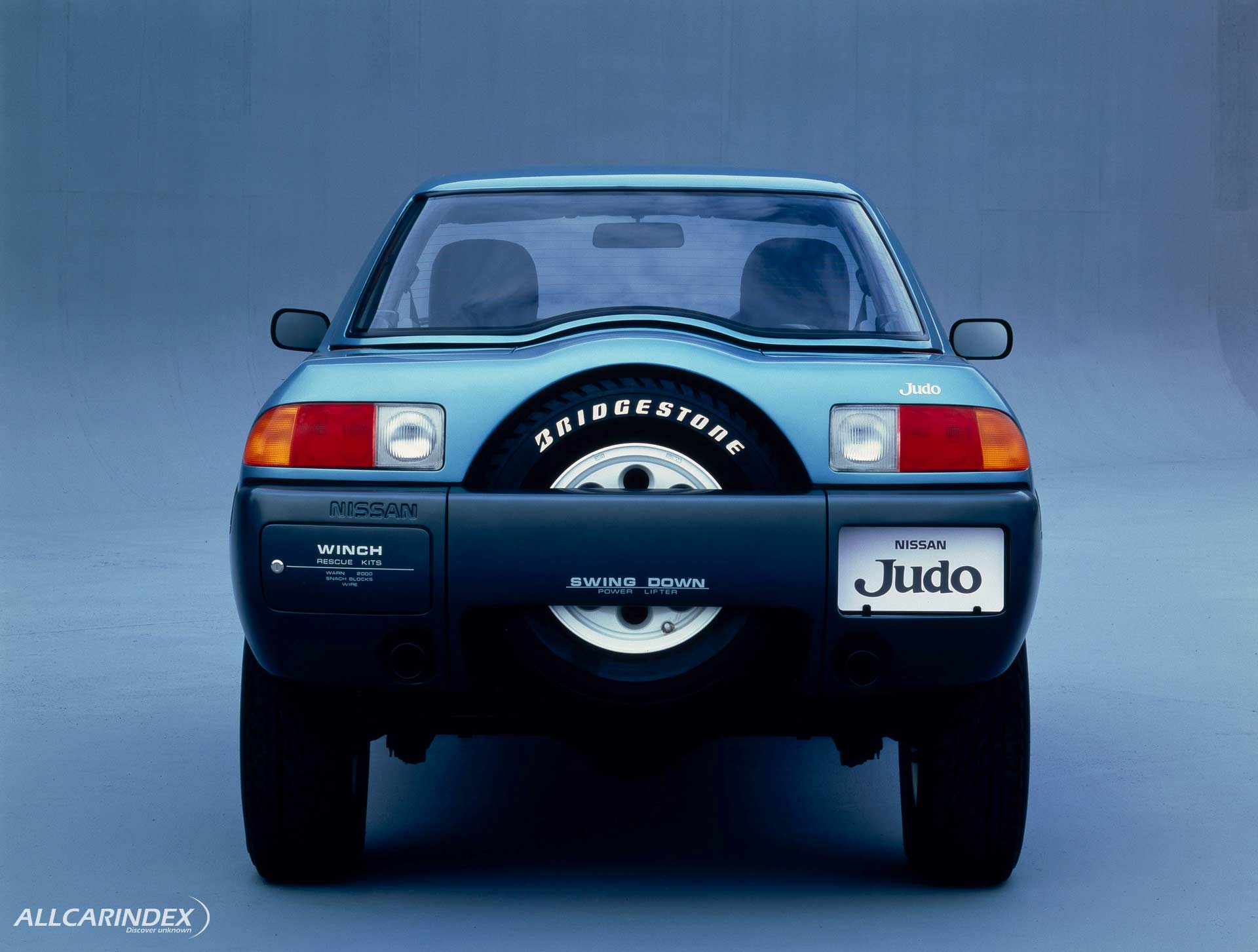


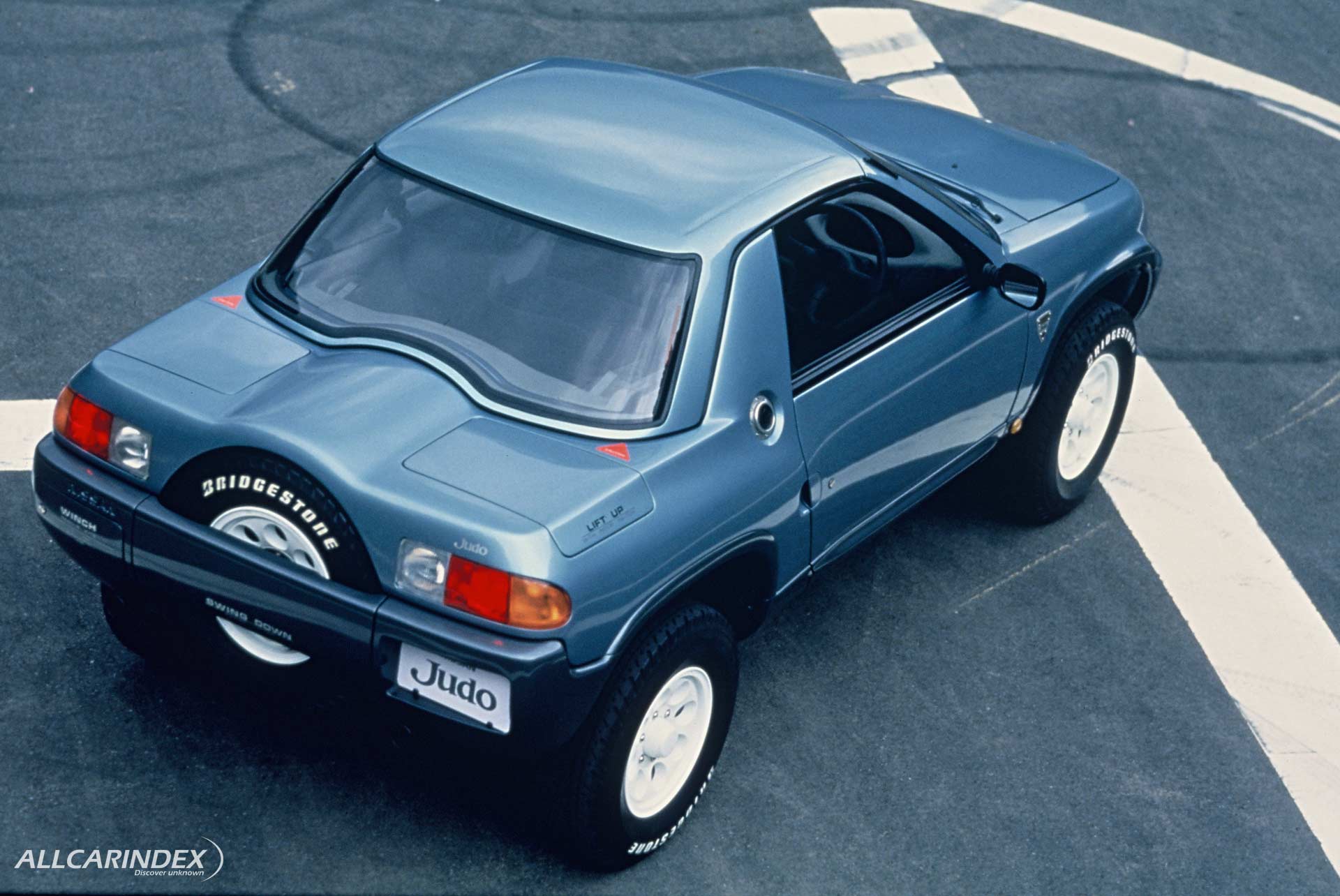
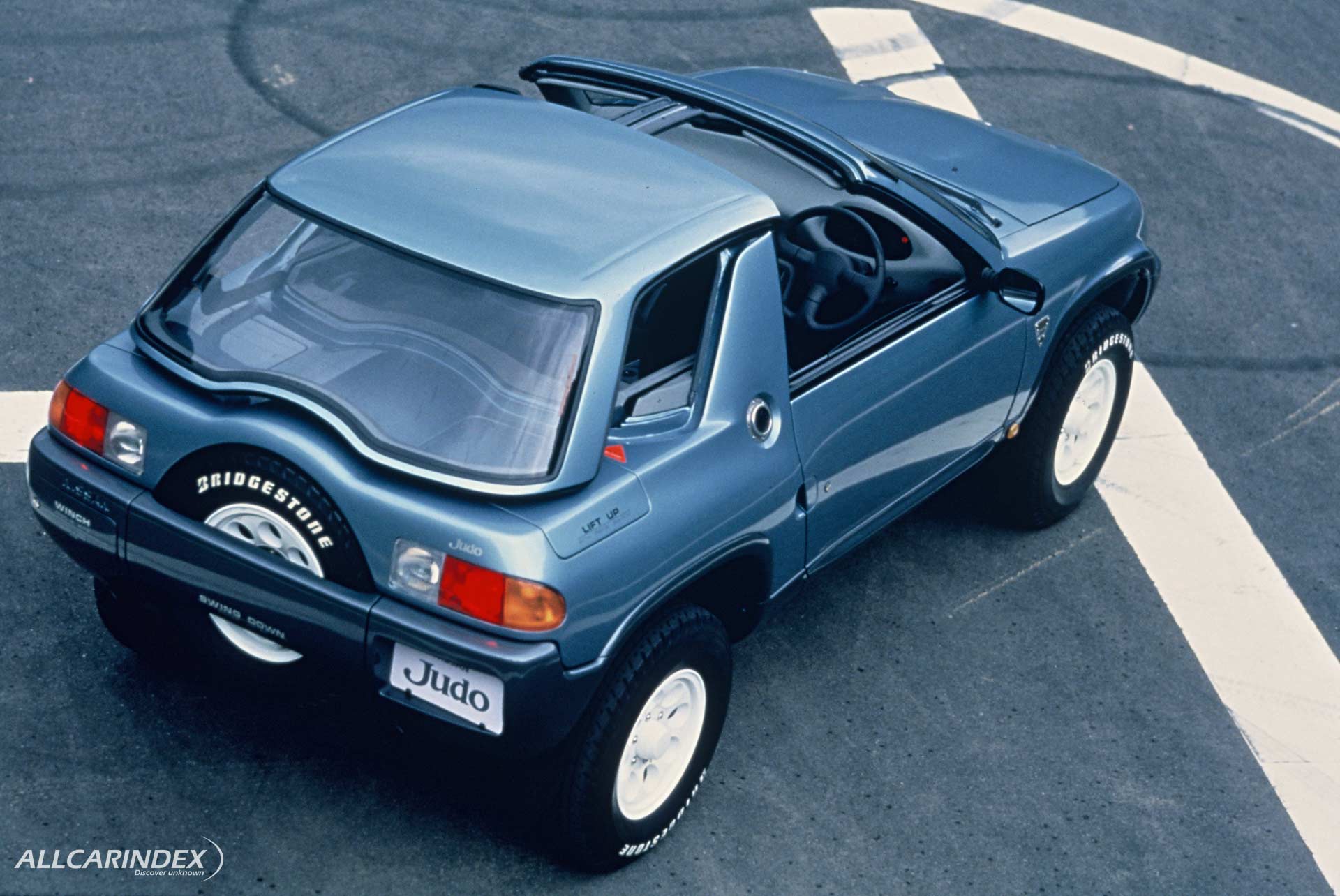

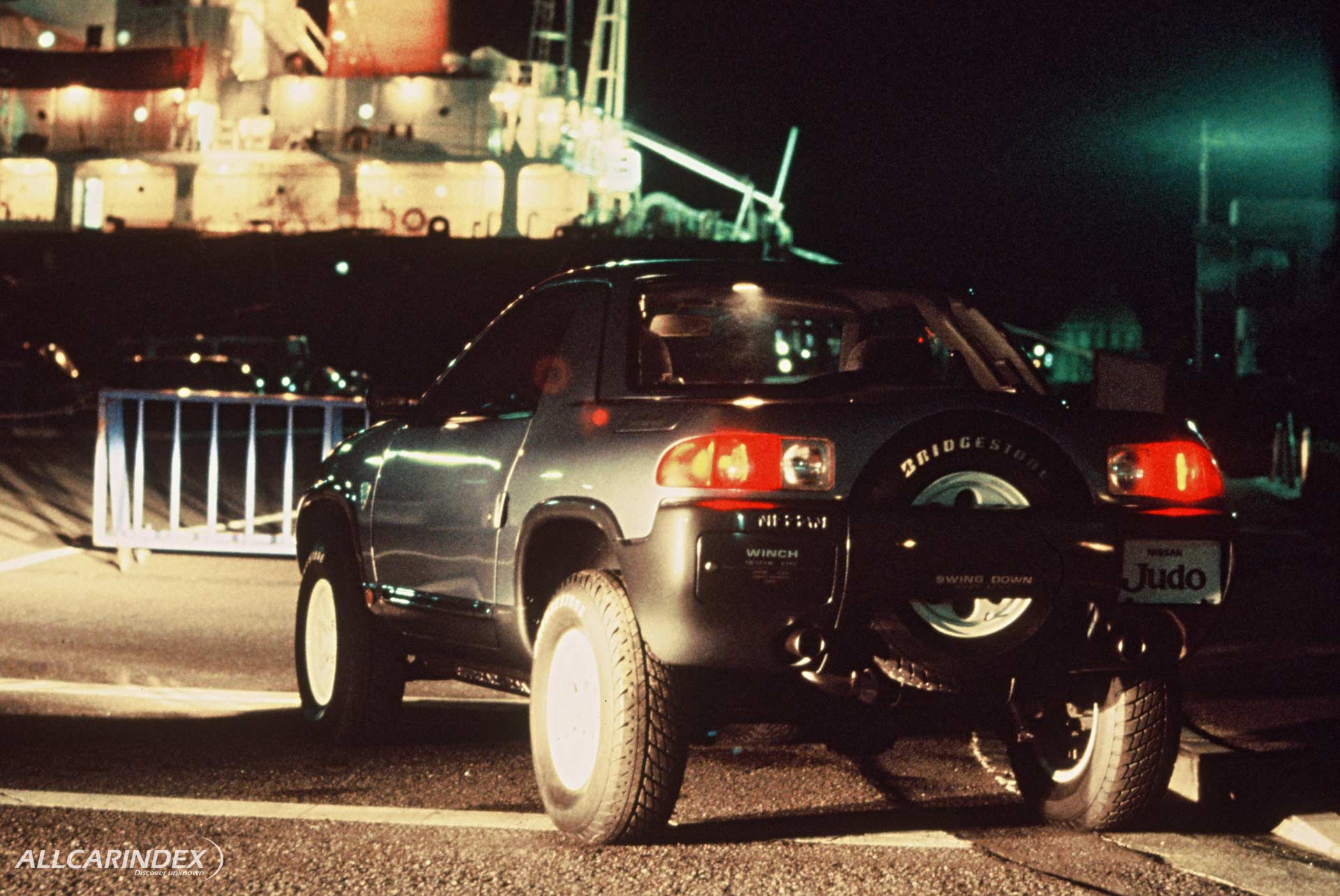
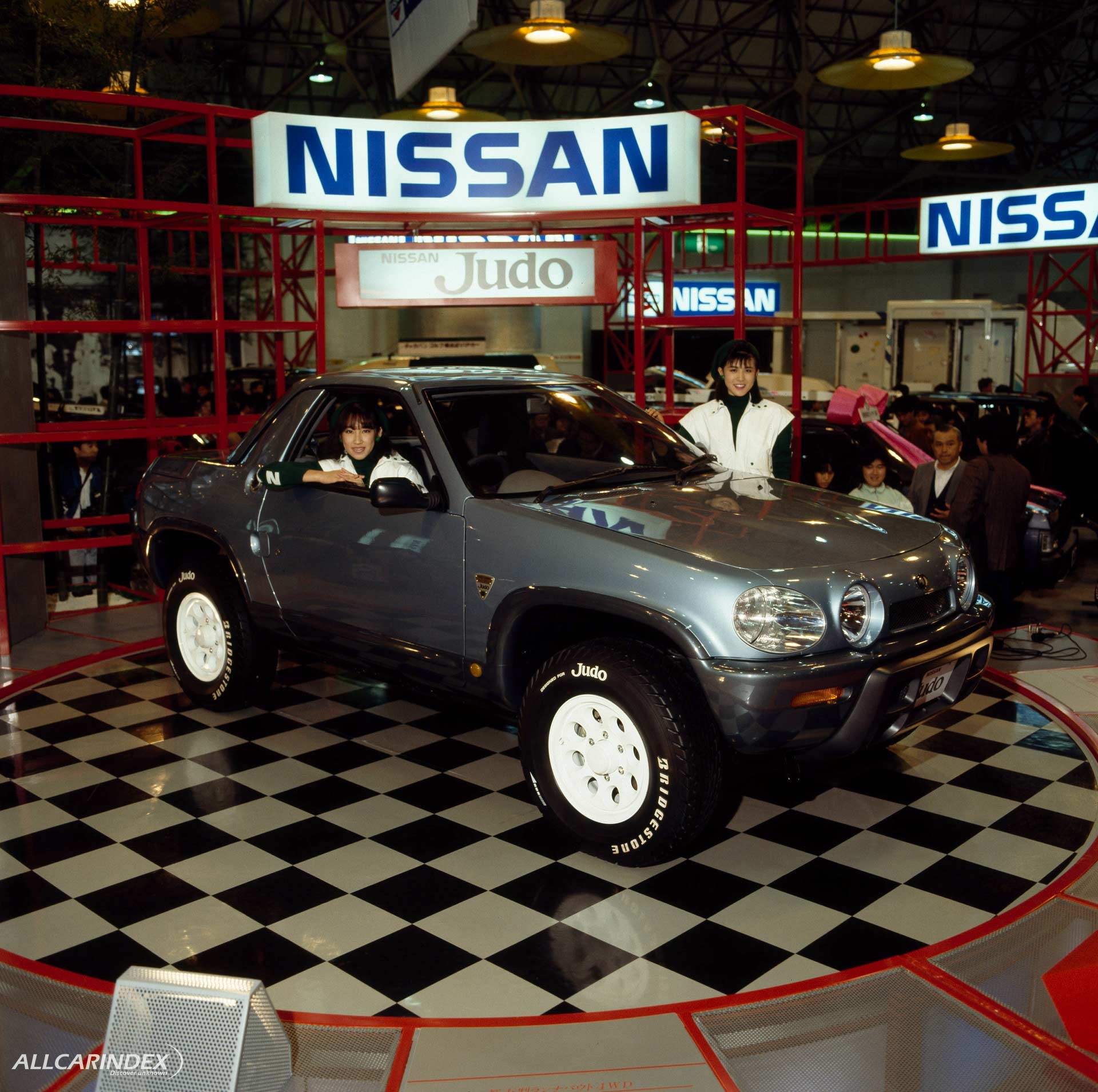

The Nissan Judo, named after the Japanese martial art, was a concept car shown at the Tokyo motor show. Designed as an off-road coupe, it was also intended to be comfortable enough for relaxed everyday use in urban traffic. The body was a 2+2-seat off-road coupe/targa with two doors, measuring 399 cm long, 169 cm wide and 158.5 cm high, with a wheelbase of 245 cm and a minimum ground clearance of 21 cm. Its approach and departure angles of 37.5 degrees and 43 degrees, along with a tip-over threshold of 29 degrees, were meant to demonstrate off-road capability.
Power came from a 1998 cc V6 engine, the VG20DET, with DOHC, 24 valves and a ceramic turbocharger, producing 210 hp at 6800 rpm and 265 Nm of torque at 3600 rpm, paired with an automatic transmission. Permanent four-wheel drive used a lockable central viscous coupling along with viscous limited-slip differentials on both axles. Suspension consisted of double wishbones at the front and a five-link setup at the rear, with disc brakes on all four wheels fitted with dual-purpose tires featuring road-oriented tread on the outer edge and off-road tread on the inner edge.
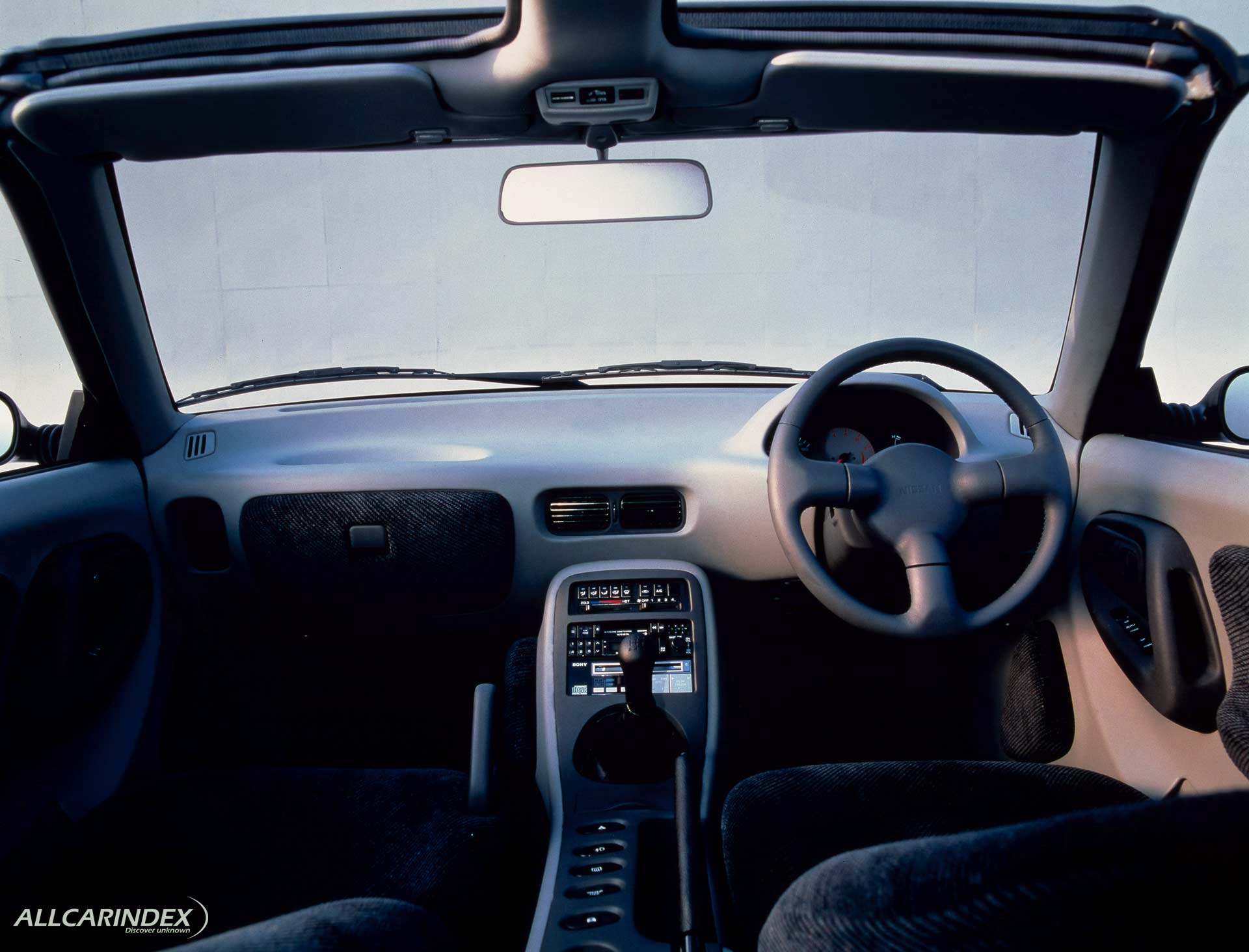
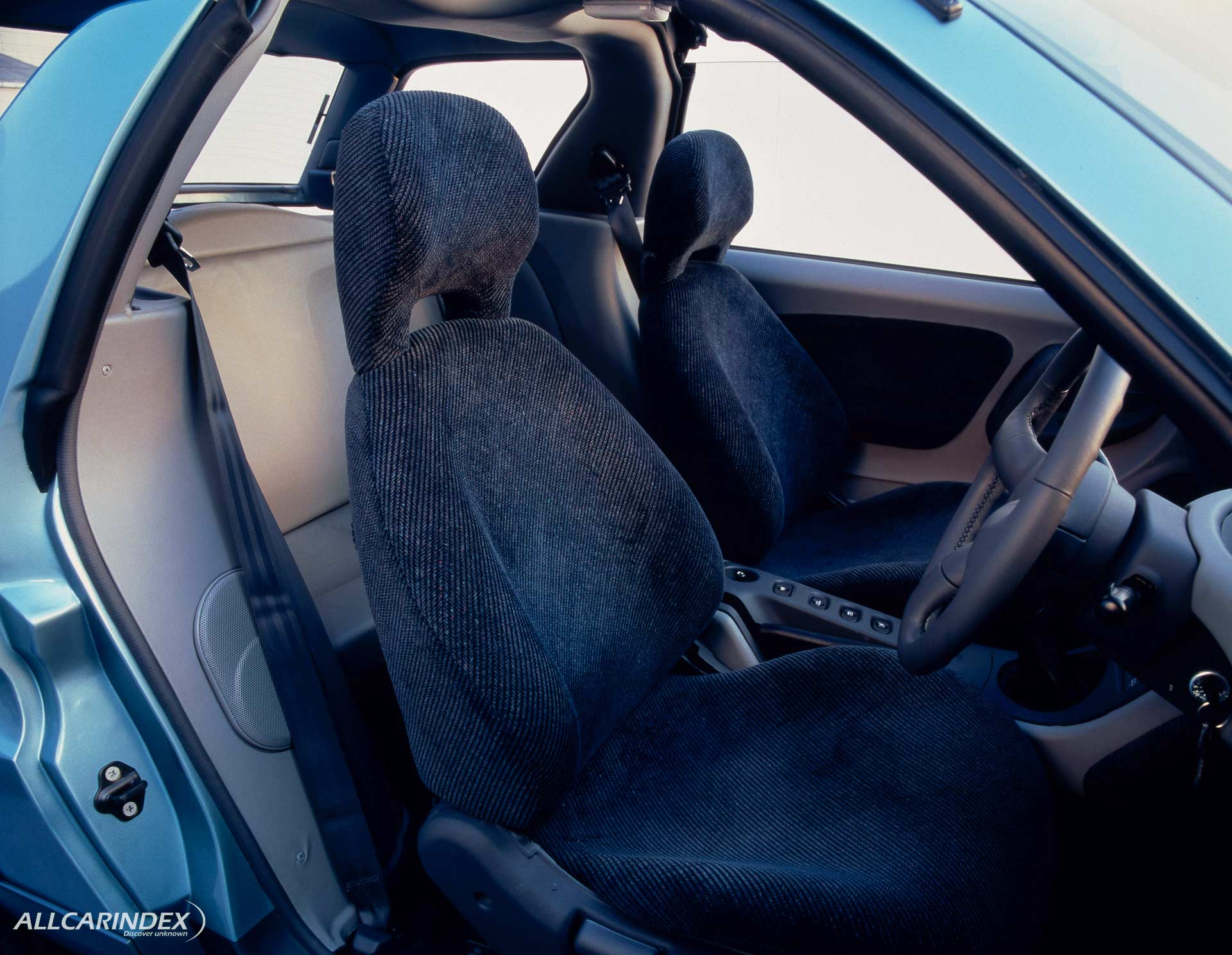
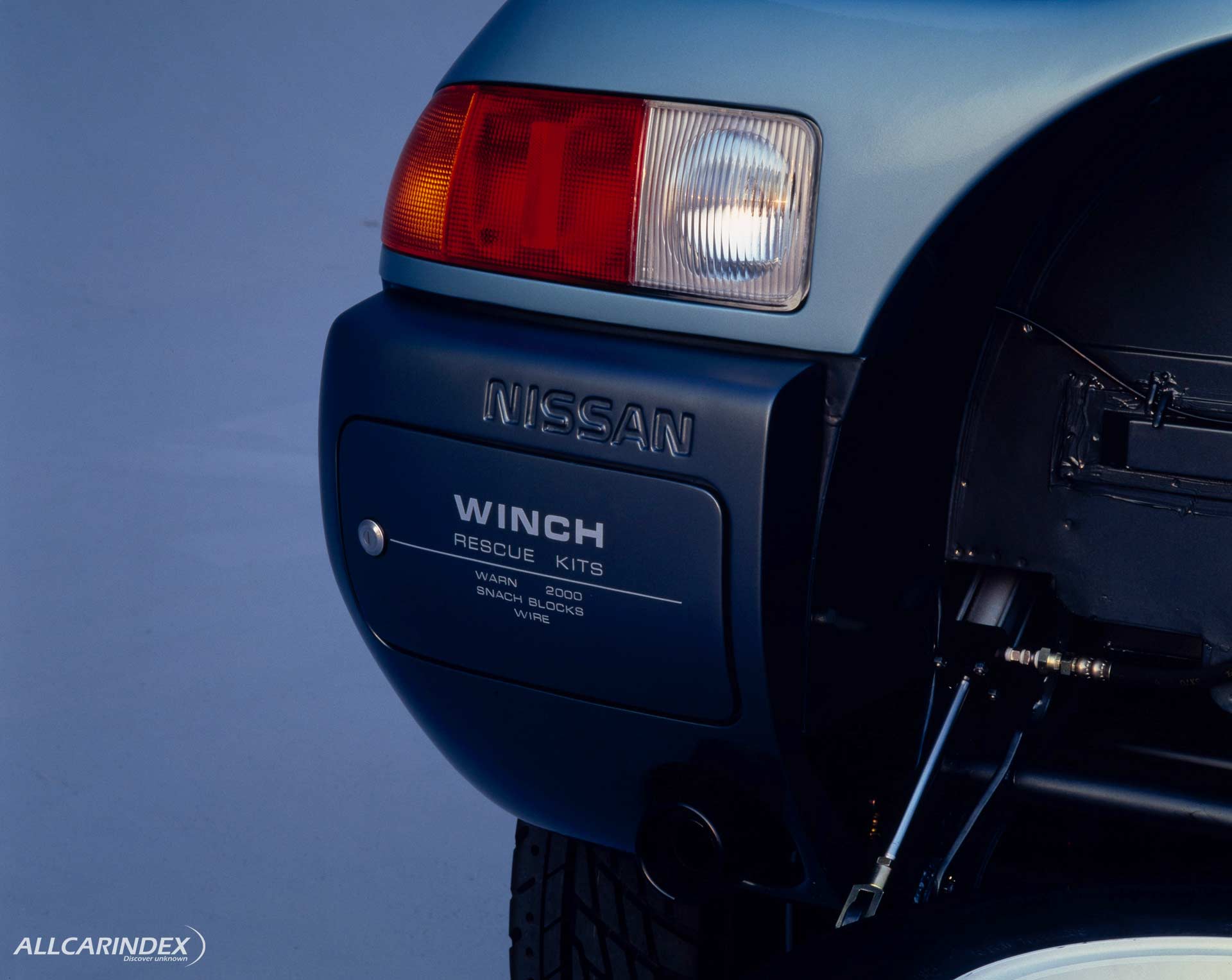
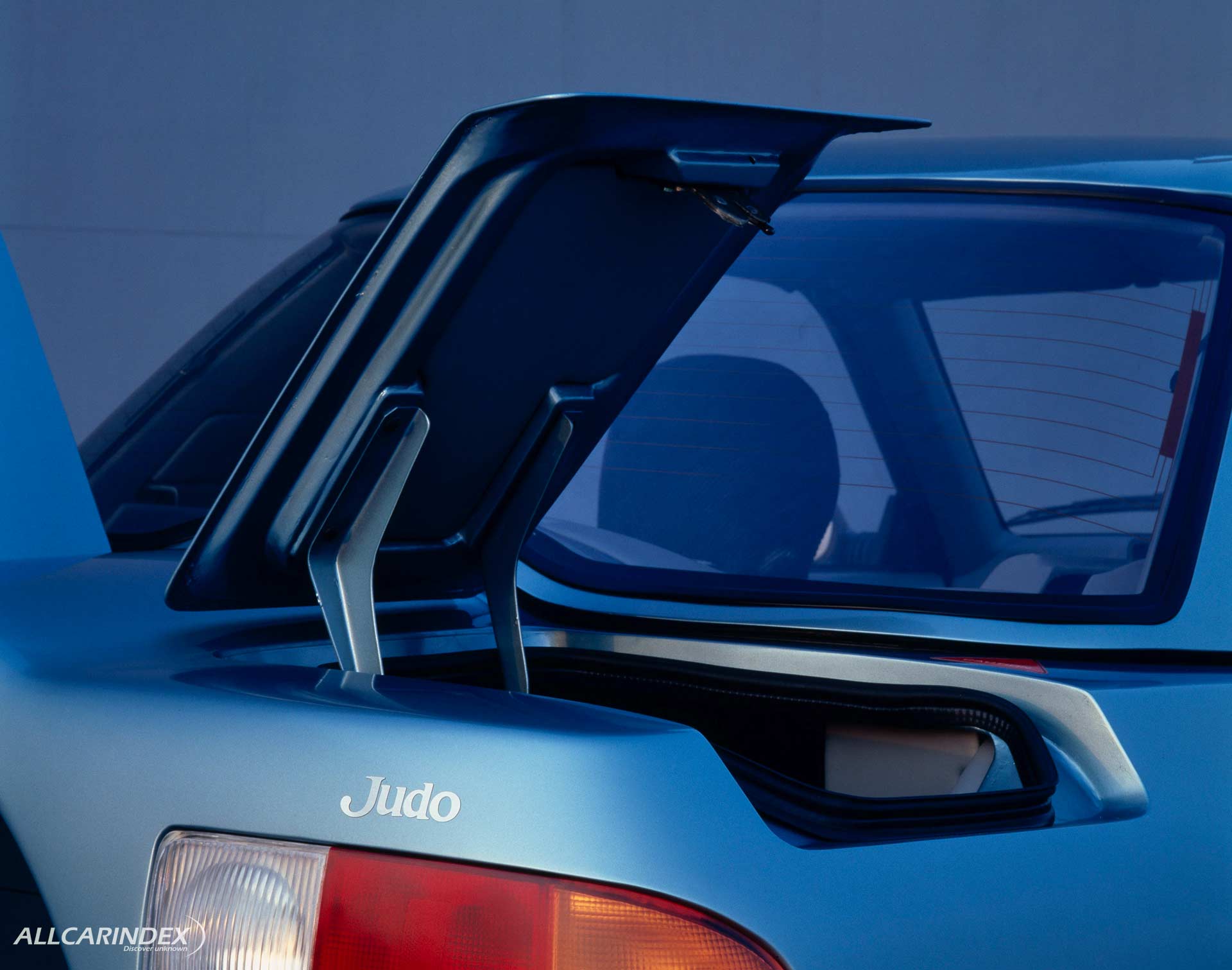
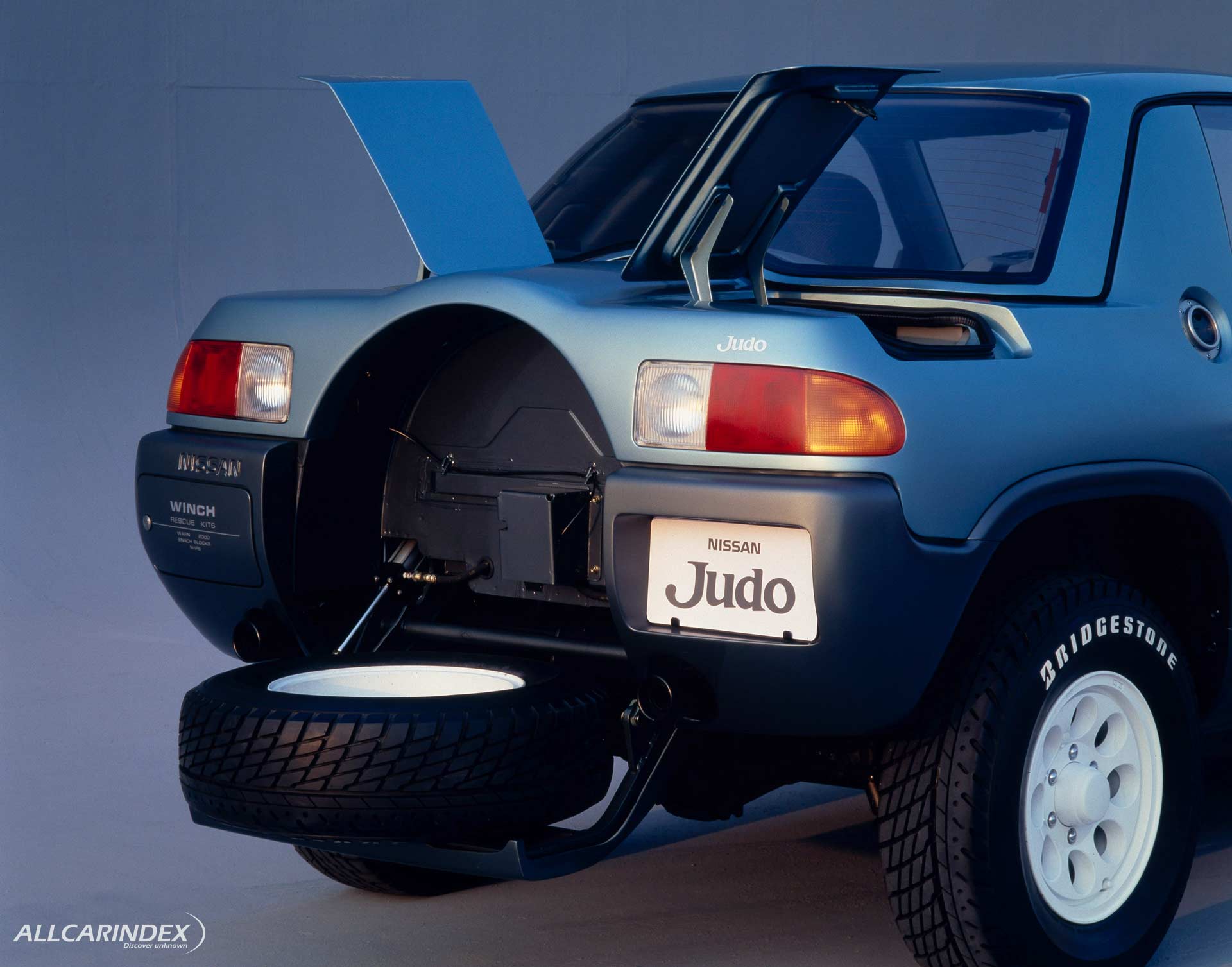
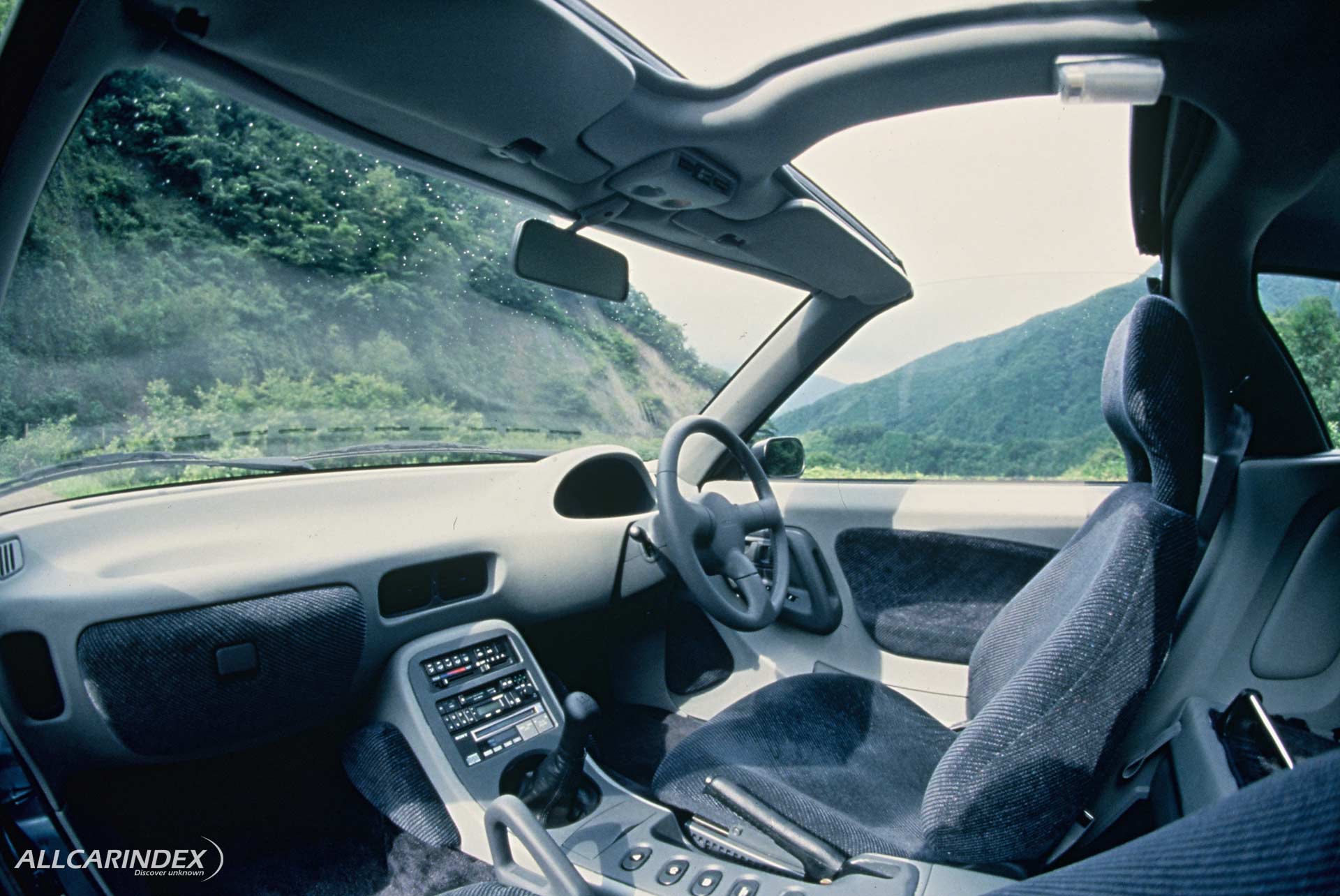
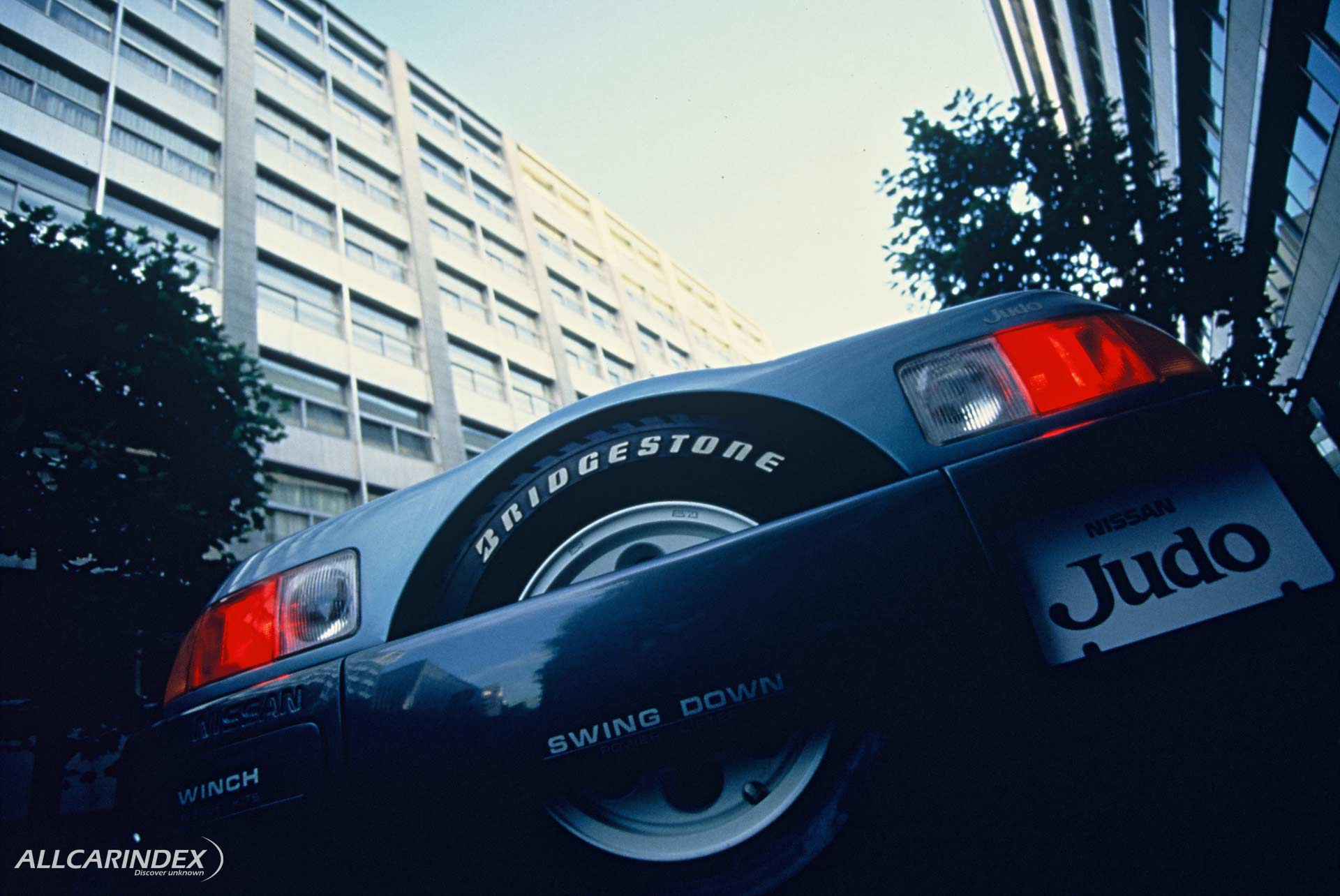
Distinctive features included a full-length electrically retractable roof and rear window, a hydraulic system integrated into the tailgate for lifting the spare wheel, a special roof rack, a folding electric winch, portable auxiliary lamps, sport gauges and additional seat bolstering.