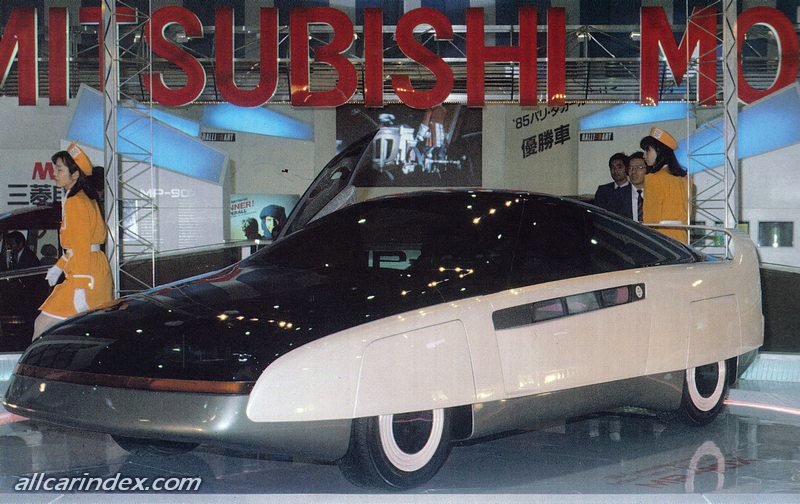
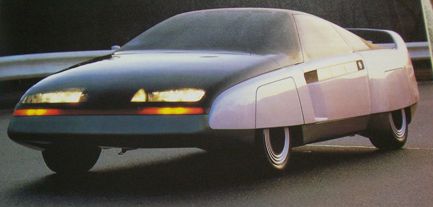
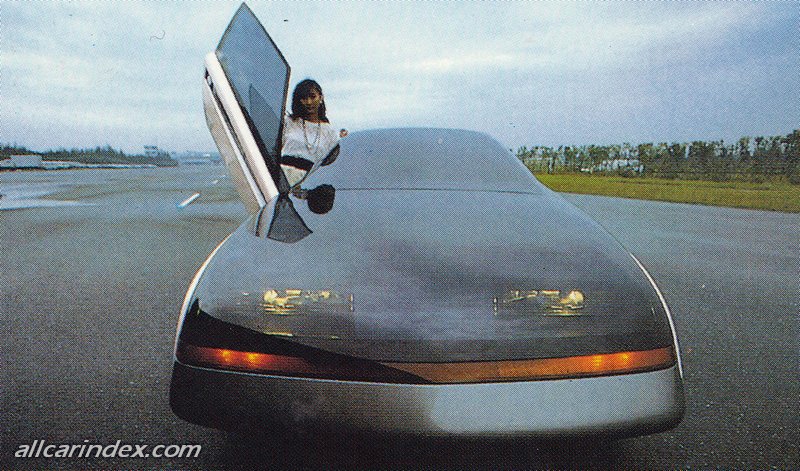
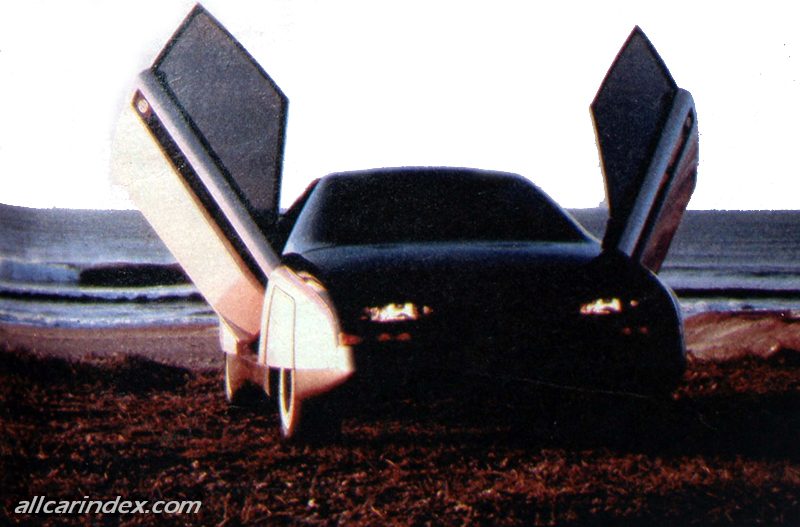
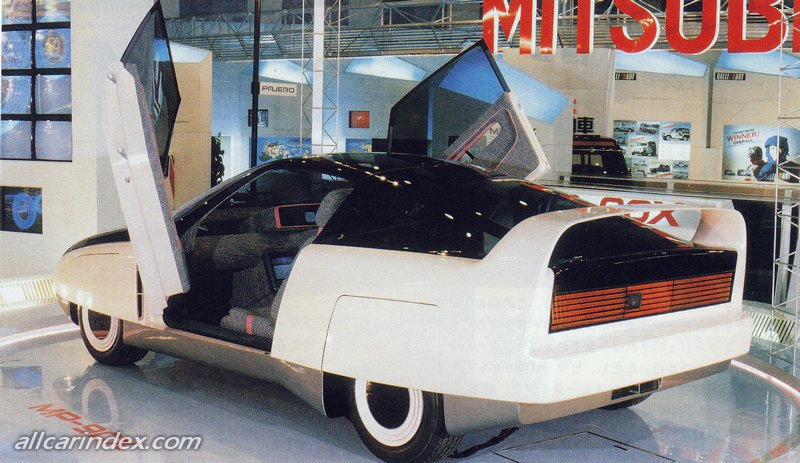
Mitsubishi MP-90X was an experimental concept car, its designation short for "Mitsubishi Passenger Car in the '90s," built to illustrate a possible design and technology concept for that decade. It was a streamlined four-seat saloon with two slanted gullwing-style doors, a glass-fibre reinforced plastic body, and a drag coefficient of 0.22. The concept was structured around three themes: an Advanced Communication Vehicle, an Active Control System, and Advanced Design, the latter covering both the futuristic exterior and the construction of the underbody, where new plastics were used to reduce weight.
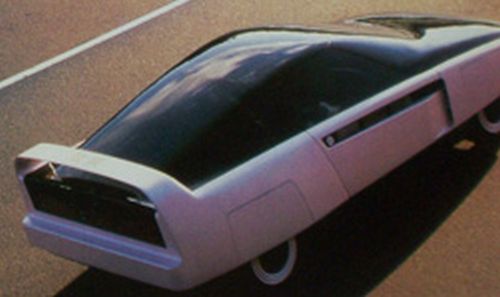
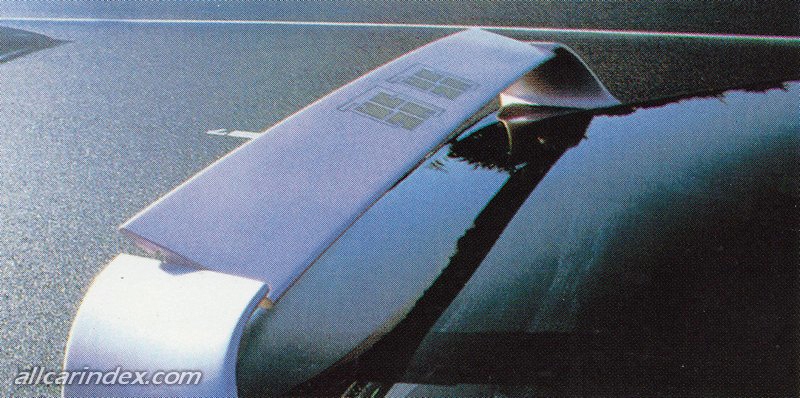
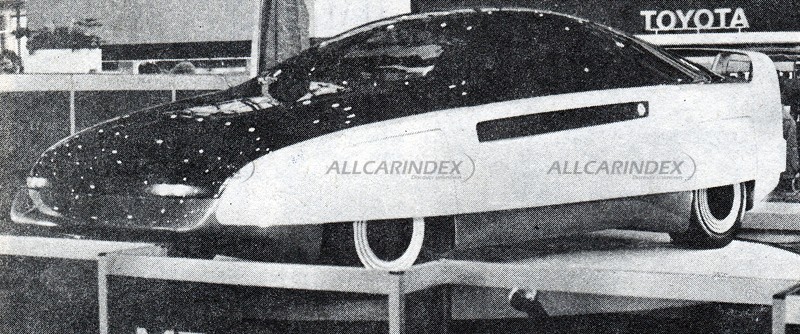
The bodywork was described as having a dolphin silhouette, with a gently rising sloped front blending almost seamlessly into a steeply raked windscreen and fastback roof. The entire upper section was glazed, using an acrylic/polycarbonate dome coated to darken automatically depending on sunlight, varying light transmission between 10 and 80 percent, and resistant to scratching. A large rear wing linked both sides of the car, adjusting its angle automatically at speed to increase downforce and also housing a retractable radio antenna. The remotely operated slanted gullwing doors eased entry in confined spaces. A flat underbody with a rear air-suction effect further improved aerodynamics.
Power came from a 1.3-liter engine paired with a four-speed automatic transmission called the Adaptive Control Automatic Transmission (ELC-90), which used a learning computer to manage hydraulic clutch pressure and automatically selected neutral when the car was stationary. The Active Control System also governed suspension, steering, and brakes. A drive-by-wire system replaced the mechanical accelerator, with sensors managing fuel delivery, combustion, engine output, and wheel-slip control. The Electronic Control Suspension, developed further as ECS-90, worked independently at all four wheels, adjusting air suspension for acceleration, braking, and cornering, raising ground clearance below 40 km/h and lowering the body—more at the front than the rear—at higher speeds to reduce drag and lift. Four-wheel steering turned the front and rear wheels in opposite directions at low speed and in the same direction at higher speed, with wheel covers that opened outward to permit steering angle.
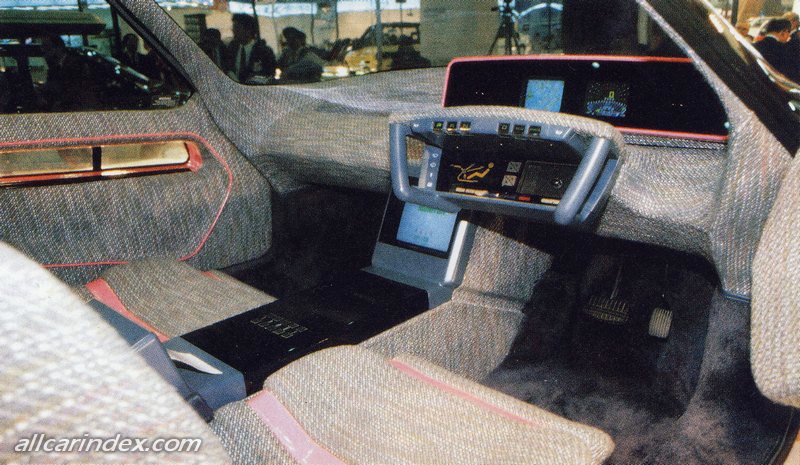
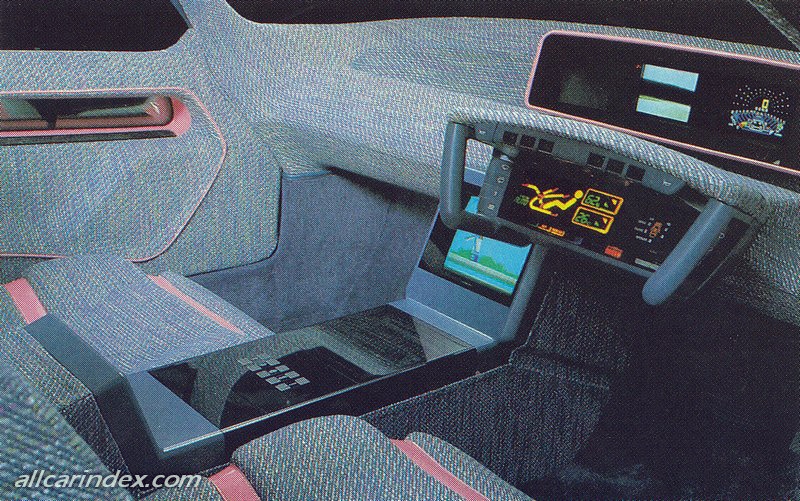
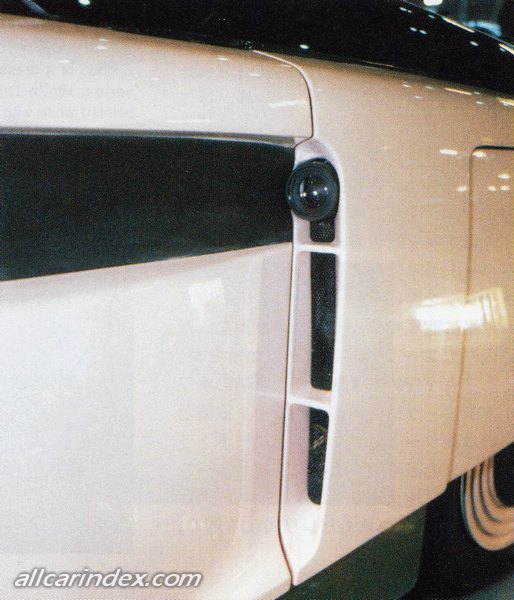
Inside, a rotating display and control unit replaced the steering wheel, flanked by two vertical grips beneath a CRT screen offering vehicle information including an Advanced Diagnostic System (Adias). Fibre-optic camera systems with around 7000 fibres and five-times magnification replaced conventional exterior mirrors. Equipment included a GPS navigation system based on the Navstar satellite network supplemented by Mitsubishi's own Self-contained Navigational System, a screen also used for television, teletext, a Captain telephone network, road-condition data, and a printer for output, plus a hands-free telephone and a CD audio system. The car rode on MacPherson strut suspension with 205/60-15 tyres, had a wheelbase of 2520 mm, track of 1450 mm, and measured 4380 mm long, 1850 mm wide, and 1345 mm high.