
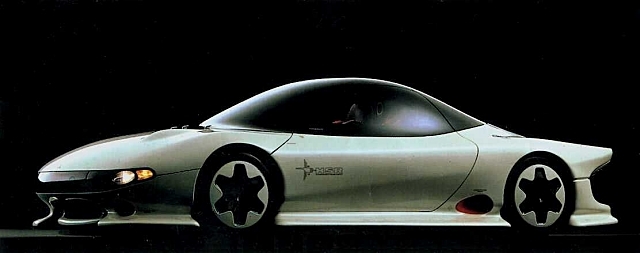
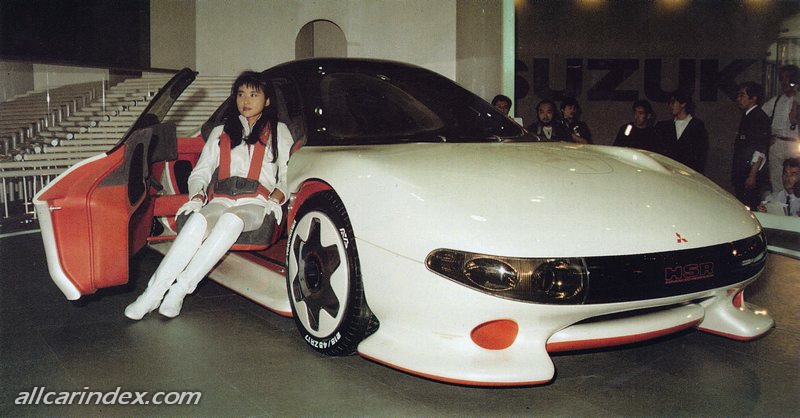
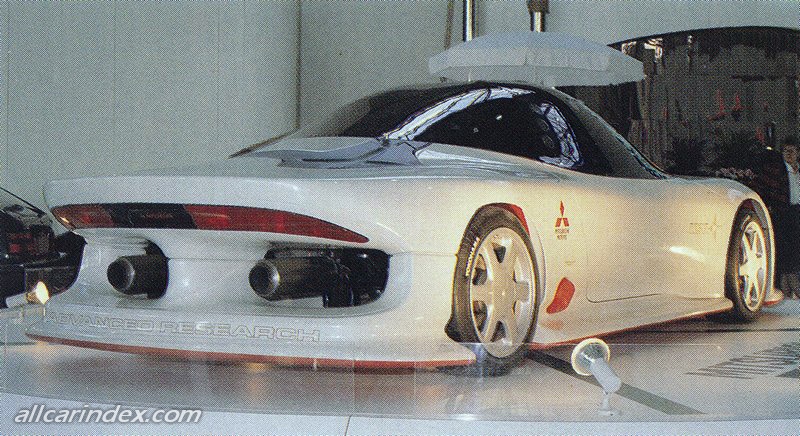
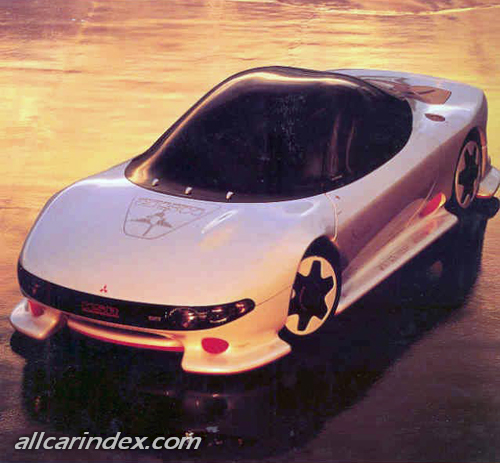
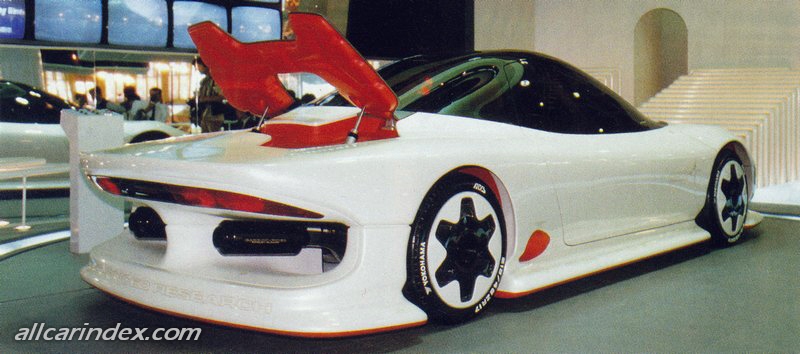
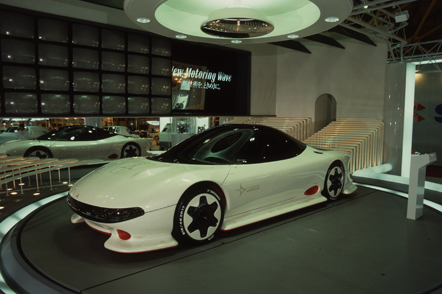
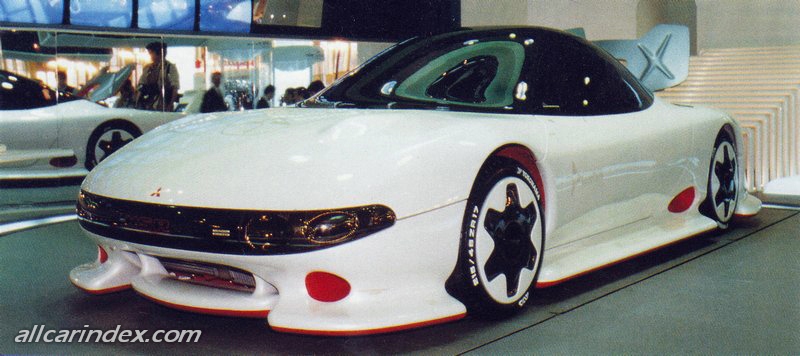
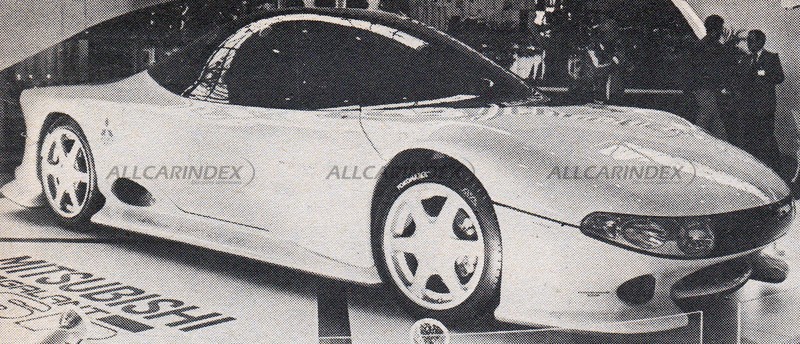
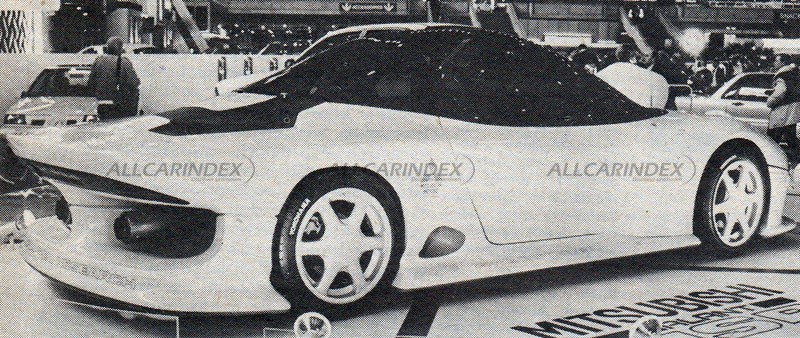
The Mitsubishi HSR, whose name stood for High Speed Research, was a concept coupe that Mitsubishi presented at the Tokyo Motor Show in 1987, described as a study for the coming 21st century. Its styling was inspired by the outline of a hummingbird, a theme reflected in the stylized bird graphic used alongside the "HSR Advanced Research" lettering on the car. The HSR served as a technology carrier for the then-new Mitsubishi Galant and was intended to demonstrate high-speed, high-safety travel accessible even to drivers without special skill.
Despite its appearance, the HSR used a front-mounted engine rather than a mid-engine layout. Its body, developed with extensive wind-tunnel work, achieved a drag coefficient of 0.20 and generated significant downforce, while also producing genuine lift-reducing aerodynamics. The structure combined a steel-sheet monocoque with tubular subframes front and rear, clad in lightweight, deformation-resistant Kevlar and polycarbonate bodywork with a crumple zone at the front.
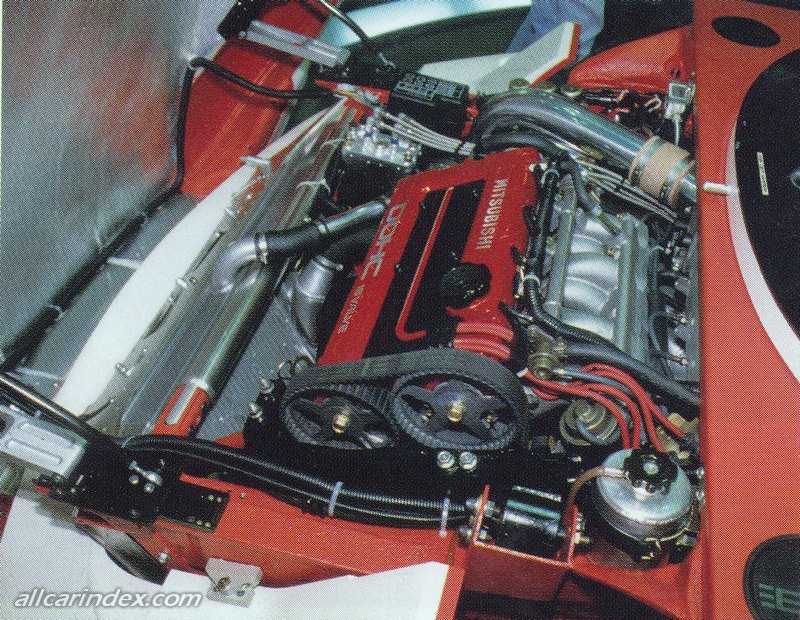
Power came from a modified version of the Galant's 4G63 4-cylinder engine, a 1997 cc DOHC 16-valve unit fitted with special exhaust valves and connecting rods, lightened moving parts, hydraulic valve clearance adjustment, and an enlarged turbocharger. It produced 295 hp at 8000 rpm and 330 Nm of torque at 5000 rpm, compared with 205 hp at 6000 rpm and 294 Nm at 3000 rpm in the standard Galant VR-4. Drive went through a five-speed gearbox. During testing at the Yatabe circuit, the HSR reached a top speed of 300 km/h, a figure Mitsubishi cited as a record for a 2-liter class vehicle; some sources list the top speed as 323 km/h.
The car's Active Integrated Performance System combined permanent four-wheel drive with a center differential and viscous coupling, Mitsubishi's own four-wheel steering with a hydraulic system integrated into the rear suspension, four-wheel independent suspension using lightweight aluminum components, an Active Electronic Control Suspension that kept ride height constant and eliminated body roll in corners, and a four-sensor, four-channel ABS working with ventilated disc brakes and 215/45 ZR 17 tires. A hydraulically extending air brake system, drawn from racing practice, was also fitted.
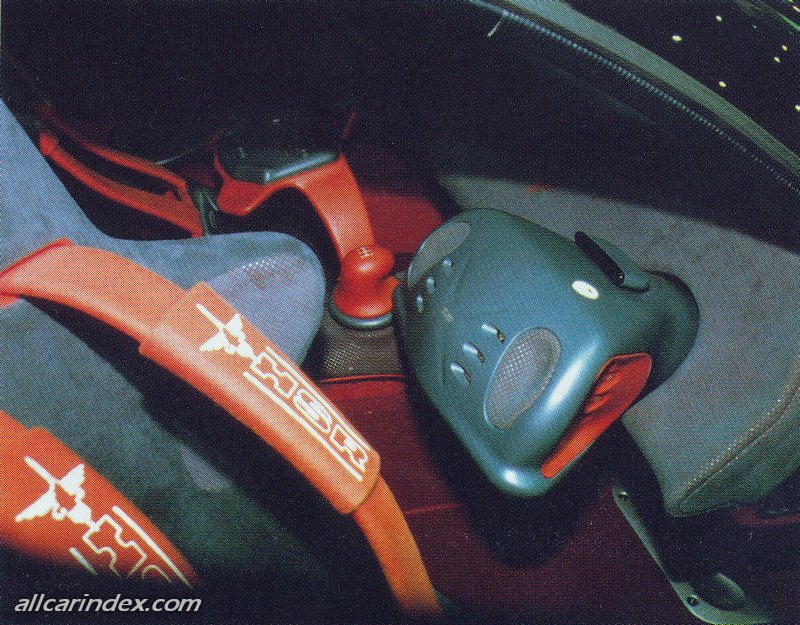
An Overall Operating Control System integrated computer assistance for driving, braking and steering. The cabin featured function monitors, a navigation system ahead of the passenger, a communication system, a roof-console display, a rearview camera system, and a night-vision camera, alongside safety features including airbags, a safety fuel tank and a fire-extinguishing system. The unusual rectangular, curved steering wheel had thumb recesses, and the two doors opened rearward, with seats pivoting outward for entry. Development input came from Mitsubishi Electric Corporation, Nippon Kogaku KK and Yokohama Rubber Co. Ltd. The HSR measured 4600 mm long, 1810 mm wide and 1185 mm high, with a 2600 mm wheelbase.