
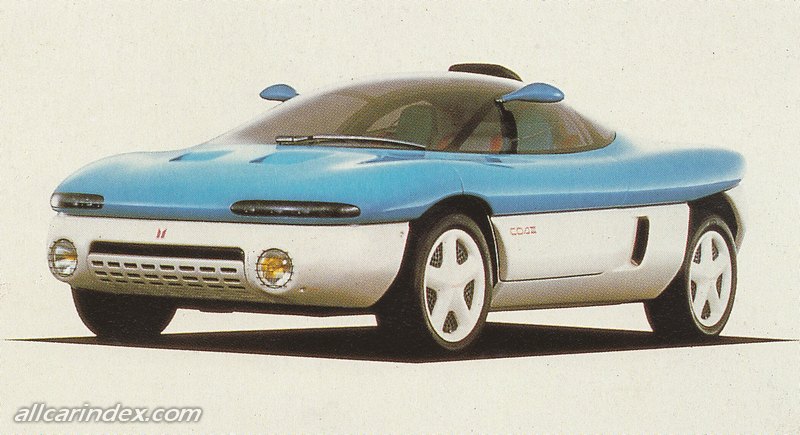
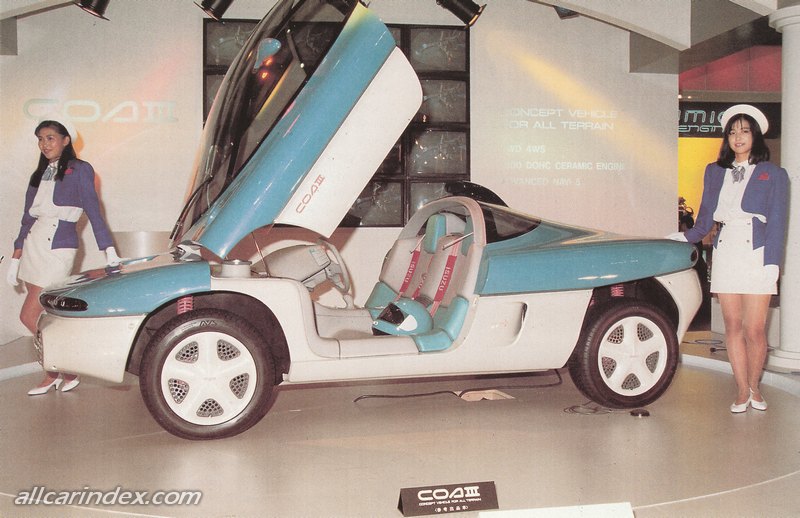
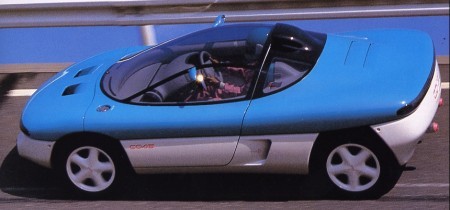
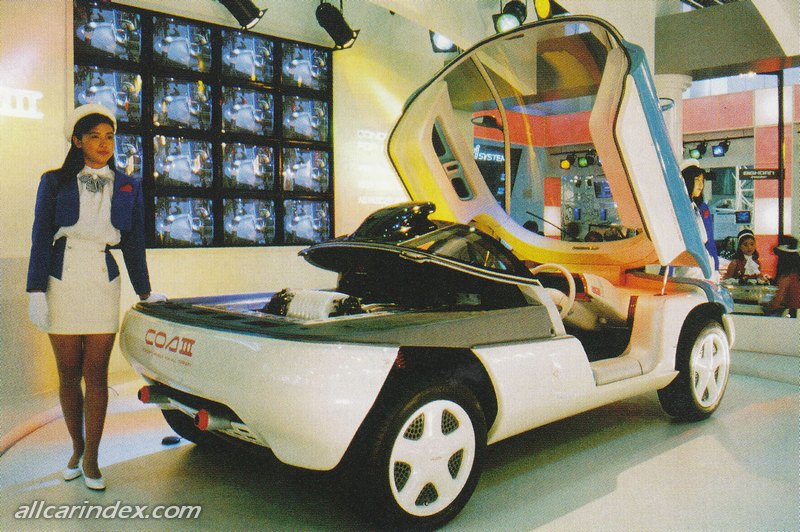
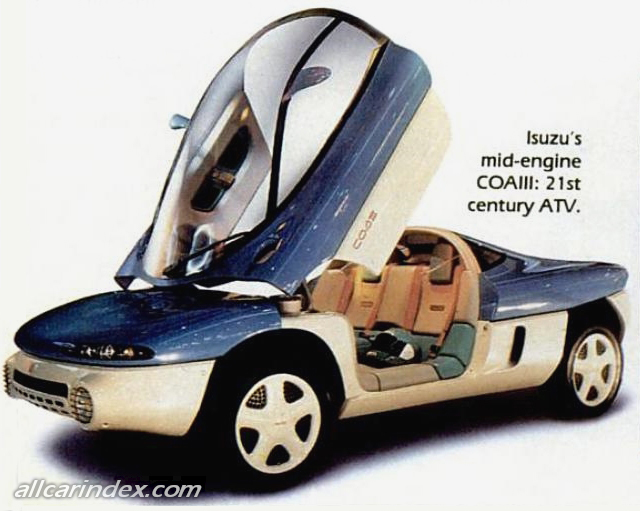
The Isuzu COA-III was a concept car shown at the Tokyo Motor Show, developed as a further step in the design evolution of Isuzu's Coa series of futuristic studies. It followed the earlier Coa-2 and combined Coa's electronic systems with ceramic engine technology first demonstrated in the Isuzu Aska. Although Coa had originally stood for "open air," the COA-III abandoned that concept in favour of a glass-domed coupe body in which the entire central section, including the canopy and doors, lifted upward and forward as a single hydraulically operated structure to allow entry and exit.
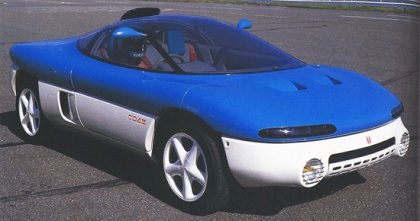
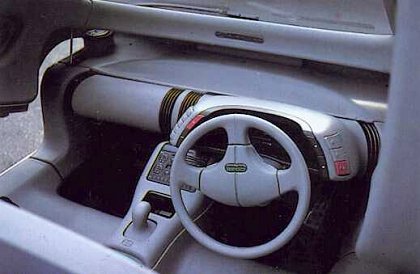
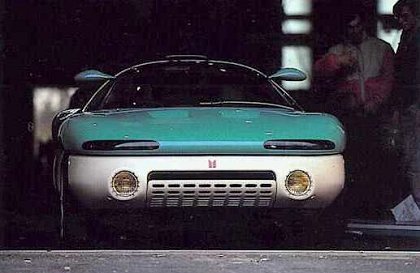
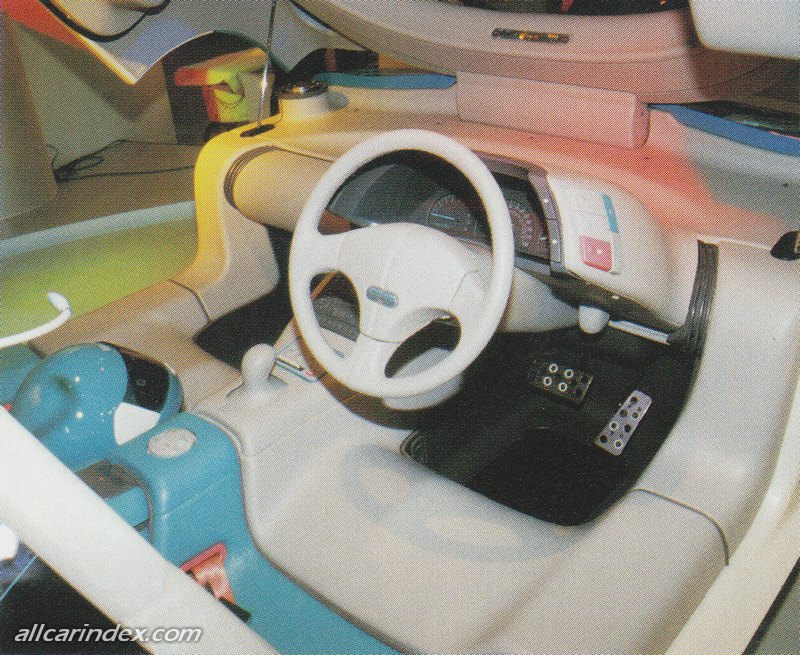
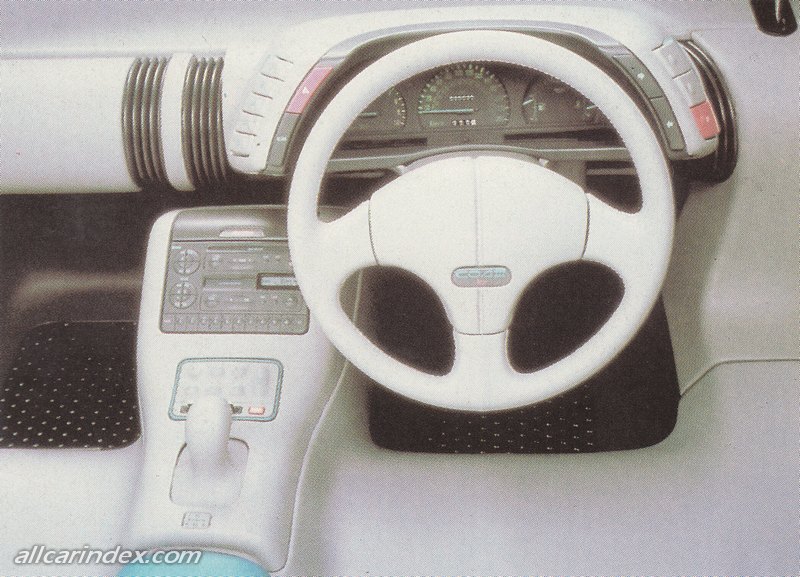
The body followed no existing design precedent, appearing to be built from two stacked shells: an upper shell, finished in a darker blue tone with smooth, sports-car-like lines, overhanging a lower shell styled with off-road imagery, including underbody protection grilles, headlamps flanked by protective bars, and a stepped rear treatment with a lip-shaped upper section housing a rear light band. Red "exhaust eye" elements and visible red suspension struts in the rear wheel arches reinforced the off-road theme, while a short rear overhang suggested a steep departure angle even though the front end was less suited to rough terrain. Aerodynamic mirrors were mounted high on the smooth glass canopy, which was topped by an air intake feeding the mid-mounted engine, echoed by intakes on the flanks. The cabin used conventional circular analogue instruments, described as "electronically assisted," with additional controls on the centre console, and the seats were designed for visual continuity with the door trim and console.
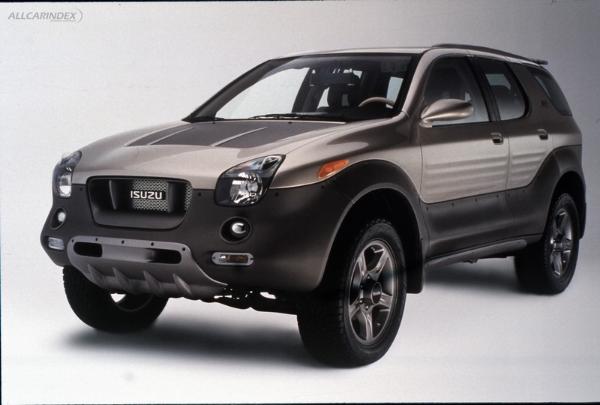
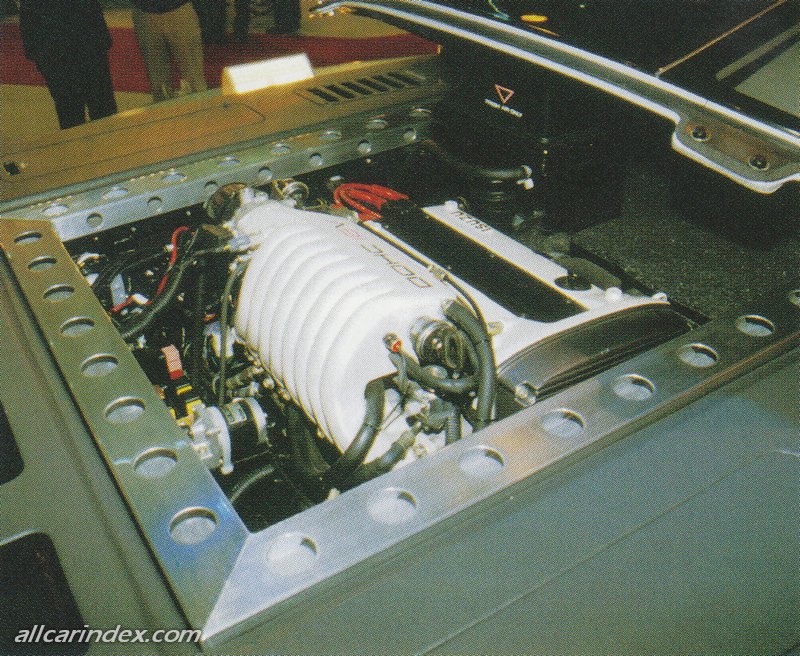
Isuzu equipped the COA-III with permanent four-wheel drive, four-wheel steering, and air suspension, intended to give the front end some degree of terrain adaptability as well. Power came from a transversely mounted mid-engine, a 4-cylinder, 16-valve DOHC unit with a crankshaft, pistons and valves made of ceramic material, producing 300 hp at 6800 rpm and 402 Nm at 5800 rpm; displacement was not disclosed, though the existing record cites a 1.6-litre turbocharged capacity. The car used the NAVI-5 electronically controlled system, an evolution of the setup seen on earlier Coa models, pairing a shift robot for the mechanical five-speed gearbox with a replaceable magnetic (IC) card that let drivers personalize shift patterns and acceleration response, while also coordinating four-wheel drive, four-wheel steering, air suspension and ABS according to road conditions. Isuzu described the COA-III as an exploration of sports car driving for the next century, designed for use in any weather or terrain. Its design themes were later reflected in the production Isuzu VehiCROSS and the VX-2 concept shown at the 32nd Tokyo Motor Show.