
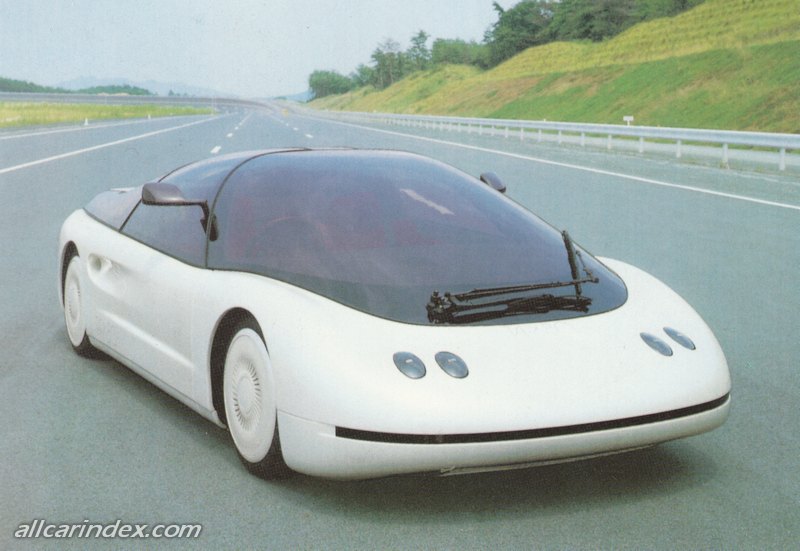
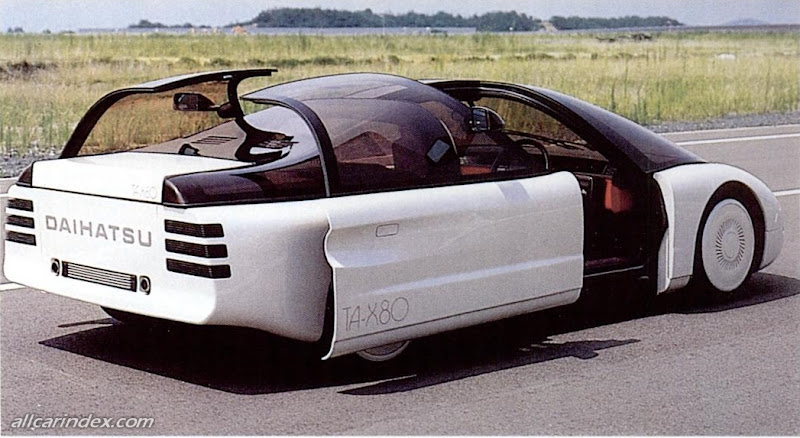
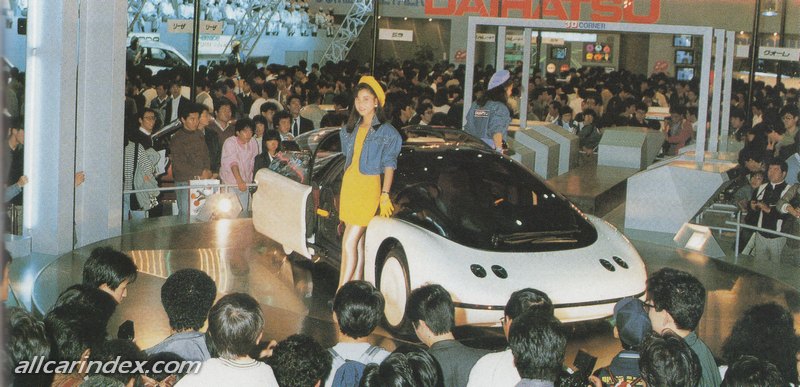
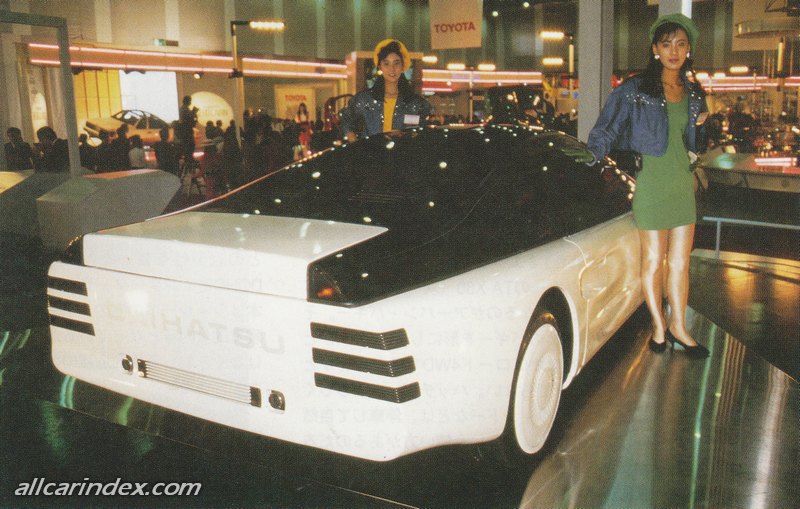
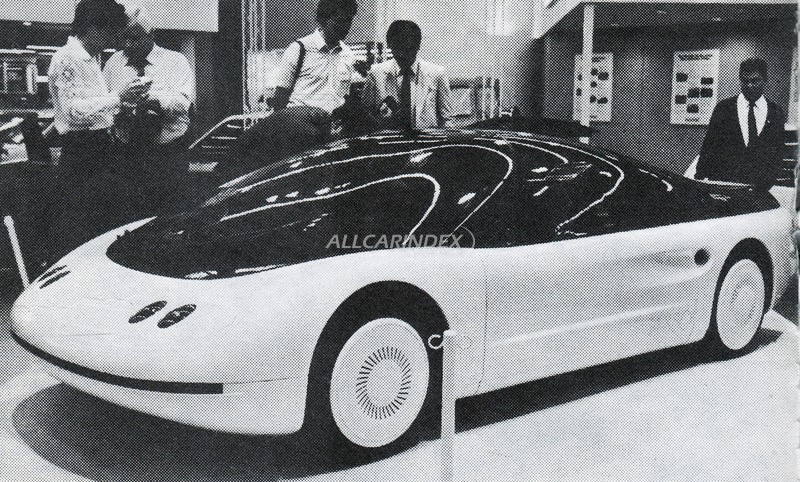
The Daihatsu TA-X80, known in Japan as the Daihatsu TA-X80 (ダイハツTA-X80), was a mid-engined concept coupe developed by Daihatsu to mark the 80th anniversary of the company. Rather than debuting at Tokyo's motor show, it was shown for the first time at the Frankfurt IAA in 1987, the same event at which Subaru and Toyota also gave Japanese concept cars their world premieres. Daihatsu described it as a vision of the next generation of sports cars, at a time when the company had not previously built a genuine sports car.
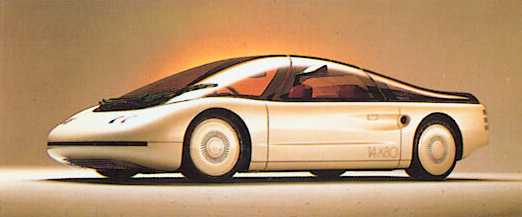
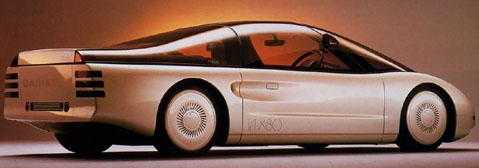
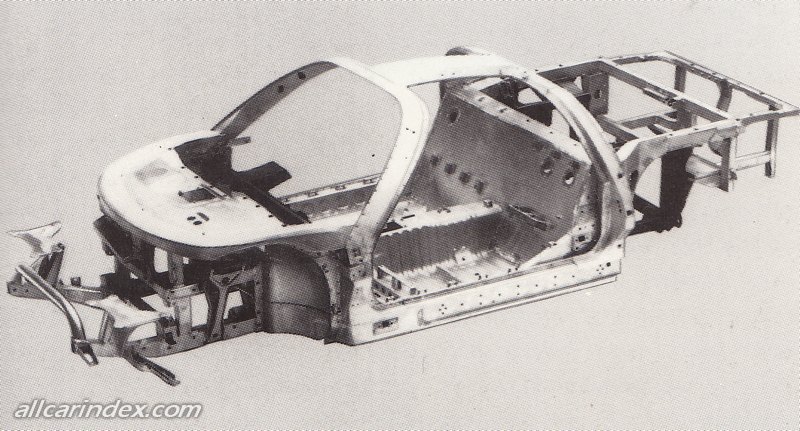
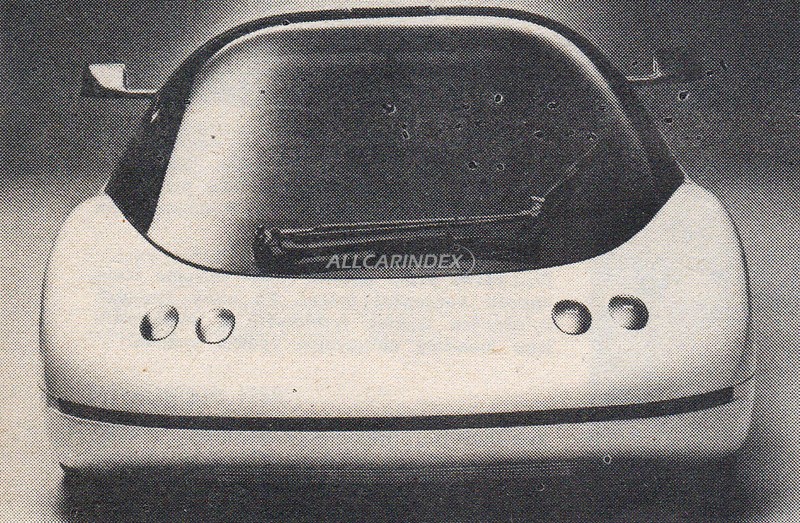
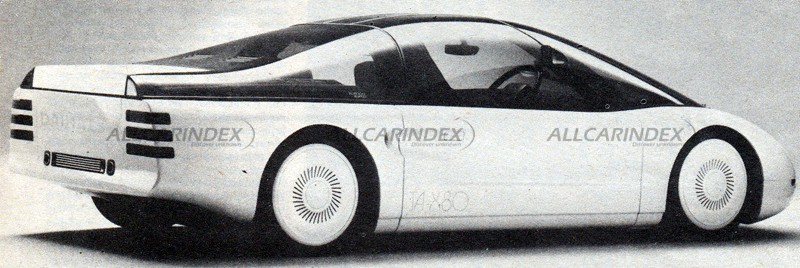
The body was an aerodynamically shaped streamlined coupe standing just 110 cm high, with a profile likened to a teardrop split lengthwise, and achieved a drag coefficient of 0.25. It used a new underbody structure combining plastic sandwich panels with a light-alloy tube frame. The cabin was accessed through two sliding doors rather than gullwing doors, cut up into the roofline and glazed in their upper sections; each door incorporated a notch to duct air to the mid-mounted engine, exiting through a circular opening ahead of the rear wheel arch. A single double-bladed wiper with a kinematic sweep covered even the upper corners of the large, roof-integrated windscreen, and small twin headlamps were set into the sloped nose.
Power came from a 996 cc V6 with double overhead camshafts, 24 valves and two turbochargers, producing 130 hp at 9000 rpm and 150 Nm at 4000 rpm — a configuration unmatched among small six-cylinder car engines since the Wolseley units of the interwar period. Daihatsu quoted a 0-100 km/h time of 5.5 seconds, a 400-metre time of 14 seconds, and a top speed of 250 km/h. Power reached all four wheels through an electronically controlled four-speed automatic transmission and a permanent four-wheel-drive system managed by an Auto-Control Coupling (ACC), which used a hydraulic multi-plate clutch to distribute torque front-to-rear and side-to-side, also acting as a differential brake at each axle. Electronically controlled hydropneumatic suspension maintained constant ride height regardless of load, adjusted damping to speed and driving conditions, resisted body roll in corners, and automatically lowered ground clearance from 12 to 9 cm at higher speeds.
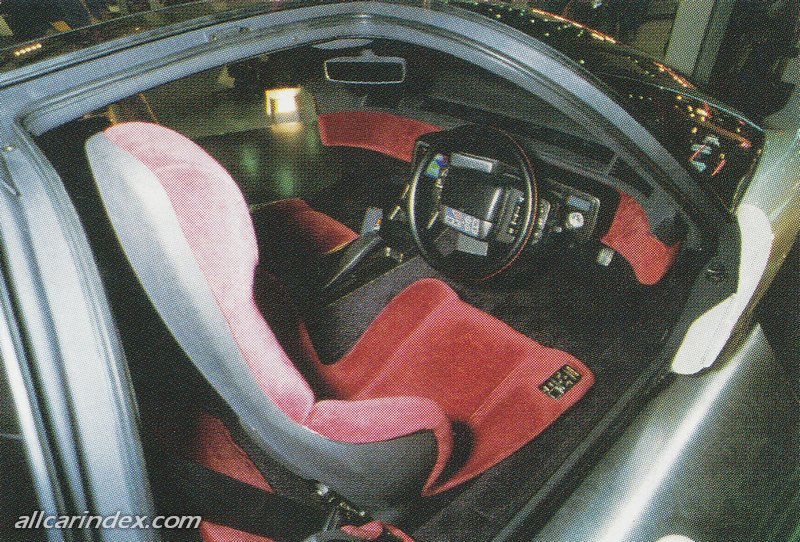
The drivetrain electronics were paired with anti-lock brakes (four sensors, three channels, ventilated discs) and traction control. A self-diagnosis system displayed a "Master Warning" message on the instrument panel in the event of a fault, detailing the problem and repair options on a centre-console CRT monitor and relaying the information to a Daihatsu dealer via a remote link that could also connect to the driver's home; this Daihatsu Ladynet system doubled as a television receiver and navigation aid showing vehicle position and the shortest route home. Above 60 km/h the instrument displays switched automatically to a head-up mode. The driver's seat rose and slid outward automatically when the door was opened and the key removed, and the full-foam seats featured pneumatically adjustable shoulder supports. Wheels were located front and rear by upper and lower wishbones and wore 190/55 R 365 tyres. The car measured 3900 mm long, 1695 mm wide and 1095 mm high, with a 2280 mm wheelbase, and weighed 880 kg. It remained a concept car.