
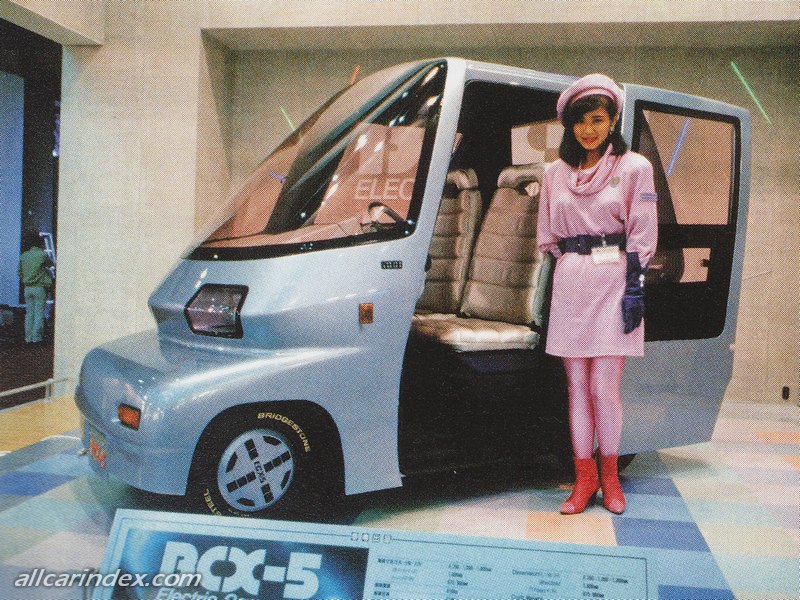
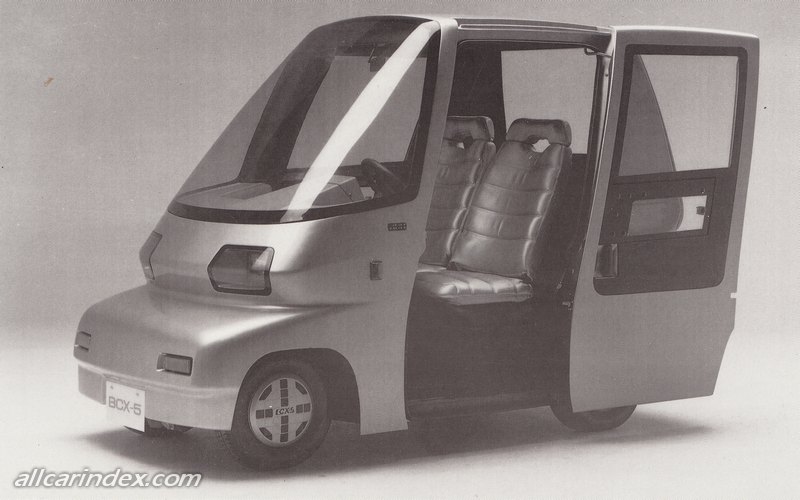
The Daihatsu BCX-5, known in Japan as the ダイハツBCX-5, was a concept car shown by Daihatsu Kogyo Co. at the 1985 Tokyo Motor Show, alongside two other future studies from the maker, the Trek and the Charade 926 R. It was designed as a two-seat electric city car conceived in response to concerns over future energy problems. The concept proved durable enough that an updated version received its European premiere at the Amsterdam motor show in February 1991.
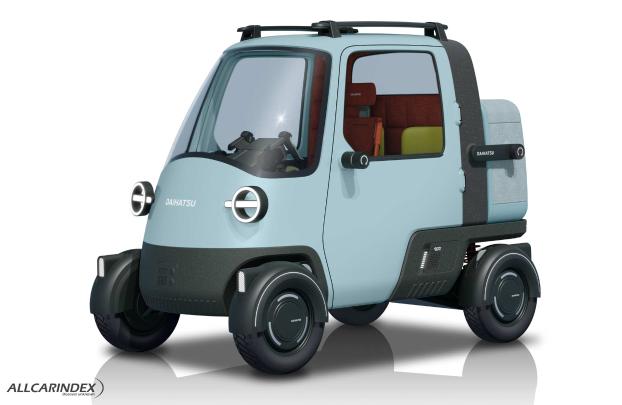
The BCX-5 measured just 270 cm in length, 130 cm in width, and 180 cm in height, and weighed 720 kg. Its compact footprint and sliding doors were intended to make it easy to park in tight spaces and simple to enter and exit. Its styling, particularly viewed from the rear at an angle, resembled a cable-car gondola cabin.
Power came from a 4.7 kW electric motor paired with 150 Ah batteries, giving a top speed of 50 km/h and a maximum range of 50 km between charges. Daihatsu drew on twenty years of experience building electric golf carts, having already produced over 6,000 units, in developing the car's drivetrain. A notable feature was the ability to direct the vehicle using the driver's voice commands.