
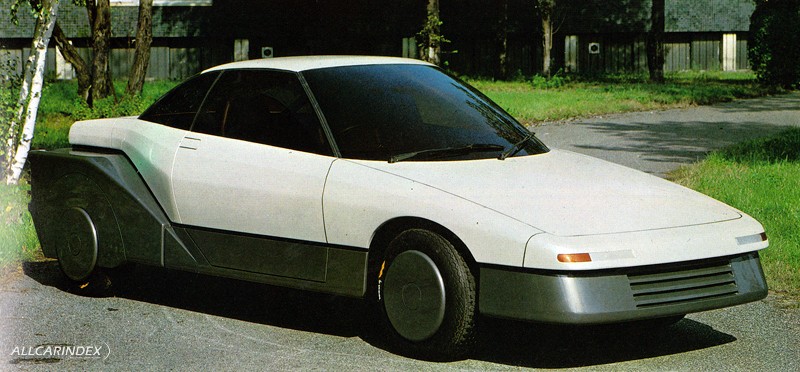
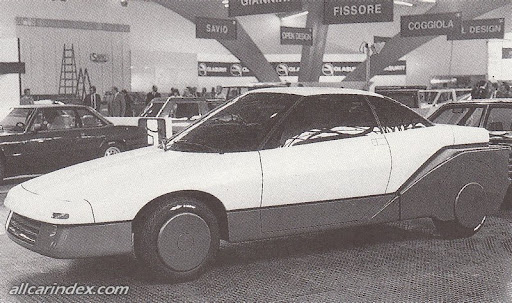
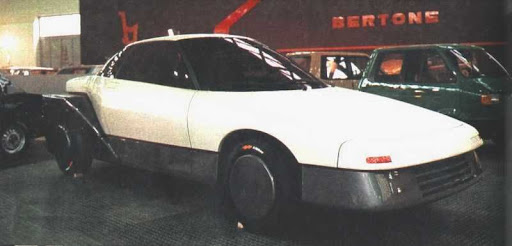
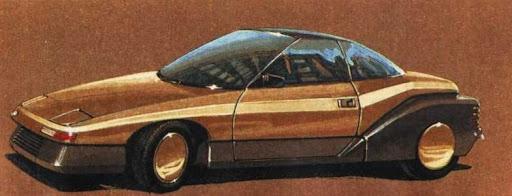
The Chicane was a concept design study by Zagato, presented first as a pure form model at the 1982 Geneva Motor Show and shown a month later with a finished interior at the 59th Salone di Torino. It was developed by Zagato Industrial Design, the marque's Centro Stile studio, as a two-door, two-seat GT coupe conceived for Group B homologation.
Visually, the Chicane was notable for its externally attached rear wheel arches, a treatment intended to allow the upper body to taper toward the rear while still providing a wide track. Although this arrangement suggested aerodynamic benefits, the full enclosure of the rear wheels did not achieve an optimal airflow in practice. A more convincing execution of flared rear wheel arches later appeared on the IAD Venus of 1989.
Beyond its styling, the Chicane was built around a modular concept: a self-supporting underbody designed to accept a mid- or rear-mounted engine, intended to carry different plastic bodies for different purposes at low cost. Zagato envisioned this platform underpinning a sports coupe, a racing spider, and a rally saloon. As displayed, the Chicane represented the mid-engined Gran Turismo variant, intended to be homologated as a Group B rally racing coupe, a class of car that soon came to dominate rallying.
The car was designed around a mid-mounted 2-liter-class engine. It measured 420 cm in length, 175 cm in width, and 130 cm in height, with a wheelbase of 270 cm and a track of 140 cm.