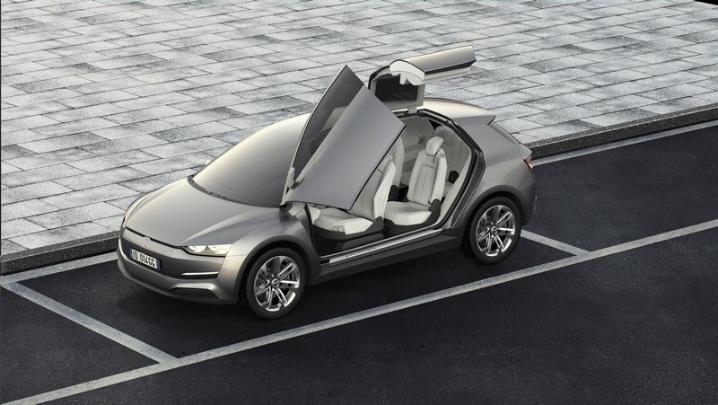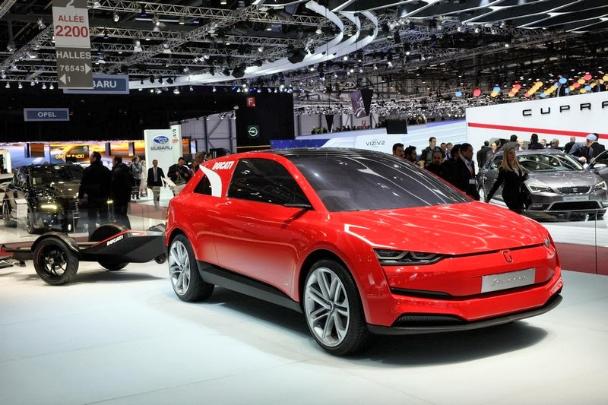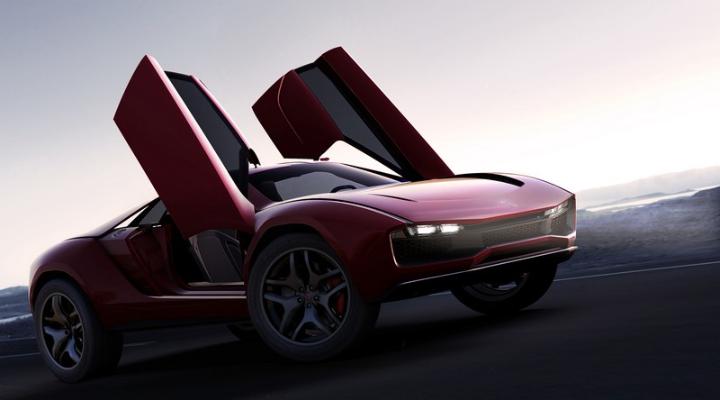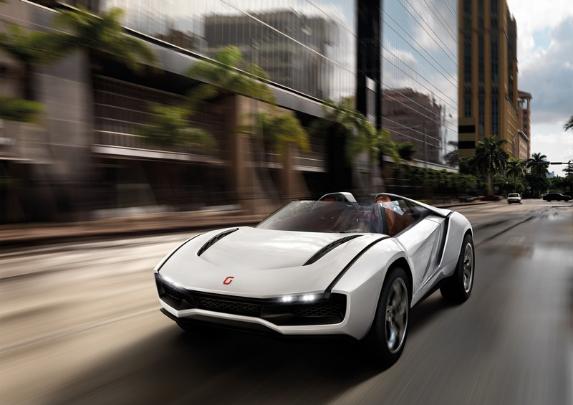

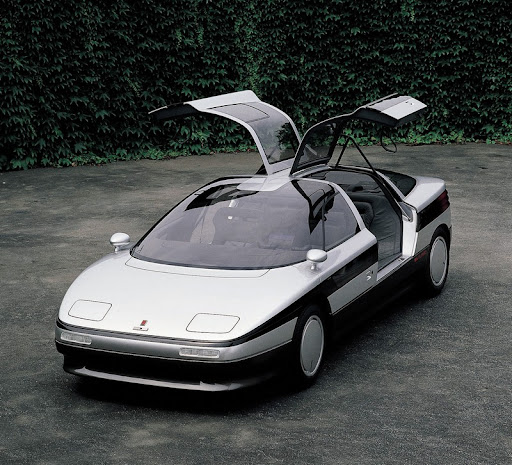
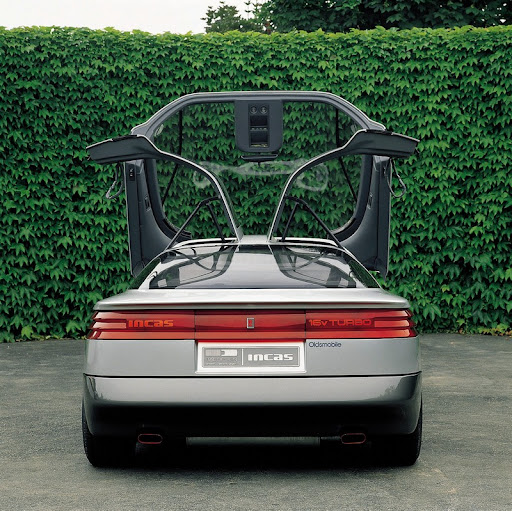
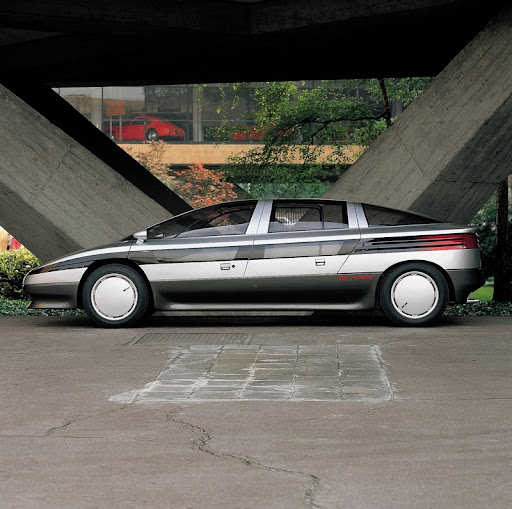
The Incas was a concept car by Italdesign Giugiaro, shown at the 1986 Turin Motor Show alongside two other concept studies from the company, the Machimoto and the Orbit. It was presented as a streamlined saloon of coupe-like shape, described at the time as a three-door four-seater coupe, and was built as a one-off study rather than a production model.
Unusually for a car of its interior layout, the Incas used a mid-mounted engine, positioned transversely. It was fitted with the experimental Oldsmobile Quad 4 unit, a 2260 cc four-cylinder with 16 valves, DOHC, and turbocharging, producing 230 hp at 5600 rpm and 339 Nm of torque at 4000 rpm. This engine was notably advanced for General Motors at the time and was slated to reach production in 1988 in a naturally aspirated 162 hp form. The Incas paired this engine with a three-speed automatic transmission, four-wheel drive with a permanently engaged system using three differentials, and four-wheel steering, with front wheels steered mechanically and rear wheels steered hydraulically; below 30 km/h the rear wheels turned opposite the front for tighter maneuvering, while above that speed a microcomputer adjusted rear steering angle to driving conditions.
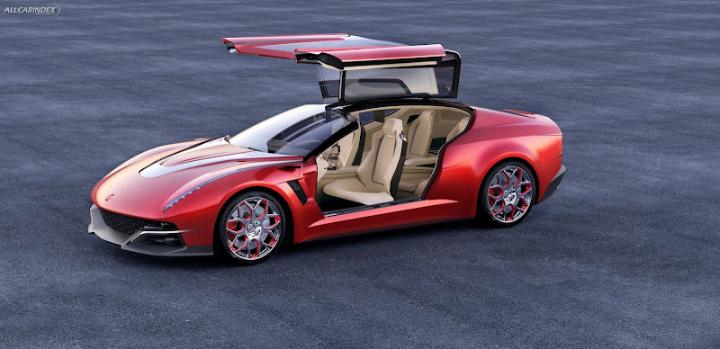
Design details included a front canopy that hinged upward in place of conventional doors, rear gullwing doors, windshield wipers concealed under a cover, and an aircraft-style steering yoke rather than a wheel, rotating up to 91 degrees each way and carrying controls including automatic transmission buttons and climate and wiper functions. The dashboard stretched the full cabin width in an arched shape mirrored by the knee protection below it, with primary instruments lit in quasi-analog form and secondary information appearing only when needed. Interior space was generous, with legroom between brake pedal and rear seat backrest matching that of the Lancia Thema despite the Incas being 14 cm shorter; the cabin featured leather-trimmed, two-tone stitched individual seats.
Technically, the Incas drew on Italdesign's earlier Maya of 1984 for its platform and mechanical layout, while its body architecture recalled the 1980 Medusa, though with a less steeply raked roofline. Compared to the two-seat Maya, the Incas was 24 cm longer and 11 cm taller, allowing for four seats instead of two. Its steel platform and separate rear subframe for the drivetrain were designed to allow separate assembly, reflecting consideration for potential small-series production, though this did not proceed. Following its Turin debut, the Incas underwent further development and received several awards, including the 1986 Car Design Award for concept cars.