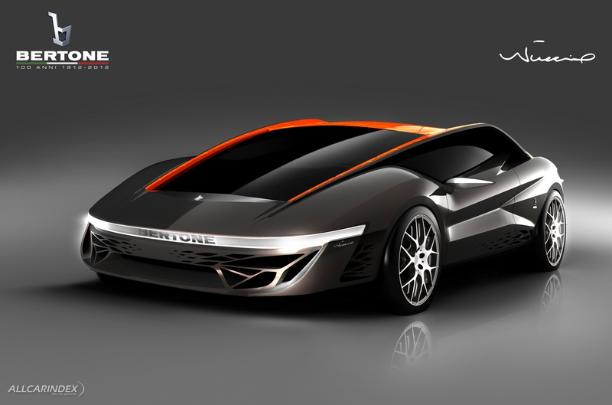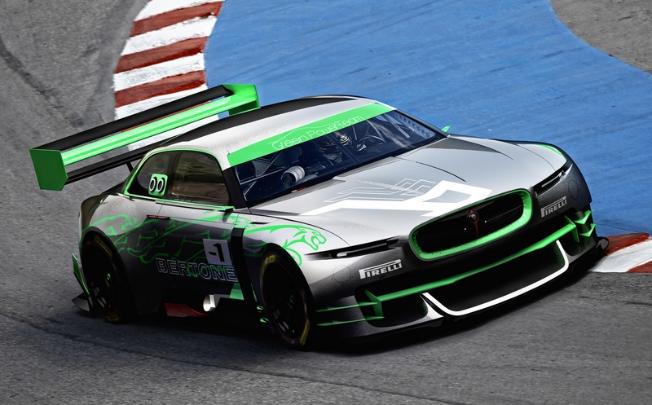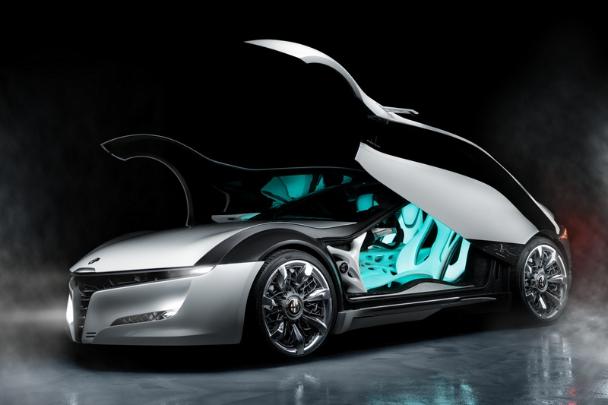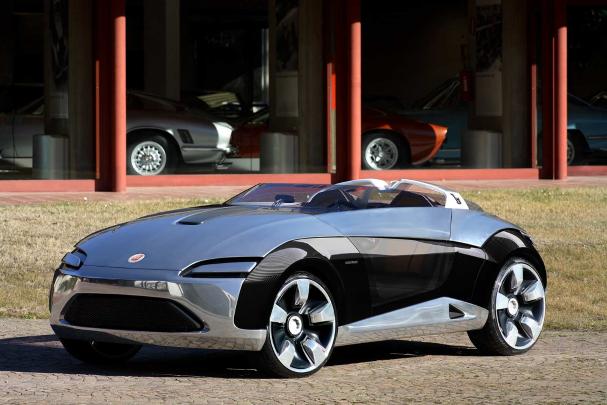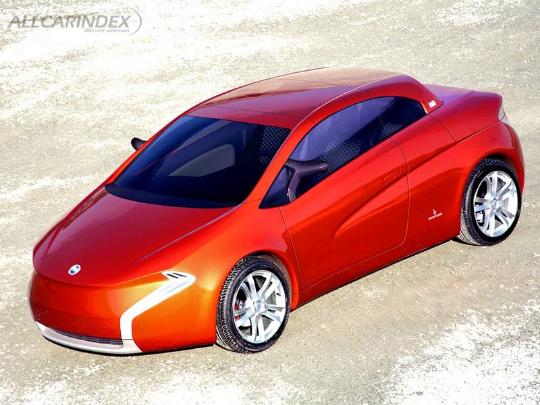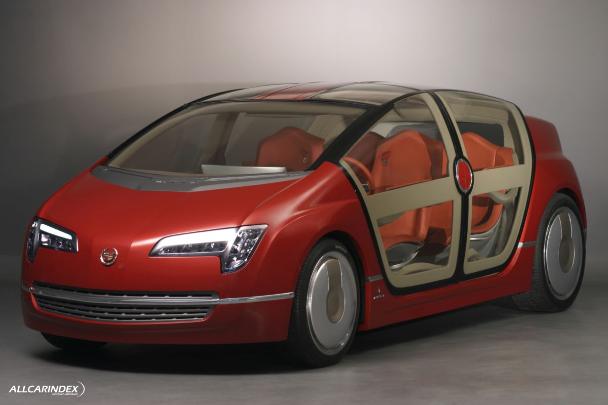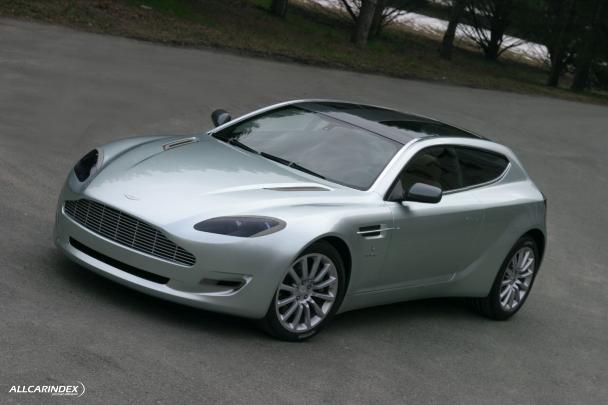
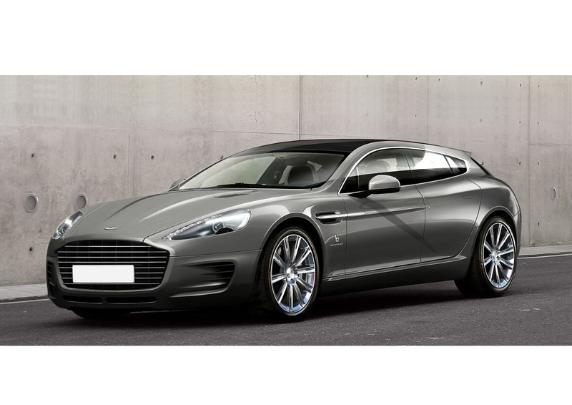

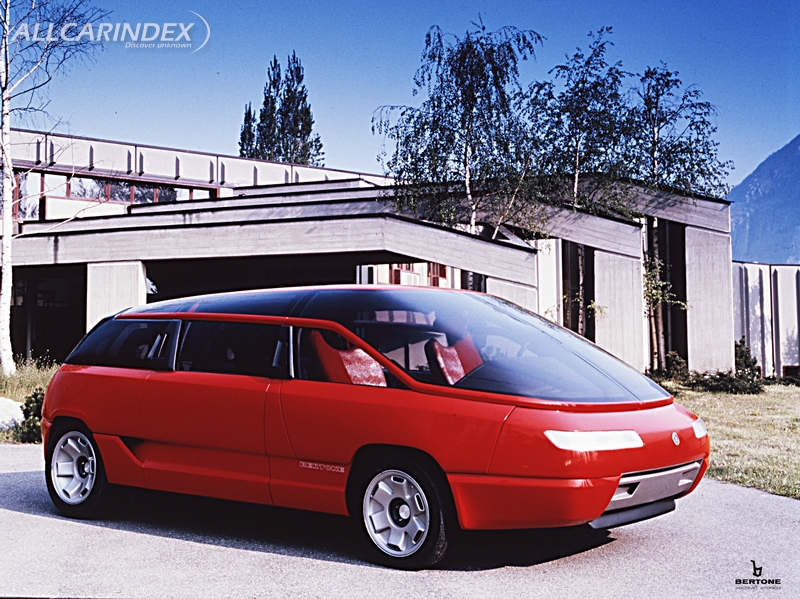
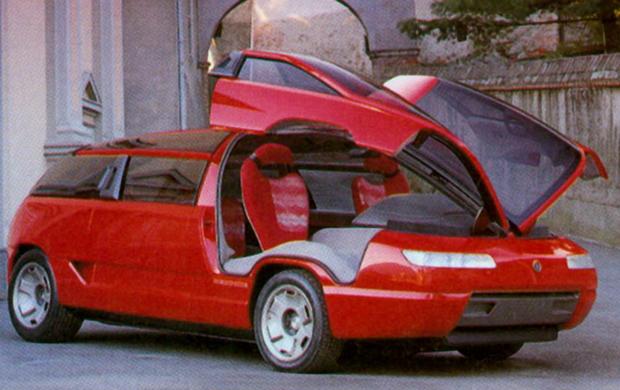
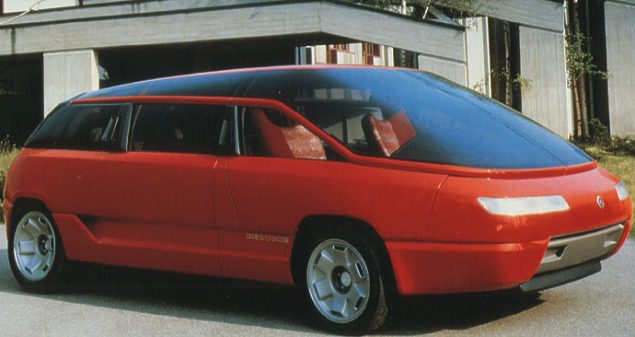
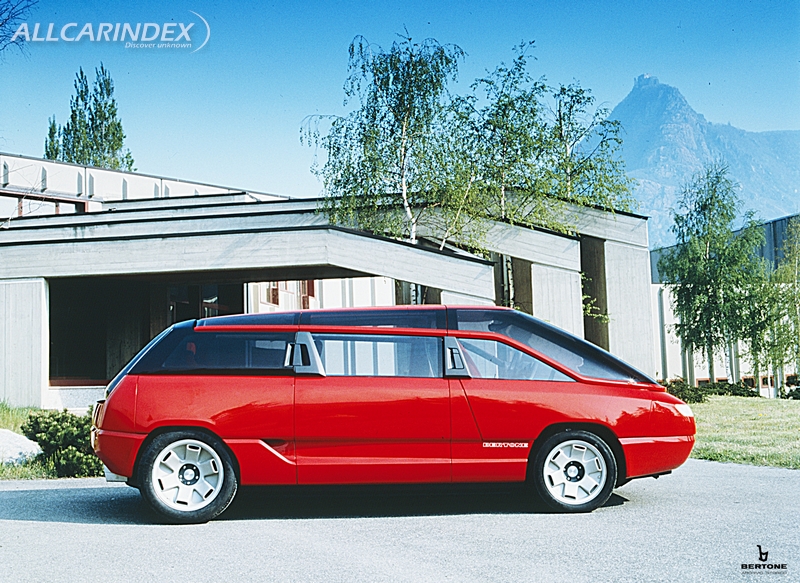
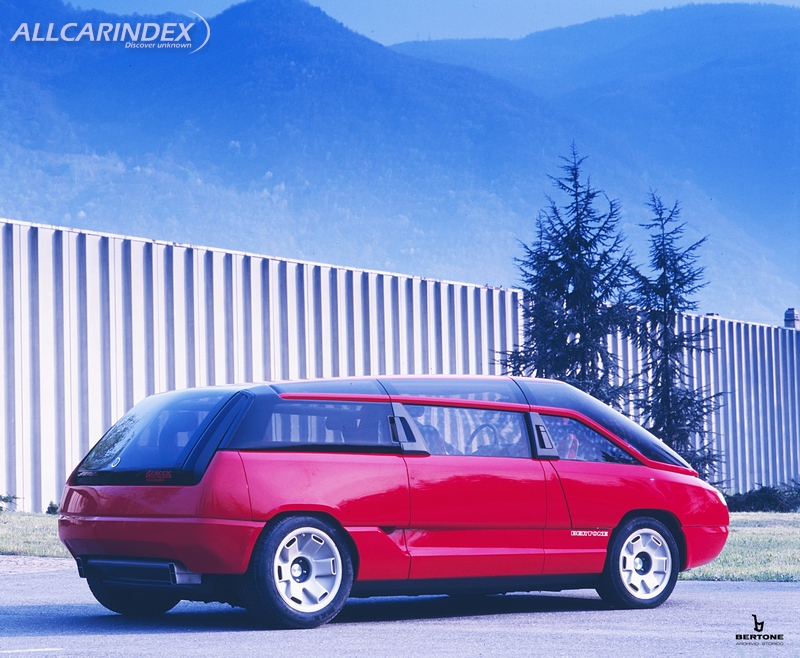
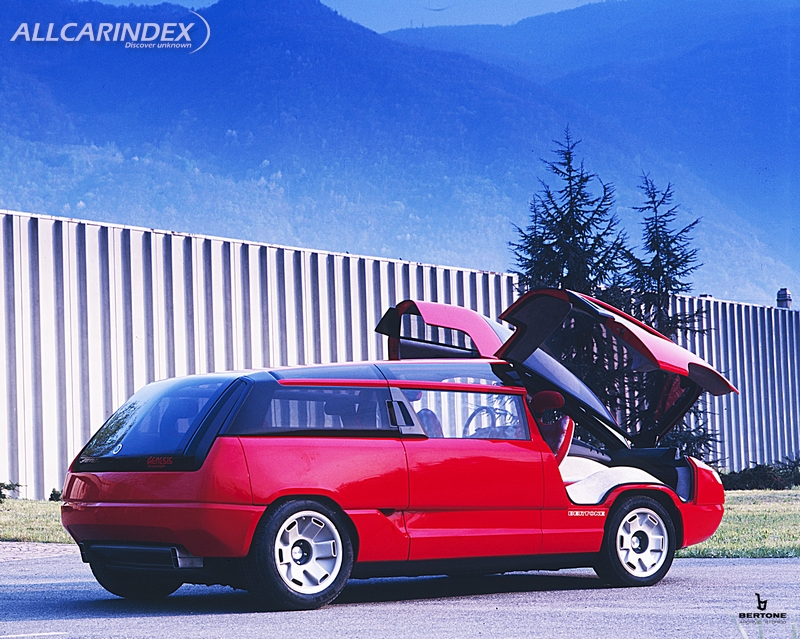
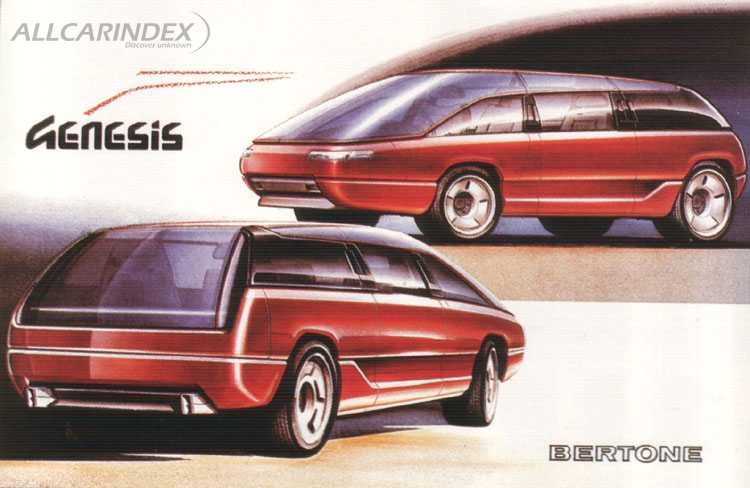
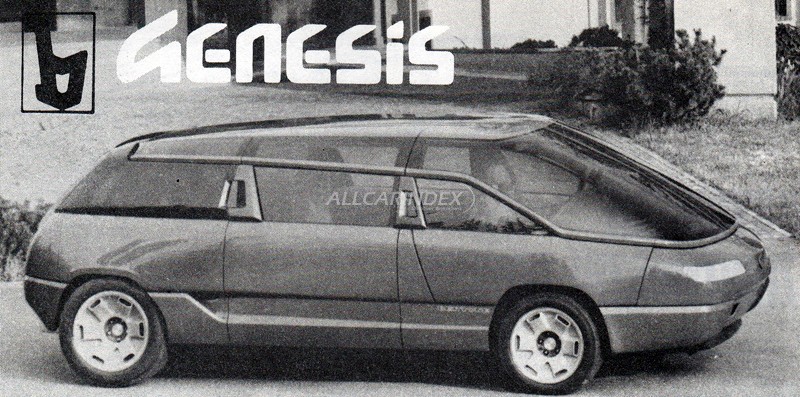
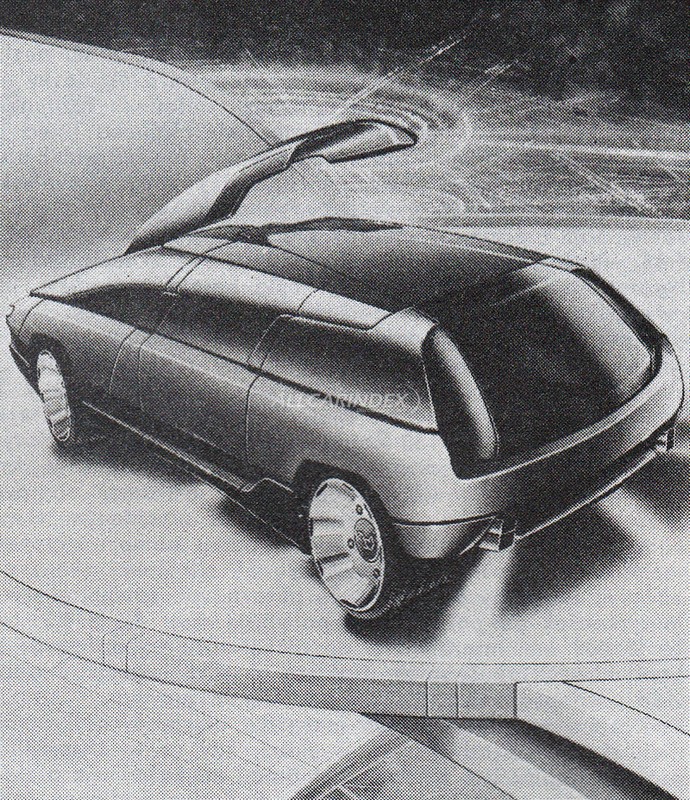
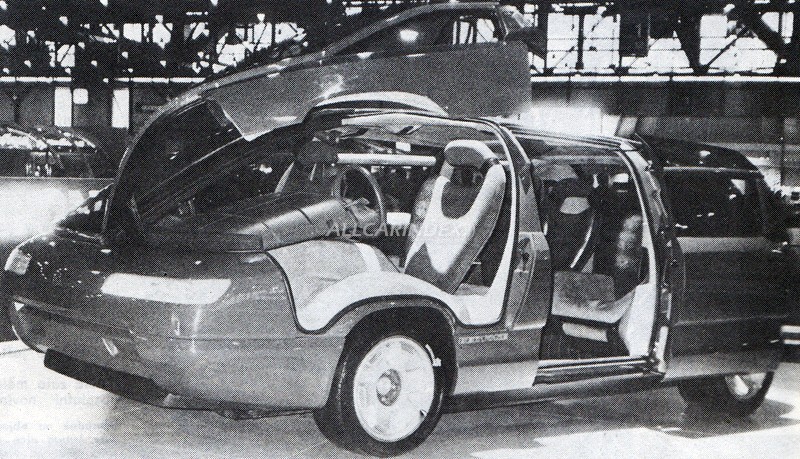
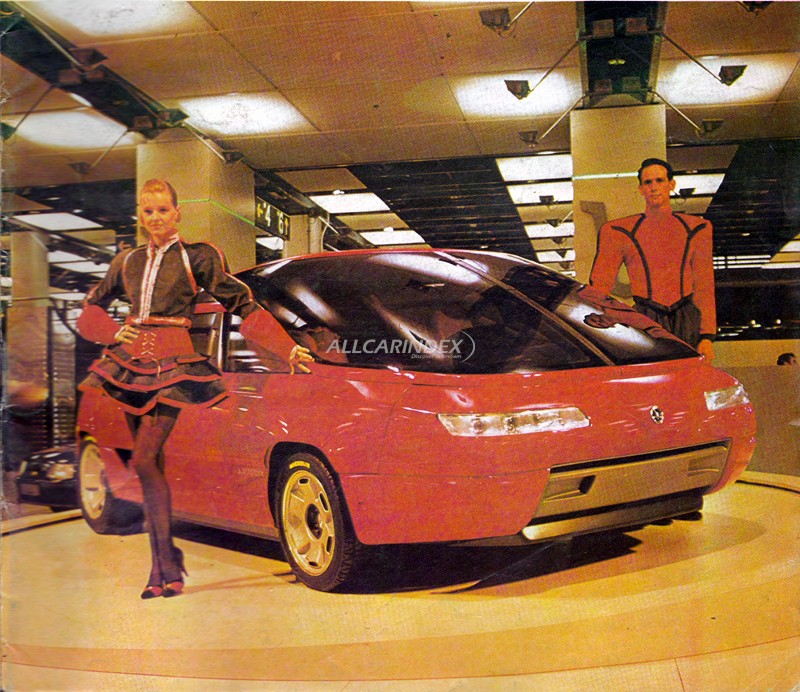
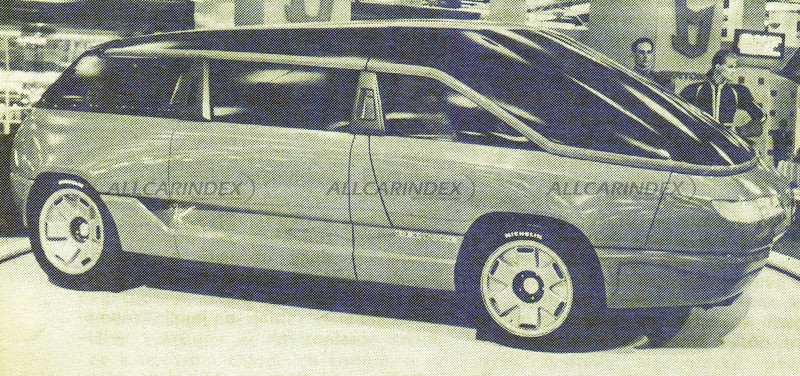
The Genesis is a concept car designed by Bertone, presented at the Turin Motor Show in the spring of 1988. Conceived as a large one-box people carrier, it followed the Zabrus sports estate as the next step in Bertone's exploration of future automotive design, moving further away from conventional saloon and sports car layouts. Its single-volume, trapezoidal silhouette departed radically from established conventions, and the car was built with an investment of 30,000 working hours. It was also driven in a road test.
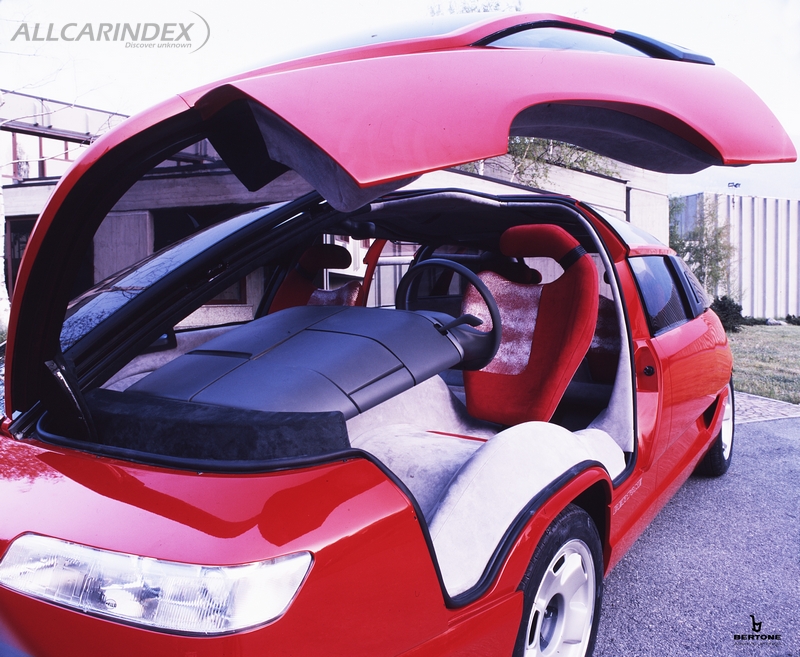
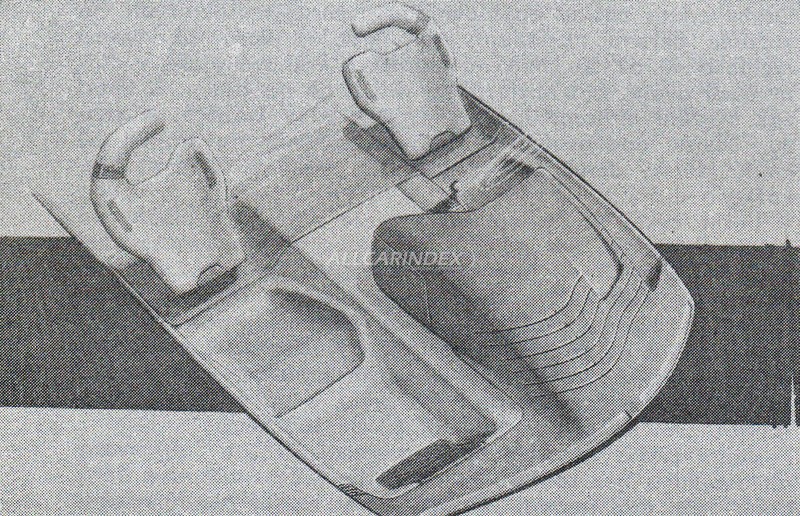
At the time, the only comparable modern one-box people carrier on the market was the Renault Espace, while the Pontiac Trans Sport still existed only as a one-off. The Genesis extrapolated this emerging body style with a notably lower roofline. Underneath, it used the running gear of the Lamborghini Espada, whose bodywork had also originally been designed by Bertone, retaining only the Espada's wheelbase within an entirely new structure. Tyre sizes were changed from the Espada's 205 VR 15 to 225/45/16 at the front and 285/40/17 at the rear. Although its proportions suggested a mid-engined layout, the Genesis actually carried its V12 engine at the front, driving the rear wheels; the engine casing was fitted between the front seats, which were pushed outward over the wheel arches into a reclined, lounger-like position.
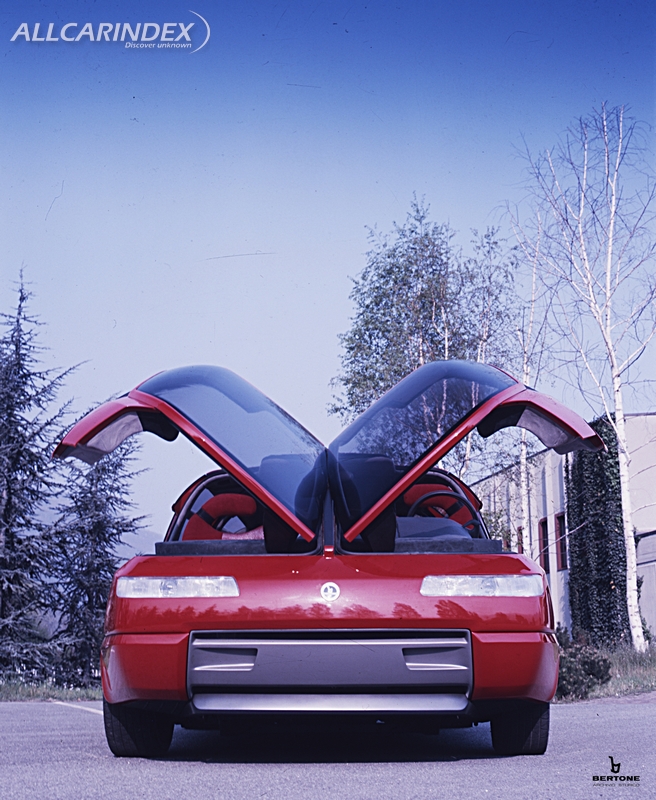
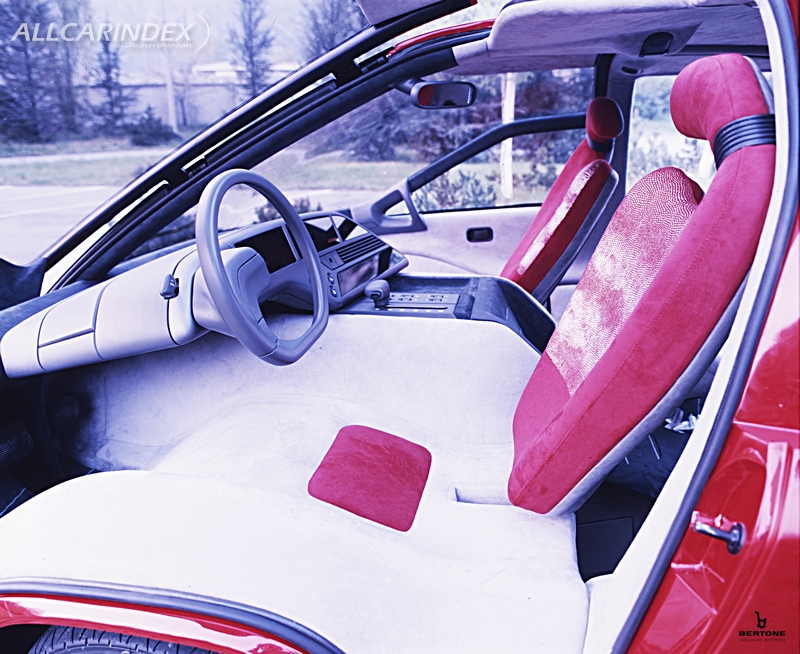
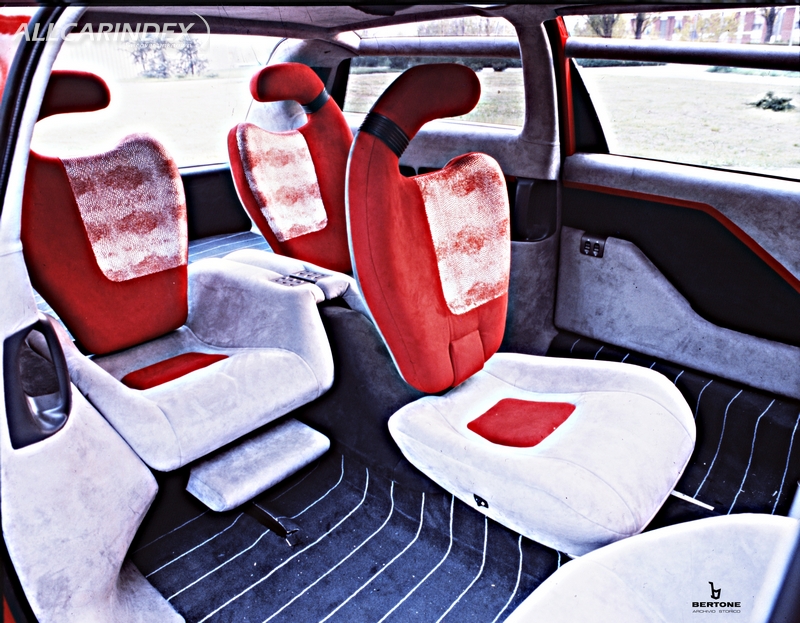
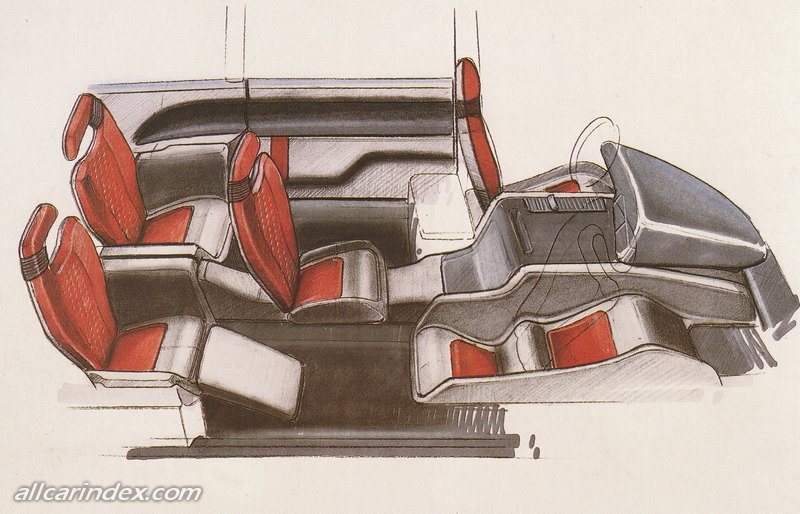
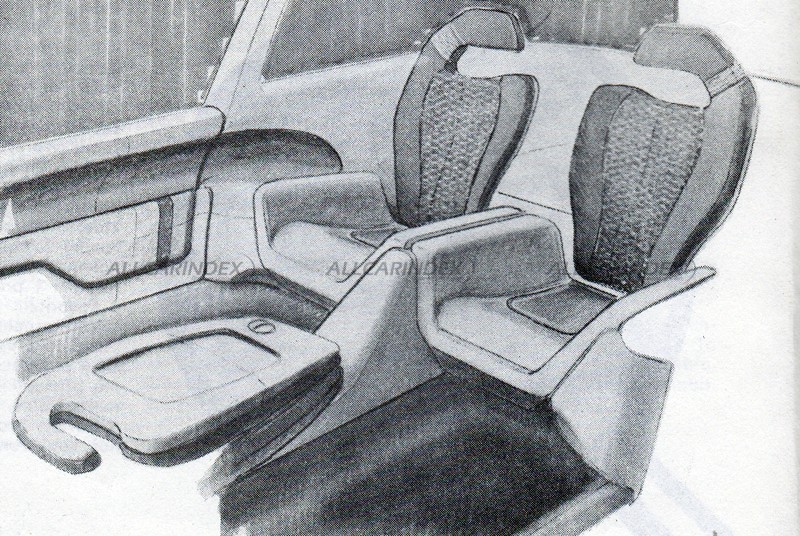
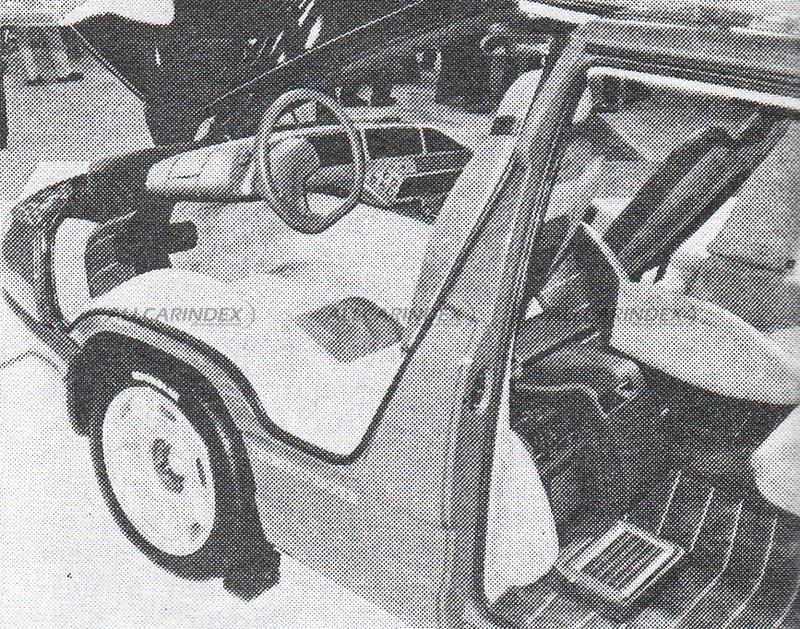
Access to the front seats required climbing over the wide sills, aided by wing doors hinged near the windscreen pillar that opened up to the nose above the headlights, avoiding the need to duck. The two-piece, deeply curved windscreen and horizontally split side glass, with the upper sections curving into the roof, added to the futuristic appearance. Rear passengers entered through sliding doors into a cabin arranged with three individual seats: two rear seats with electrically adjustable backrests and extending leg rests, plus a third seat mounted forward on the transmission tunnel that could rotate, along with the front passenger seat, to face rearward, allowing four occupants to sit facing each other, in a manner similar to the Renault Espace. The middle seat could fold into a small table. A television and video system was fitted in a console behind the driver, complemented by an audio system, alongside an electronic instrument panel and a flat-bottomed steering wheel with asymmetric spokes.
The Genesis was powered by the Lamborghini Espada's 3,929cc DOHC V12, producing 350 hp at 7,500 rpm and 392 Nm of torque at 5,500 rpm, paired with a three-speed Chrysler Torqueflite automatic transmission. It measured 4,475 mm in length, 2,000 mm in width and 1,520 mm in height, with a 2,650 mm wheelbase and front/rear tracks of 1,740 mm and 1,680 mm. The car remained a single concept.