
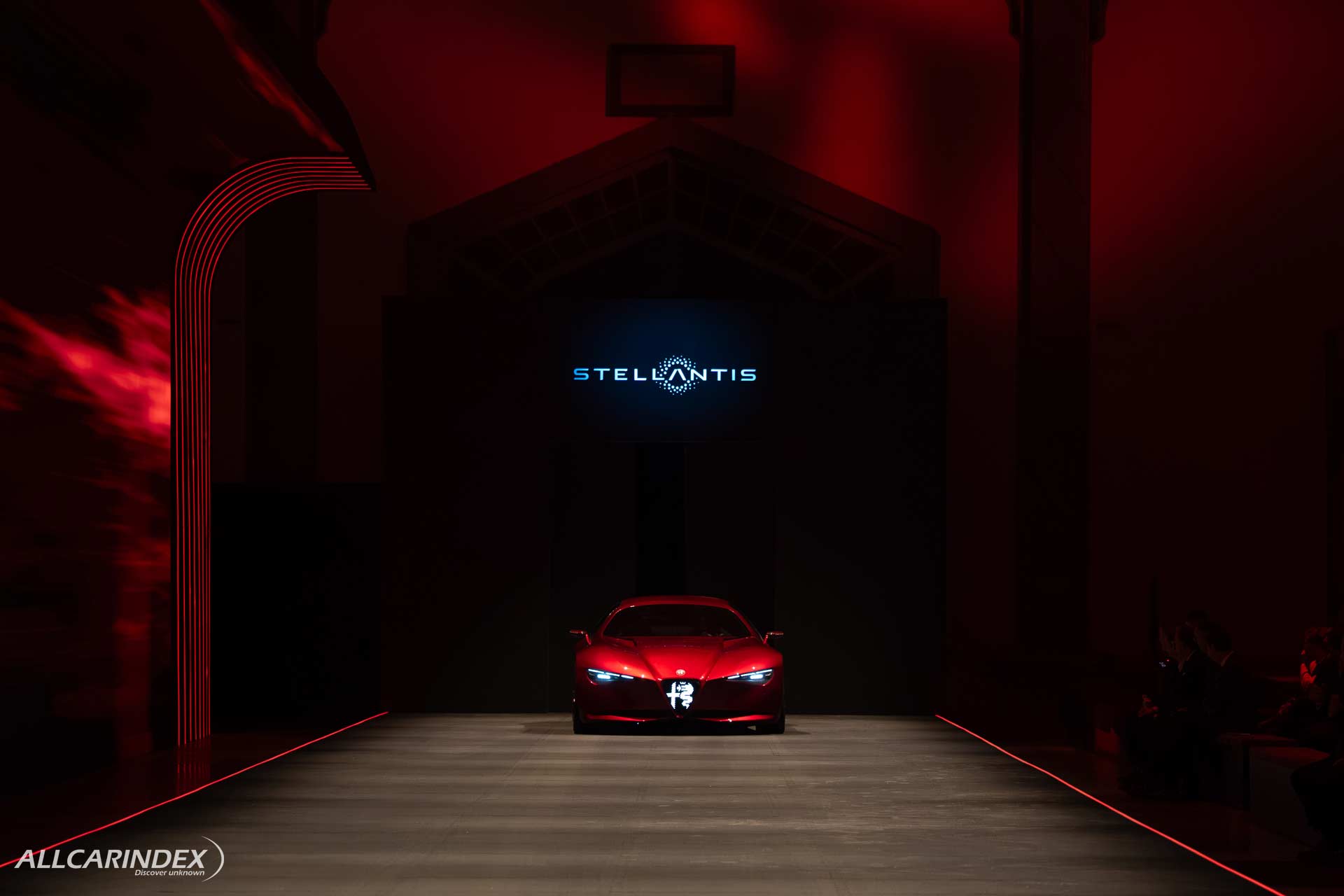

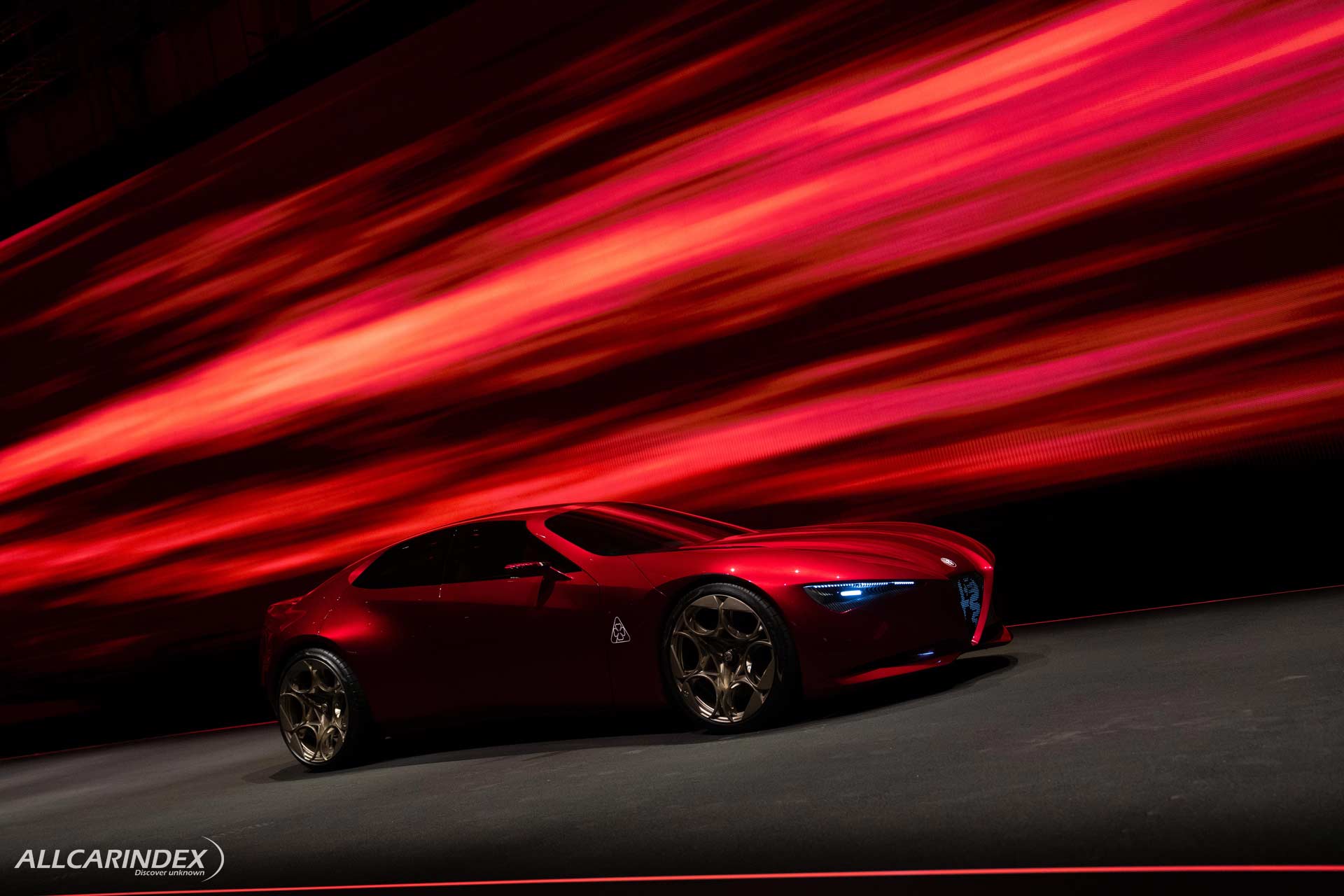
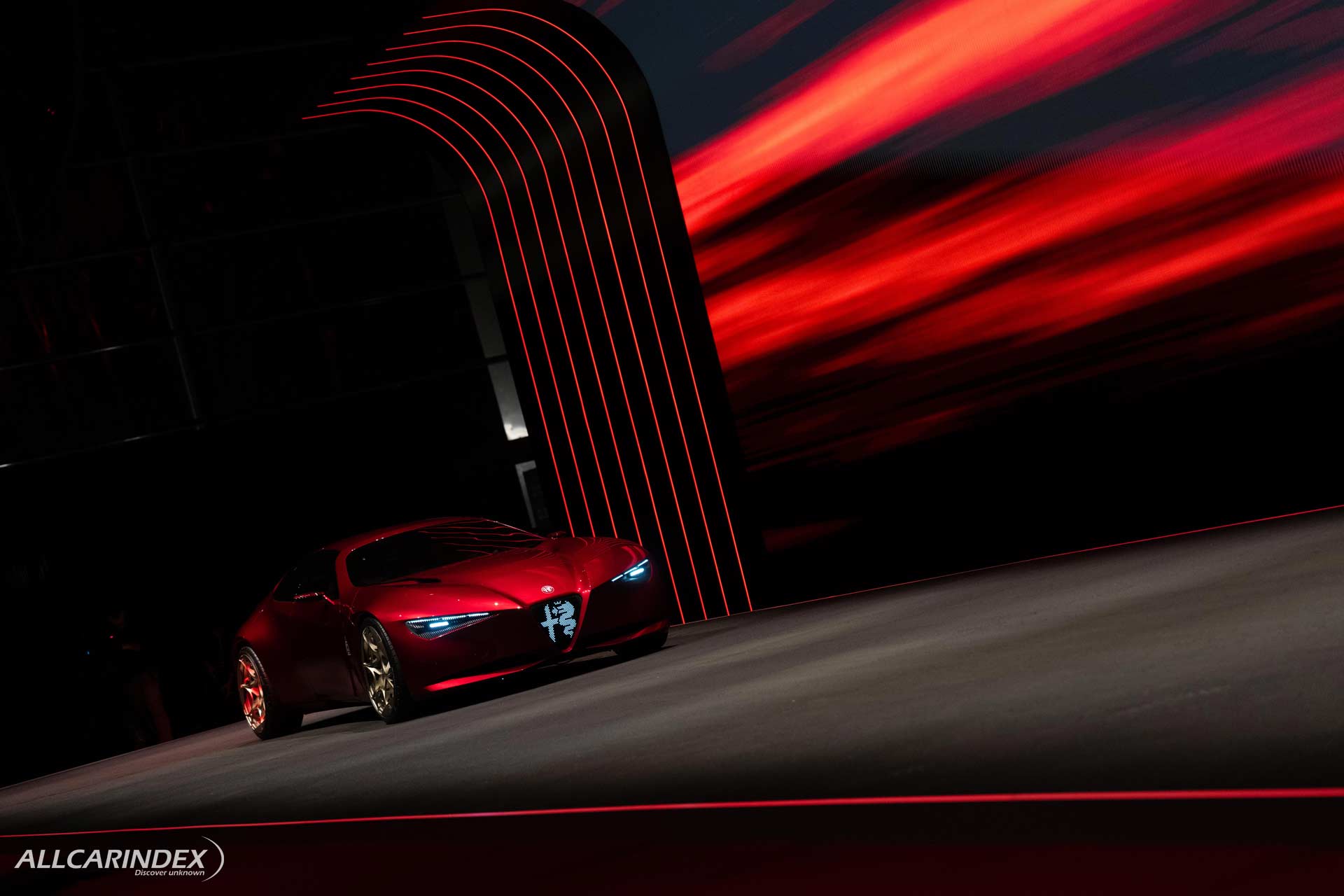
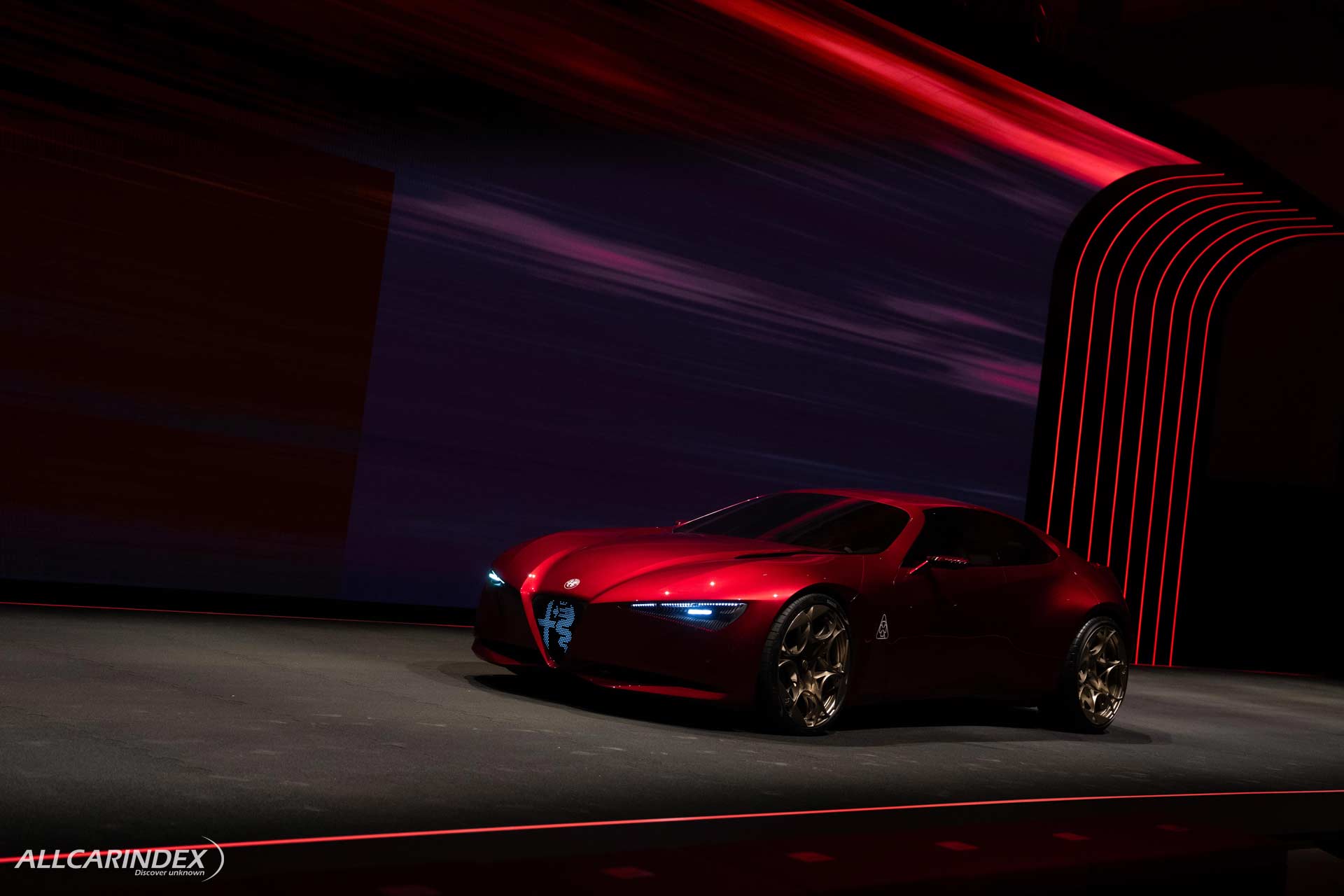
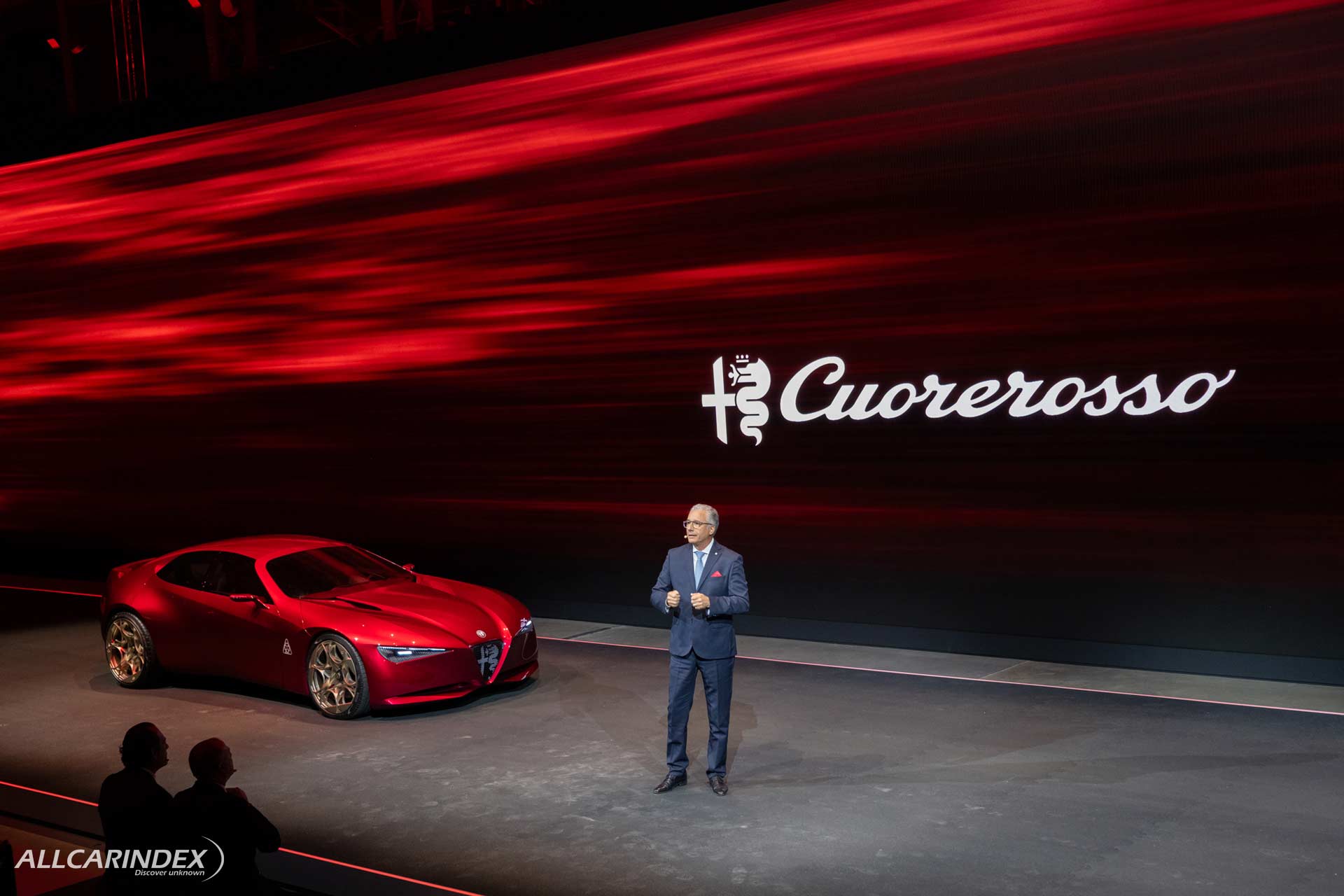
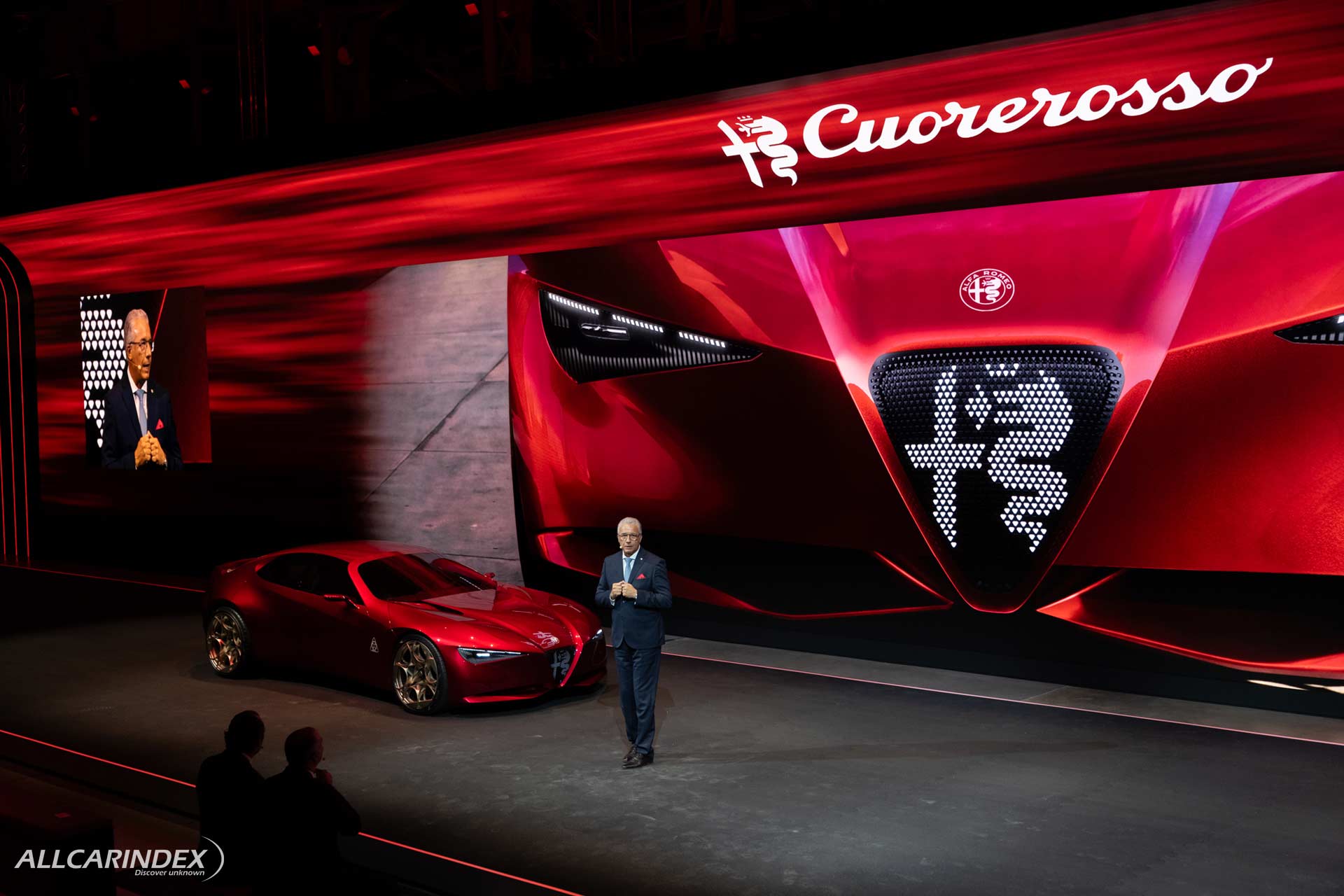
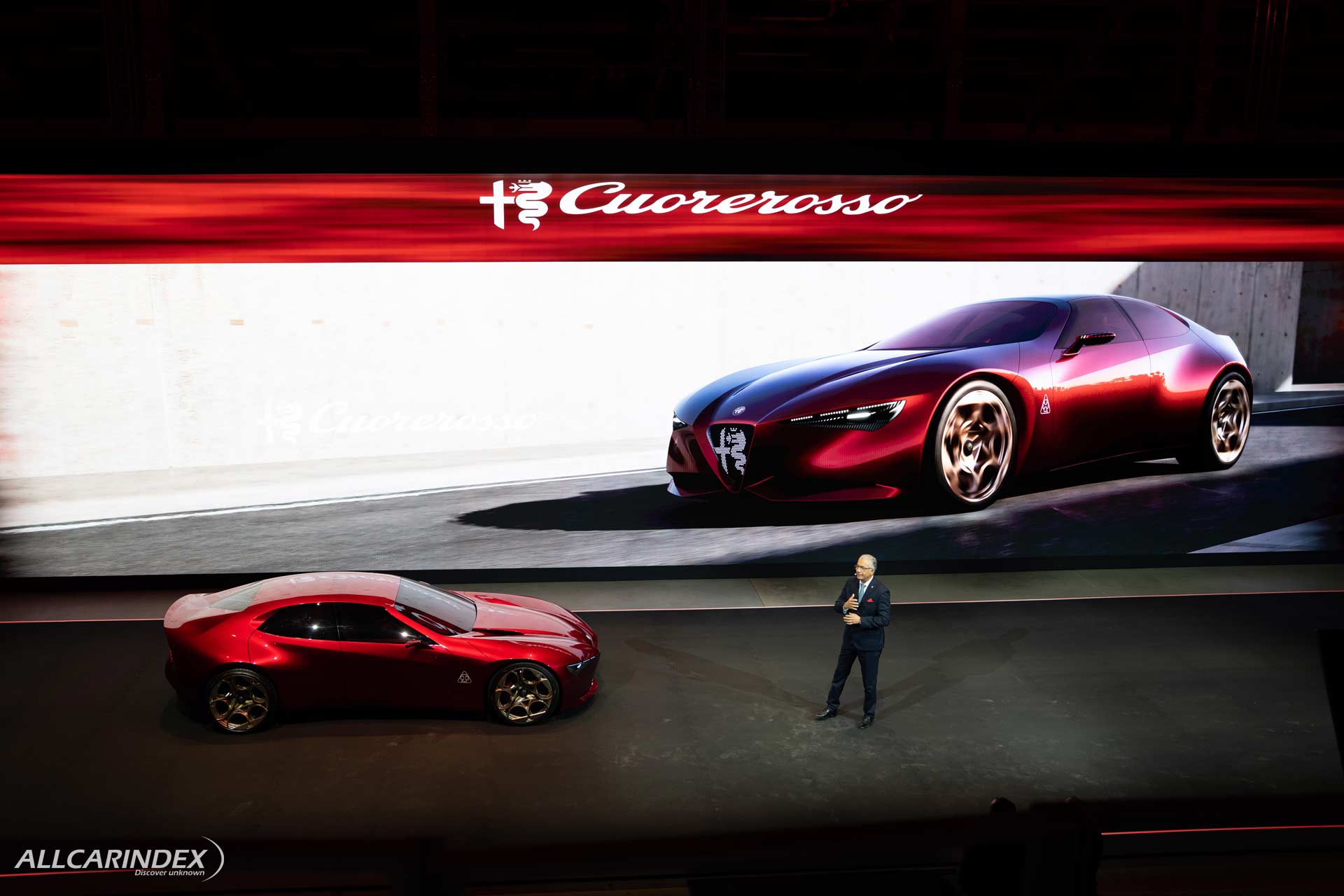
Since 1910 Alfa Romeo has been the brand of Italian sportiness, and for the people who build its cars every day an automobile has never been a tool for carrying passengers from one place to another. It is supposed to stir emotions, ignite the senses and bind the driver to the machine in a visceral manner, which the company traces back to a profoundly Italian automotive culture, one that blends artisanship, innovation and style with passion and ingenuity. Within Stellantis the marque holds the role of a Premium Sports Brand, and its task is to give a voice to sportiness of the third millennium that is also efficient, so the arrival of electrification is the moment when it has to explain how this mission will go on. The explanation was delivered at the 2026 Paris Motor Show, where a spectacular concept car made its worldwide debut. We are talking about the Alfa Romeo Cuorerosso.
The name joins Heart, which everybody reads as the sign of emotions, with Red, a synonym for sportiness, and the two are meant to beat in unison. Alfa Romeo is clear about what the car is not: it is neither a preview of a production model nor a simple styling exercise, but a manifesto meant to inspire the models that follow and to show how the Biscione brand will approach the new era. Three pillars hold it together. The first is Italy, with its sartorial mastery, long design tradition and aesthetic taste, the second is sportiness, understood as a push towards dynamism and the joy of driving, and the third is the colour red, intrinsic to the history of the marque. All of them are woven into shapes, proportions, materials and design solutions by the same people who produce Alfa Romeo cars every day for Alfisti all over the world. Their conviction is that a car is chosen first by an instinct coming from very deep inside, and only afterwards does reason confirm it. Without a heart, they say, there would be nothing but machines.
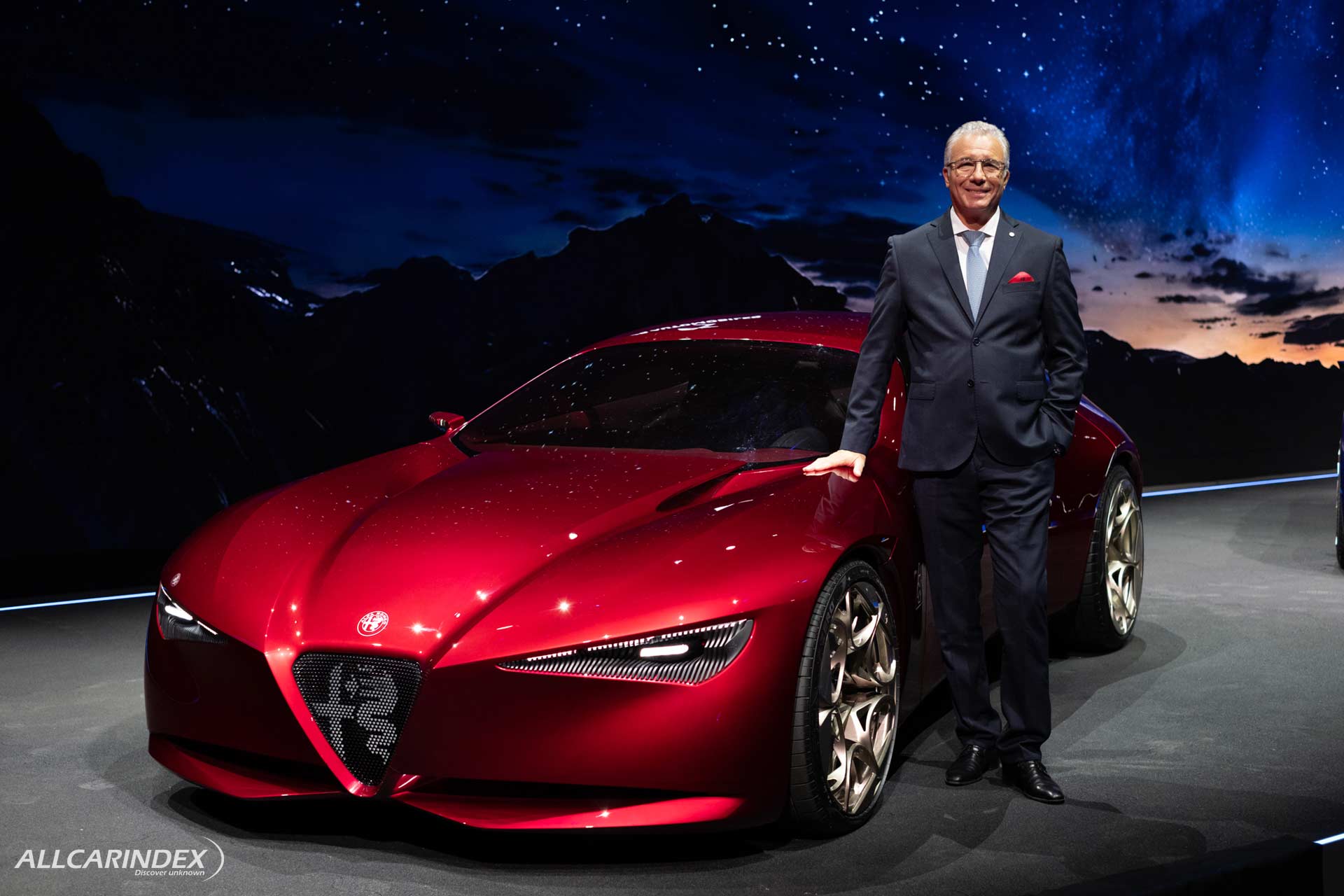
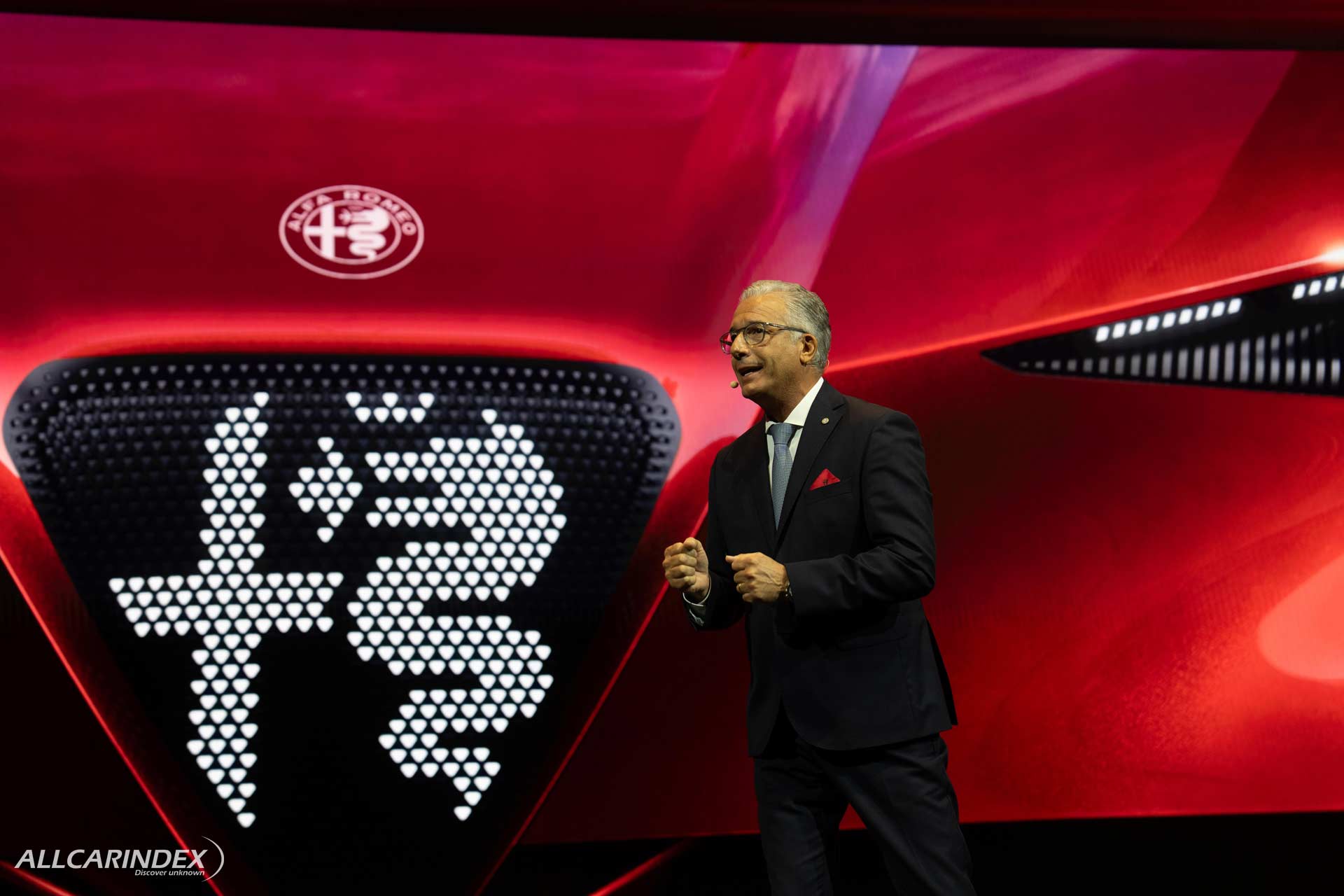
Mr Santo Ficili, CEO of Alfa Romeo and Maserati, describes the human-machine connection, nourished by a culture of passion, sportiness and the Italian spirit, as the thing that makes each car an Alfa Romeo. In his words the identity is carried into a future open to different energy solutions, with technology, function and quality always serving emotions and driving pleasure. This is what he calls Bellezza Necessaria, a term coined by the brand itself, meaning cars made for those who love to drive, able to interpret their time and become icons at once. In practice it is a design philosophy that eliminates the superfluous, reduces every component to the essentials and gives each of them a precise function, all of it lifted by materials, workmanship and finishes of the highest level. Quality, technology, functionality and aesthetics are supposed to melt into a single design language, and the approach leans on Italy’s great tradition of sculpture, where beauty is considered to be already waiting inside the material for its release.
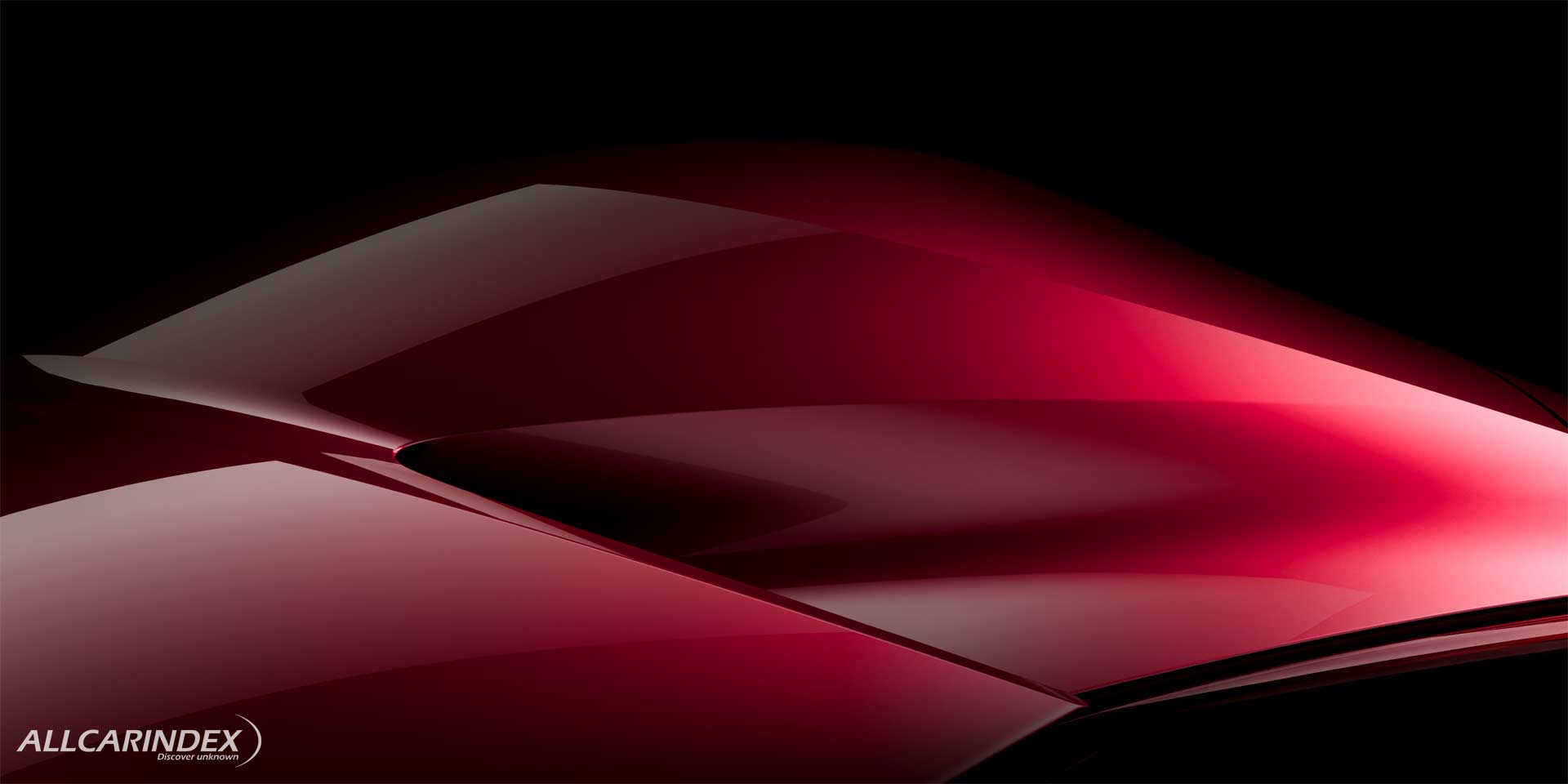
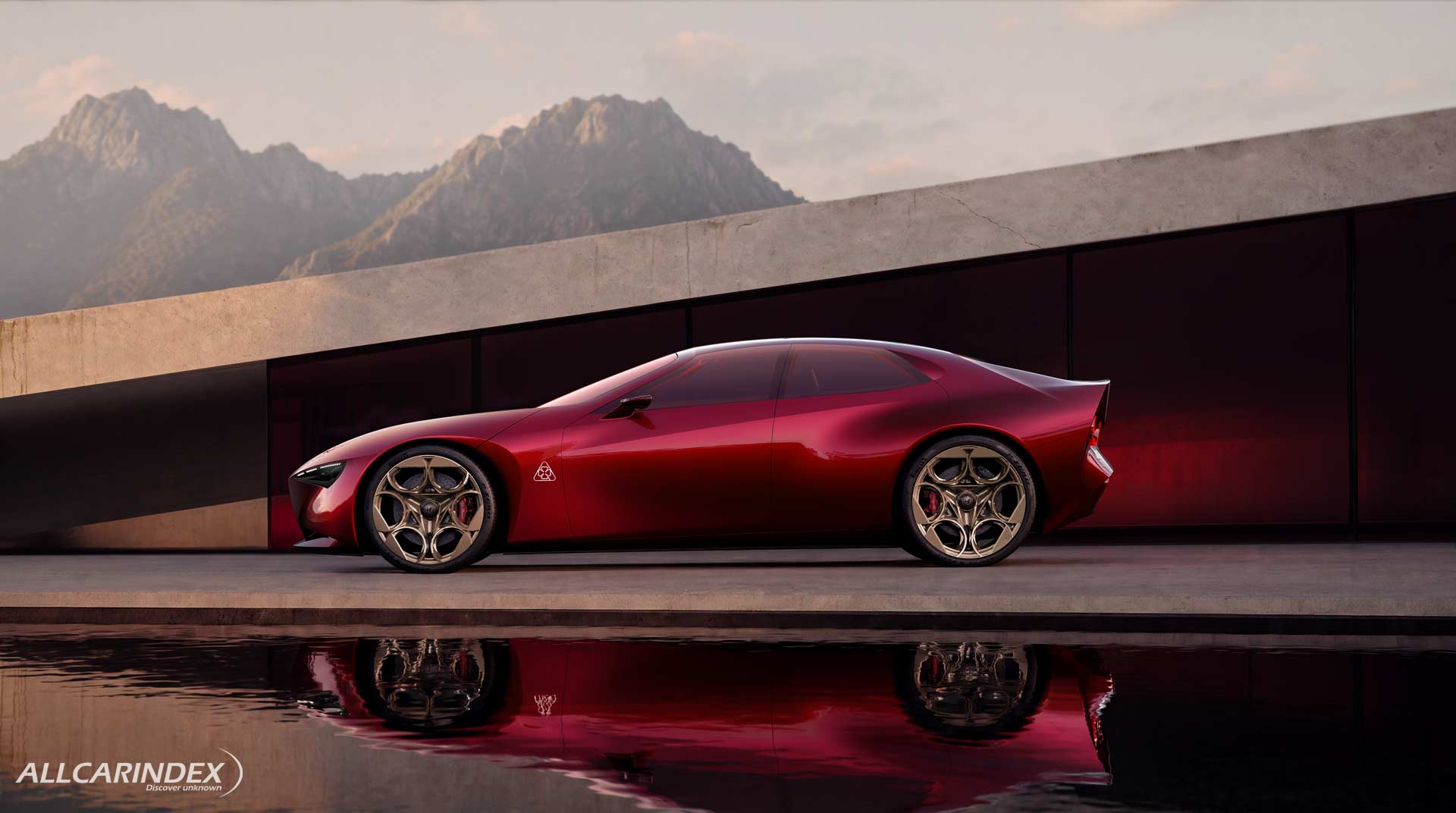
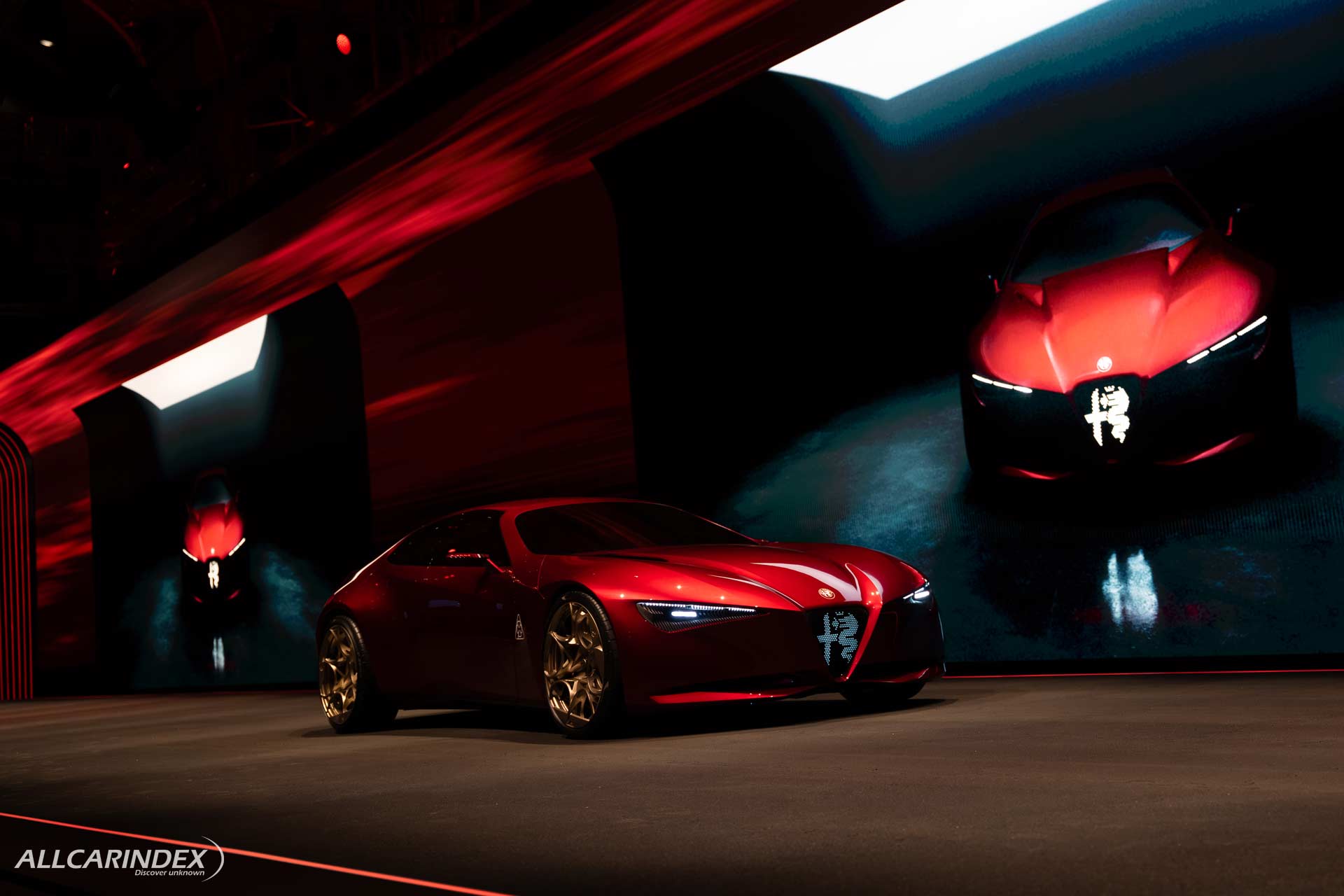
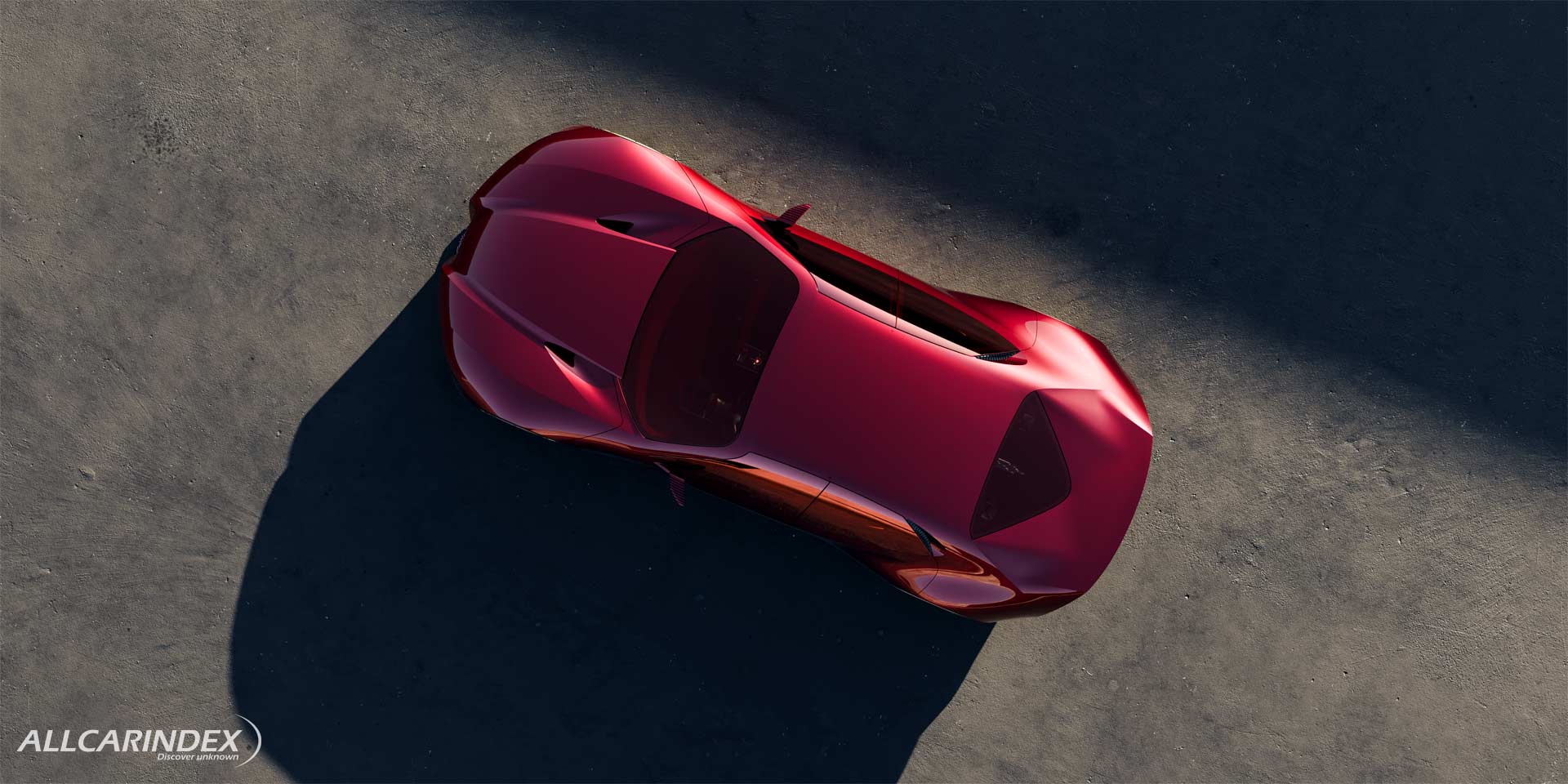
The Alfa Romeo Centro Stile followed this idea quite literally. After only a week or two spent on the first sketches, the designers moved straight to three-dimensional modelling and treated the project as one solid block, without wheels, glazing, visuals or details at the beginning. Needless to say that it was a deliberately radical gesture, taken to keep attention on theme, proportions and volumes while the superfluous was removed step by step until the form appeared. What came out is described as a living, monolithic and continuous sculpture, with surfaces that merge like liquid metal and lead the eye along the entire body without interruption, giving an impression of movement even when the car stands still. The ambition was to make an object beautiful in itself, a sculpture able to exist independently of its automotive nature. A profoundly Italian way of working, as the company puts it.
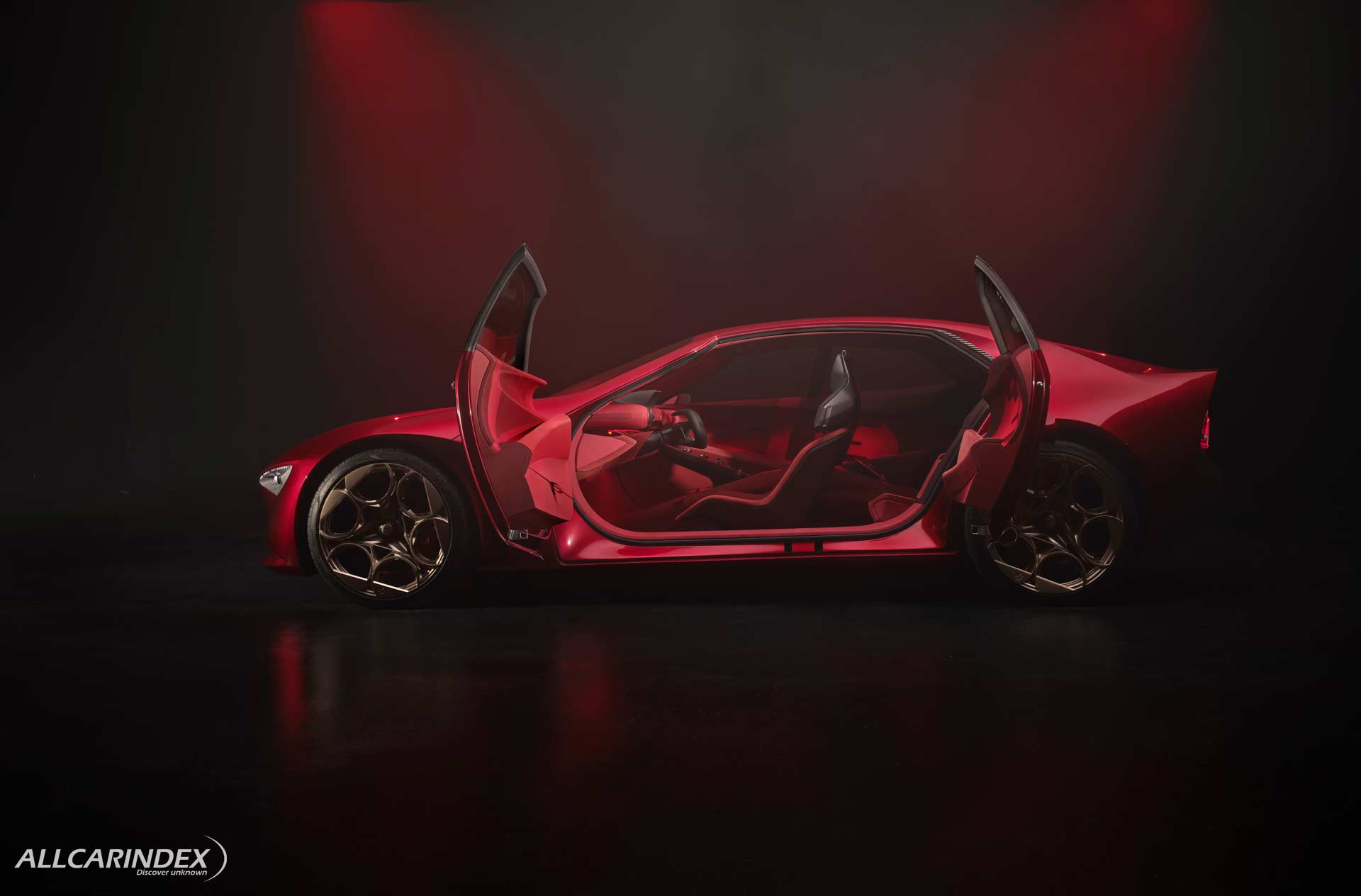
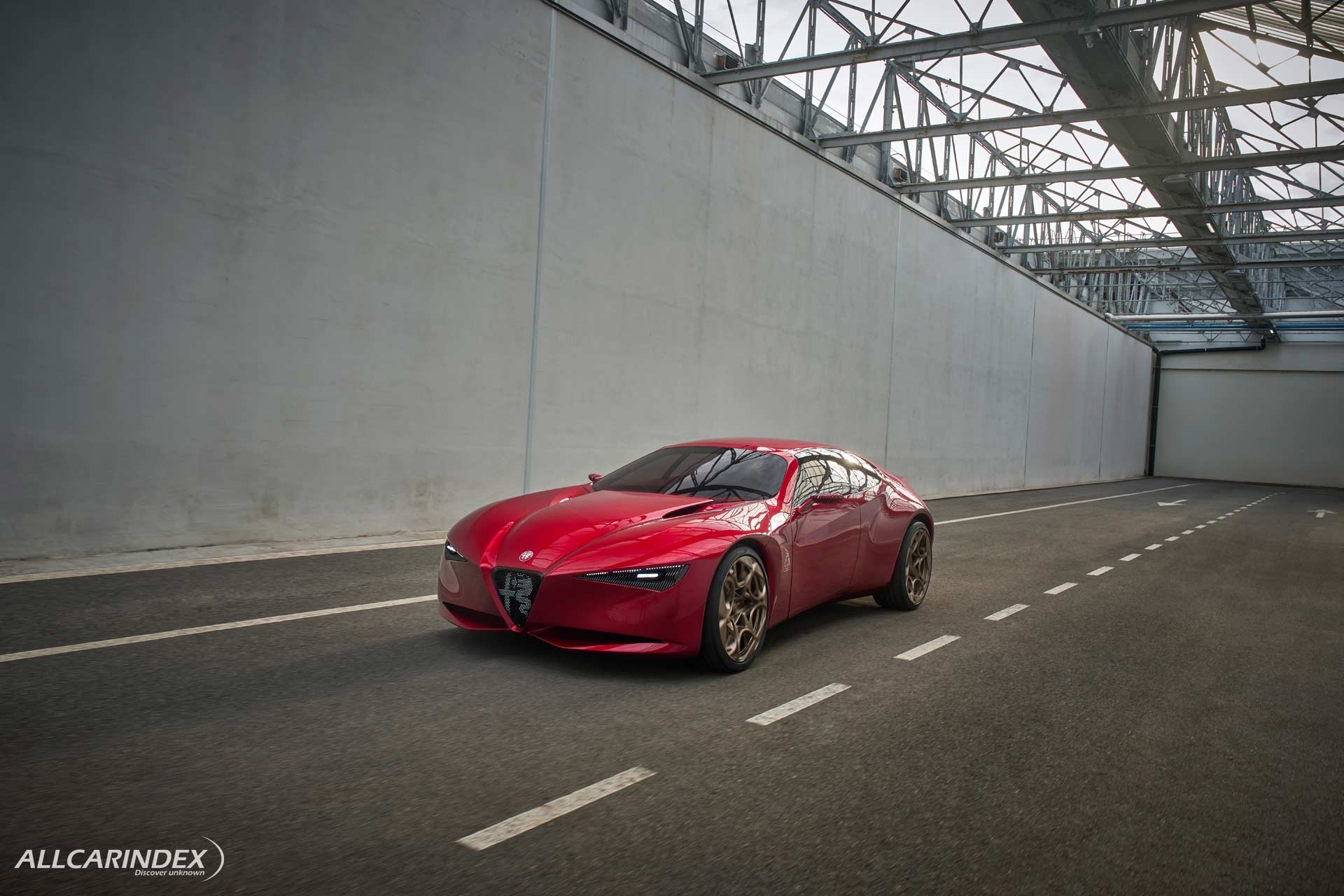
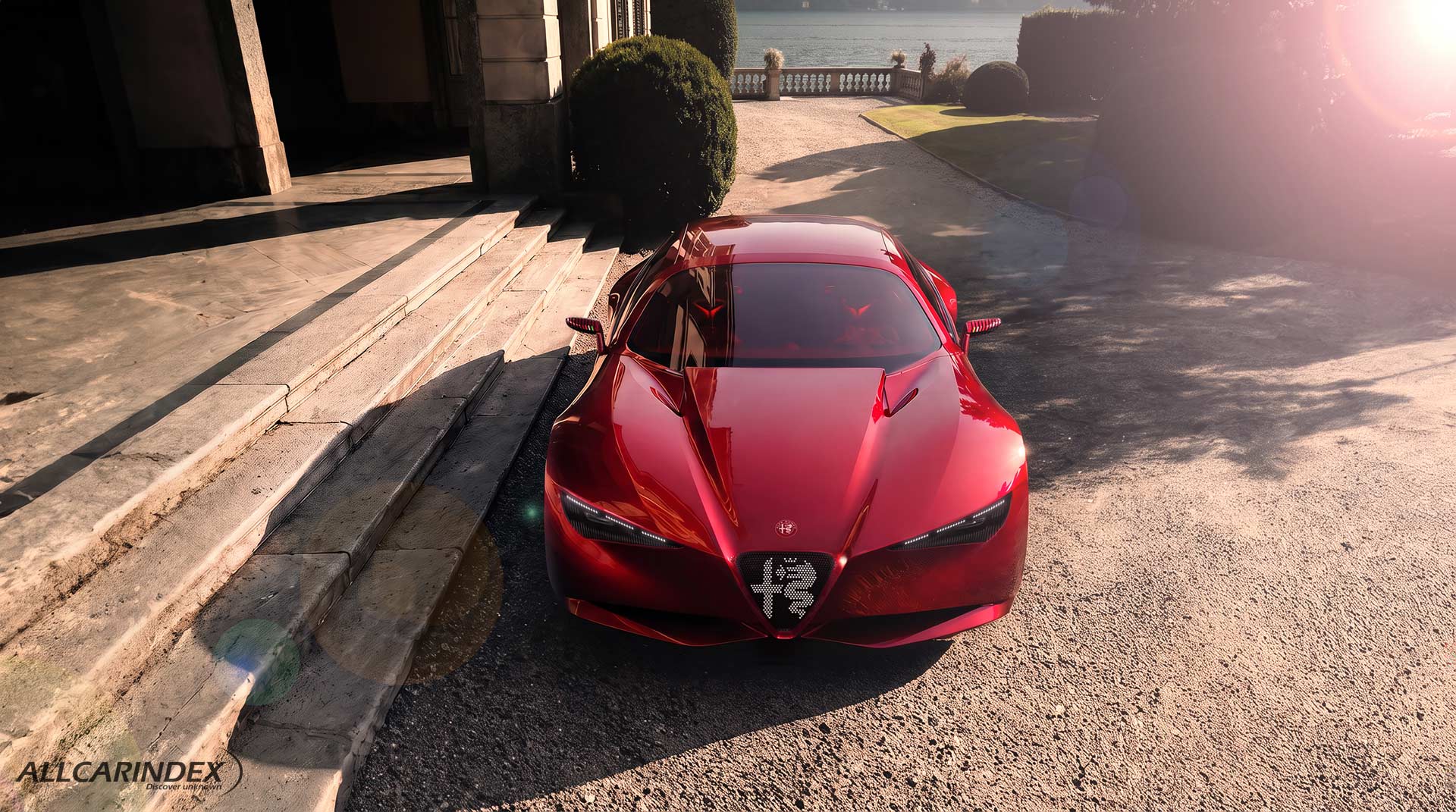
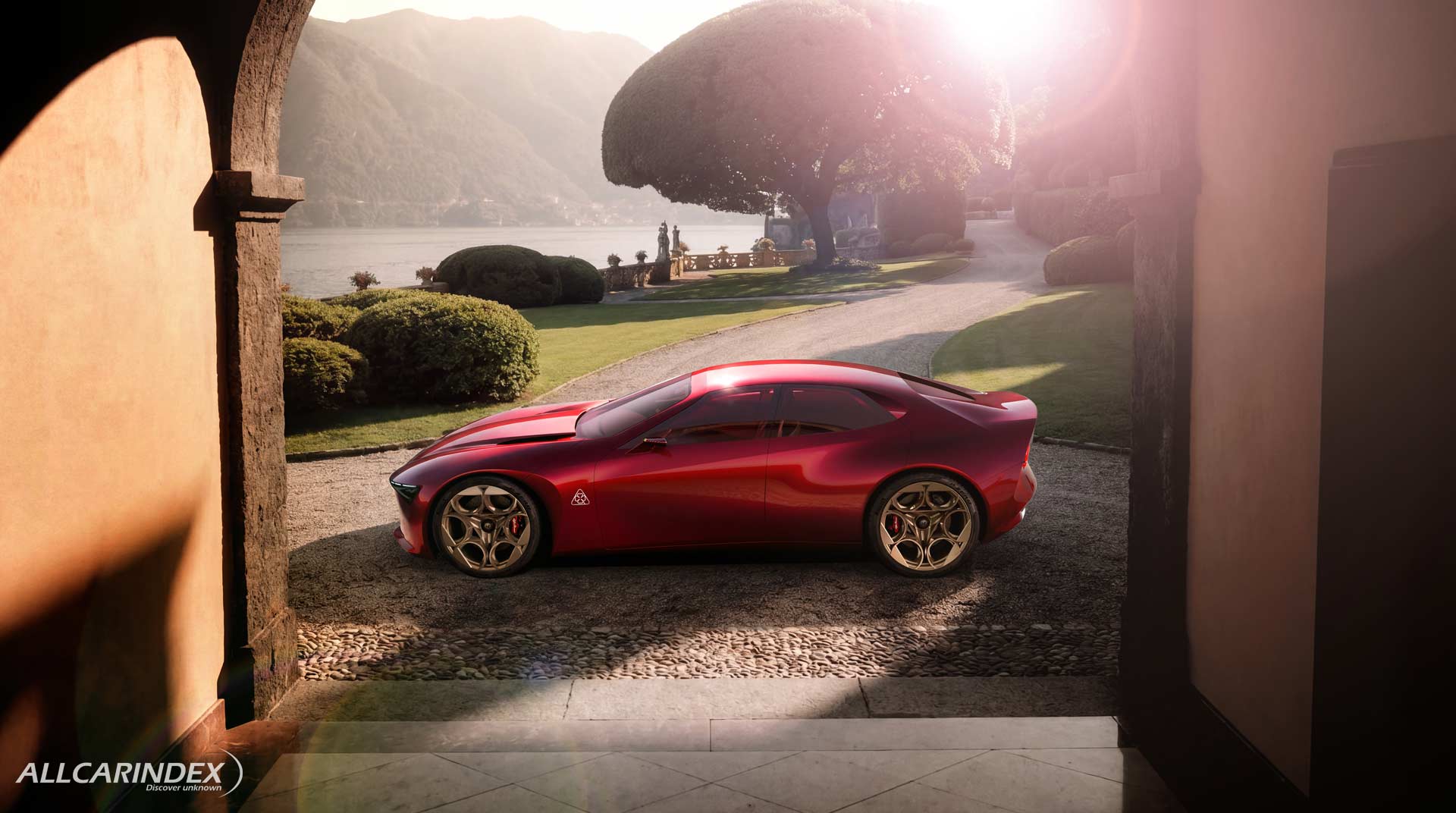
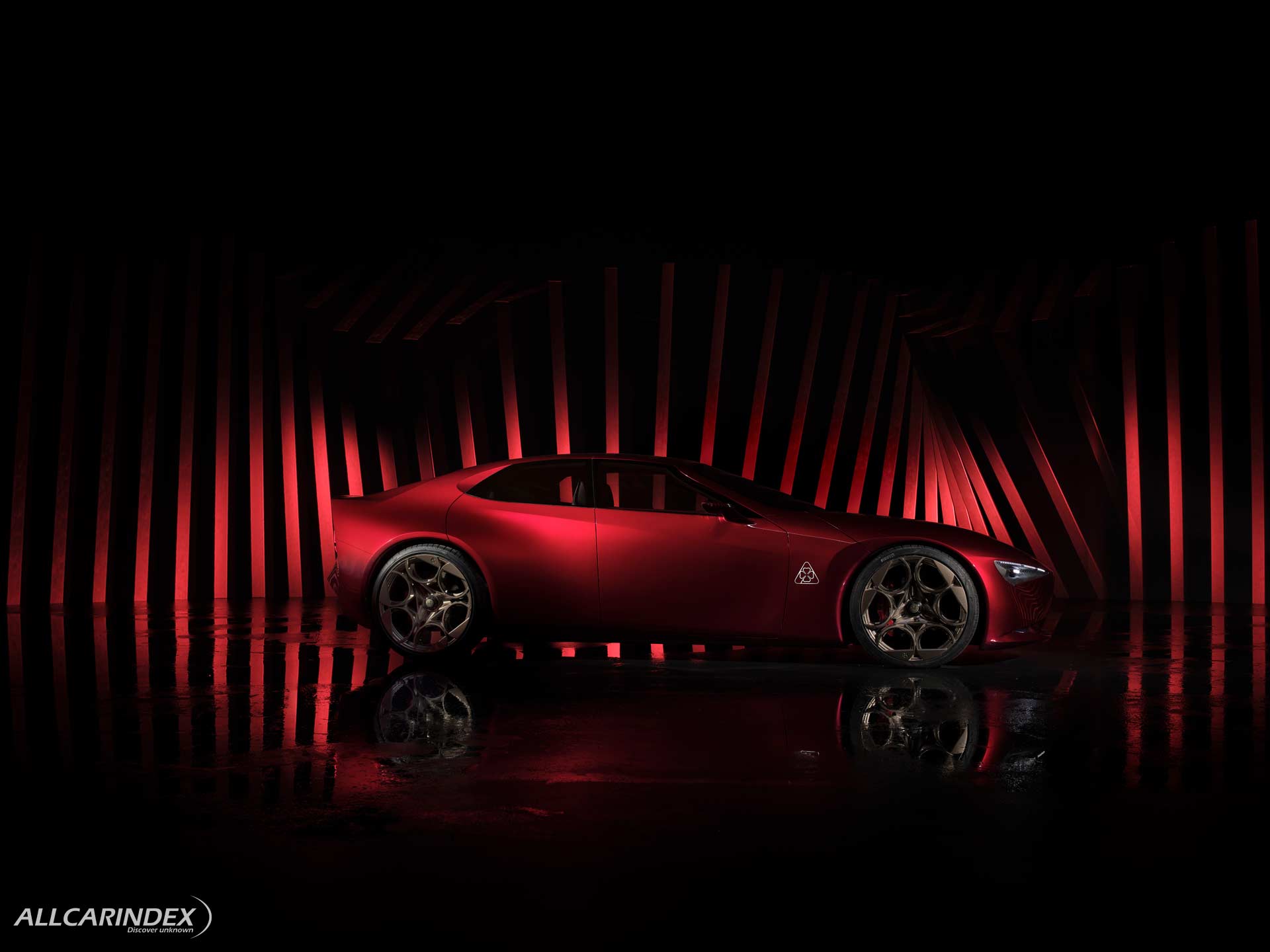
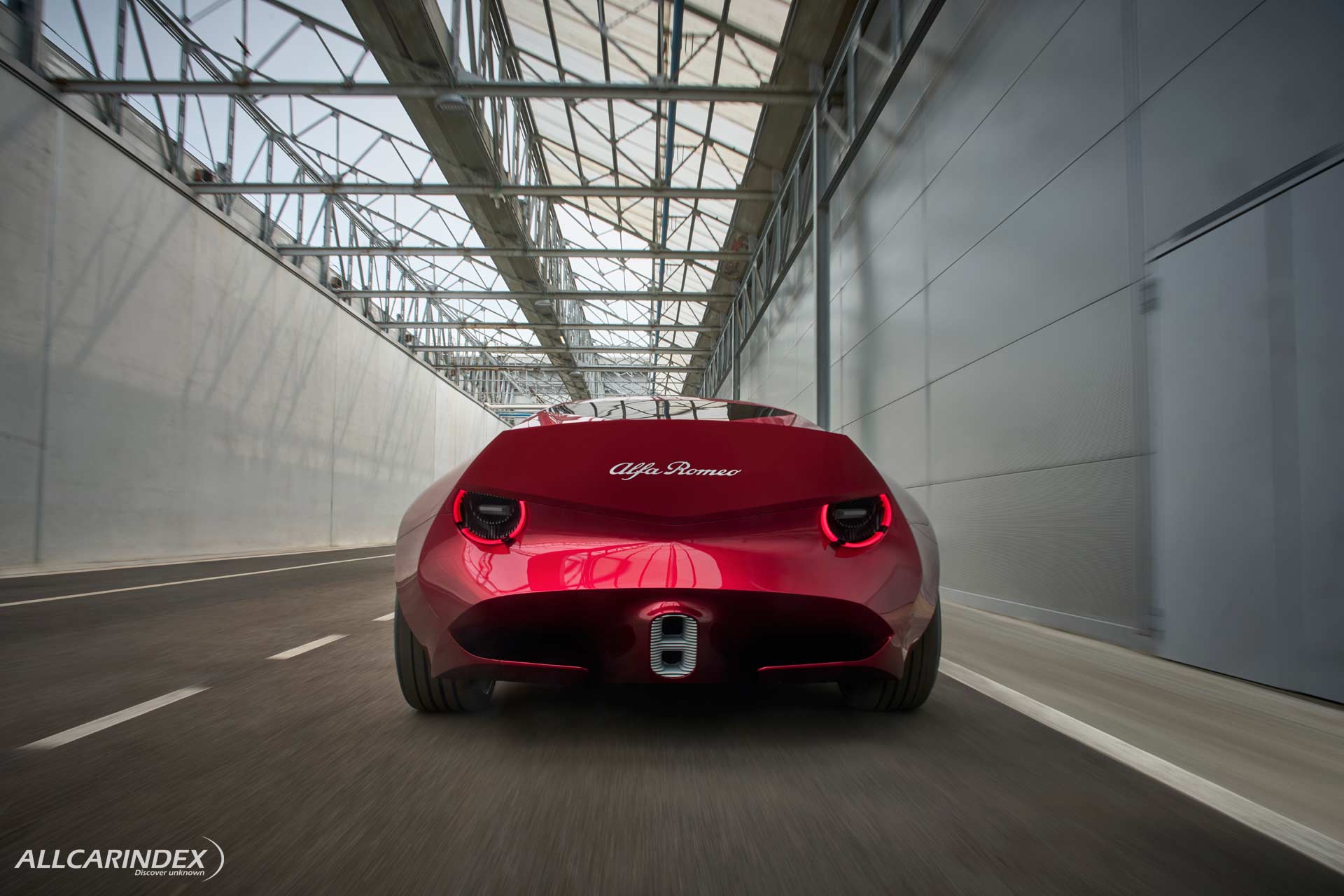
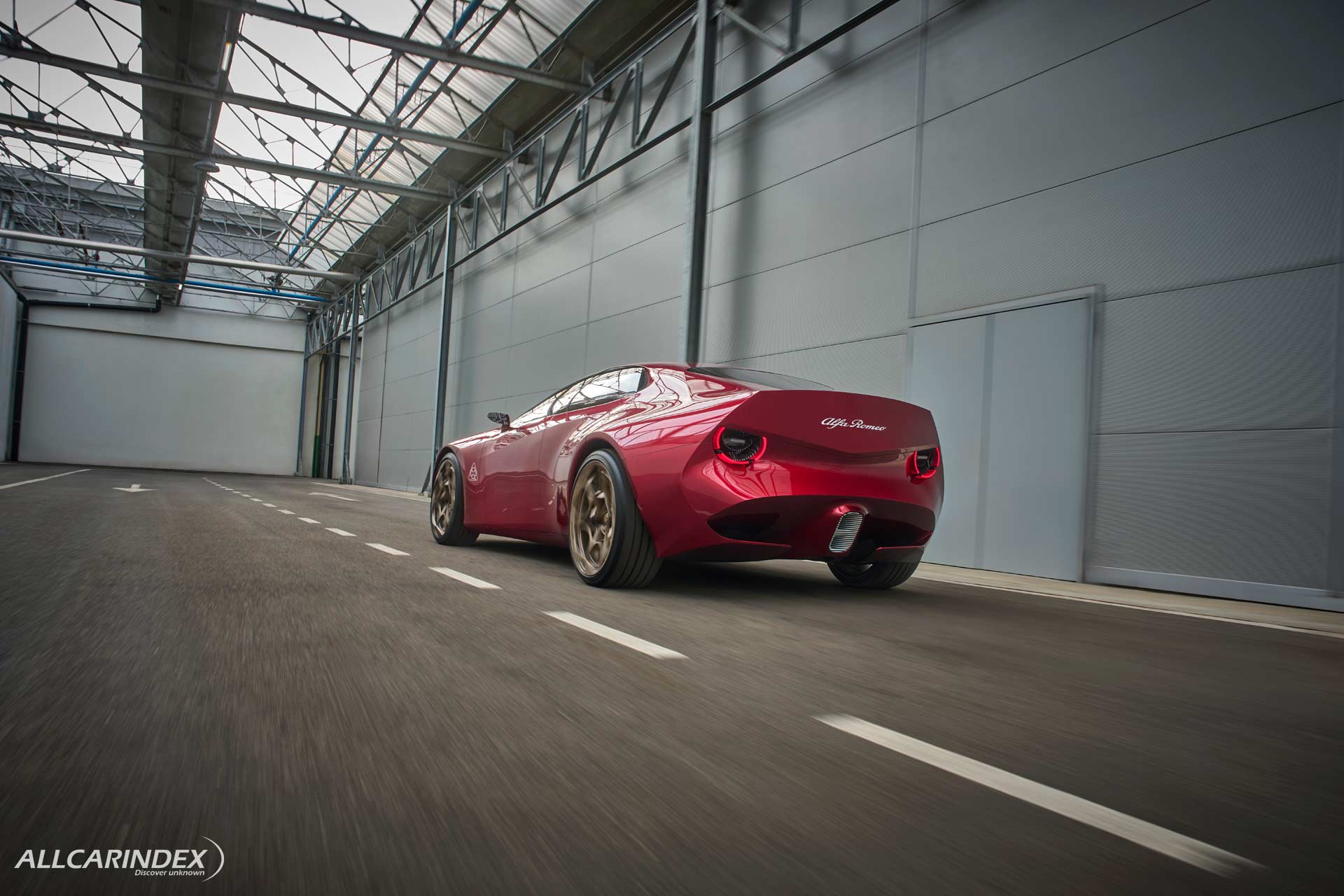
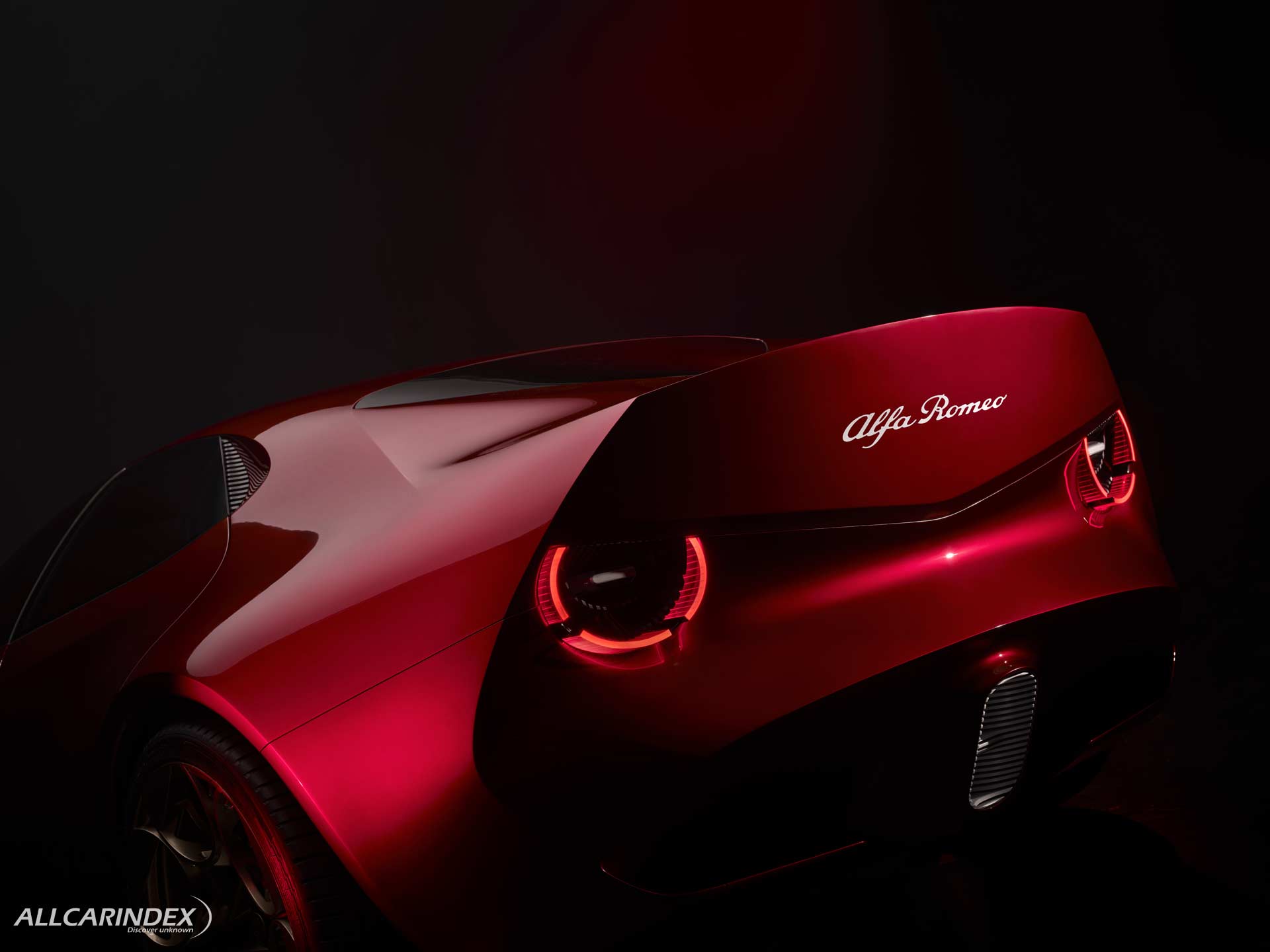
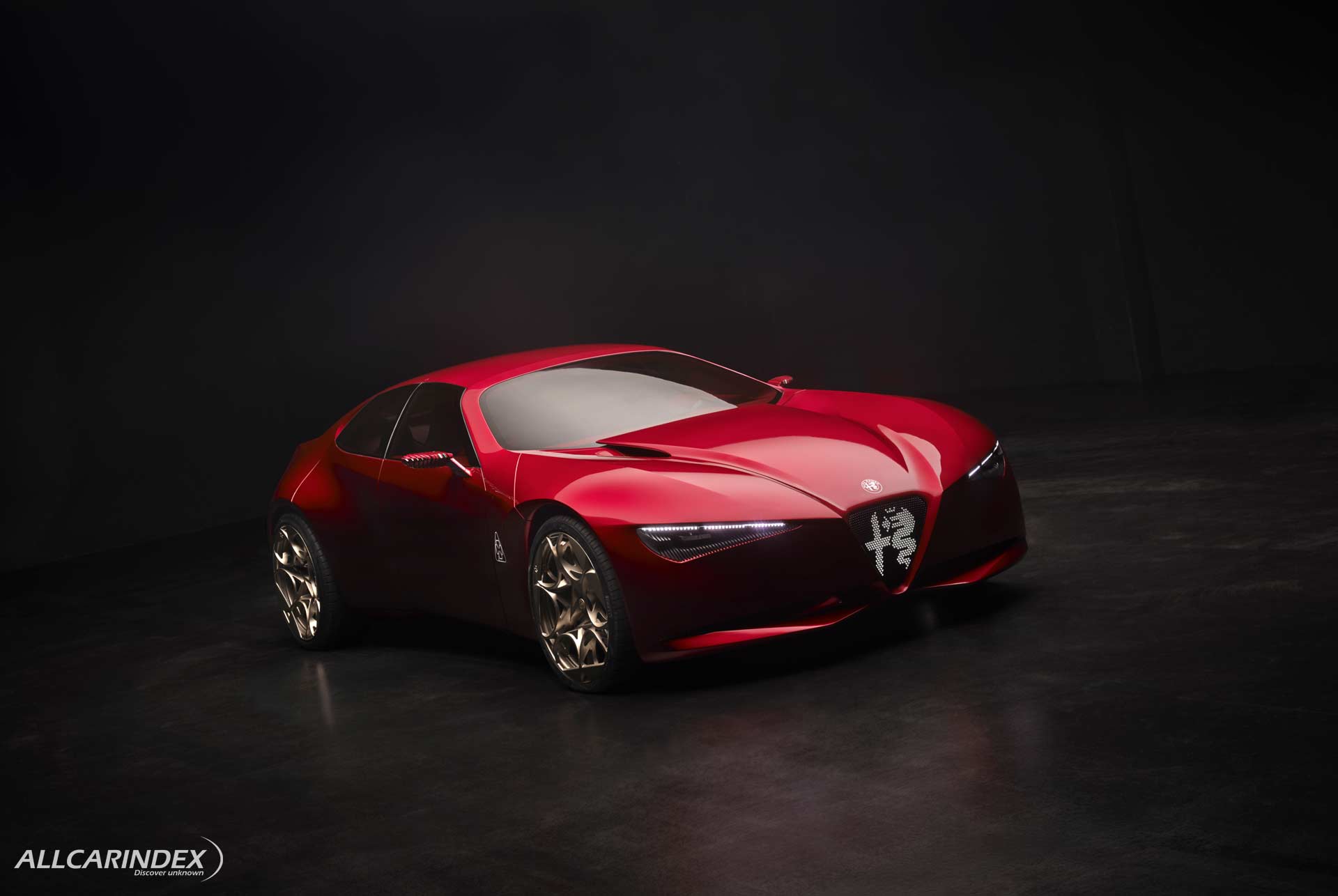
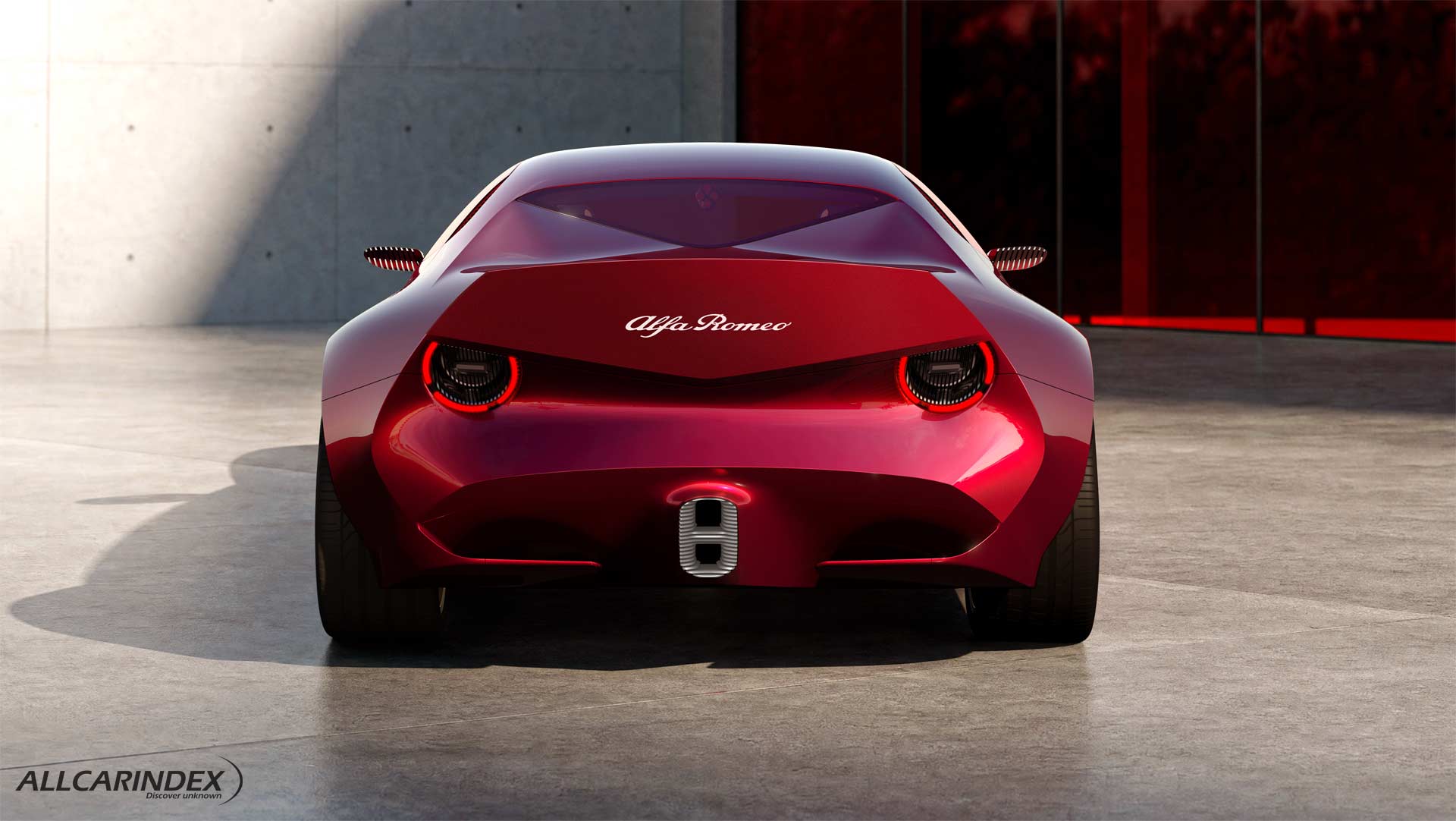
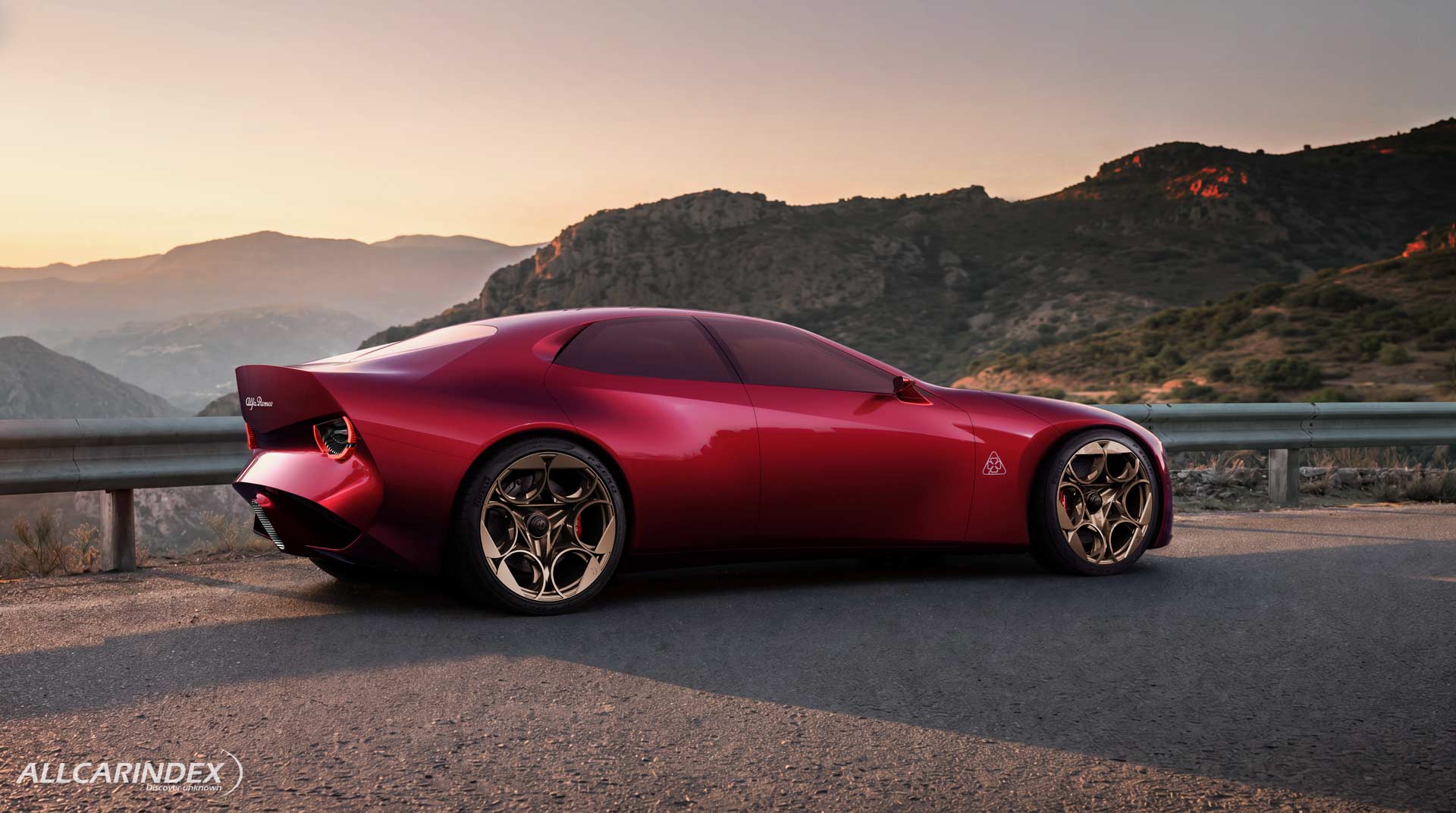
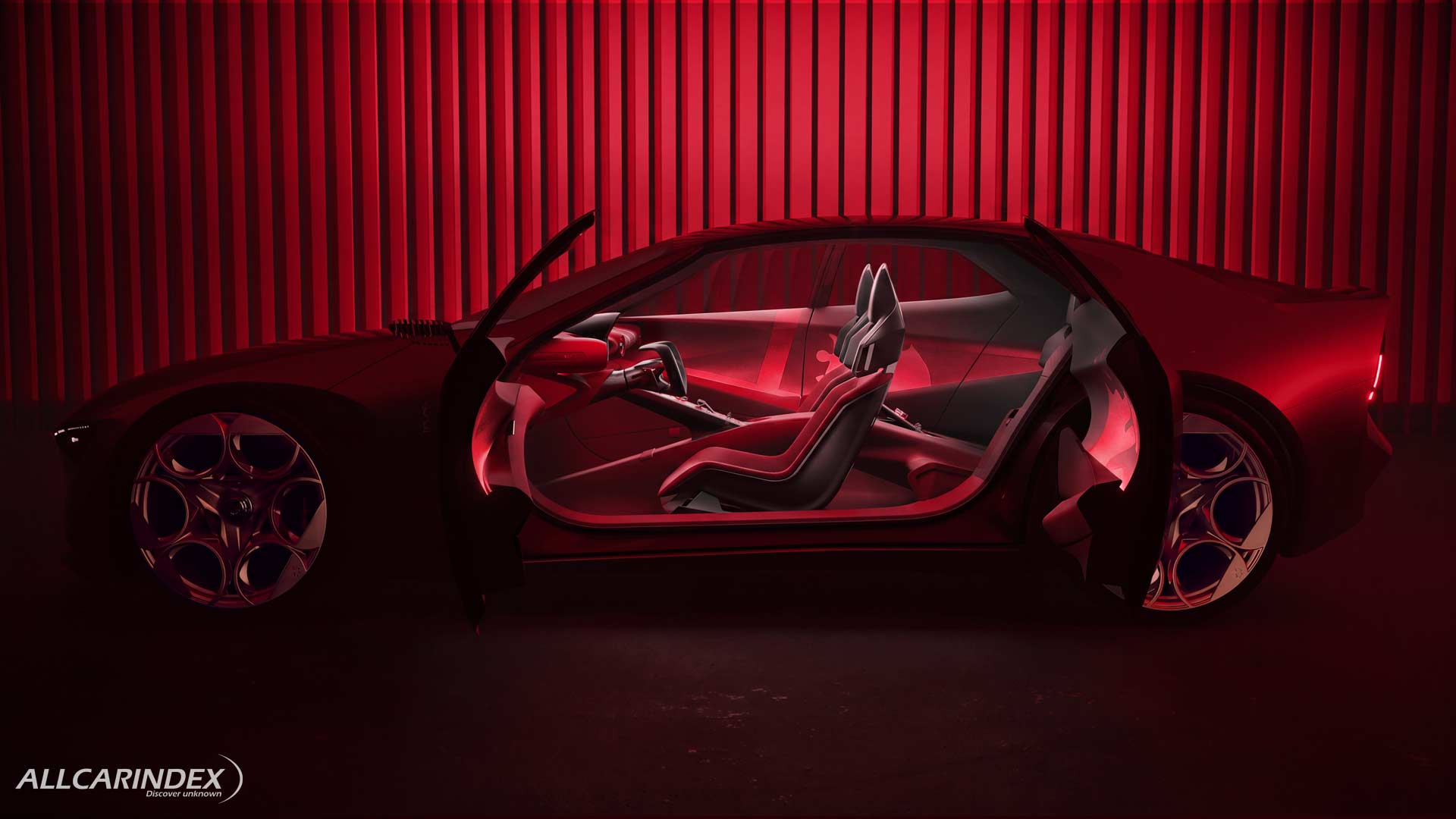
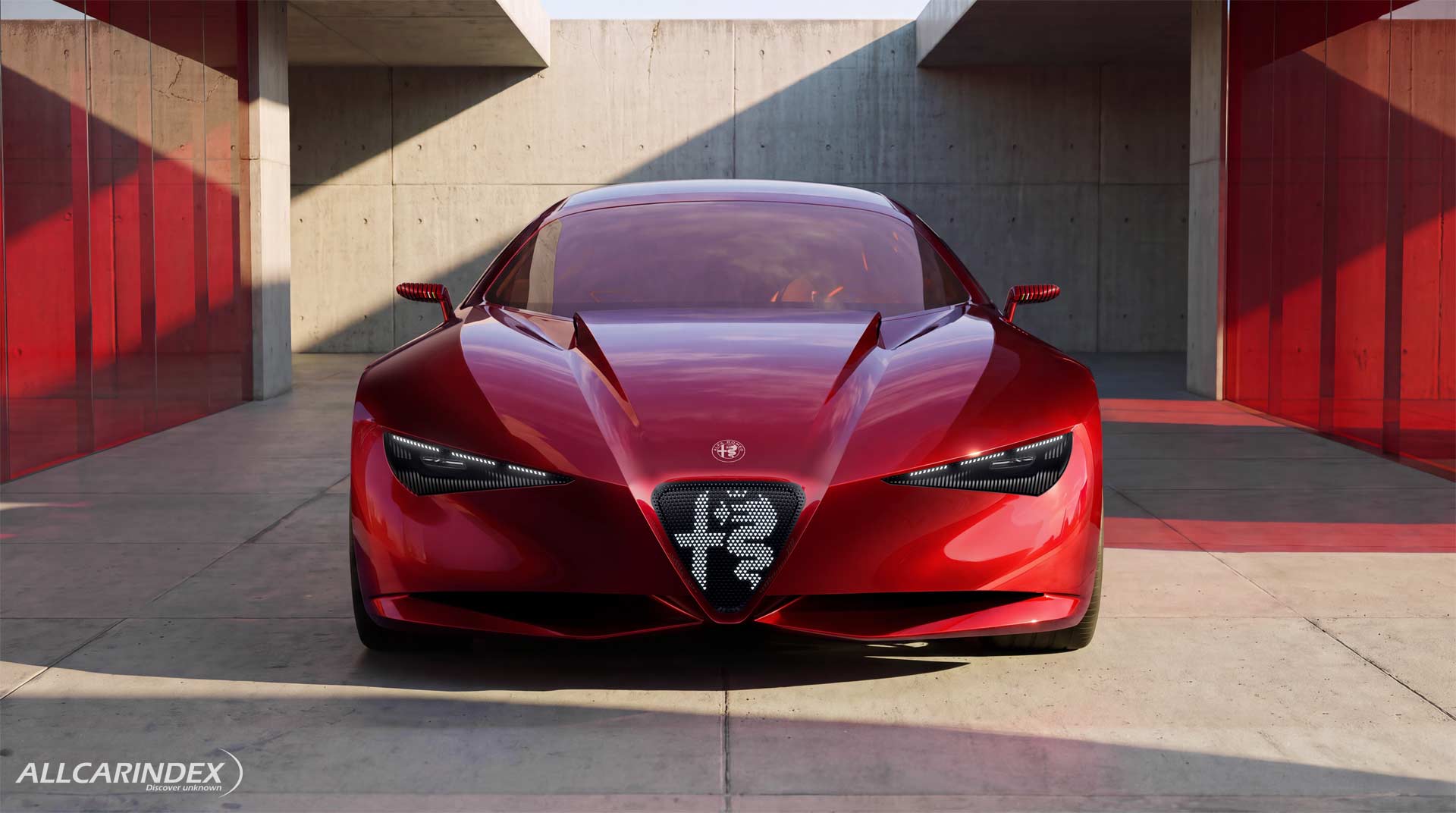
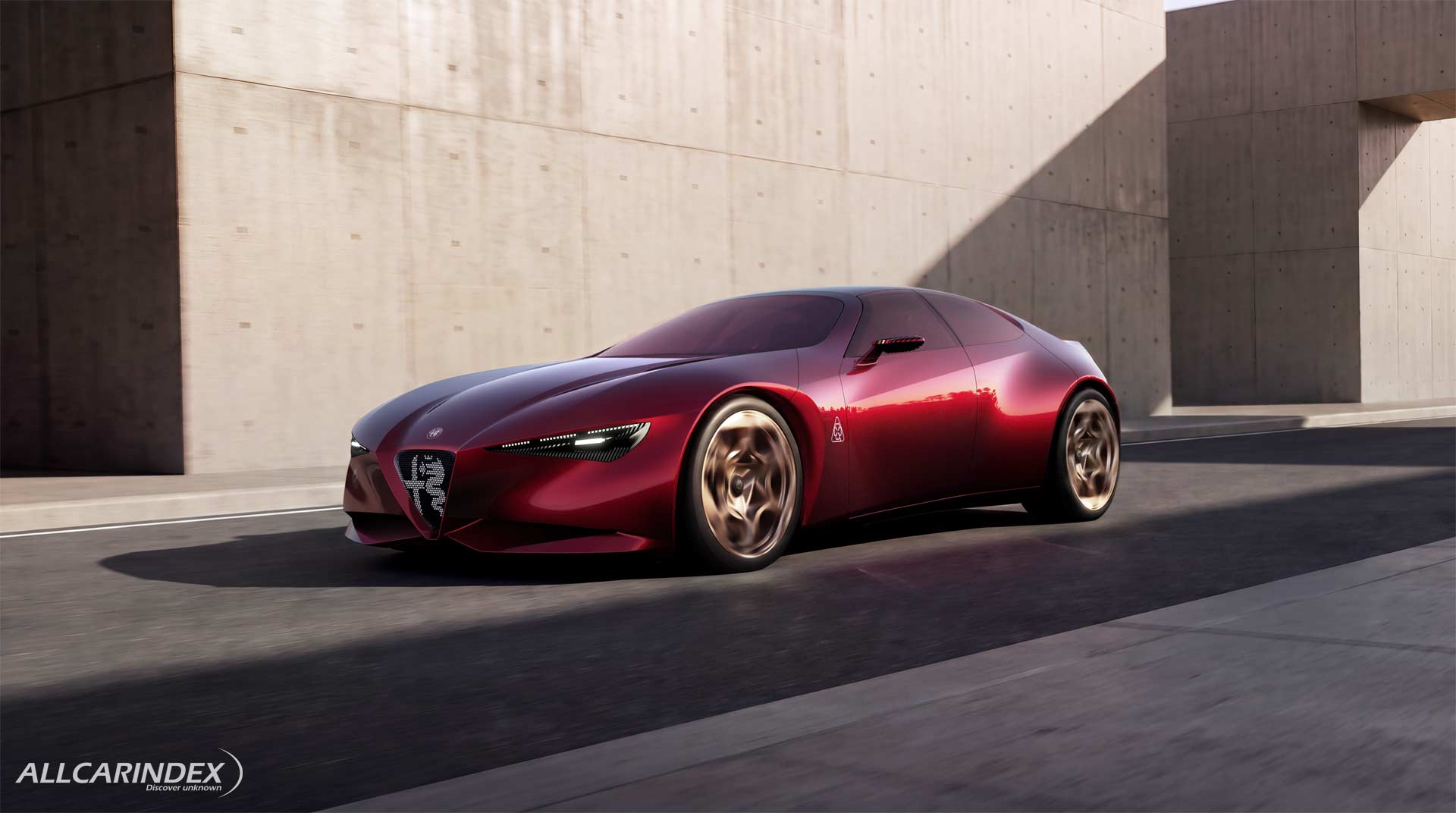
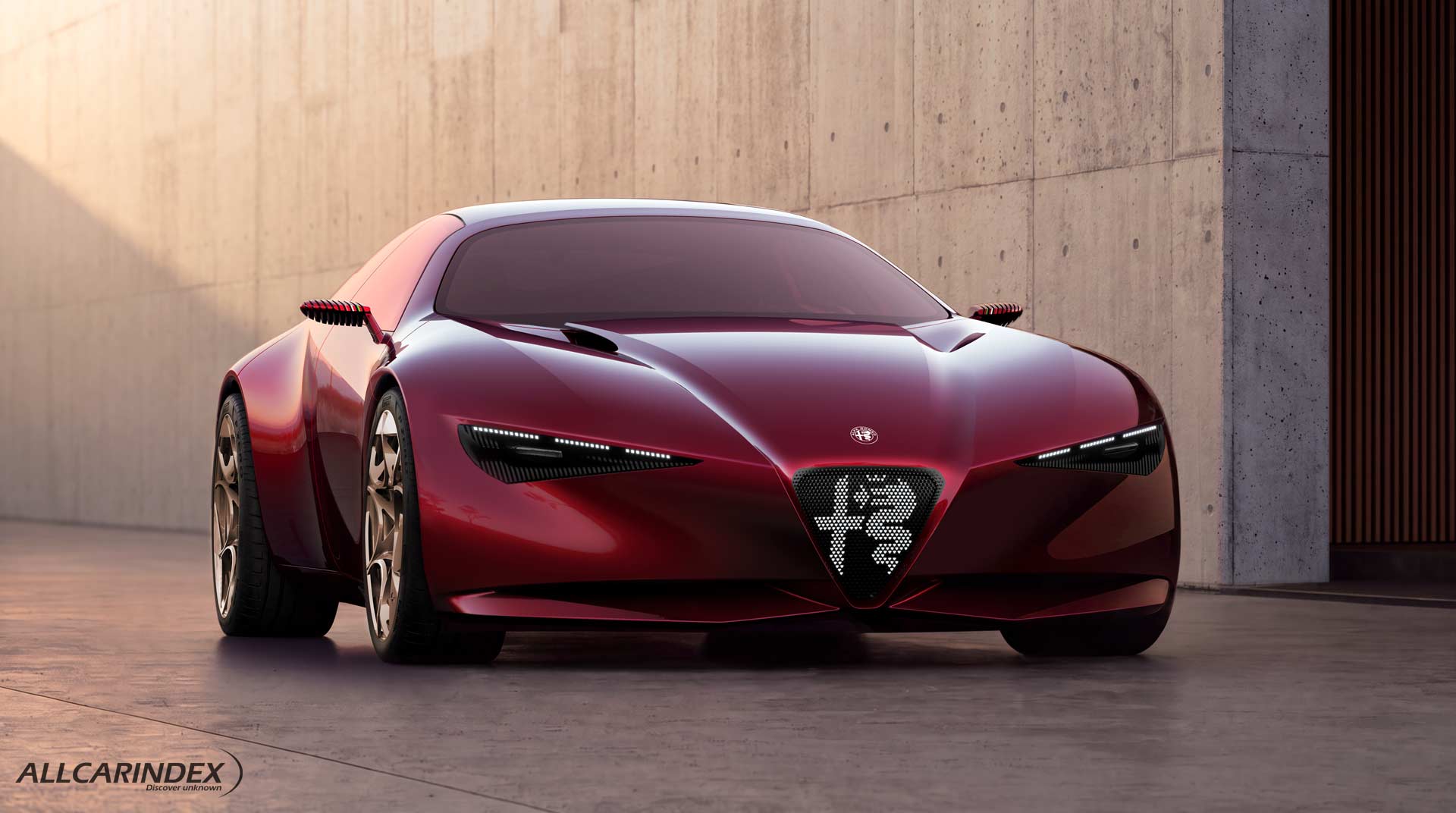
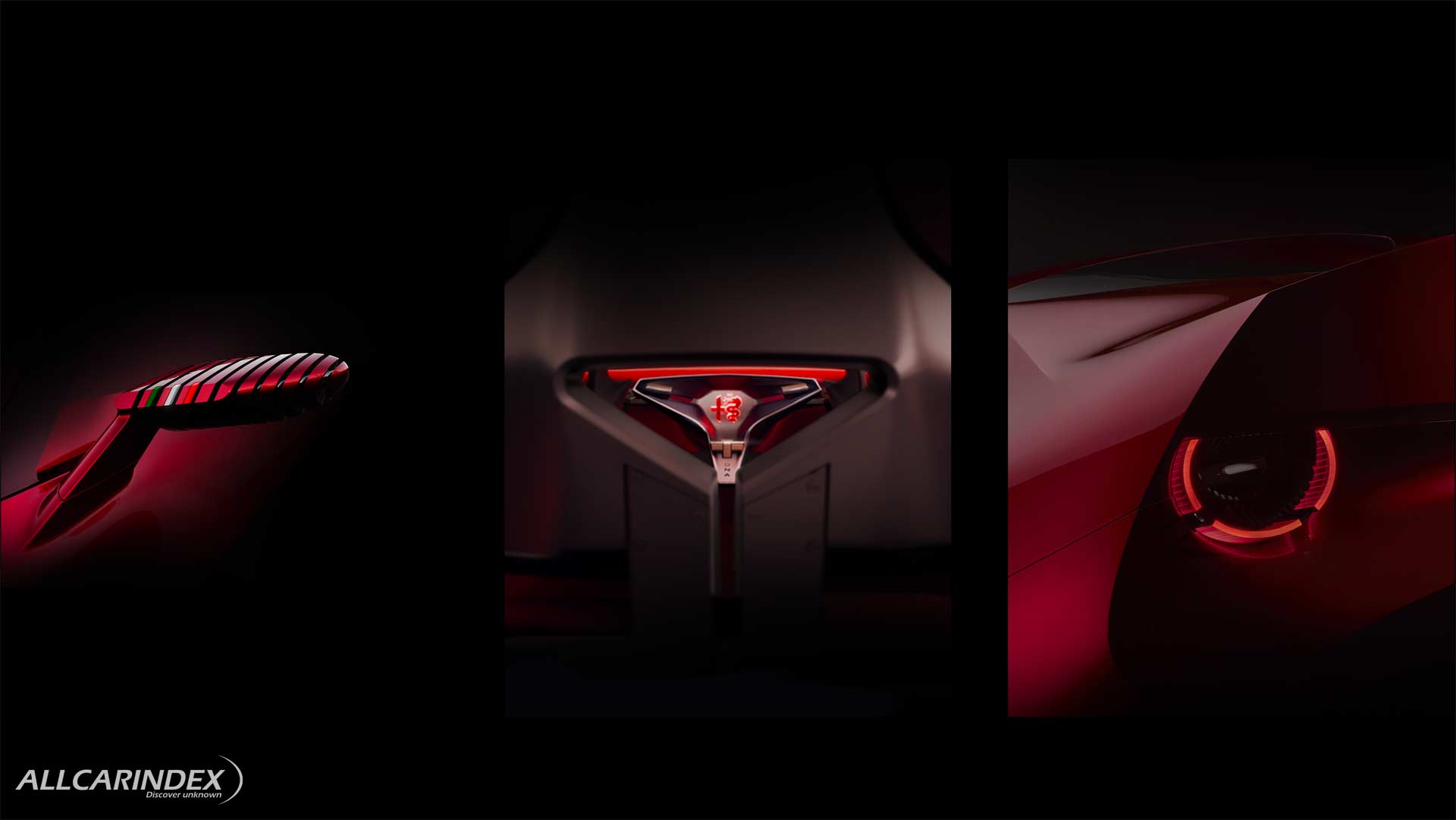
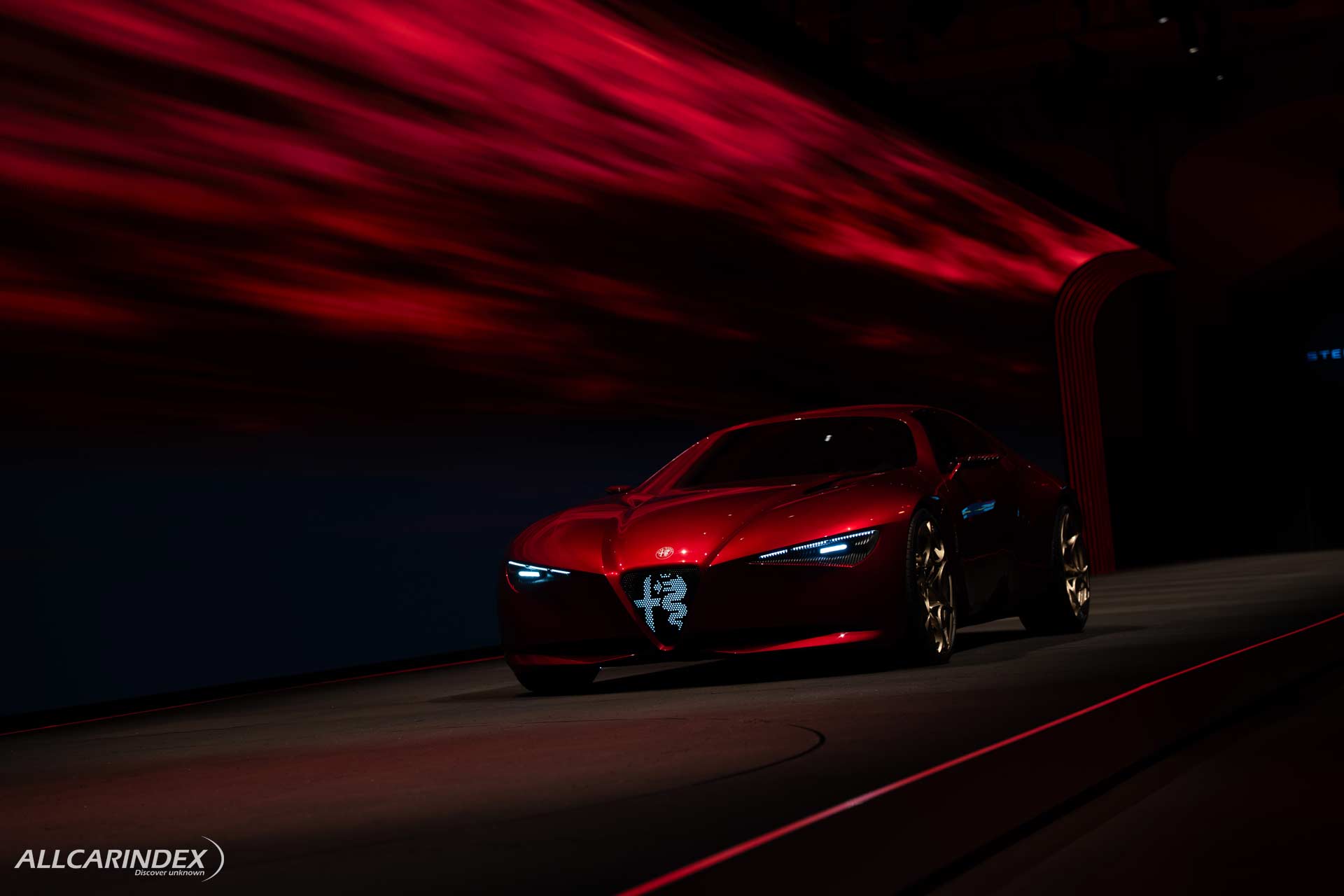
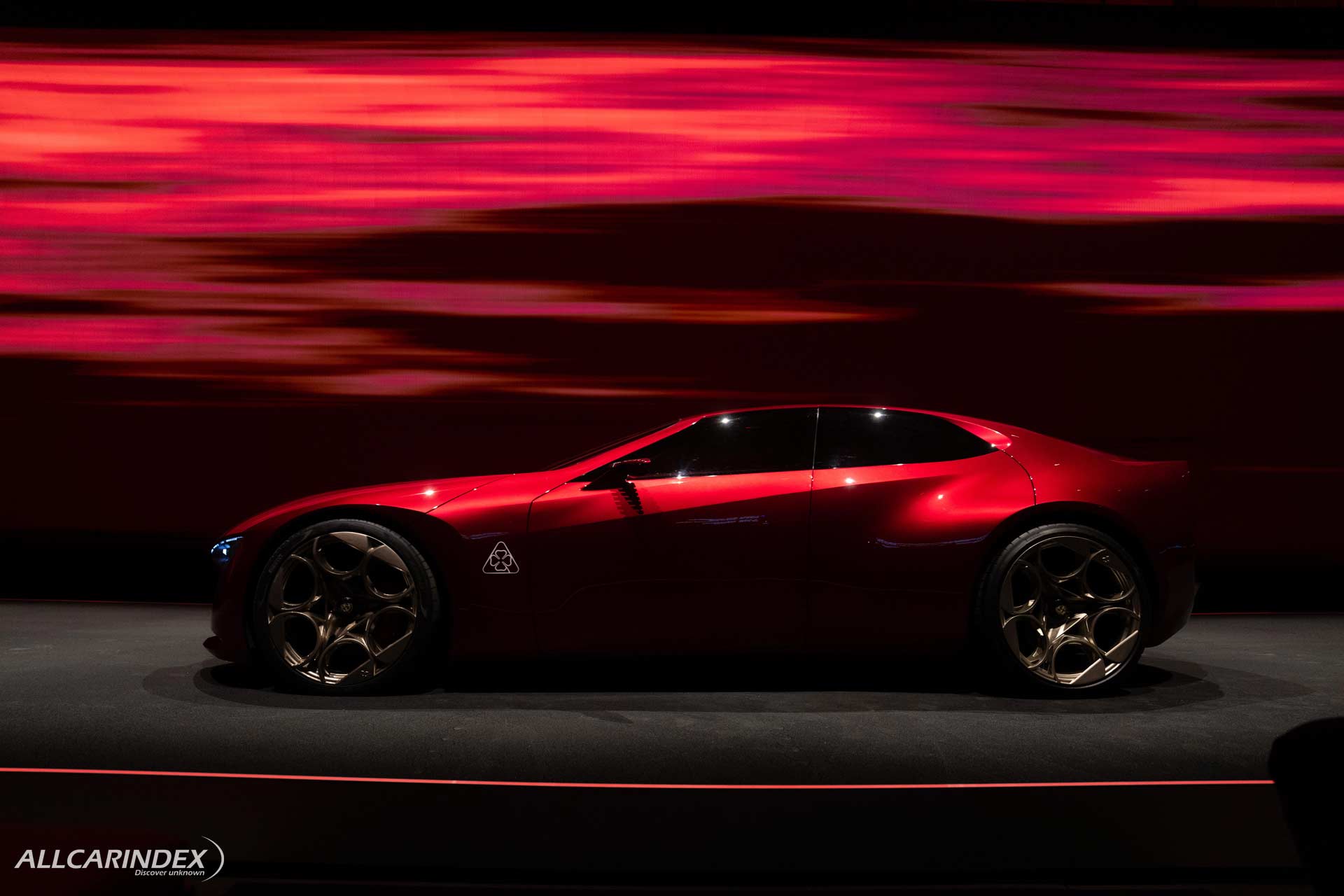
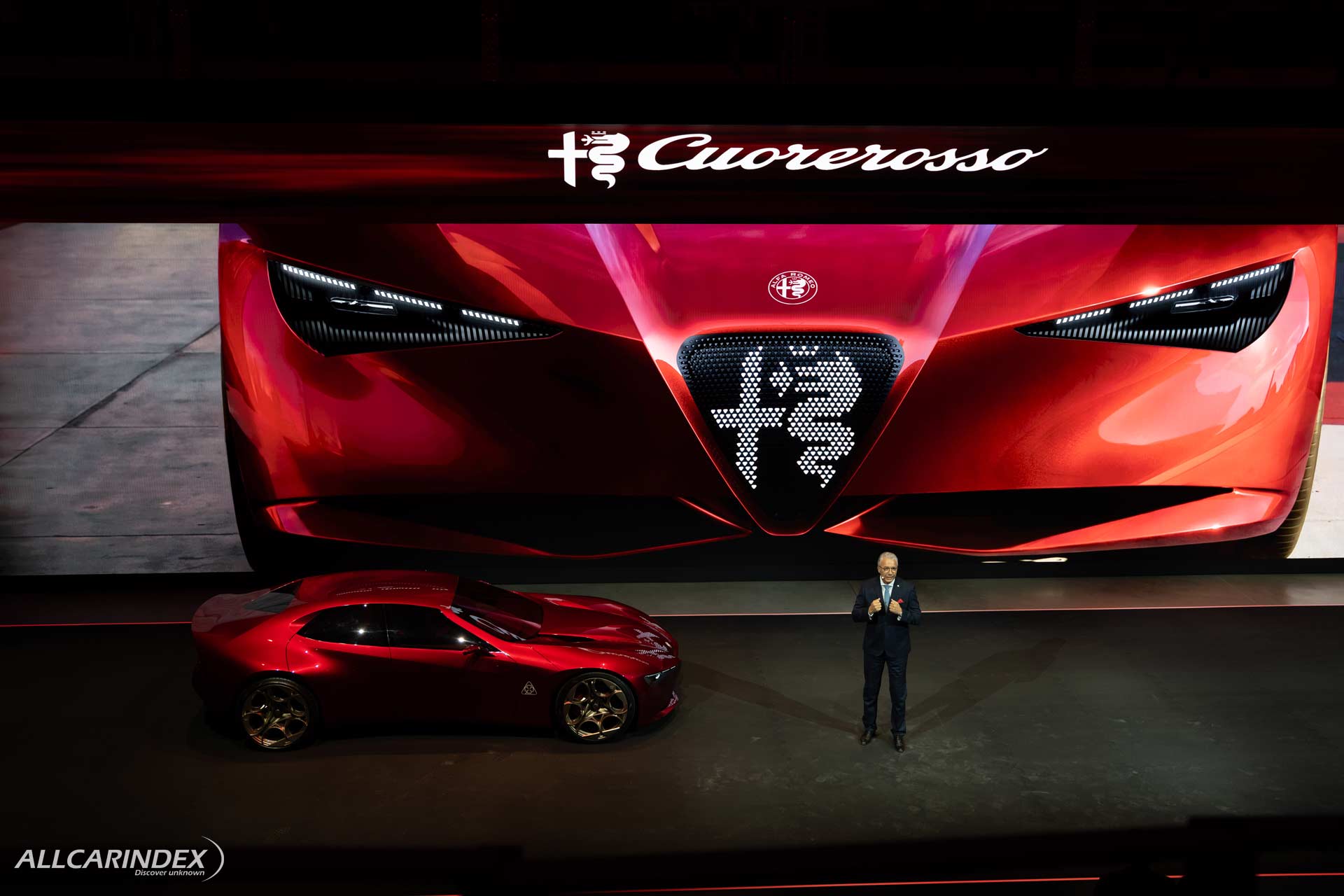
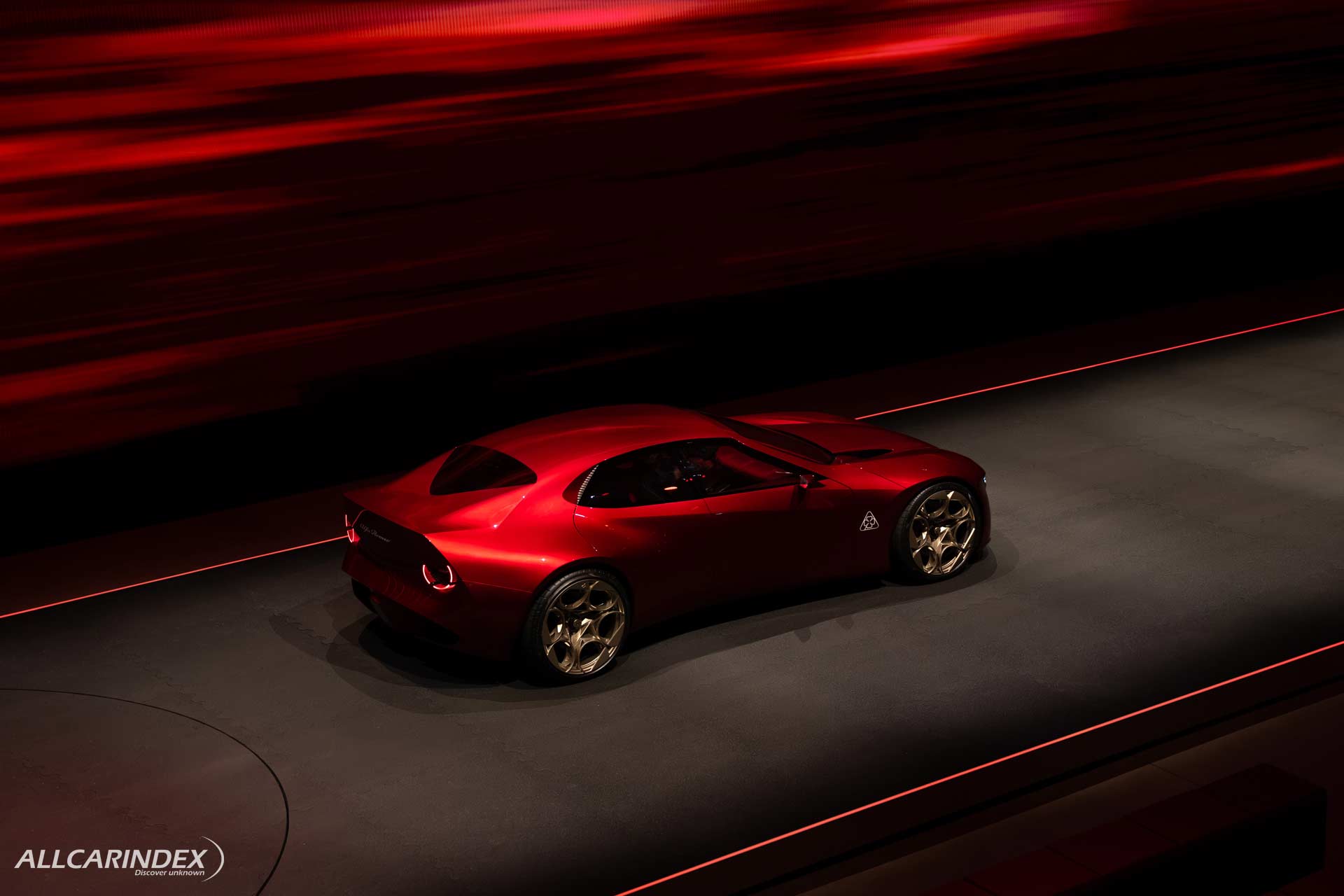
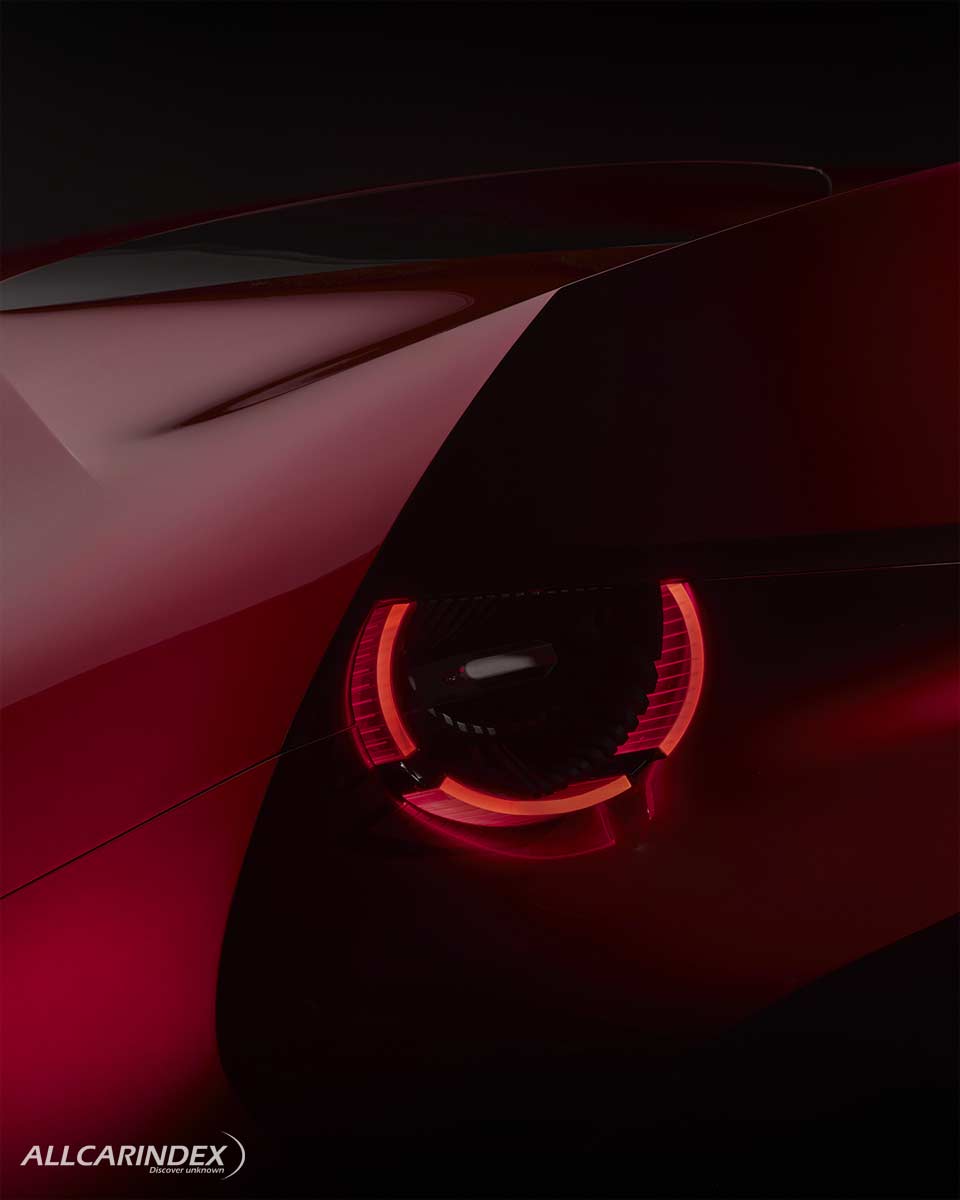
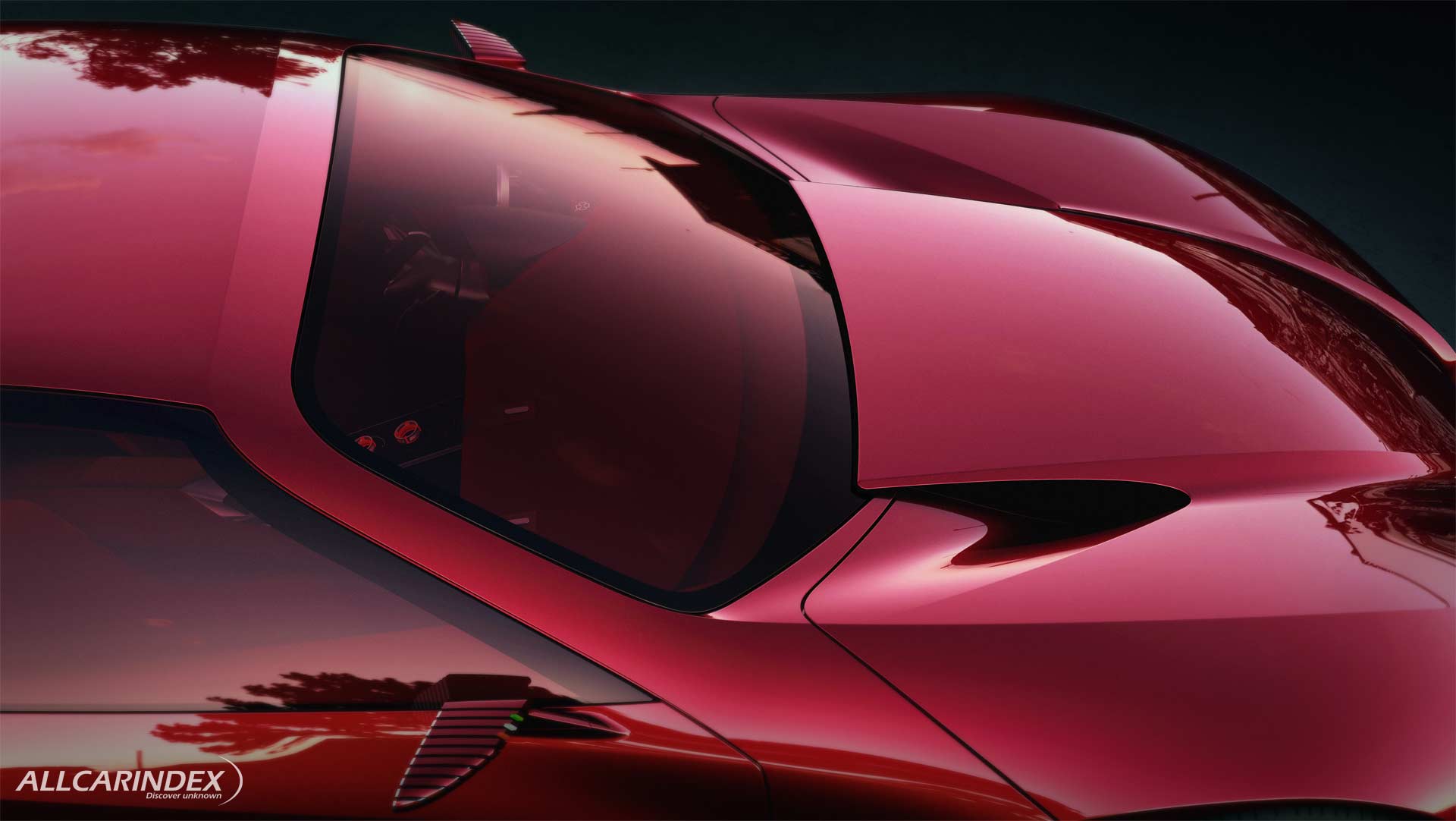
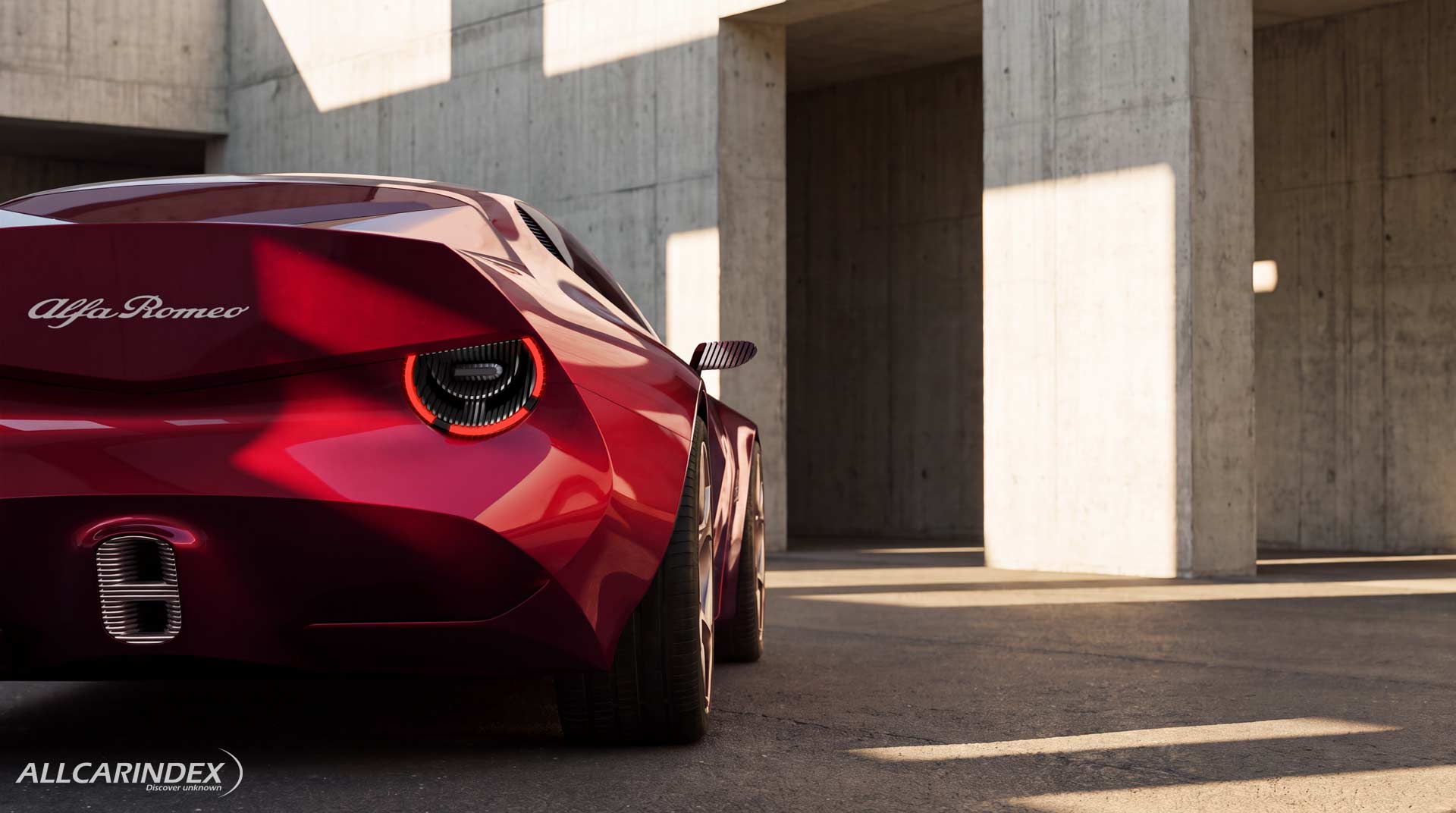
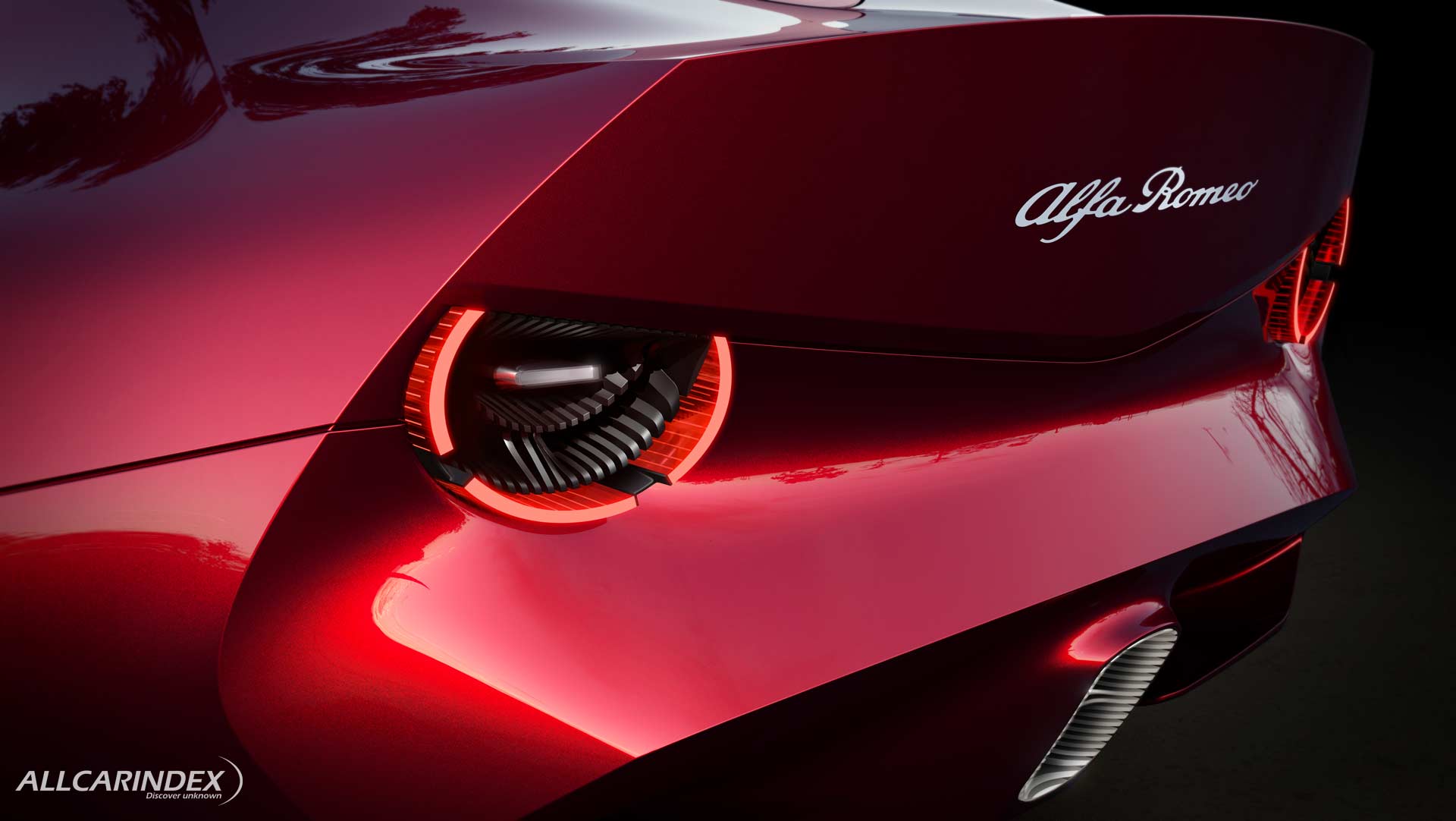
Cuorerosso is a 2+2 coupé which mixes the character of a Gran Turismo with the scenic presence of a supercar. It measures 4.700 mm in length and 1.980 mm in width, and it is just 1.331 mm high! The wheelbase is 2.930 mm and the weight is 1.750 kg. Aerodynamic work relies on no less than three key elements: the pure and uninterrupted shape, the low diffuser built into the bodywork and the Coda Tronca, the truncated tail, one of the most recognizable codes of Alfa Romeo tradition. Together they deliver a Cx of 0.28. From the side the car is crossed by a characteristic wedge line that travels from nose to tail, adding tension and power to the bodywork before it ends in the truncated tail, which carries two circular lights. Above it the rear window follows the shape of the Scudetto and is perfectly integrated into the body volume.
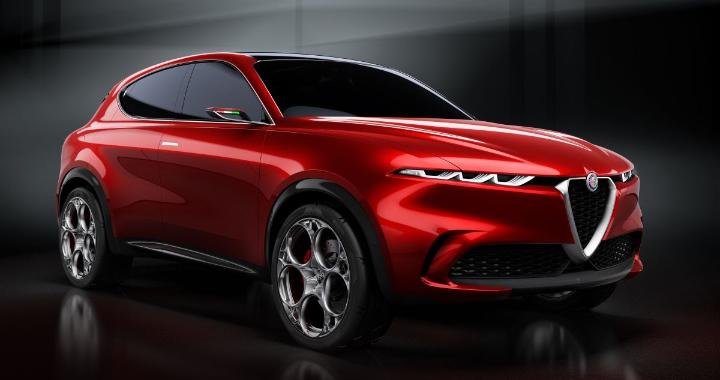
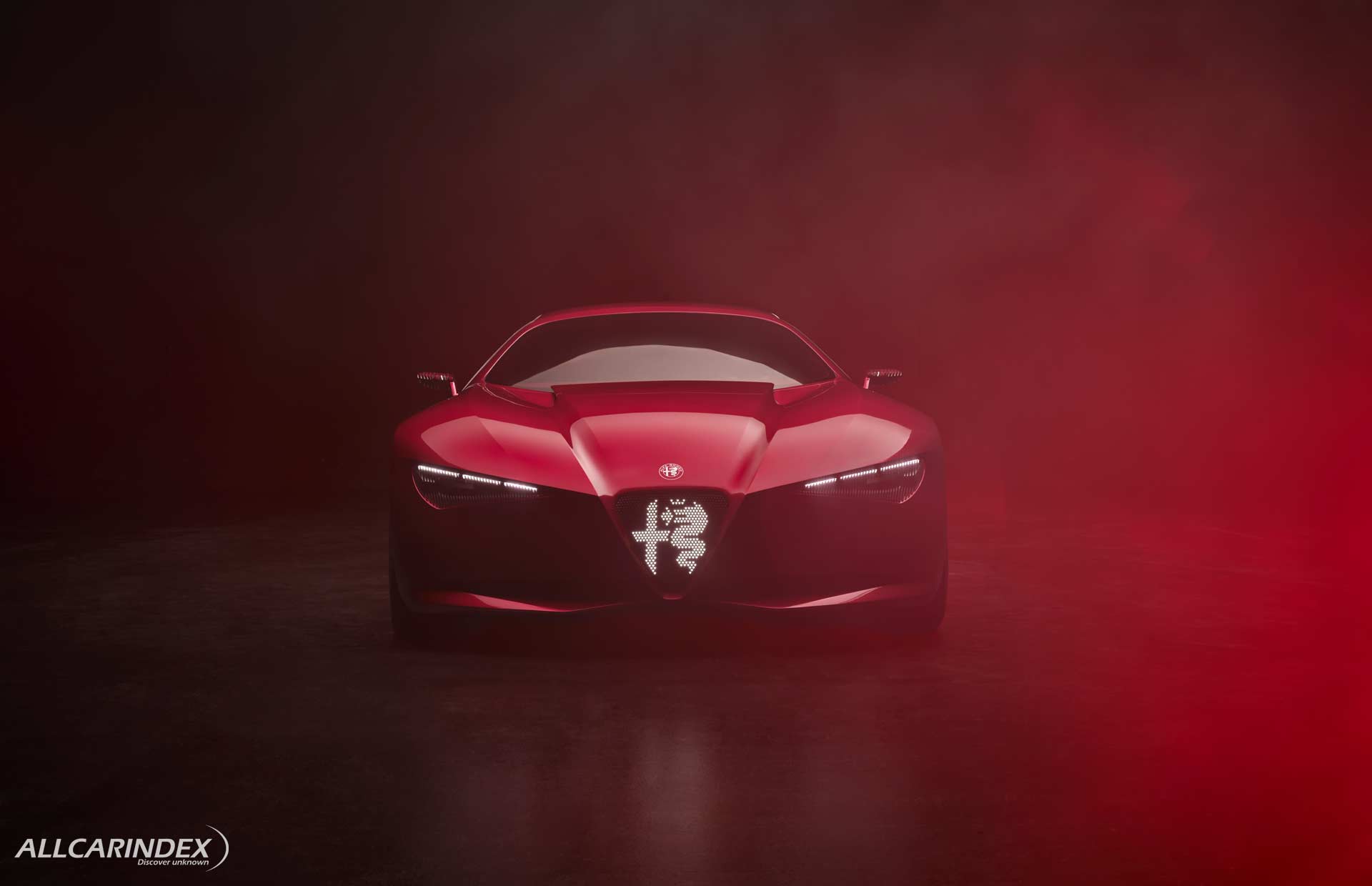
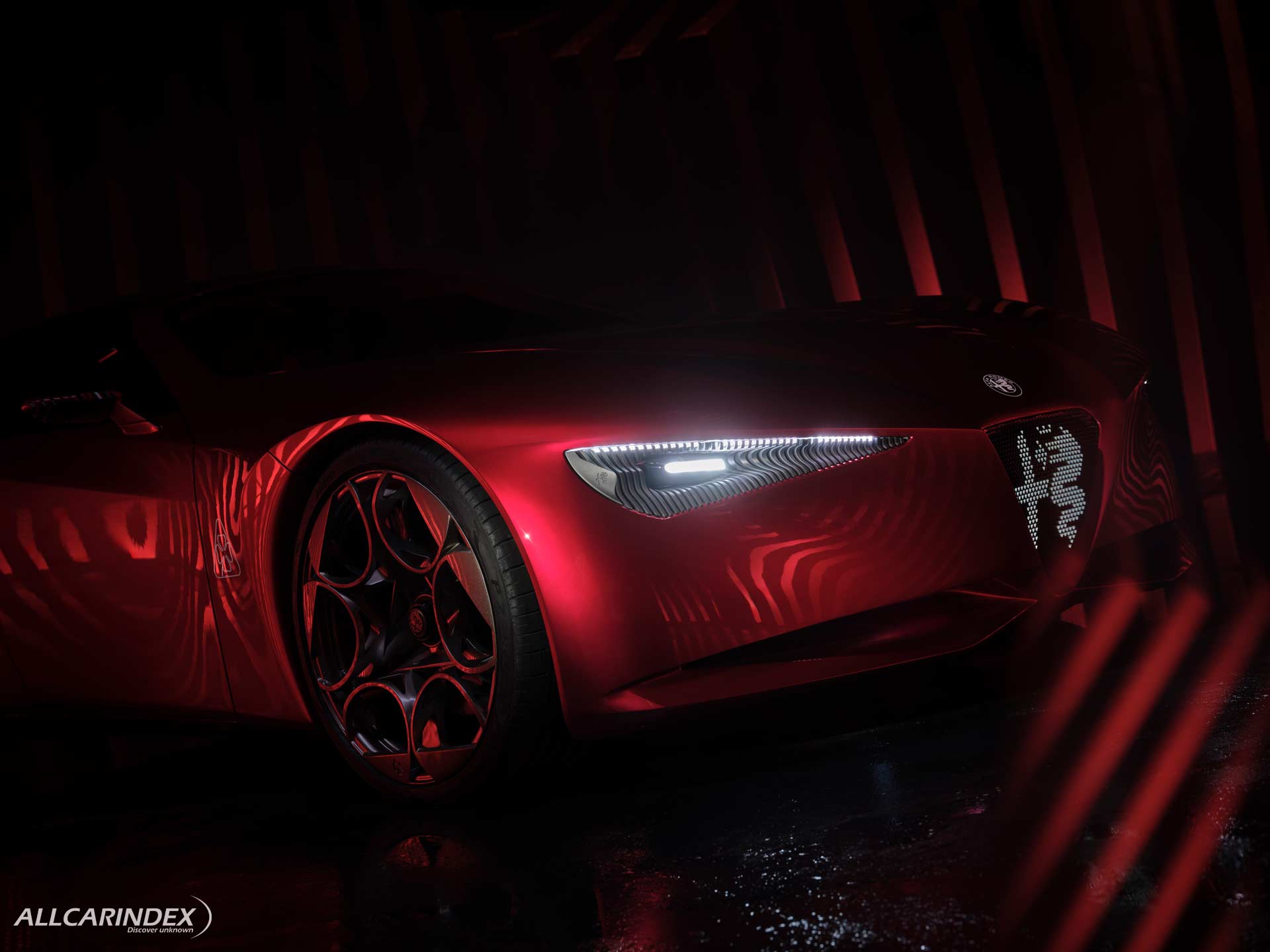
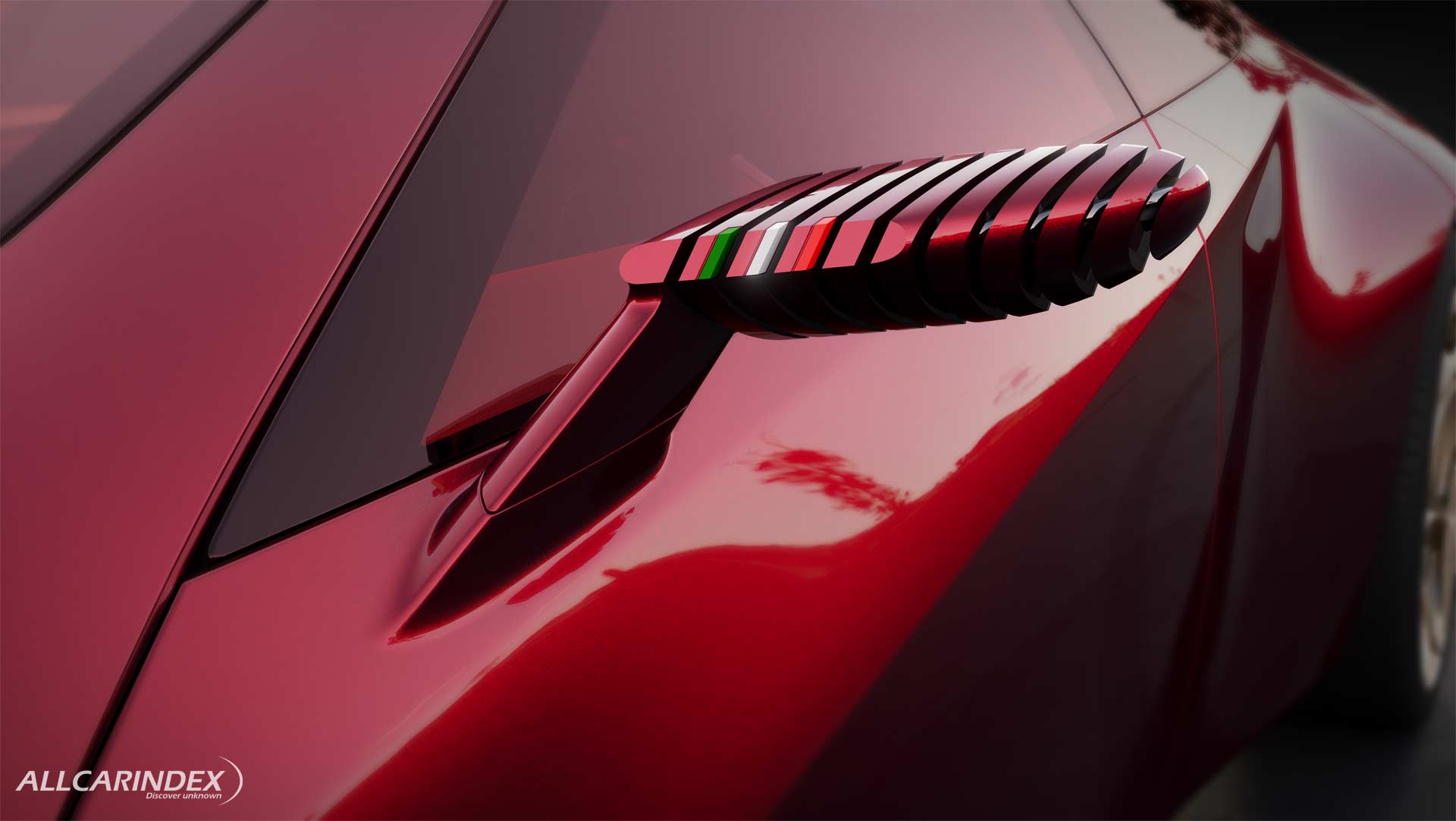
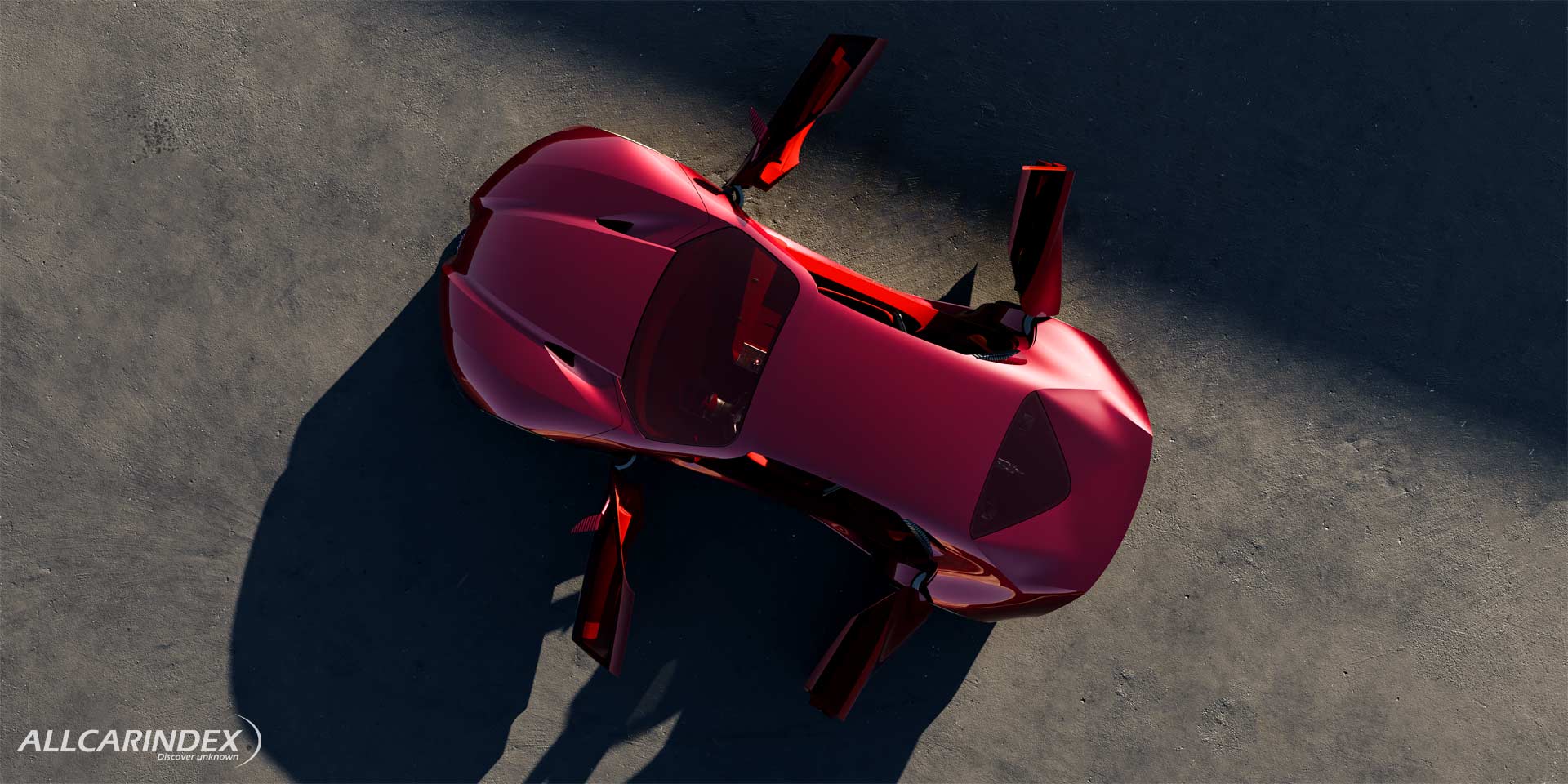
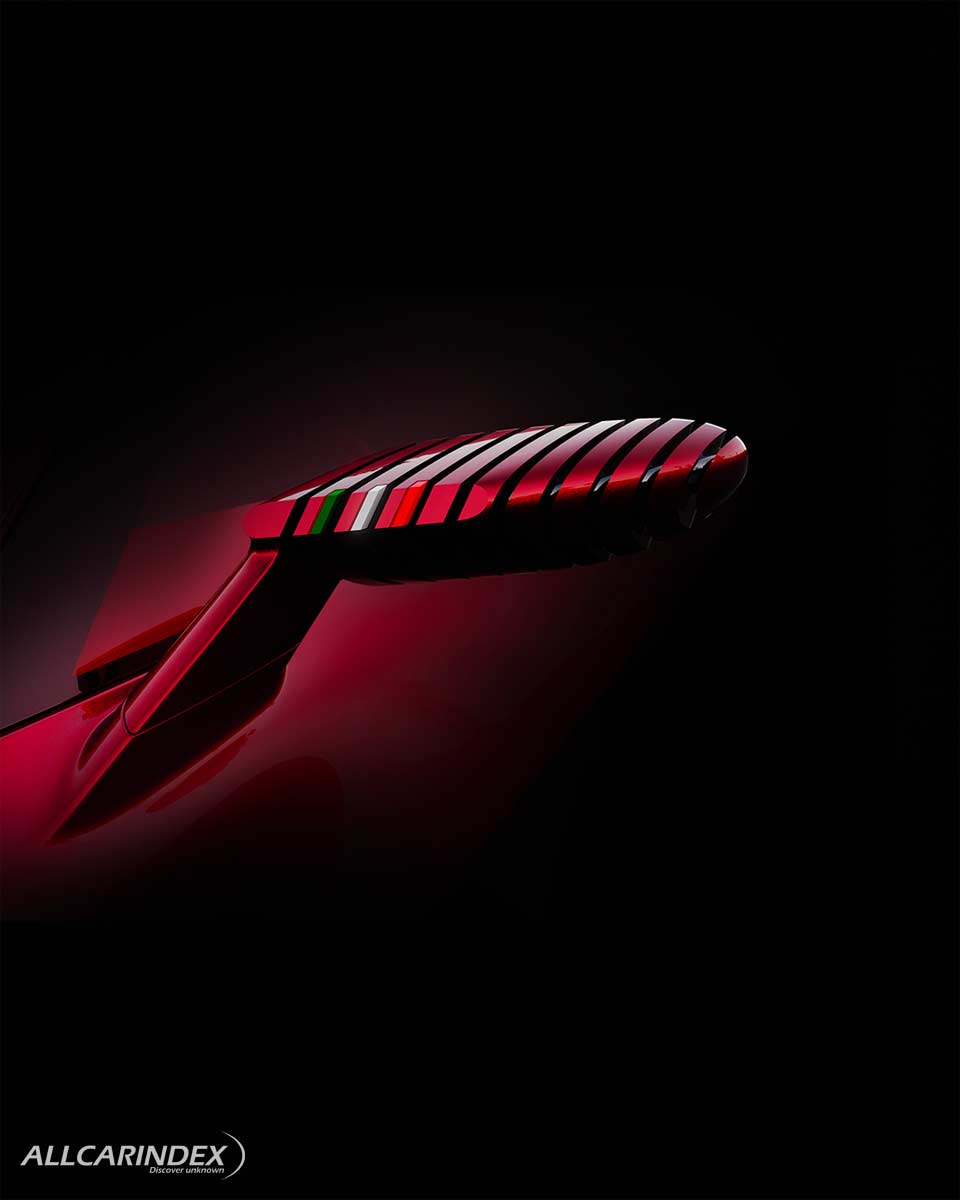
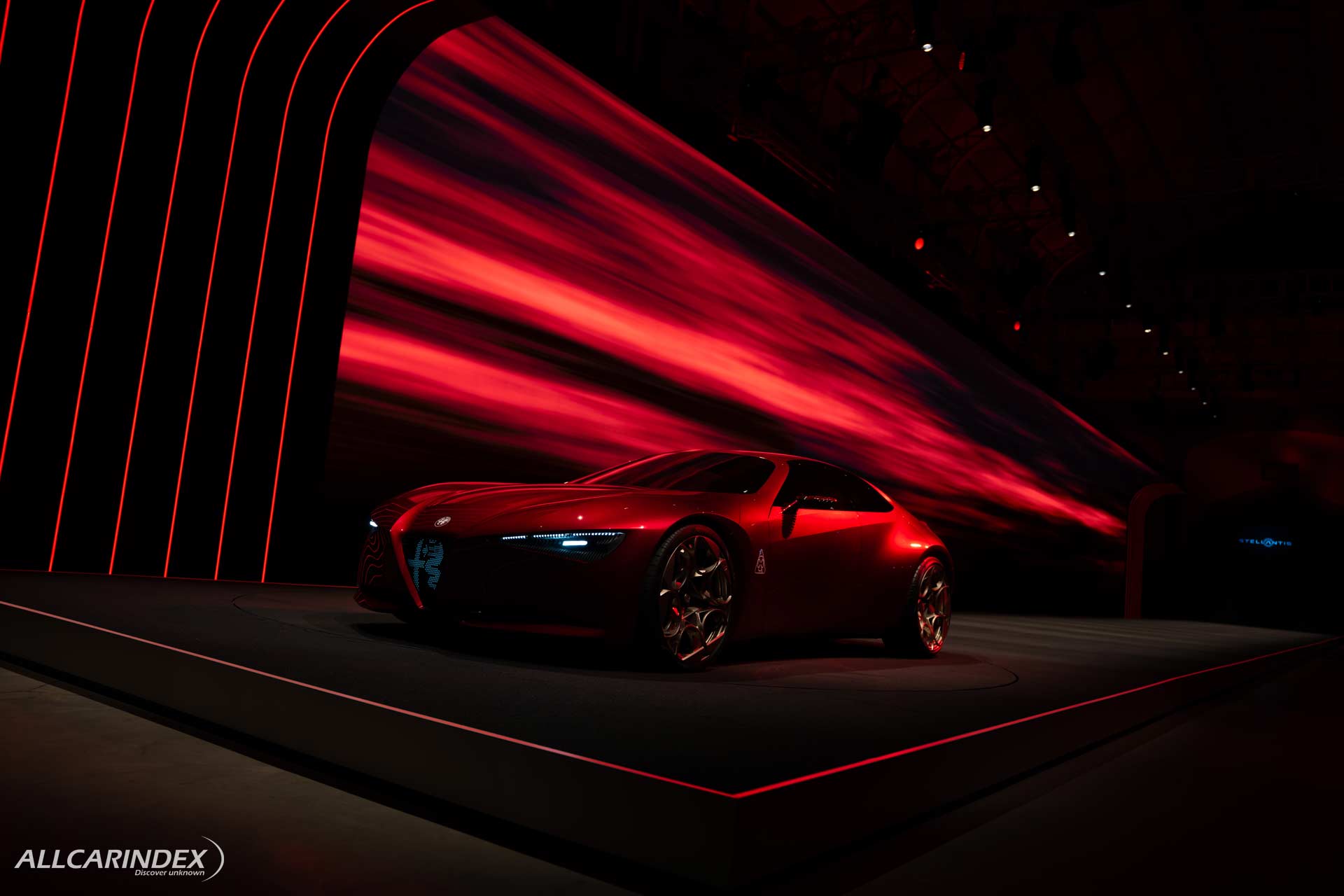
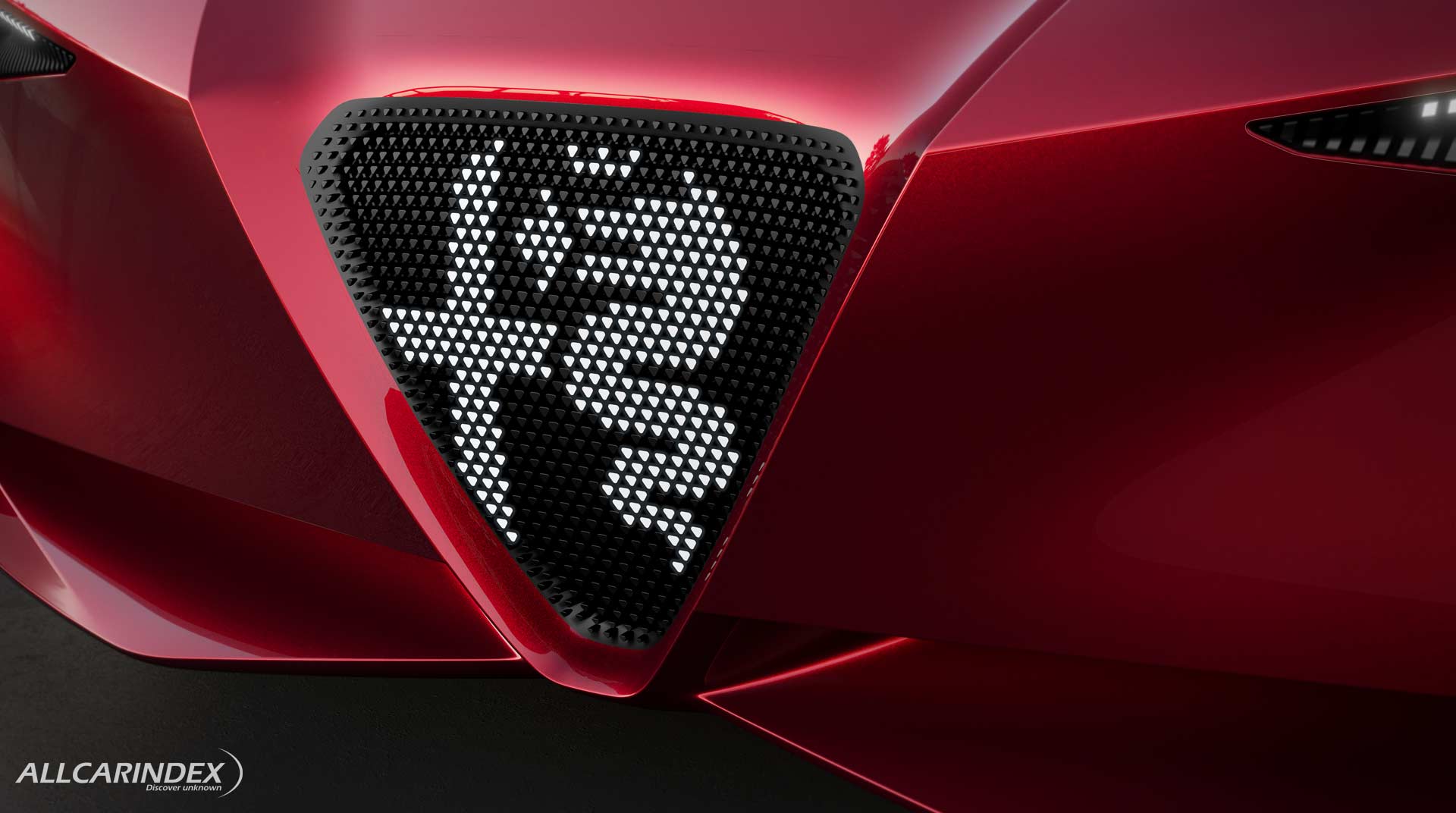
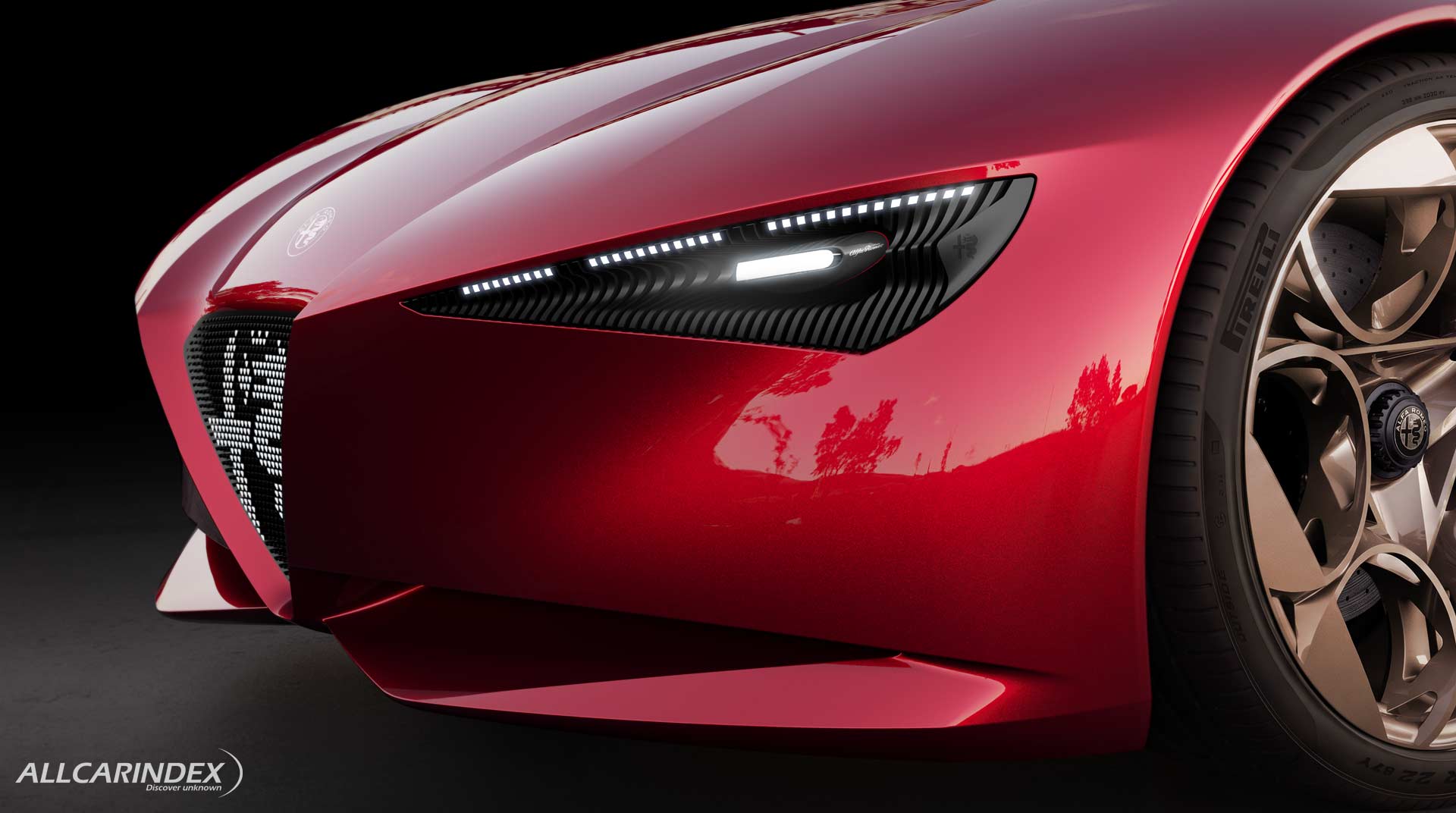
The face is built around two famous Alfa Romeo features reinterpreted in a contemporary way, Lo Scudetto and the Trilobo. The Trilobo forms the face through a dialogue between the central Scudetto and the headlights, which read as two eyes drawn with deliberately natural proportions and give the car a concentrated, self-confident gaze. The Scudetto itself rises directly from the sculptural volume and runs along the bonnet, inspired by the wake of a boat moving on water. The grille is woven from tiny triangles lit from behind, which talk to the historic Cross and Biscione symbols and create a luminous signature with a beat like a heart. The driver’s welcome light follows the same beat. Along the sides the traditional handles are gone and the doors are opened by touching a control in the roof, while the windows are fully flush, the logos are integrated into the bodywork and the doors face rearwards, which makes getting inside even more spectacular. The mirrors carry a sequence of inlays embellished with the Italian flag, and their shape echoes the aerodynamic slats that cut the volumes into sections, lessen the visual mass and the frontal area and let the air pass.
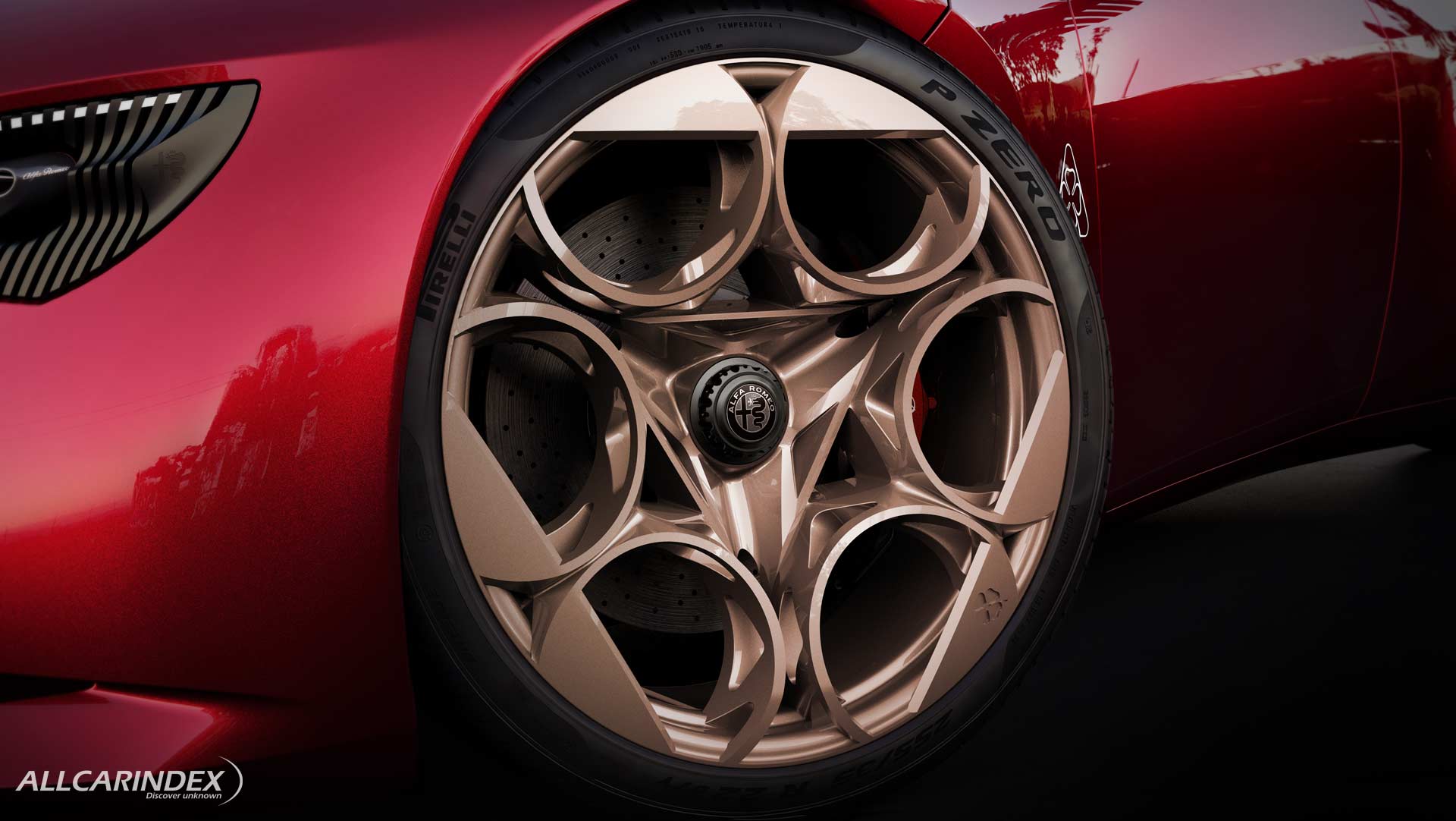
The forged wheels reinterpret the famous telephone configuration with six circular elements on three spokes in a 2+2+2 scheme, with openings and grooves shaped as the Scudetto to lighten the look and improve aerodynamic efficiency. Their colour is inspired by titanium and mixes cool tones with warmer metallic reflections. The Quadrifoglio symbol is present as well, taken ahead into the future as one of the most authentic expressions of Alfa Romeo sportiness. Behind the wheels sit a Brembo carbon-ceramic braking system with specific Alfa Romeo calipers, and the suspension is of the air type. The concept also announces the multi-energy approach of the brand, with Full-Electric, Plug-in Hybrid, Mild Hybrid and Full-Hybrid solutions ready to cover different needs of use. Models up to 4.7 meters long are foreseen for the most important market segments, with the potential to accept Quadrifoglio versions. For the top of the range a 2.9 V6 Full-Hybrid power aggregate can be imagined, combined with Q4 all-wheel drive, a torque converter and a carbon fiber driveshaft.
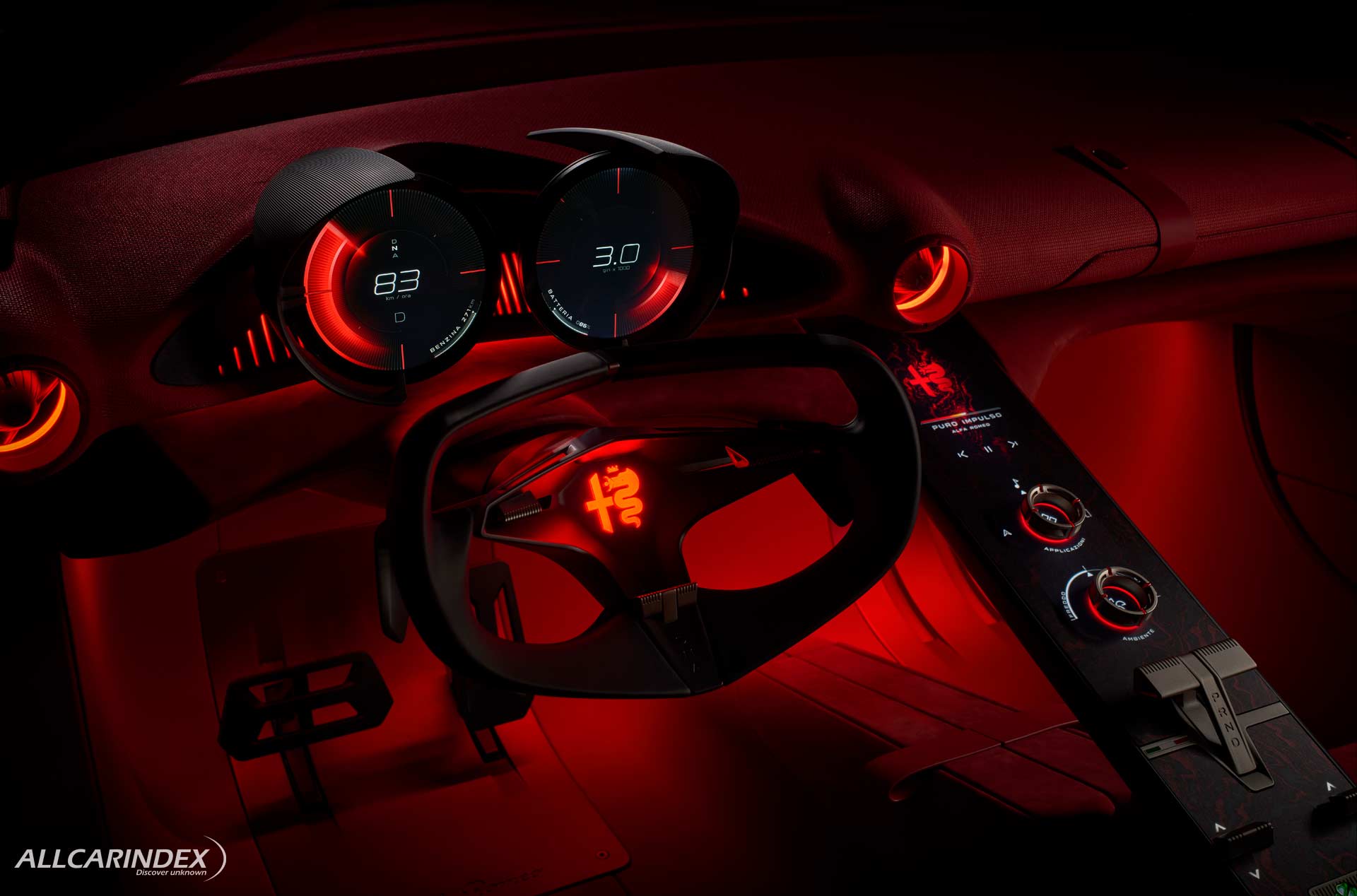
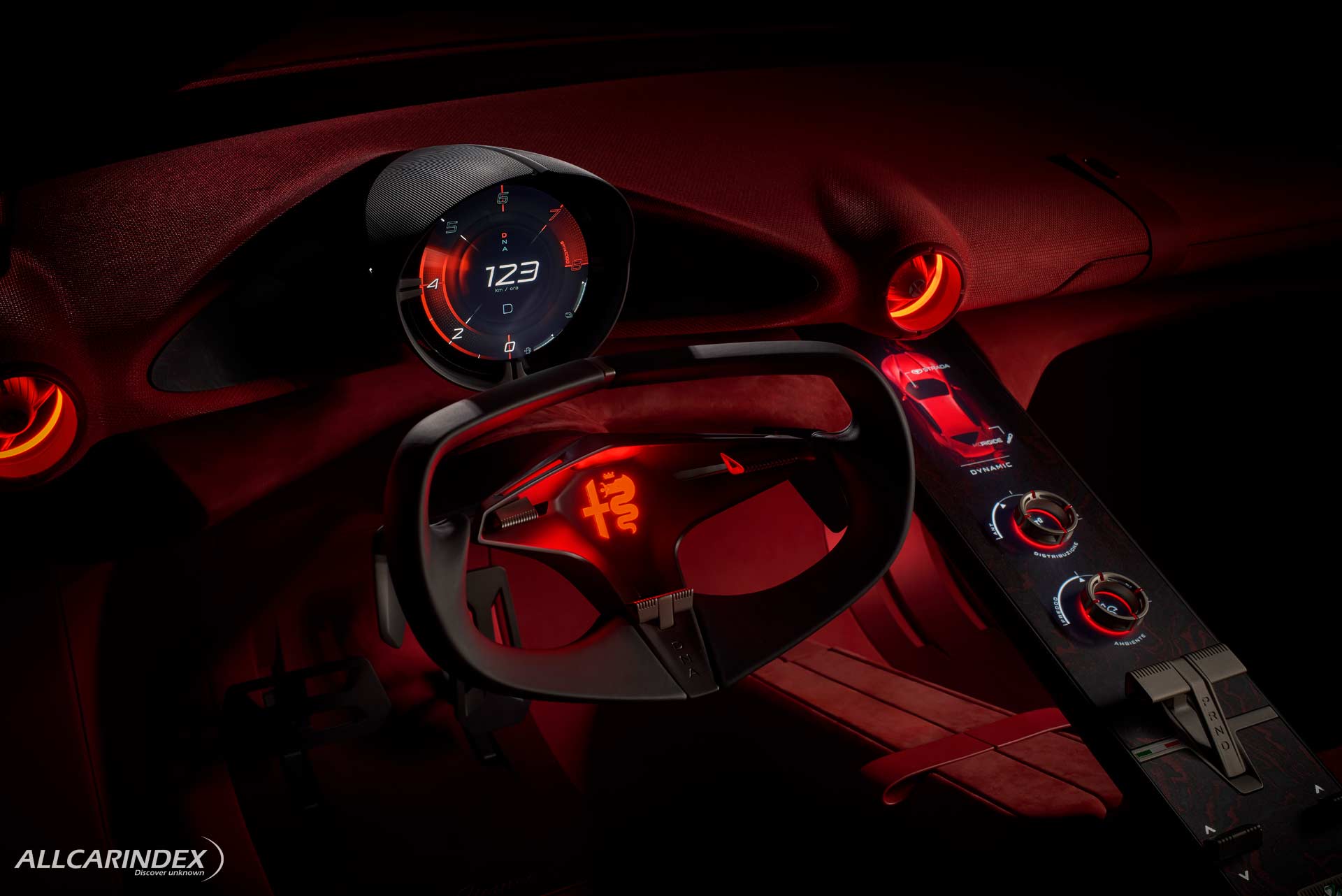
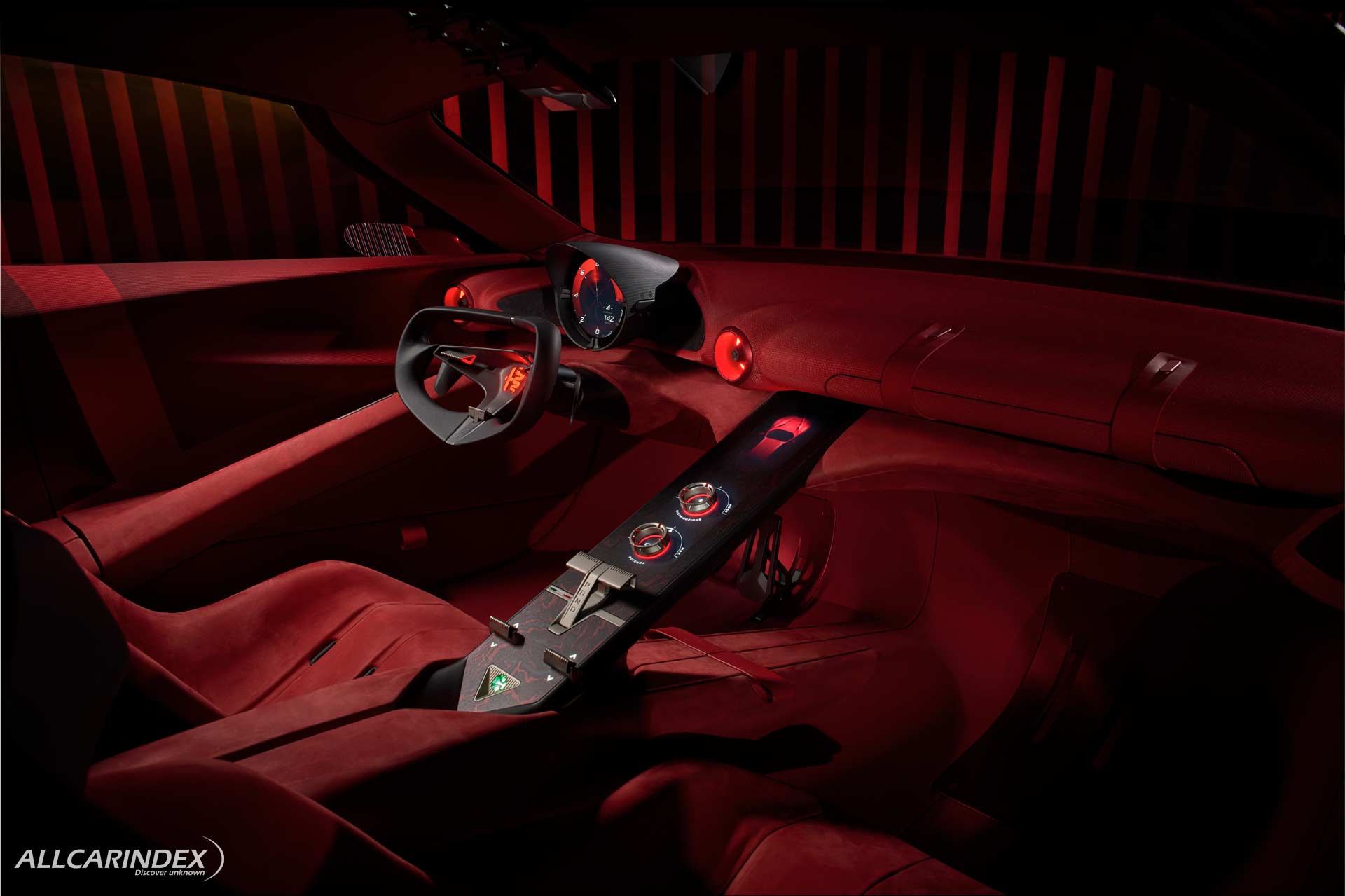
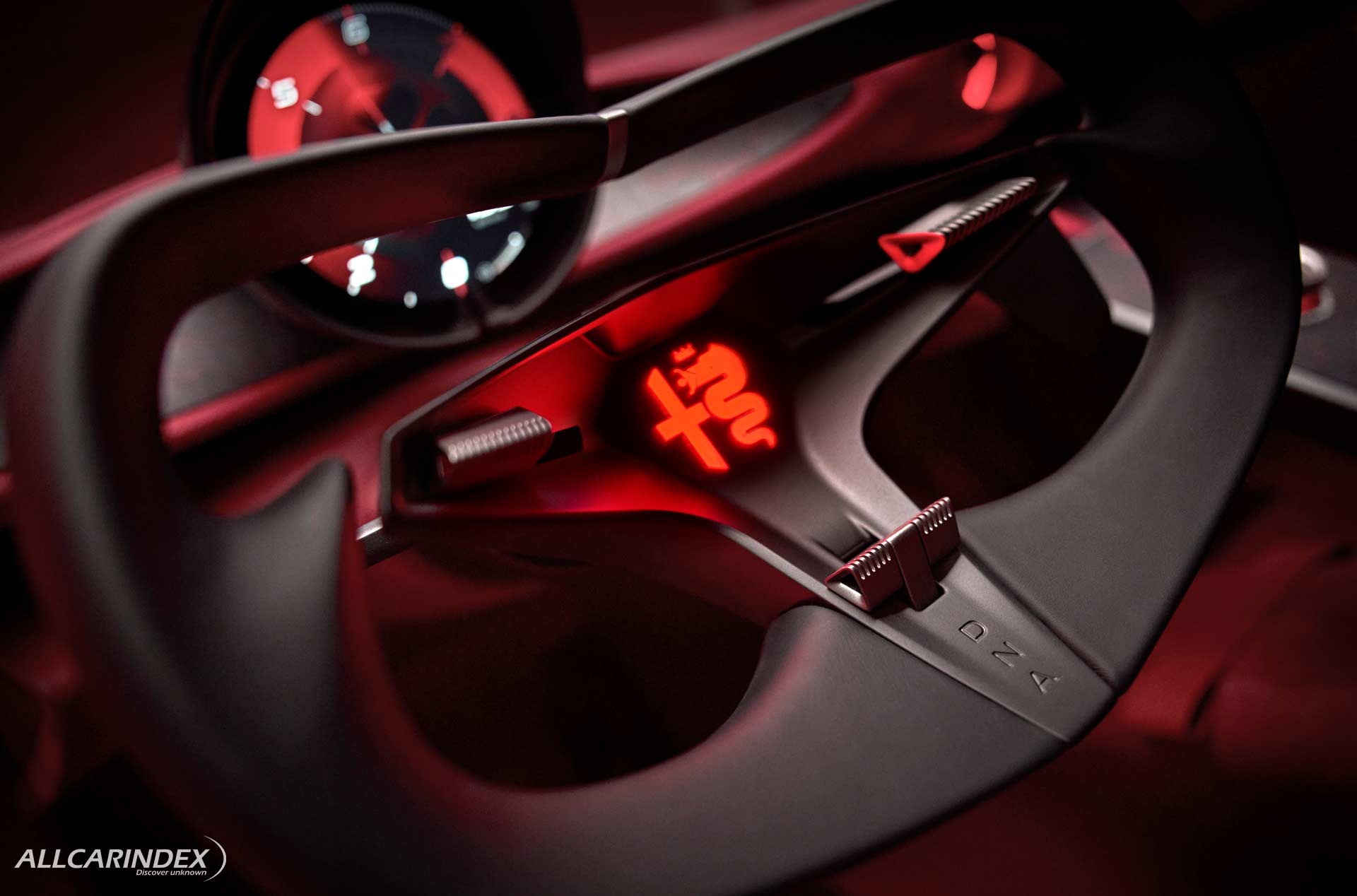
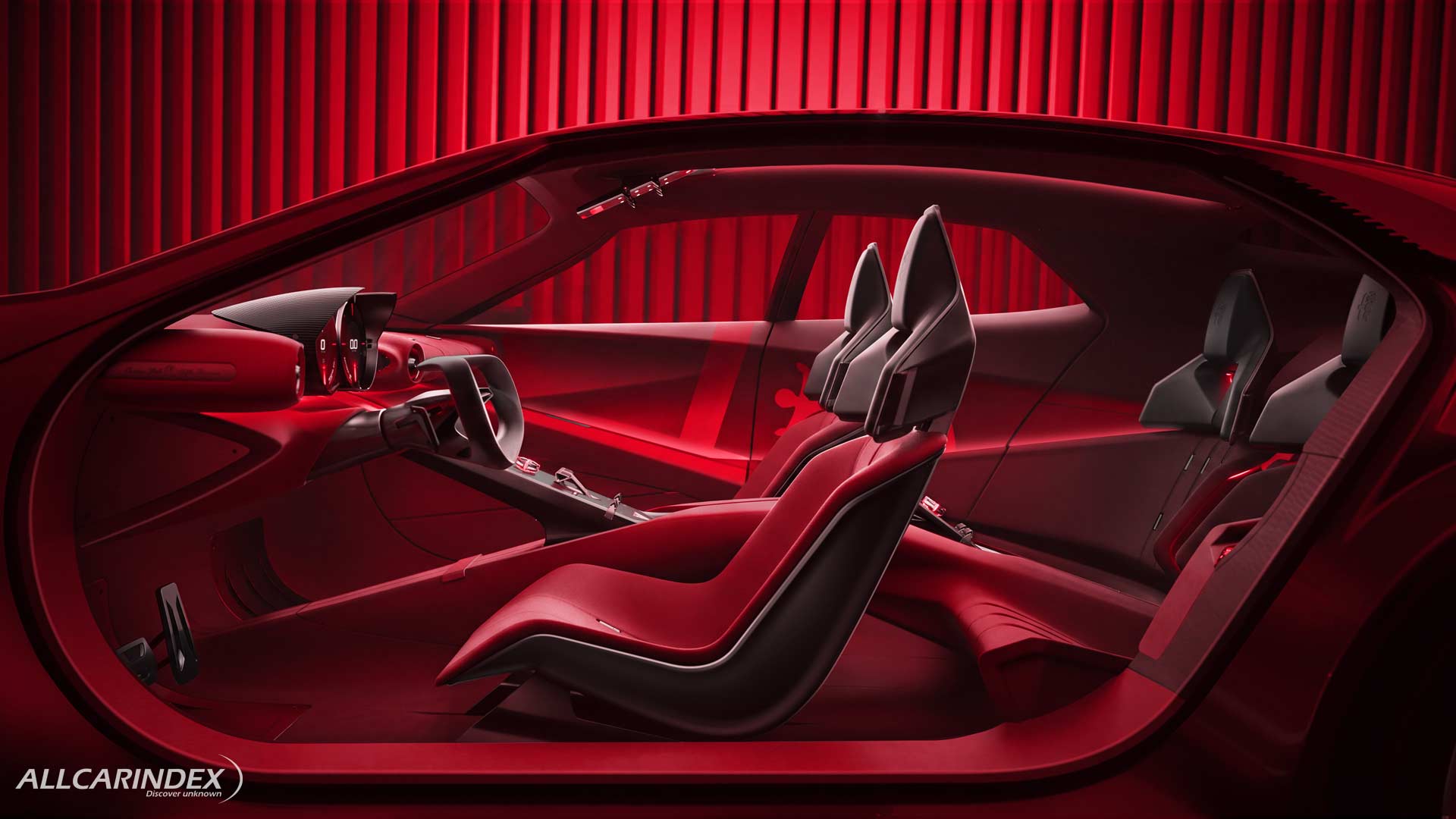
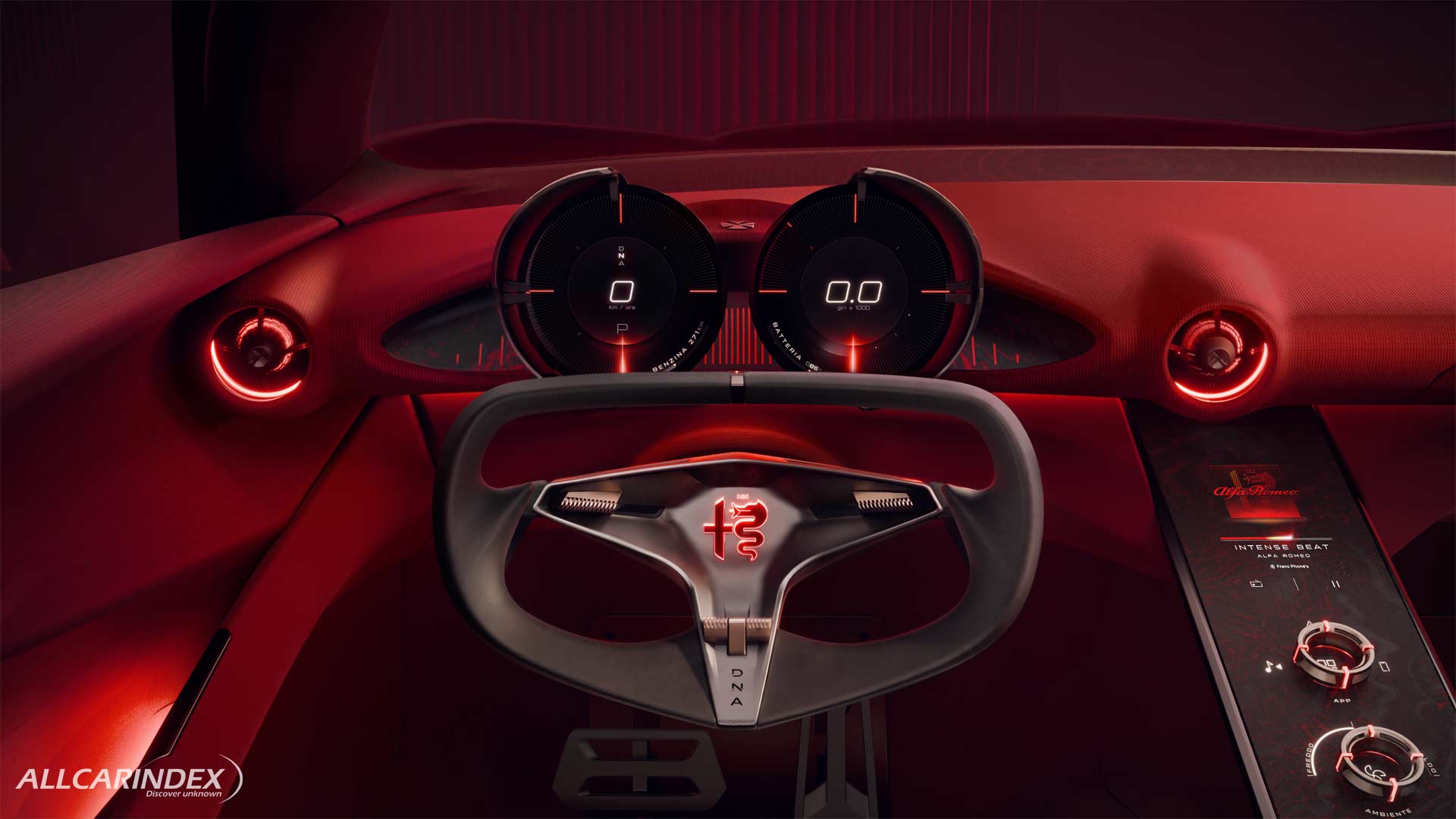
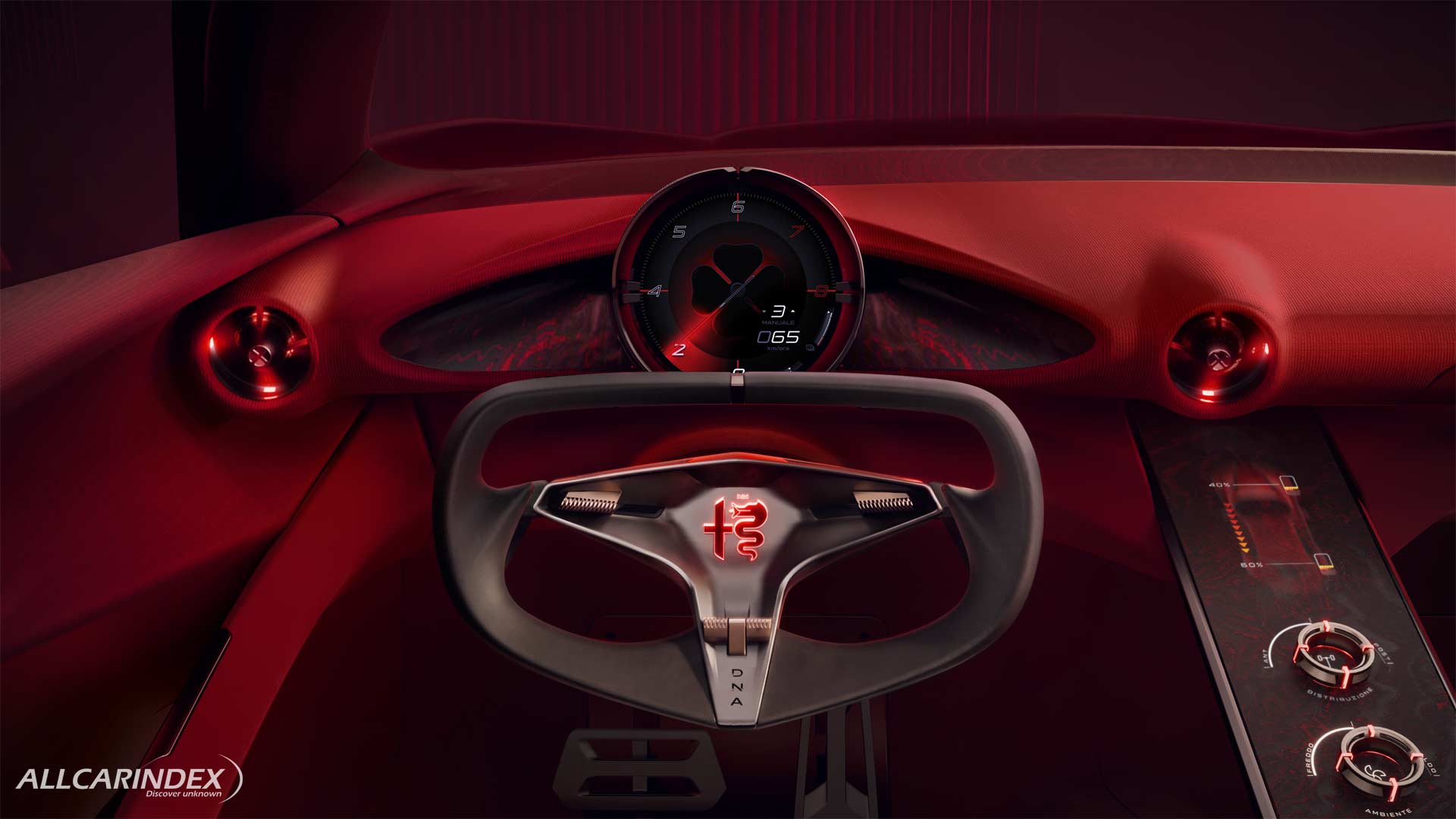
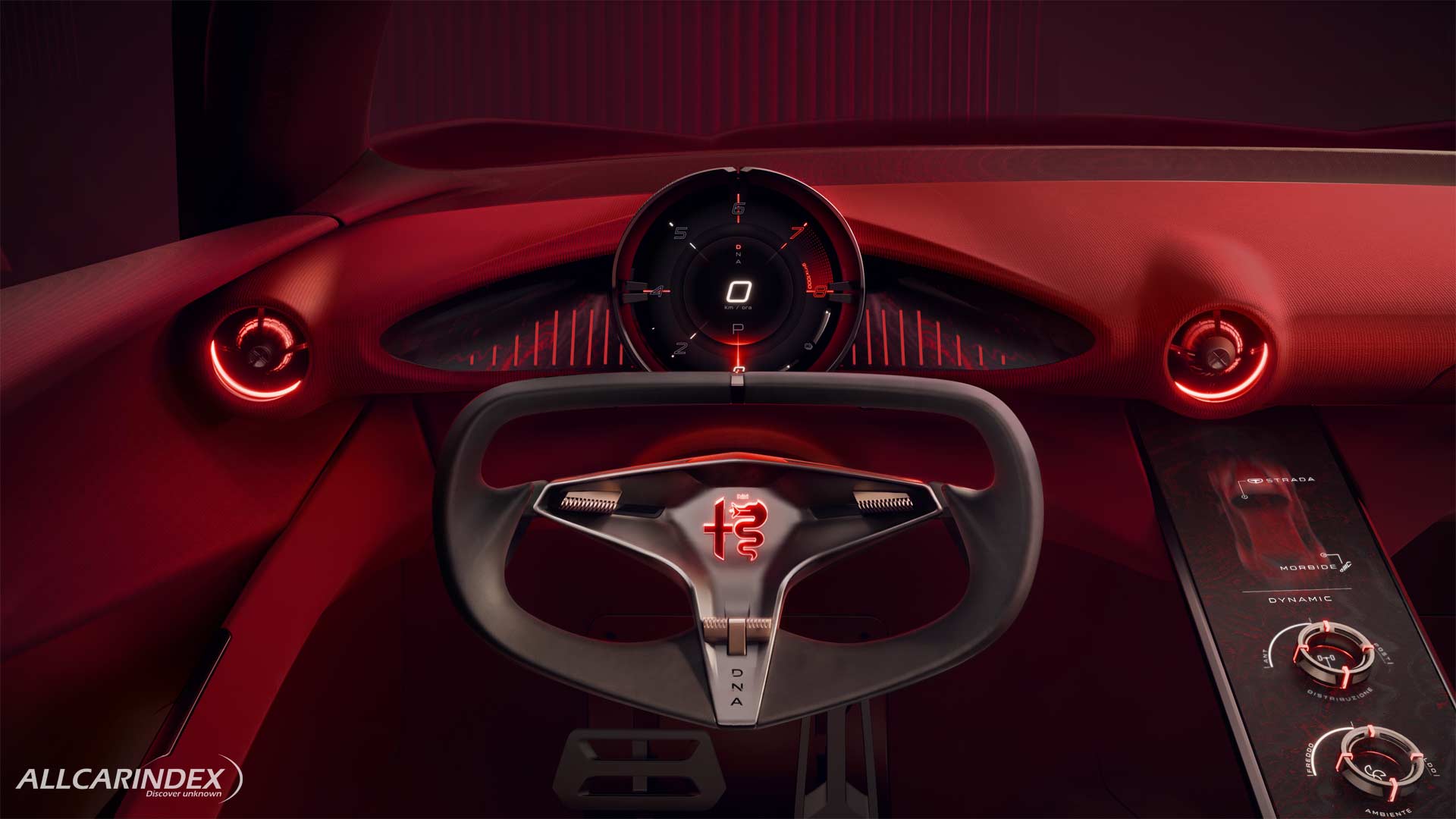
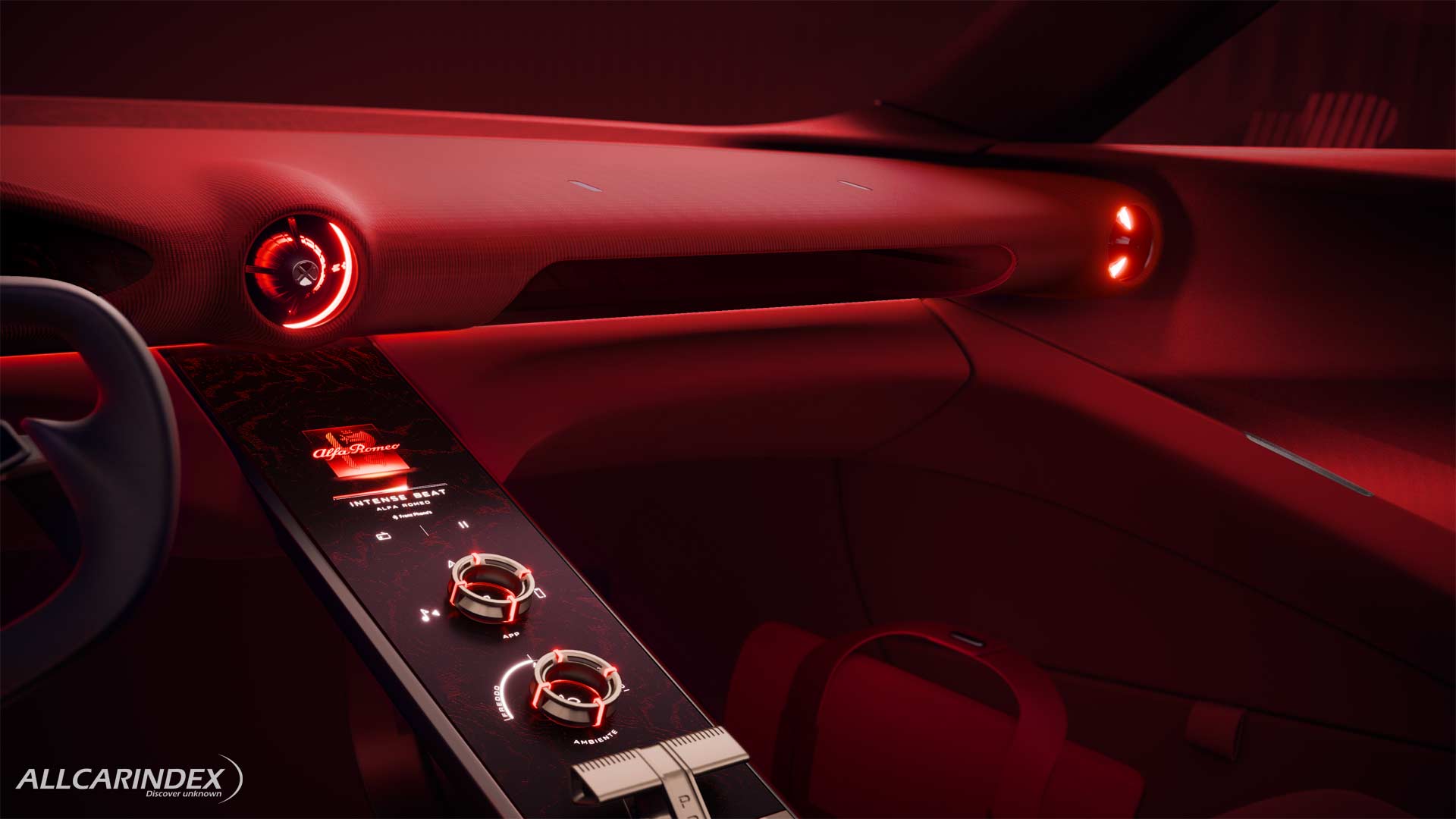
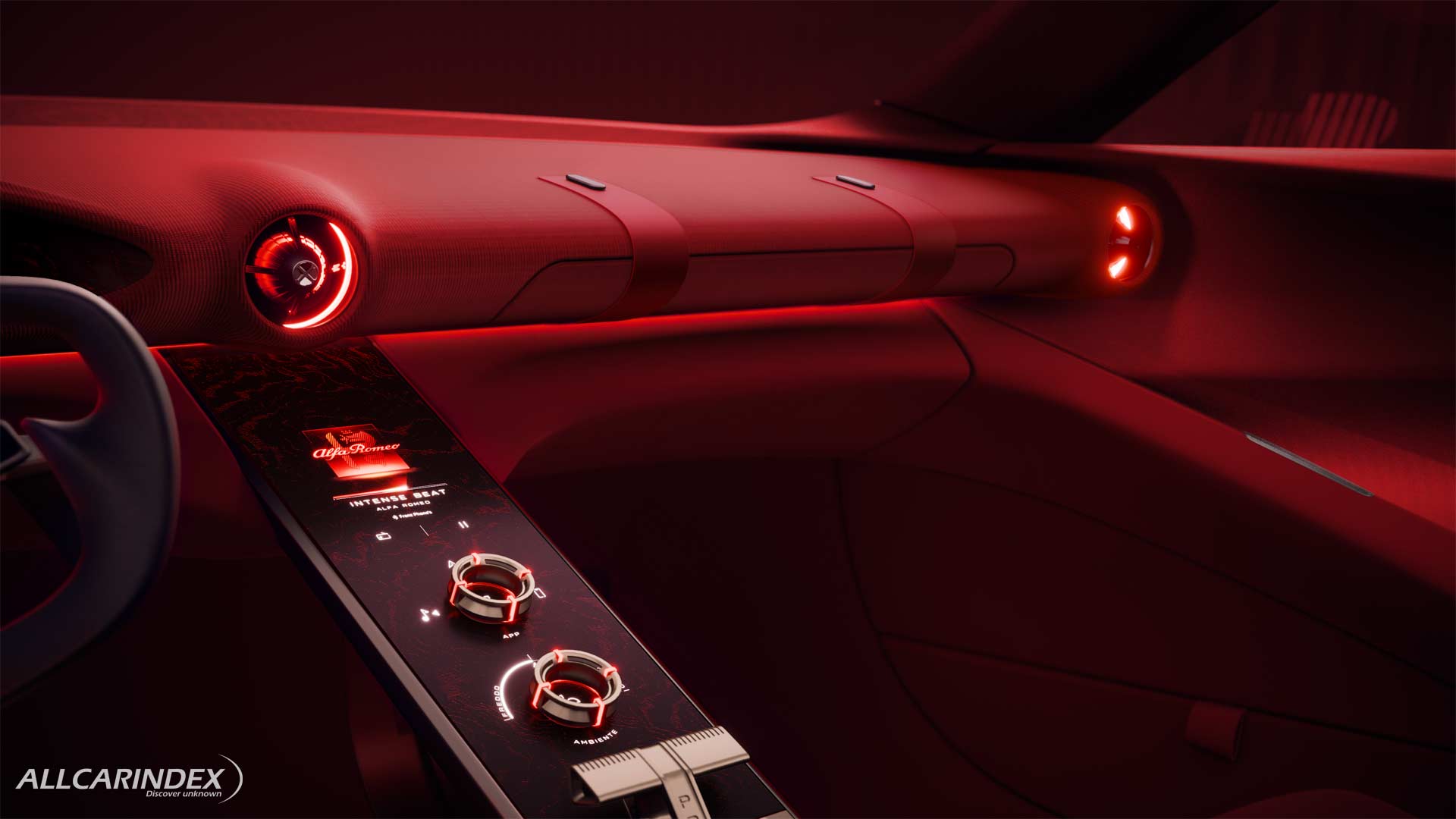
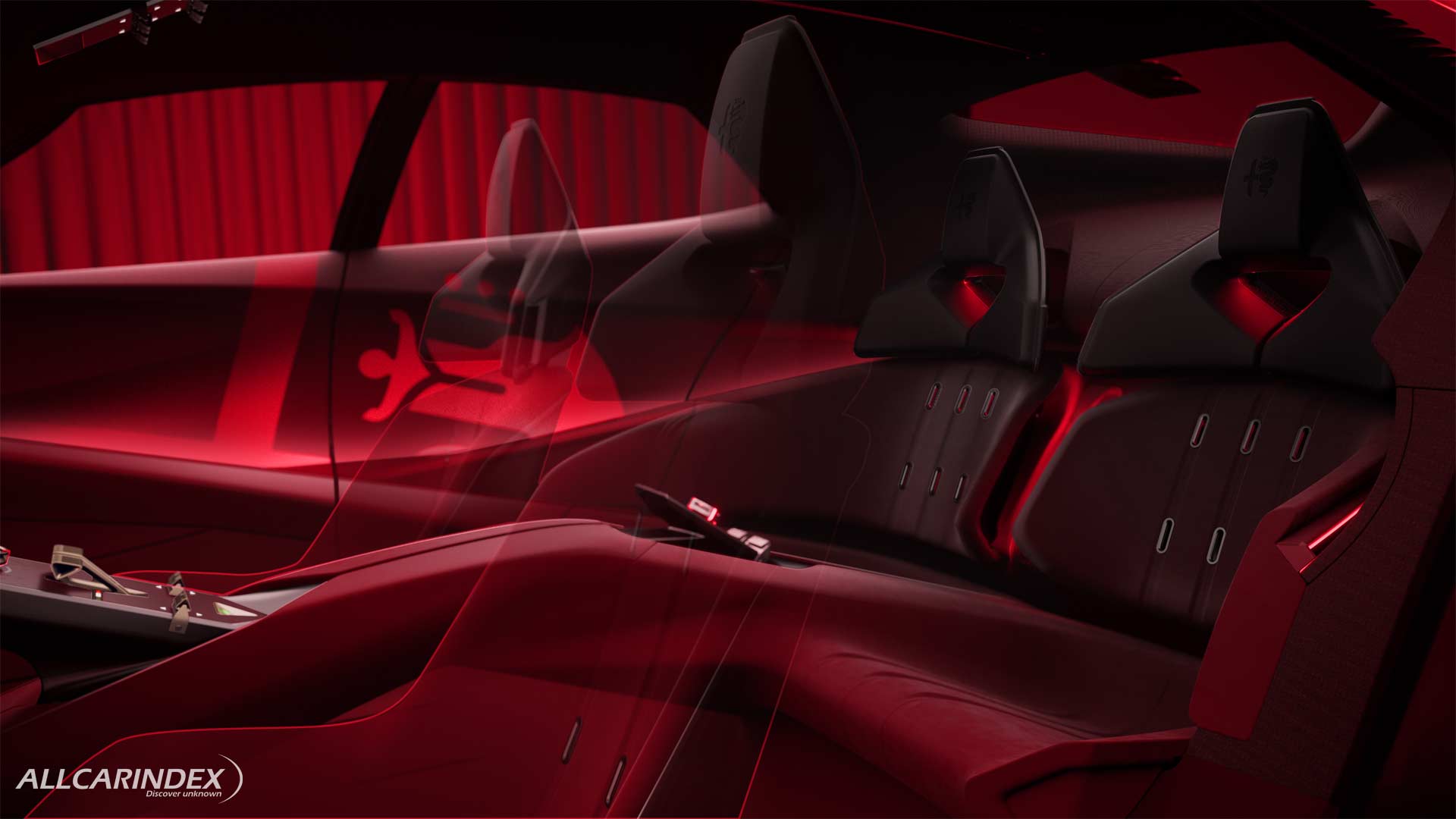
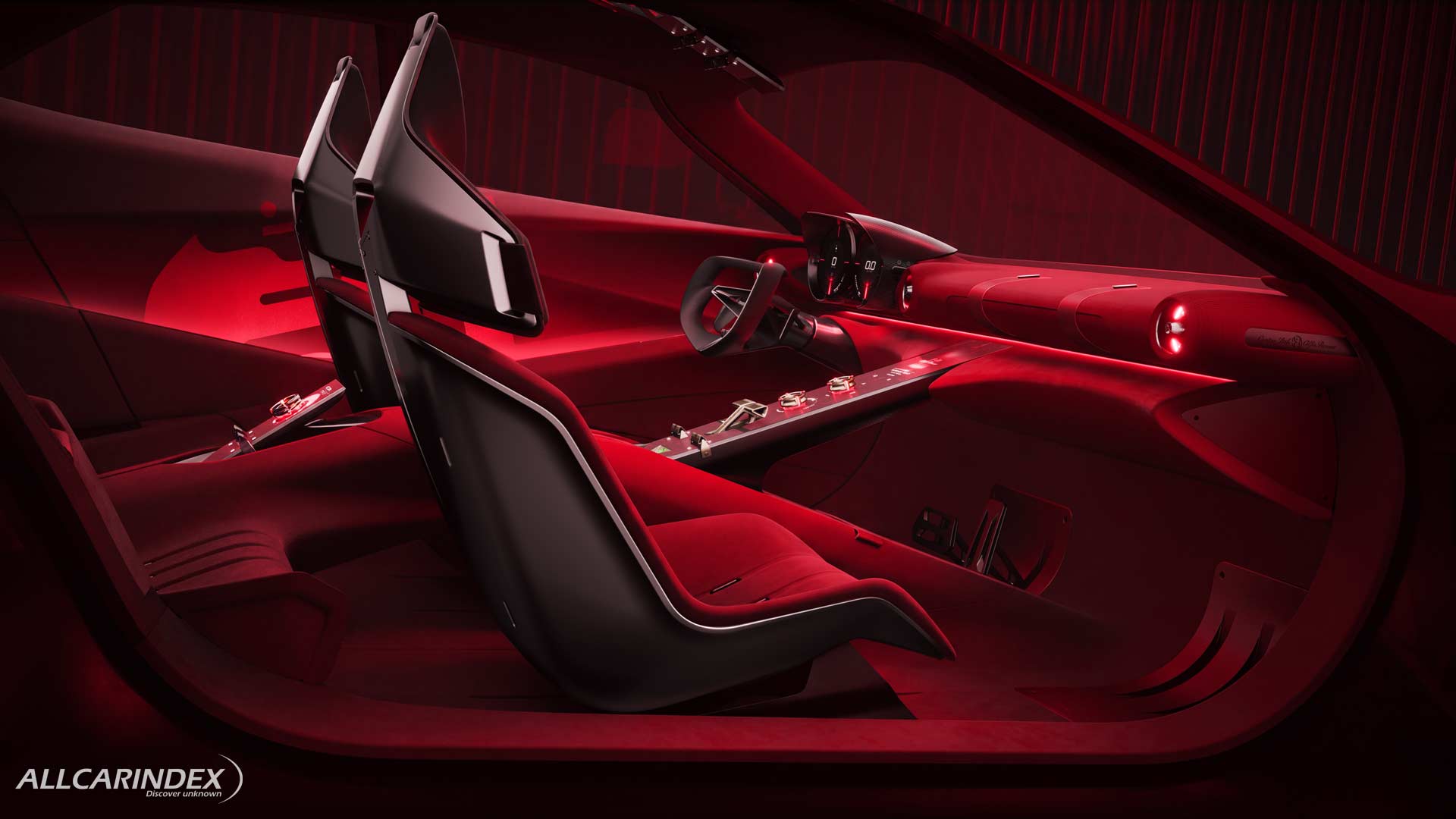
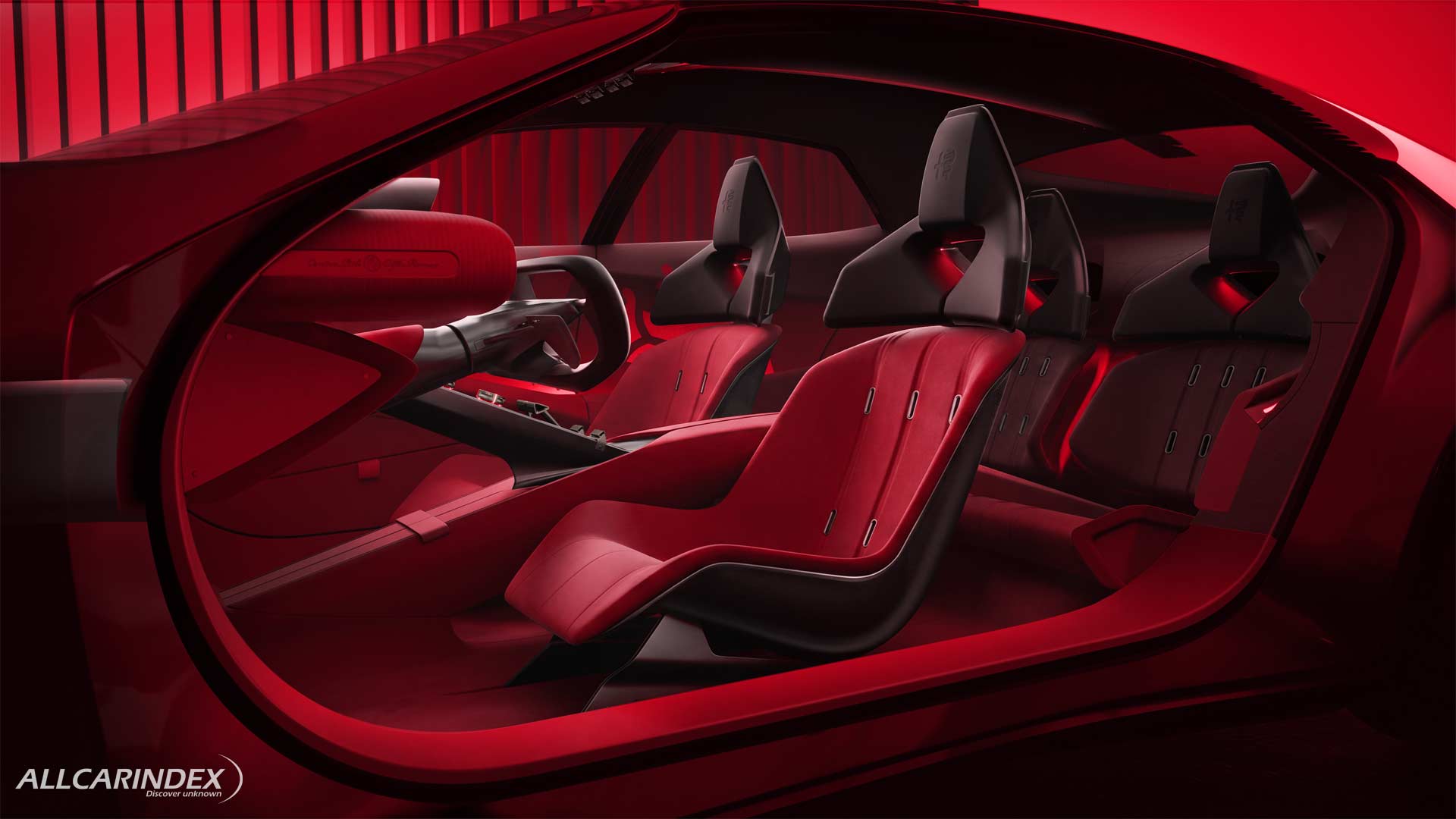
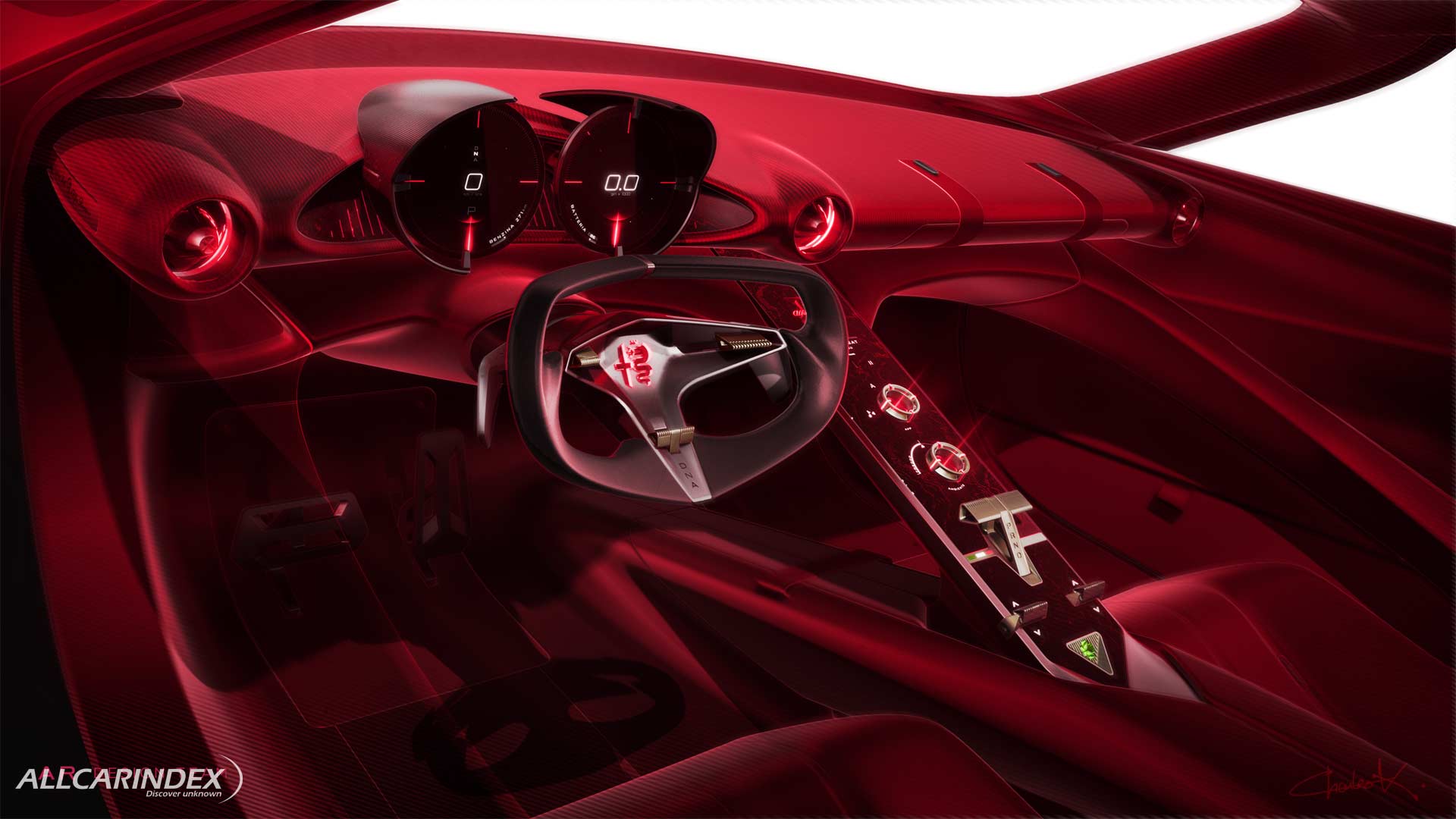
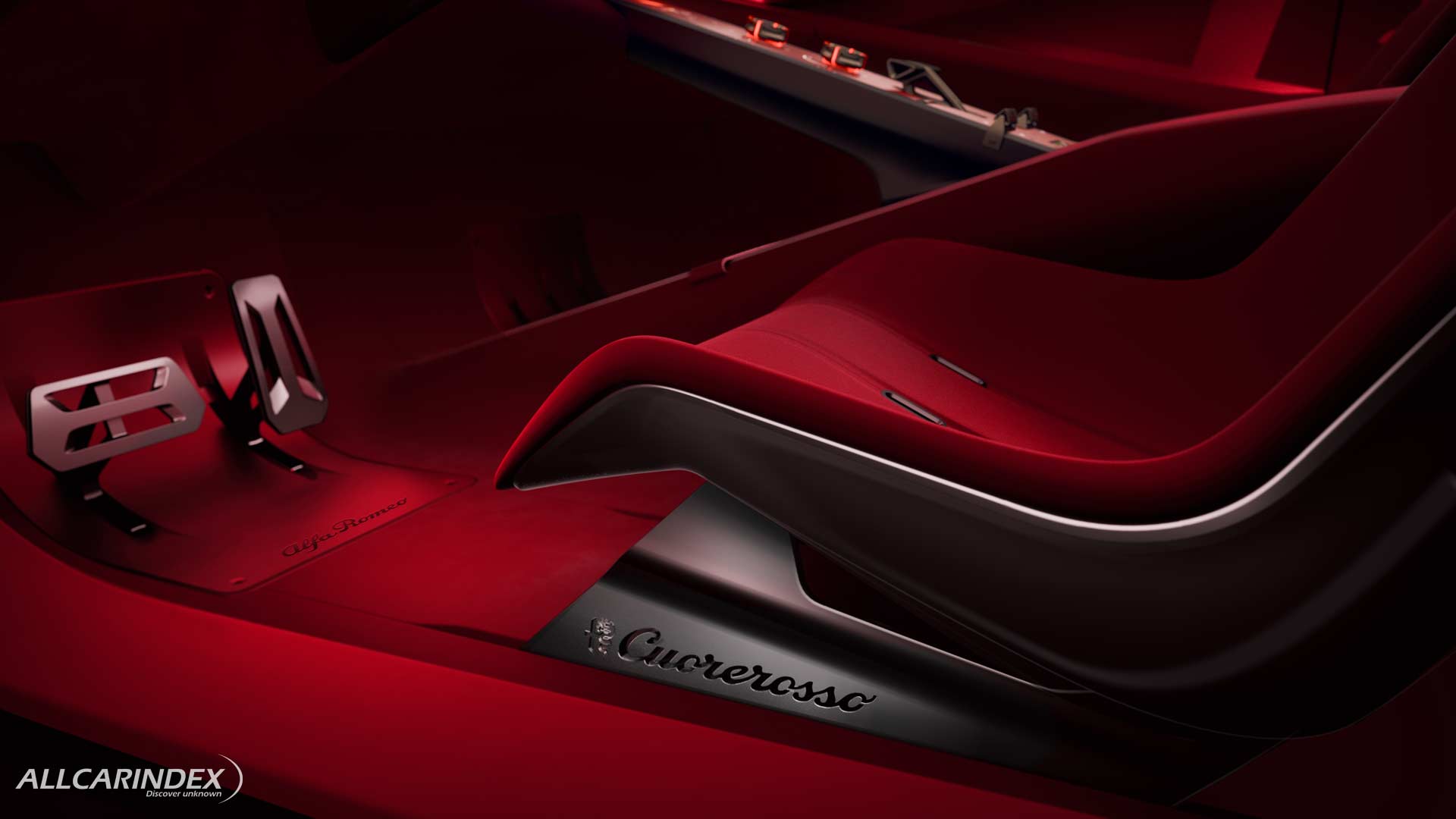
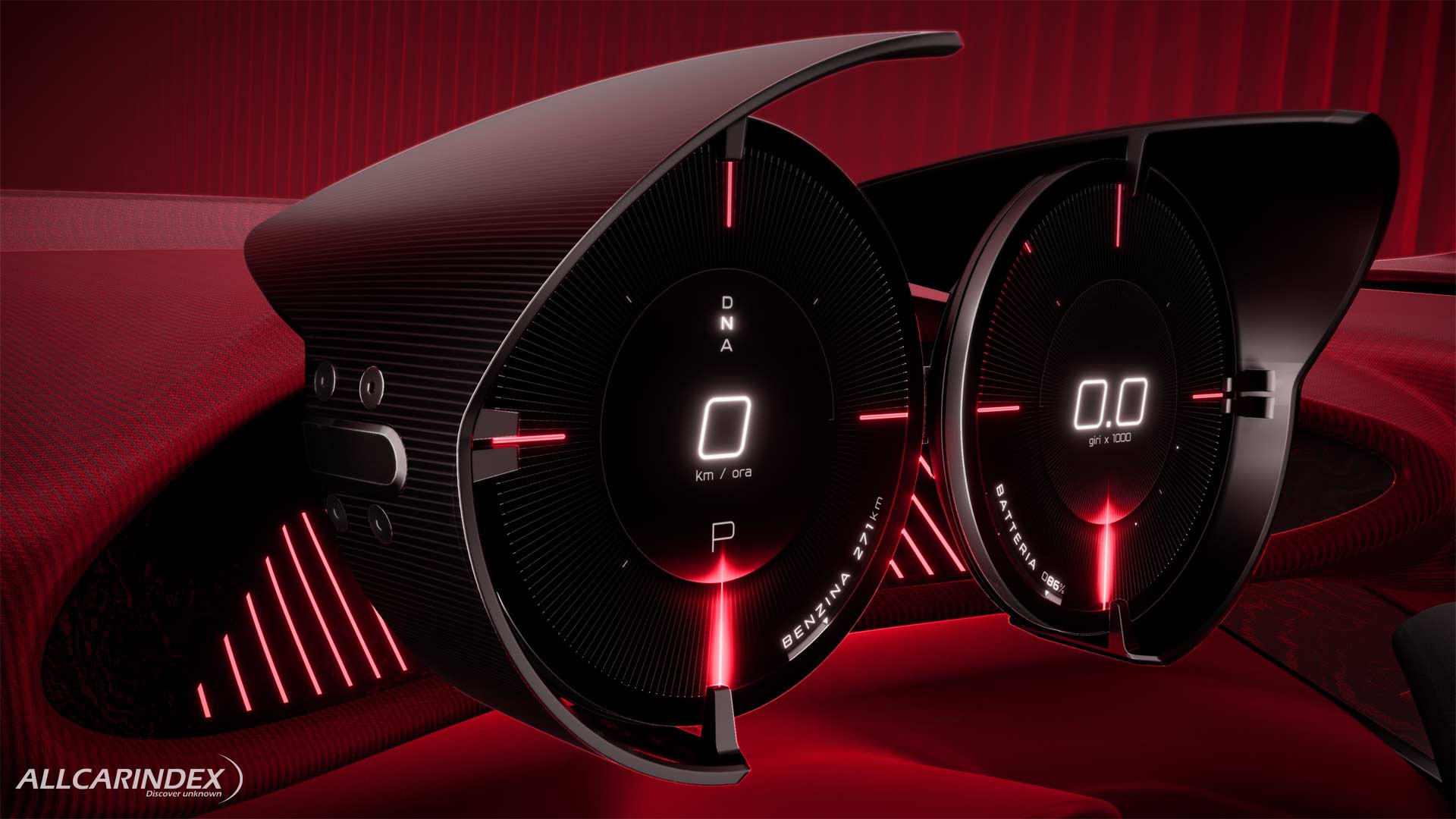
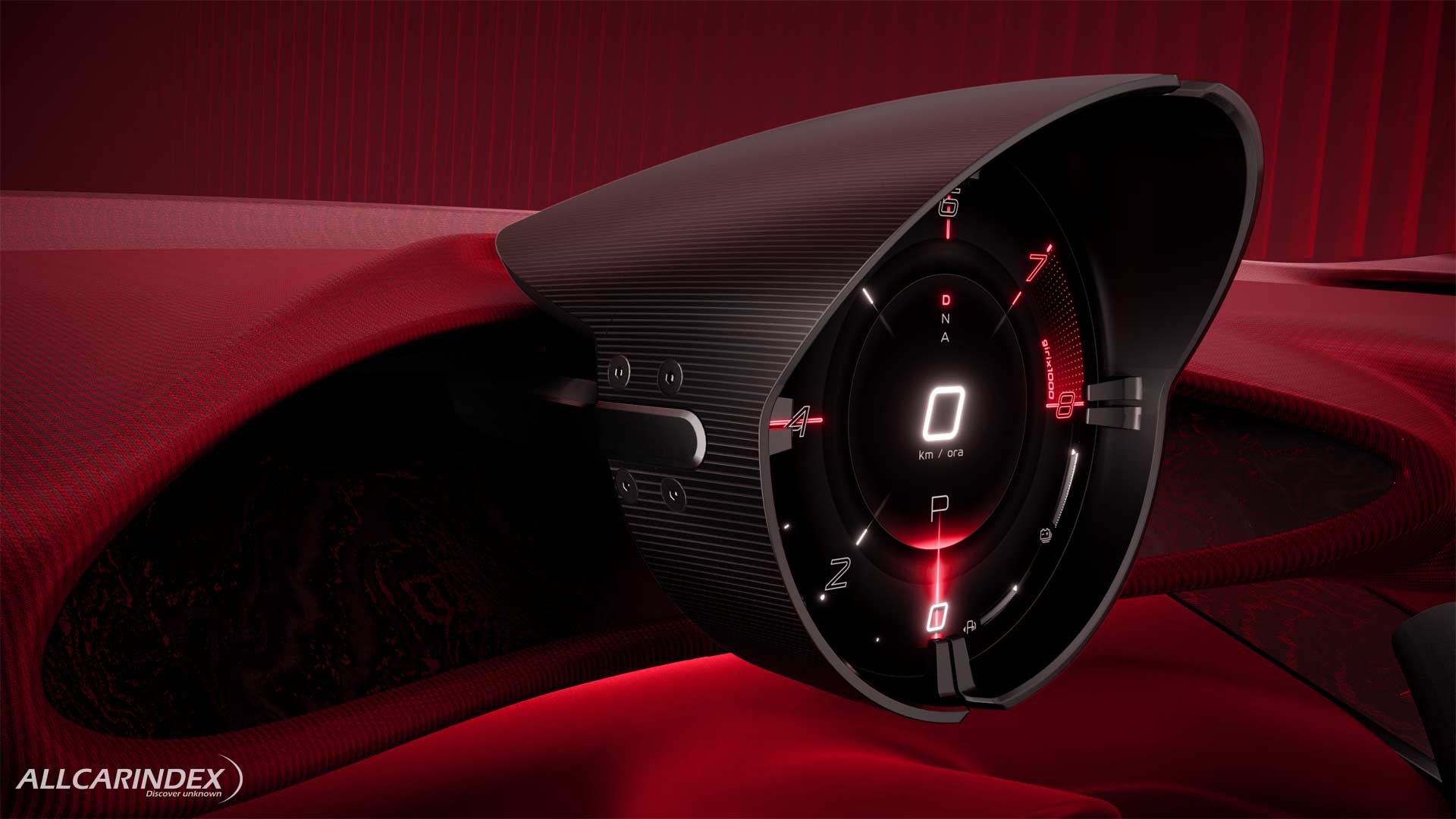
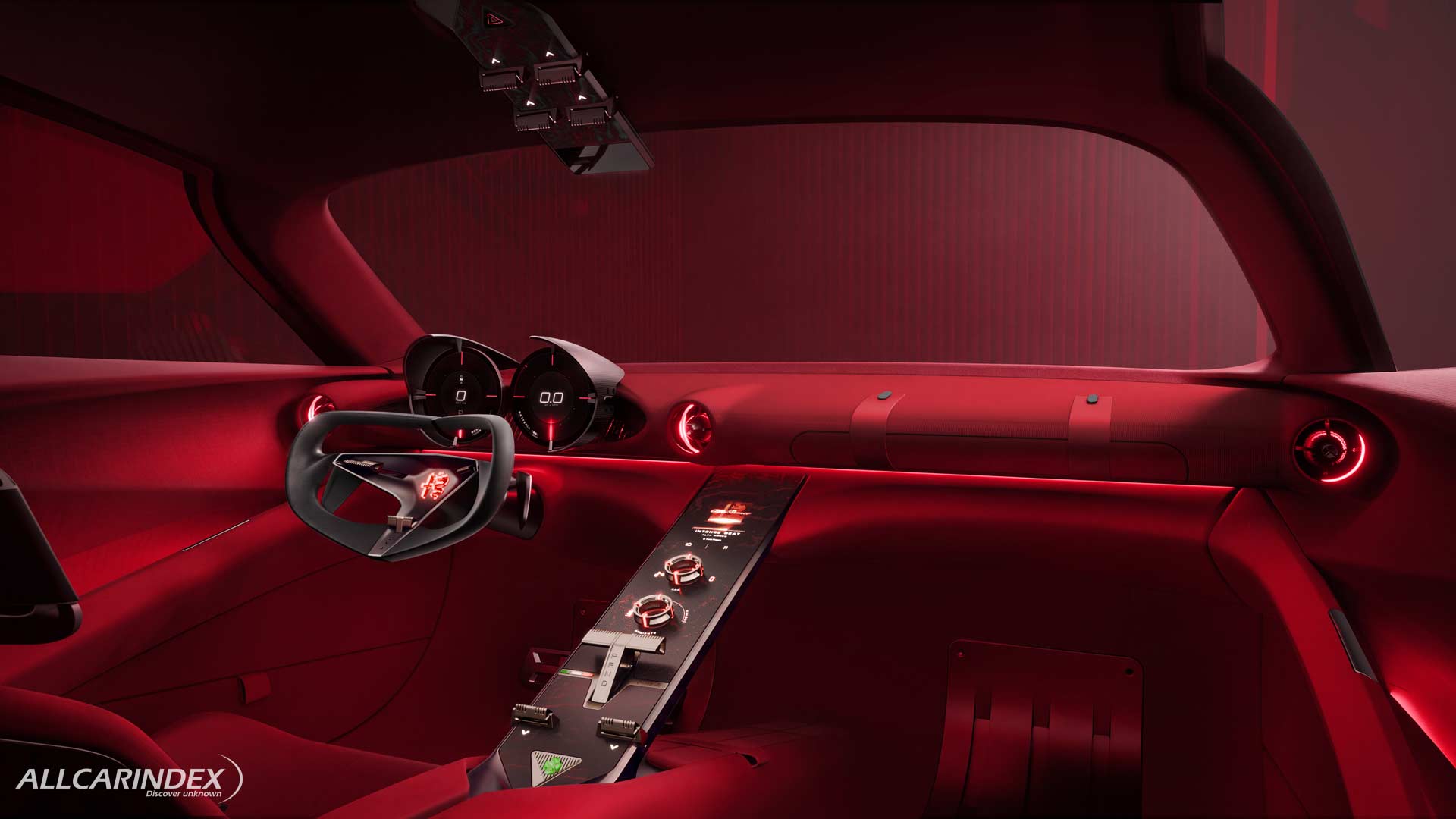
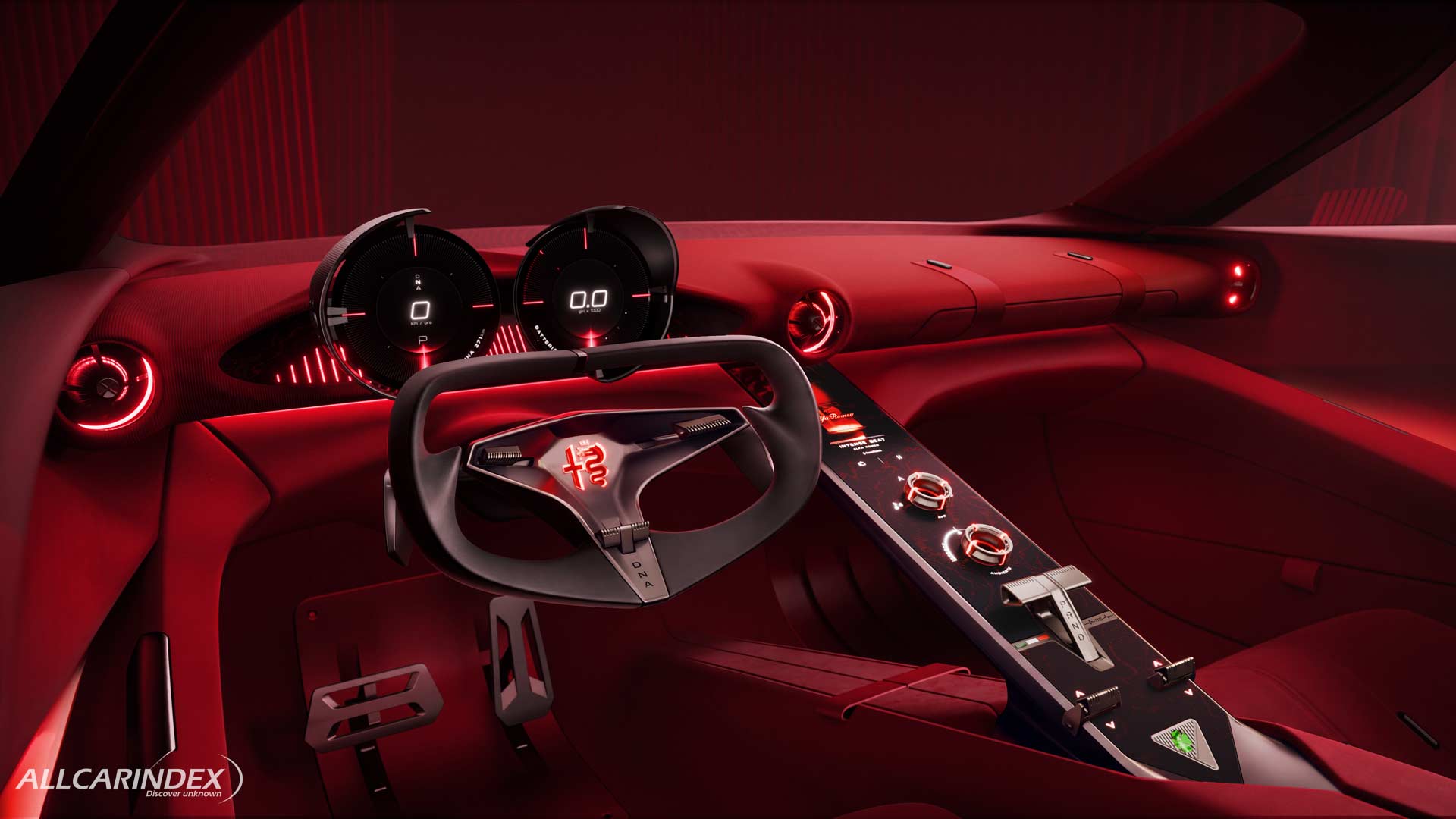
Likewise the exterior, the interior speaks about lightness, simplicity and the centrality of the driver. Four individual seats with enveloping shapes and ergonomic design reinterpret the traditional bucket seat, and a lengthened center console together with dynamic longitudinal volumes on the door panels wrap the occupants like a driving glove. The dashboard takes its inspiration from the architecture of the 1967 33 Stradale and its newly launched counterpart. Its thin, horizontal movement across the car adds to the perception of lightness, stability and technical control and continues into the door panels. Information and controls appear only when really necessary. In front of the driver is the new Cannocchiale Vivente, a reinterpretation of one of the brand’s stylistic features, turned into a dynamic interface with advanced kinematics. Immersivo keeps the traditional two-element setting, while Concentrato physically fuses the two telescopes into a single one, recalling the instrumentation of racing cars of the past. The more engaged the driving becomes, the less information remains. The technology may develop further in STLA SmartCockpit, the Stellantis digital platform.
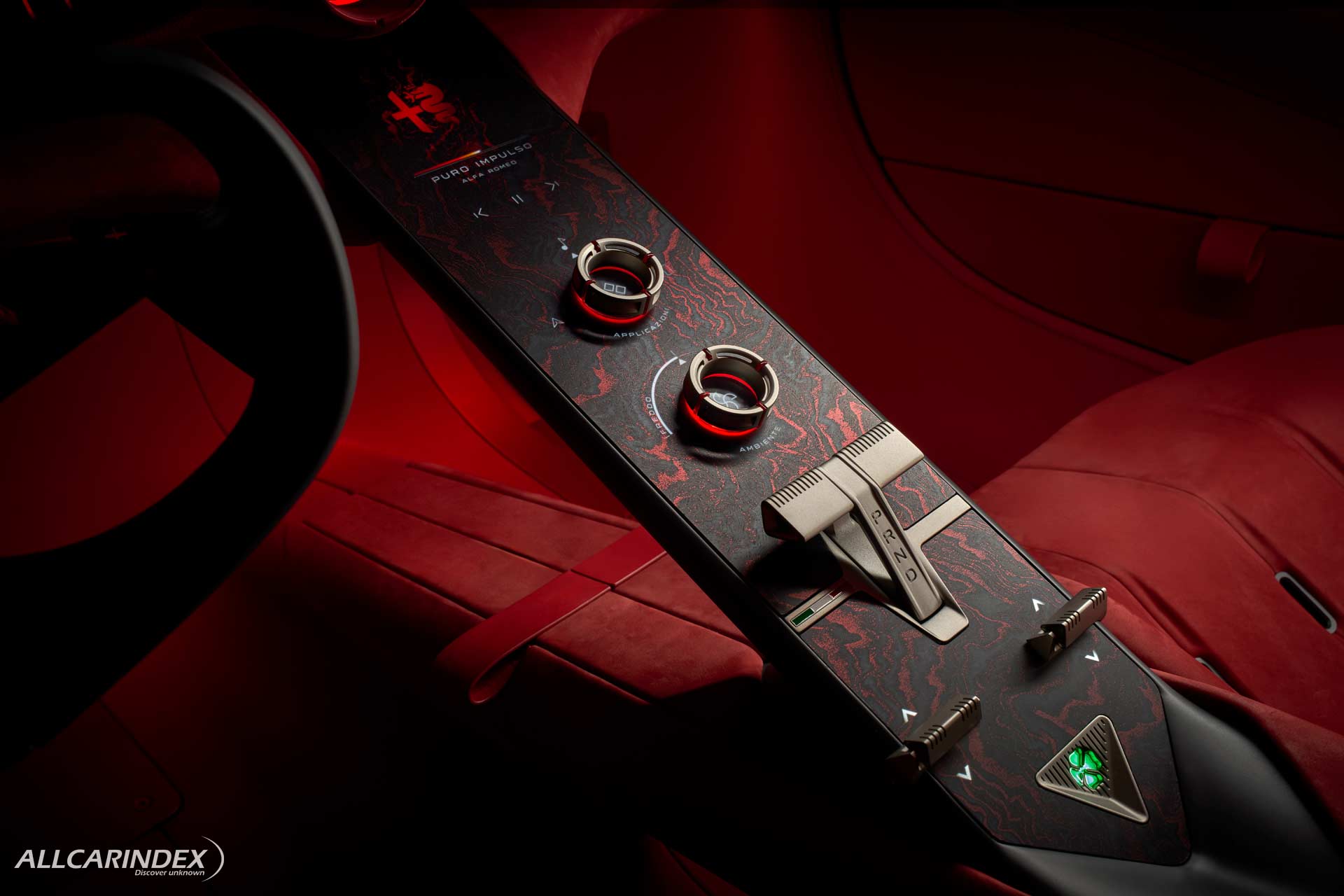
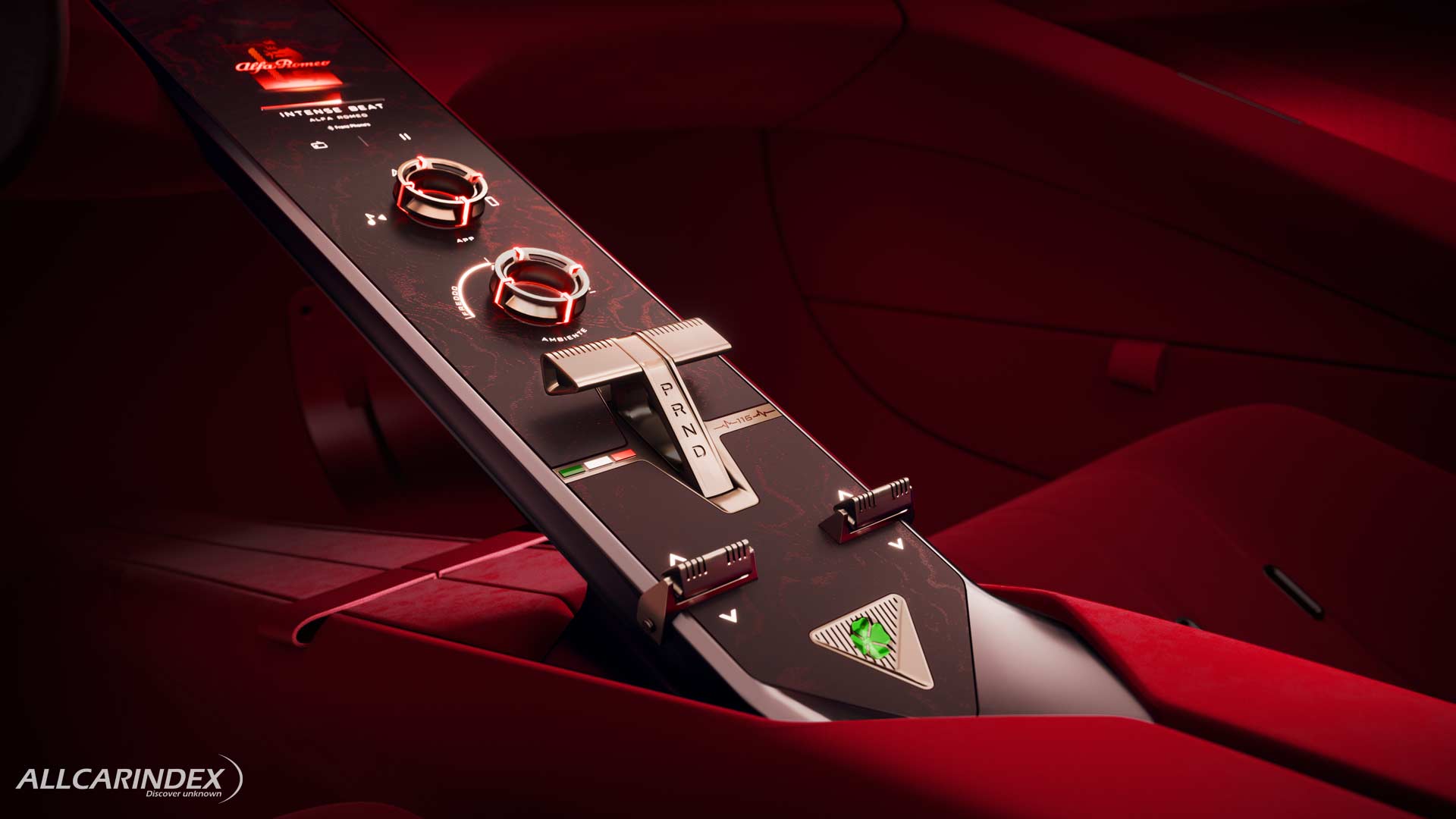
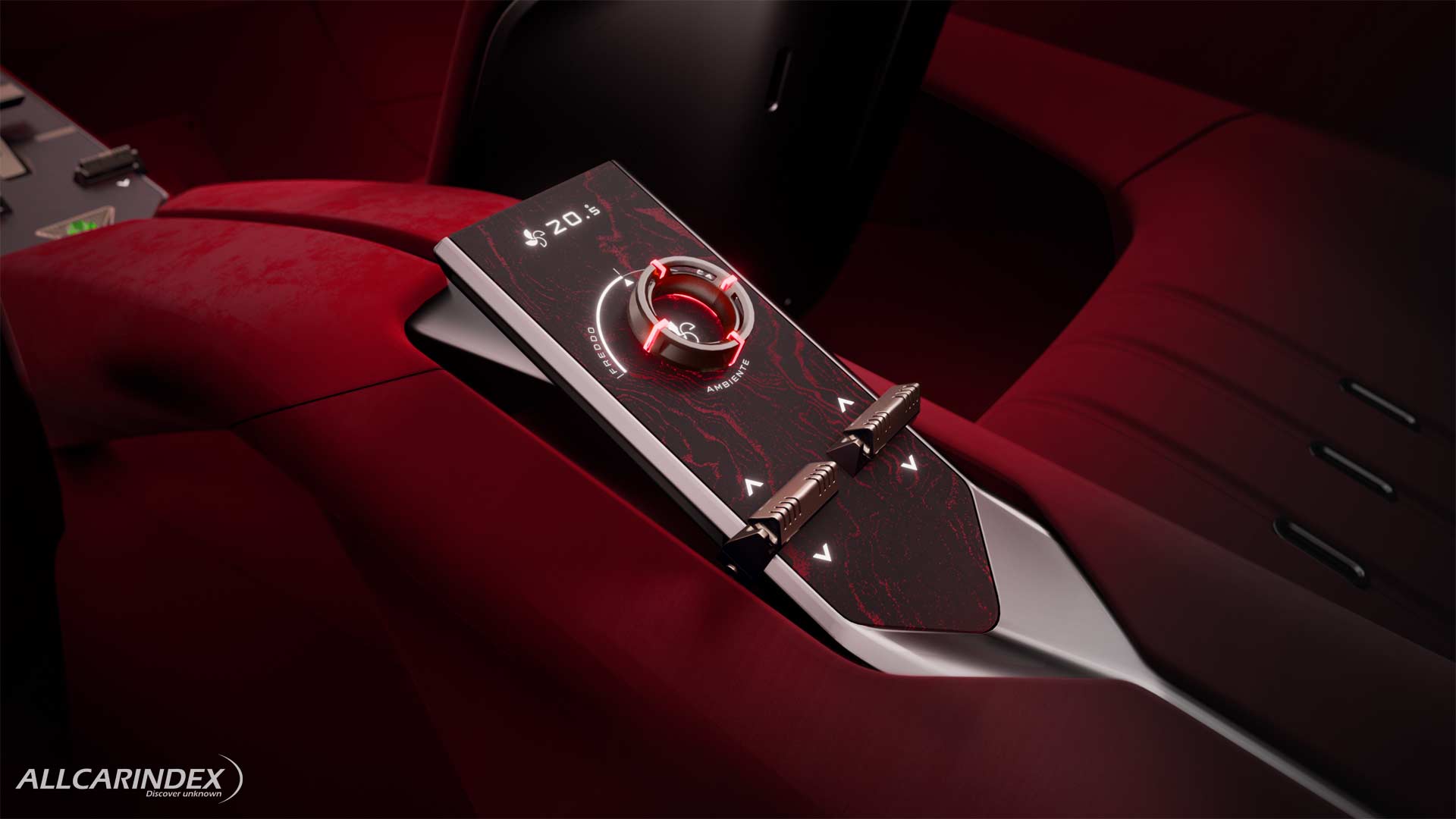
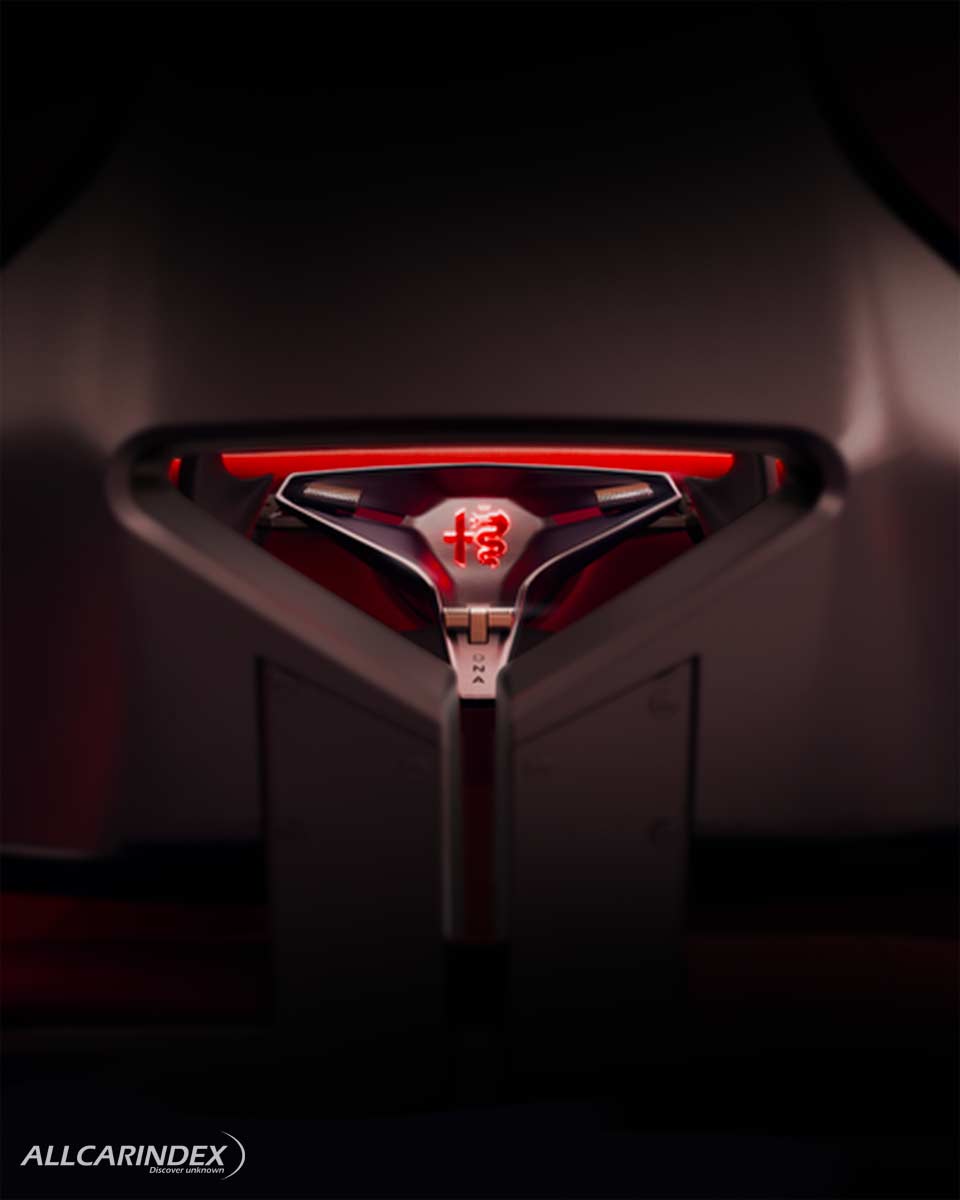
The same philosophy governs three driving experiences called Cruise, Sport and Quadrifoglio, which adjust the interaction between driver and car according to the level of engagement required. The three-spoke steering wheel works through an electronically controlled steer-by-wire system, yet the principle named Con-tatto Volante keeps the analogue and physical side very much alive, since the mechanical controls answer with haptic and acoustic feedback. On the central tunnel sits the Magma Display, a phygital control center where a touch screen surface lives next to a rotary dial, a selector for the drive modes and toggle switches. It remains discreet until needed and then becomes intuitive, simple and precise.
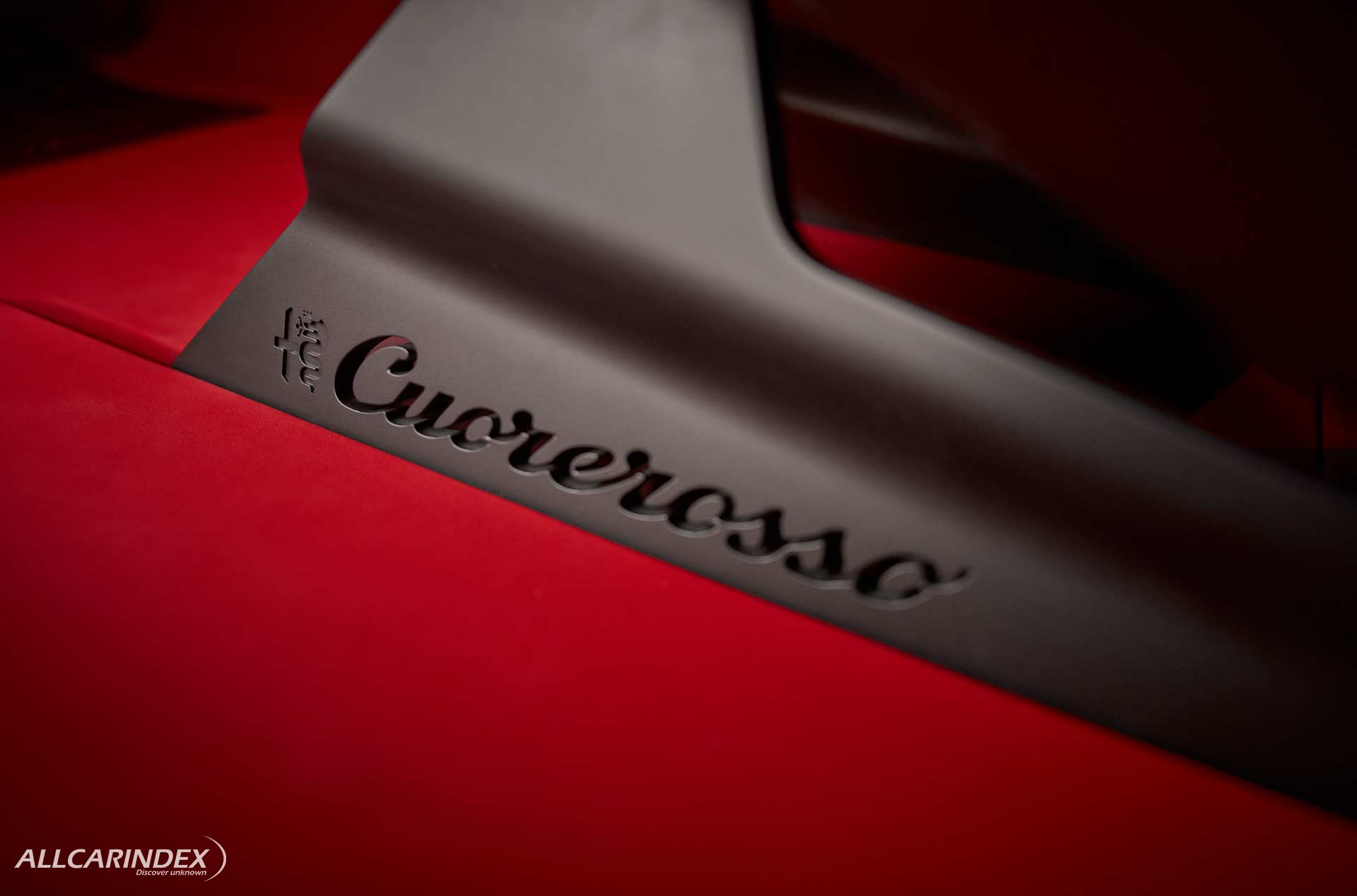
Red is treated as an energy rather than a colour choice. The bodywork wears the new Liquid Ink Red, obtained from a fine aluminum base covered by a coloured transparent layer, which gives an almost infinite visual depth. In the light the paint looks intense and vibrant, and when the angle of observation changes it turns to black. Entering through the rear doors is described as crossing the threshold of the Alfa Romeo heart, into a red and sinuous environment. Nubuck and metals take their shades from titanium, anthracite and gunmetal and sit next to newer materials, among them a regenerated leather containing 60% of waste left over from premium upholstery production. The hand-finished Poltrona Frau nubuck is used only where the occupants actually touch the car. In addition to that, research carried out together with Luna Rossa gave the dashboard a light, transparent, tensioned monofilament fabric, a descendant of the technical clothing worn in high-performance ocean sailing.
When the center console wakes up, a red glow rises from inside it through a surface that borrows its pattern from magma and lava. Alfa Romeo is also experimenting with recycled carbon fibers mixed with red resins, and the headrests come from an elaborate leatherworking process first tried out on the 33 Stradale. A removable bag is built into the dashboard on the passenger side and can be taken away when leaving the car, its securing straps becoming the handle. A detail with a purpose, in line with Bellezza Necessaria. The red itself follows a gradient, growing more intense towards the driver and cooling into darker, deeper shades towards the rear, and the Poltrona Frau nubuck is coloured by hand to give the same shaded effect. Light carries information as well, depending on the driving mode: in Concentrato it is reduced, while in Quadrifoglio mode some elements dim further and a set of four small lights in the vents recalls the Cross of the Alfa Romeo logo.
From the pulsing grille to the glowing console, everything in Cuorerosso is meant to beat at the rhythm of one heart, and the heart in question belongs to the driver.