


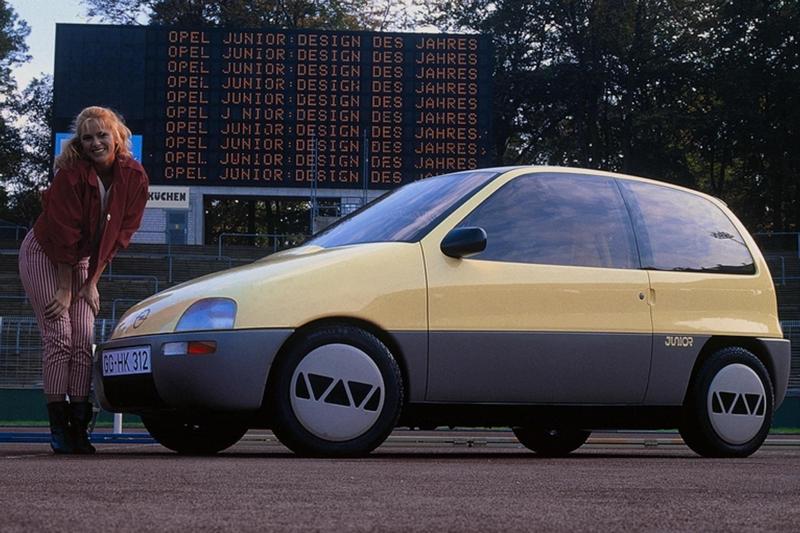
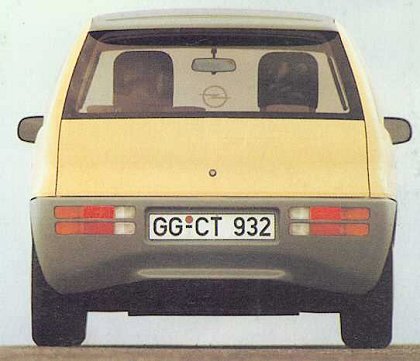
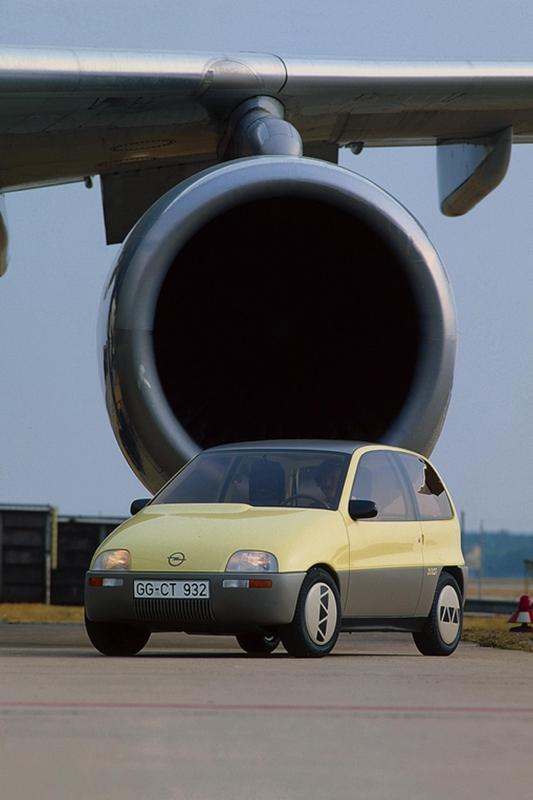
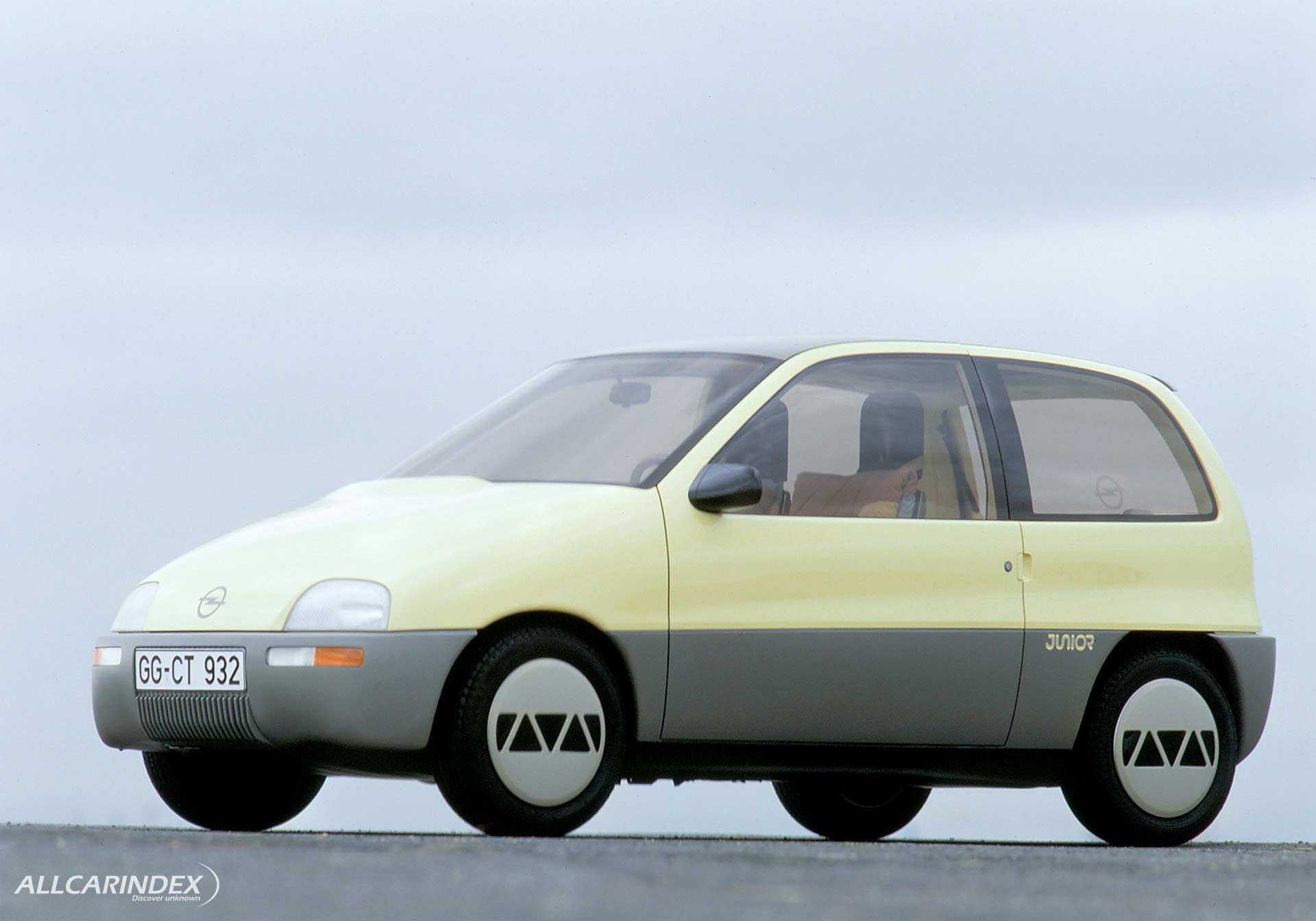
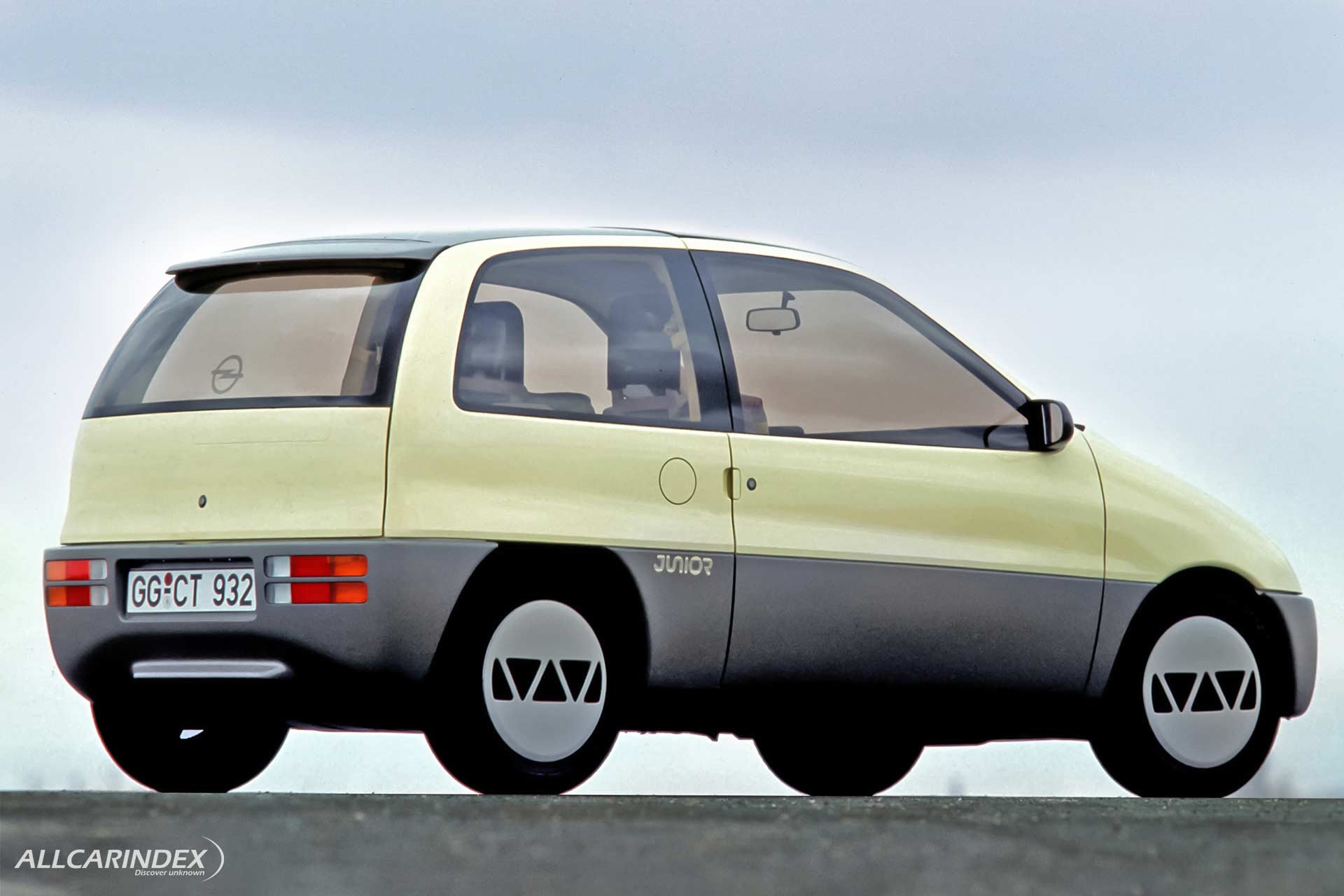
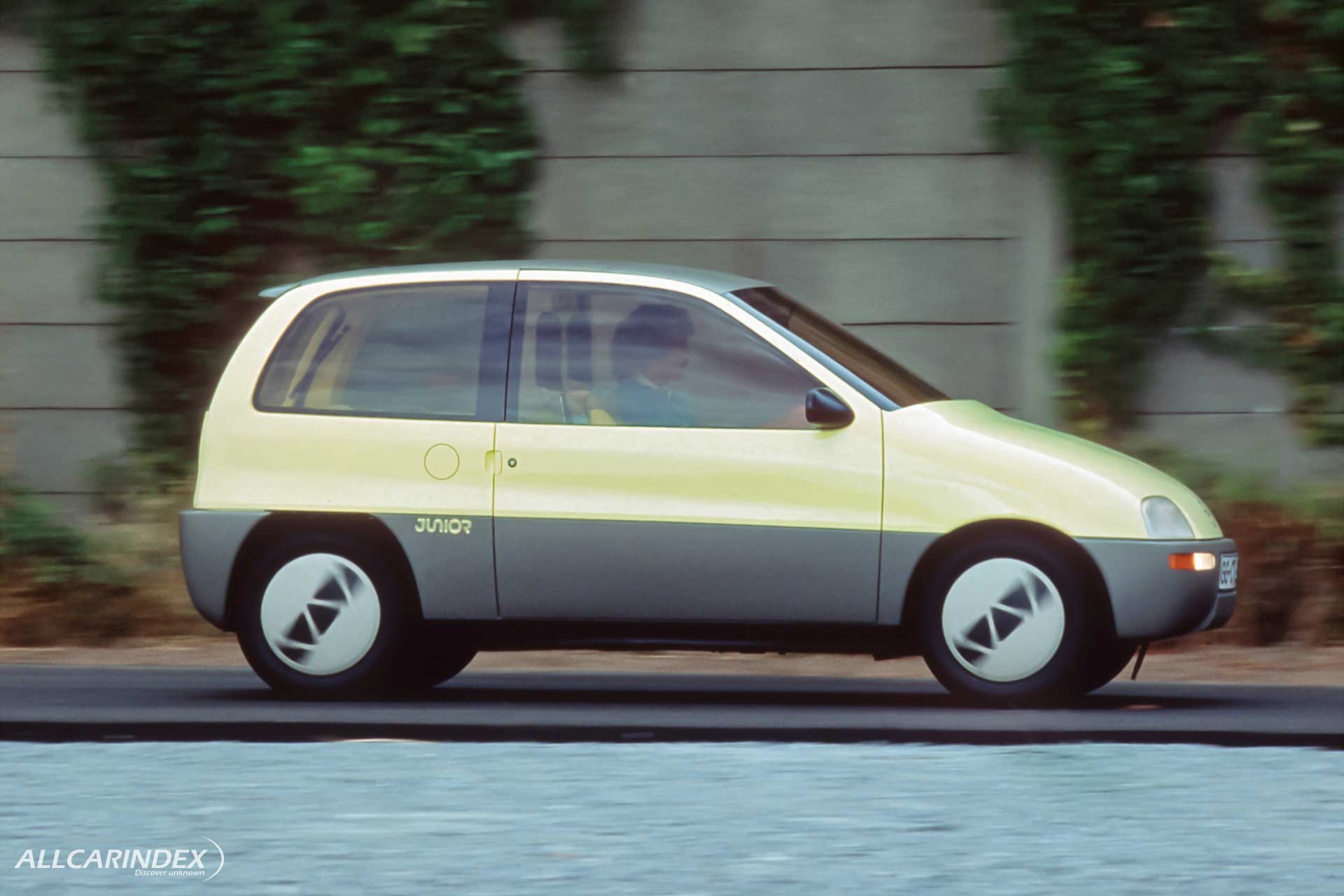
The Opel Junior is a small concept car that Opel presented at the Frankfurt International Motor Show, drawing considerable attention for being potentially even smaller than the Corsa, which General Motors produced in Spain at the time. Measuring only 341 cm in length, 157 cm in width and 145 cm in height, the Junior was noticeably shorter and taller than the Corsa, which measured 362 cm in length and 136.5 cm in height. Its proportions, with a steeply sloped hood and a comparatively high roofline, were often compared to those of the Honda City, sold in Europe as the Honda Jazz. This shape gave the car good visibility for maneuvering, a comfortable seating position and easy entry and exit, qualities suited to short-distance urban use.
Mechanically the Junior was based on the Corsa, using its 1.2-liter four-cylinder engine producing 55 hp at 5600 rpm and 90 Nm of torque at 2200 rpm. It used a lightweight torsion-beam rear axle with mini block springs adapted from the Corsa, but was fitted with larger 14-inch wheels wearing wide 165/60 SR 14 tires for visual effect. Opel stated the car could accelerate from 0 to 100 km/h in around 15 seconds and reach approximately 150 km/h, performance close to that of the Corsa itself, though fuel consumption was said to be considerably lower, with a claimed figure of just 4 liters per 100 km at a constant 90 km/h. Its rounded body and flush-mounted windows and fittings gave it a drag coefficient of 0.31, an excellent figure for a small car.
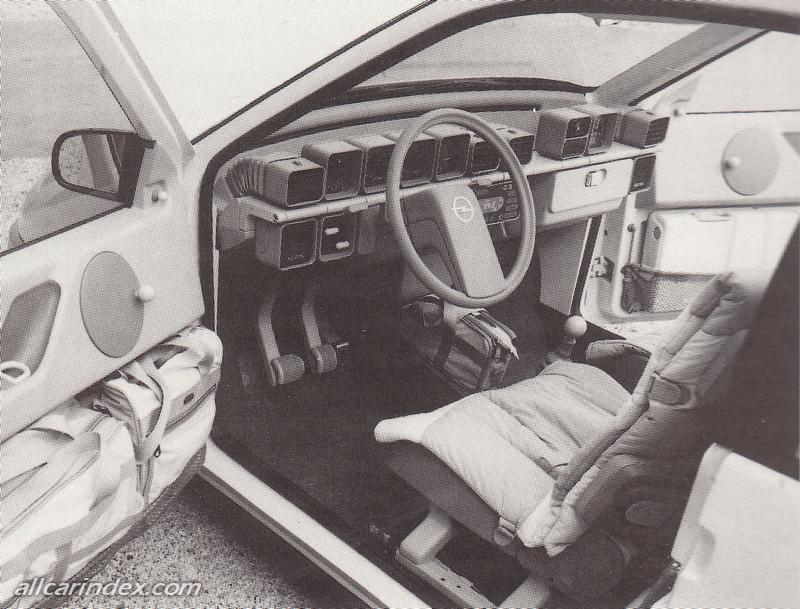
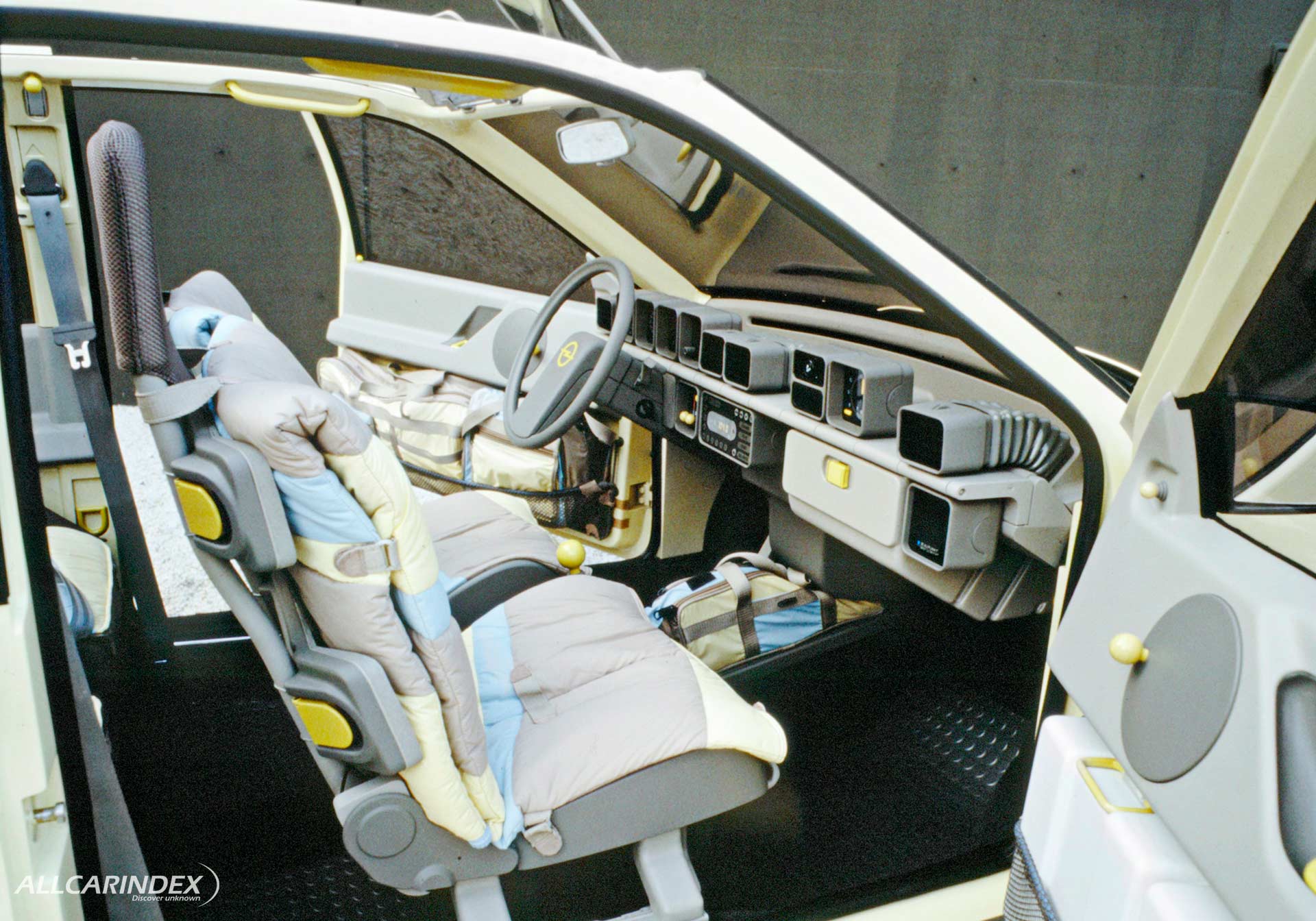
As a concept or "idea" car, the Junior incorporated several unusual features. Three interchangeable roof types were designed for it: a two-piece plastic roof, a fabric folding roof, and a glass roof, each compatible with a ski or surfboard carrier. A small wing above the curved rear window was intended to eliminate the need for a rear wiper, while the front wiper was hidden behind an asymmetrical hood edge. Inside, the front seat cushions were removable and could double as sleeping bags, and the door panels contained removable small cases usable as luggage. The dashboard consisted of interchangeable cubic elements that could be rearranged according to driver preference, with special wiring allowing components such as the tachometer to be connected for engine adjustment work. The car also featured a removable car radio convertible to battery power, a clock housing that doubled as an electric razor, plus a built-in hairdryer and beauty case. Its heating and ventilation system used flexible, adjustable ducting that could be positioned in multiple configurations.
The Opel Junior received the Car Design Award for concept cars and was considered a strong candidate for production in a more conventional form, particularly as Volkswagen was known to be developing a similarly small concept called the Student. However, the market for cars smaller than the Corsa and Volkswagen Polo was not yet considered ready in the 1980s, and the Junior was not put into production.


