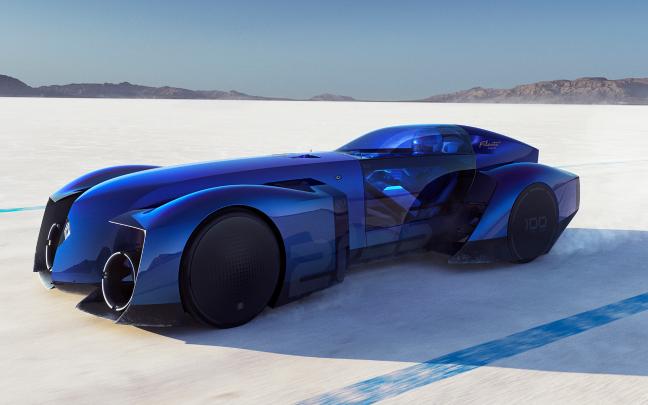

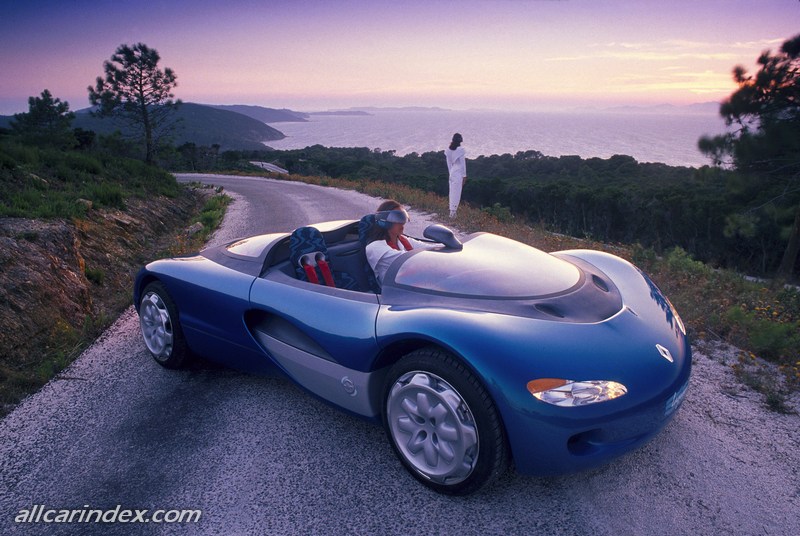
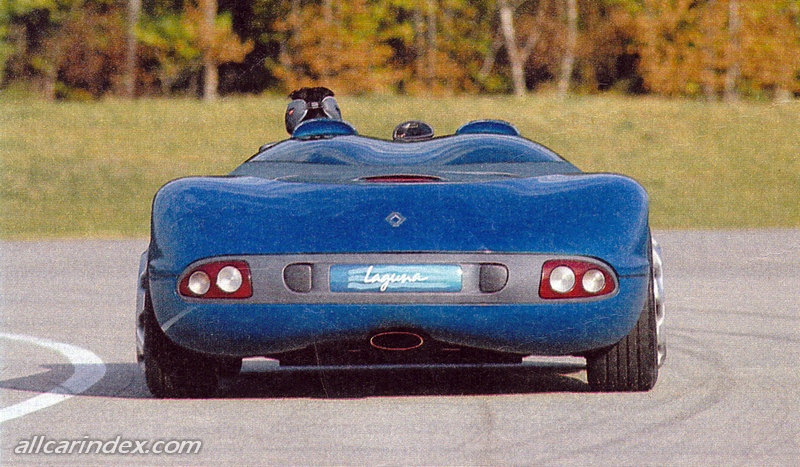
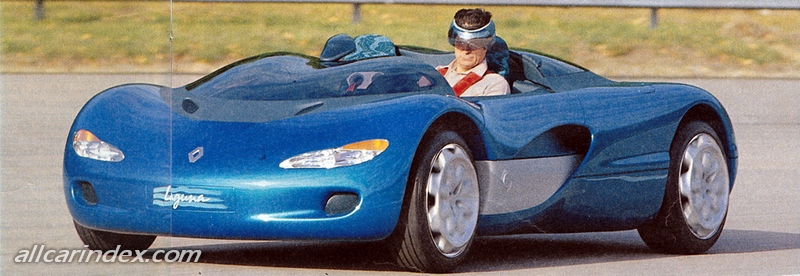
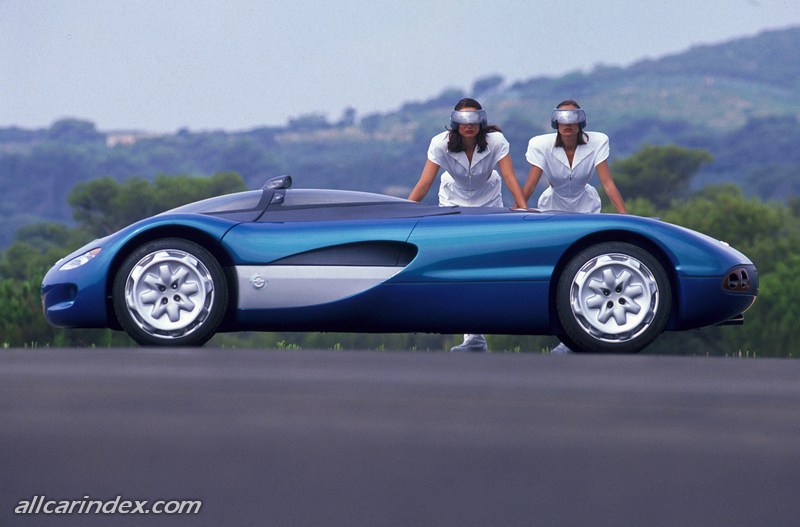
The Laguna was a concept car from the French manufacturer Renault, presented as a mid-engined roadster rather than a technology-laden saloon like the Mégane concept the company had shown in Paris two years earlier. Its rounded, flowing bodywork was built from composite materials and incorporated a sliding cockpit cover that ran on rails back over the engine cover, opening up the cabin in place of a conventional soft top or hood; no roof of any kind was fitted. When closed, the glass cockpit cover met the low, race-style windscreen to form a shallow glazed dome; when retracted, occupants sat above the windscreen line, which led the design team, headed by Renault design chief Patrick Le Quément, to develop a matching face visor called "Cruising stéréo" that doubled as sunglasses and as a receiver for an infrared audio link to the car's Philips sound system.
Structurally the Laguna was built as a racing barquette with a four-part underbody. A front tubular chassis carried the double wishbone suspension at both ends and also served as a crash structure, while a rear tubular frame housed the suspension, the transversely mounted turbocharged four-cylinder engine, radiator and fuel tank. Between these sat a honeycomb-structured sheet-metal sandwich passenger tub and a similarly honeycombed bulkhead that separated the cabin from the engine bay and anchored two integrated mobile roll bars. These roll bars remained hidden until sensors detected an imminent rollover, triggering a pyrotechnic and pneumatic system working at 150 bar pressure to deploy them from the body within a tenth of a second; once locked in place, Renault stated they could withstand a force of 3880 kg.
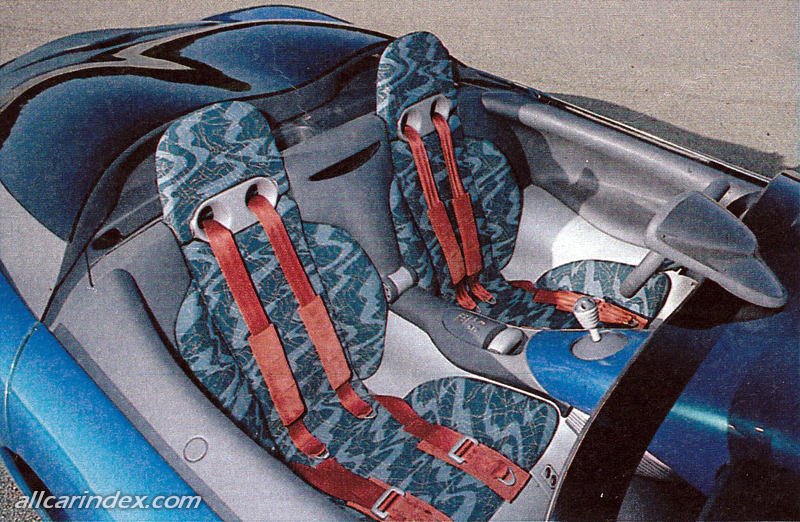
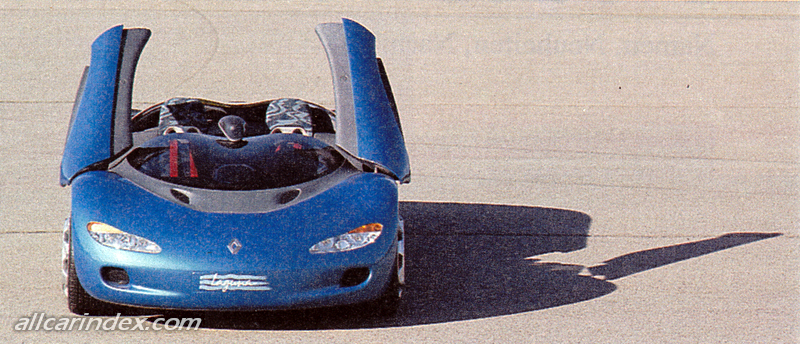
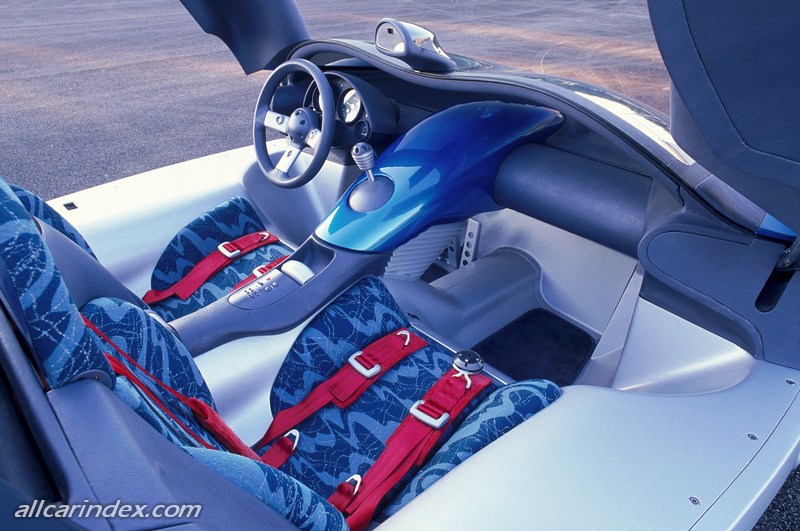
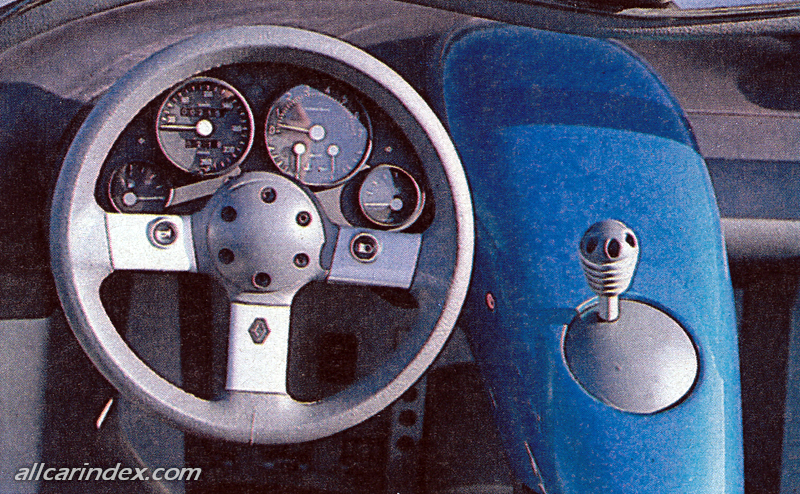
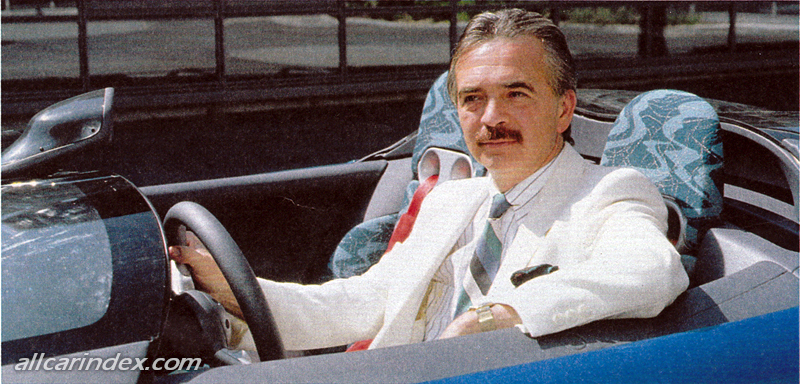
The bodywork combined plastic, carbon fibre and Kevlar for the outer skin, seat shells, dashboard, centre tunnel and other panels, while the front, cockpit and engine covers were made of reflective polycarbonate, all chosen to keep weight low. The doors opened forward and upward on gas struts and were secured by a constant-pressure electric lock. Inside, patented seats extended in a "long chair" style down to the floor, the electrically adjustable seats were paired with a curved centre console nicknamed the "motorcycle tank" for its shape, and the cabin featured standing pedals, circular gauges, a dedicated steering wheel and four-point harnesses.
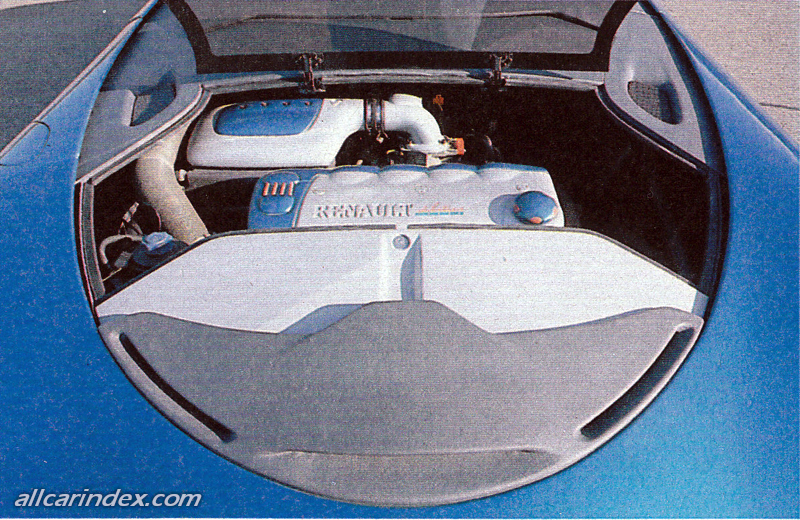
Alloy wheels with flower-patterned composite wheel covers carried Michelin tyres sized 205/45 R18 front and 235/40 R18 rear, with weight distribution of 39:61 percent. The transverse mid-mounted engine was derived from the Renault 21 Turbo, its output raised from 175 to 210 hp at 5250-5500 rpm through intake and turbocharger modifications, paired with a five-speed gearbox and producing 304 Nm at 3000 rpm. Renault claimed 0-100 km/h in 6 seconds, a standing kilometre in 25.2 seconds and a top speed above 250 km/h. The car measured 411 cm long and 183 cm wide, rode on a 252 cm wheelbase, and weighed 900 kg. It was built to factory drawings by the specialist model-making firm D3 near Paris, as was the practice for other French concept cars of the period.