
The Matra P 29 was a concept coupe shown by the French manufacturer at the Paris motor show in the autumn of 1986. Matra had built its reputation with production sports coupes such as the M 530, Bagheera and Murena, the Rancho leisure estate, and a strong record in motorsport, and the P 29 emerged from its development department's exploration of future high-performance cars. Despite drawing heavily on racing car influences, it was not conceived as an ultra-low, superaerodynamic coupe, and Matra itself described it as a fun-car.
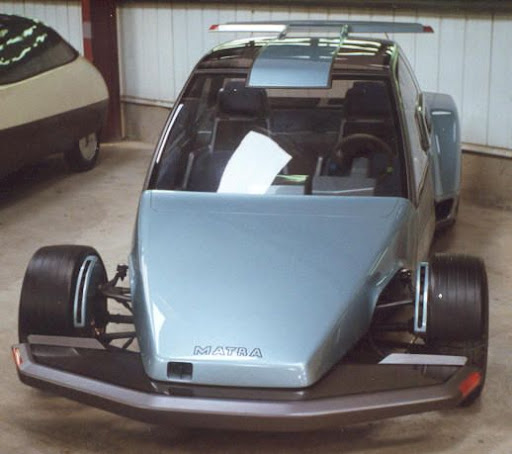
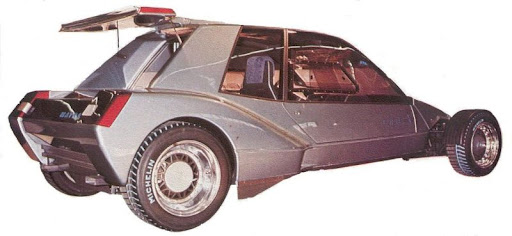
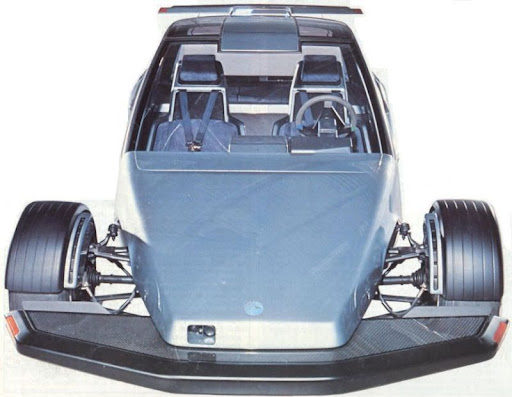
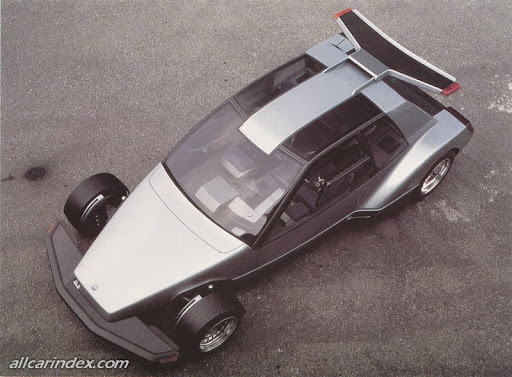
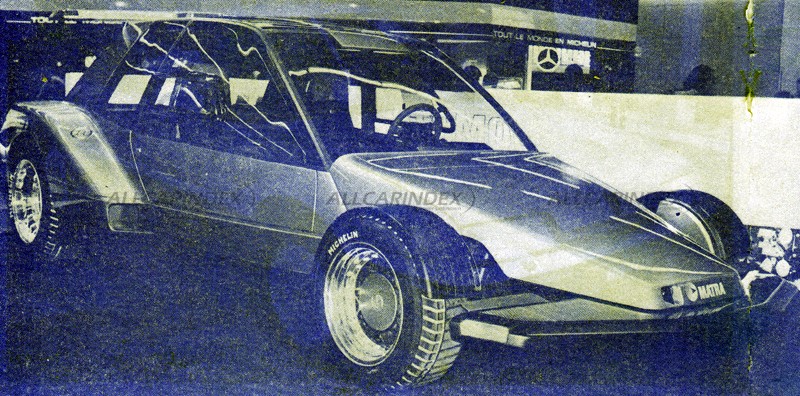
Its styling combined a Grand Prix-style front wing and exposed front wheels, covered only by small swiveling shrouds above their upper section, with a wedge-shaped nose and a tall, moderately raked windscreen that curved up into the roof. The door glass extended low and merged into glazed roof sections, though only small openable window sections were fitted. Angular wheelhouses shaped the rear flanks, and the tail was finished with a wide wing mounted at roof height. This bodywork achieved a drag coefficient of 0.30 and was intended to combine race-derived aerodynamics with everyday comfort and safety. The two-seat coupe body used composite materials and had two slanted gullwing-type doors.
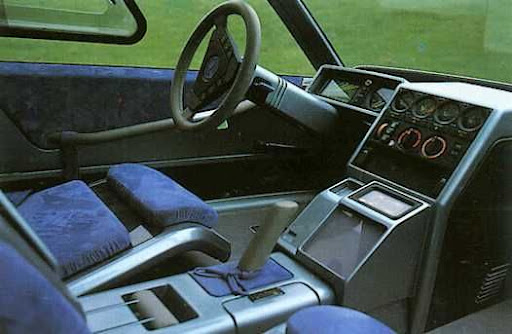
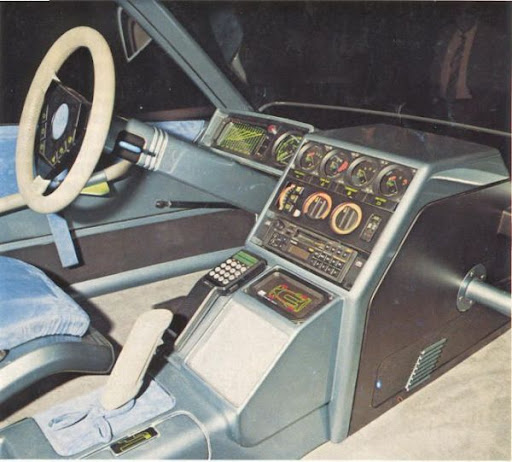
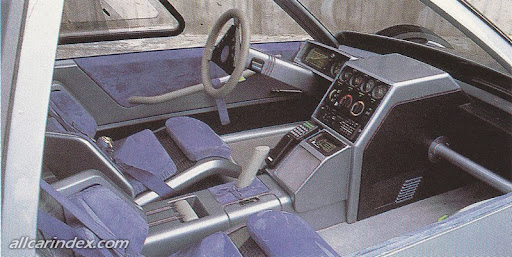
The interior offered a comfort-oriented cockpit with a low waistline, a normal-height roofline and generous glazing, giving occupants good visibility without sitting low to the ground or looking through a distorting sloped screen. Power came from a Matra-developed mid-mounted 2-litre four-cylinder engine fitted with a composite-material supercharger, producing 255 hp. Drive went through a permanent four-wheel-drive system, splitting torque 37 percent to the front and 63 percent to the rear wheels. At just 850 kg, the car reached 0-400 m in 12.9 seconds and 0-1000 m in 23.8 seconds, performance comparable to the Ferrari Testarossa or Lamborghini Countach, with 0-100 km/h taking 5.6 seconds and a claimed top speed of 270 km/h.
The low weight resulted from extensive composite construction: an aluminium honeycomb structure formed the base, with carbon-fibre and Kevlar panelling, and composite materials also used for the driveshafts and seat shells. Electronic systems controlled the rear wing's angle of attack and the rear air suspension based on wheel data, keeping ride height stable under braking and acceleration. The car also featured ABS, traction control linked to the fuel injection via wheel sensors, and Michelin tyre-pressure monitoring with automatic adjustment displayed on a centre-console monitor. In place of exterior mirrors it used a rear-view camera, plus an infrared radar system from Jaeger with one transmitter and two receivers to warn of obstacles in fog, a navigation system capable of displaying map sections, partly electronic instrumentation, and a head-up display. The P 29 measured 410 cm in length, 183 cm in width and 130 cm in height.