
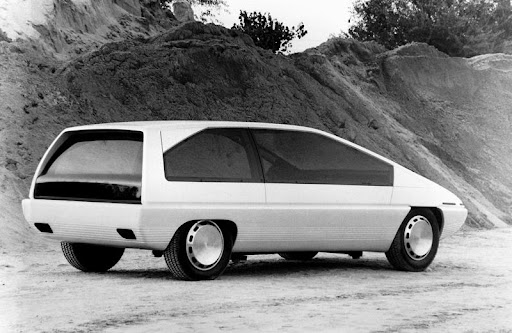
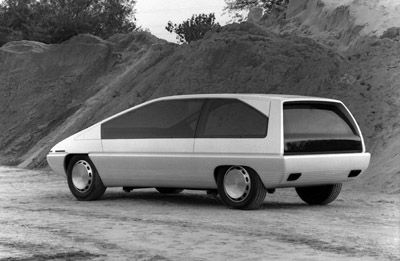
The Citroën Xenia was a concept car created with the American market in mind, intended for display not only at European motor shows but also, in 1982, at the Los Angeles Auto Expo and in San Diego. In the end, the effort to establish a foothold in the United States was left entirely to Peugeot, the Citroën parent brand. The Xenia was designed under Trevor Fiore, who had become Citroën's design chief that year and led a team of young designers. Fiore had begun his career in Paris with Raymond Loewy, the designer behind the distinctive postwar Studebaker, and his earlier work included the Elva-BMW and the TVR Trident, alongside projects for several other firms. In 1982 he took charge of Citroën's future-design studio at Antibes in the south of France, where he also worked on a Citroën 2CV concept intended for the mid-1980s. Carl Olsen, who came from Ogle Design, was hired around the same time as chief designer responsible for Citroën's nearer-term future models.
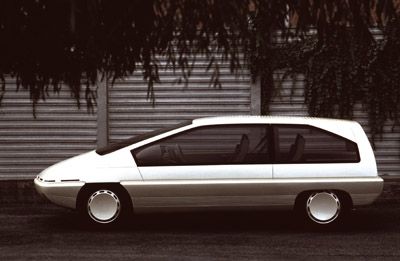
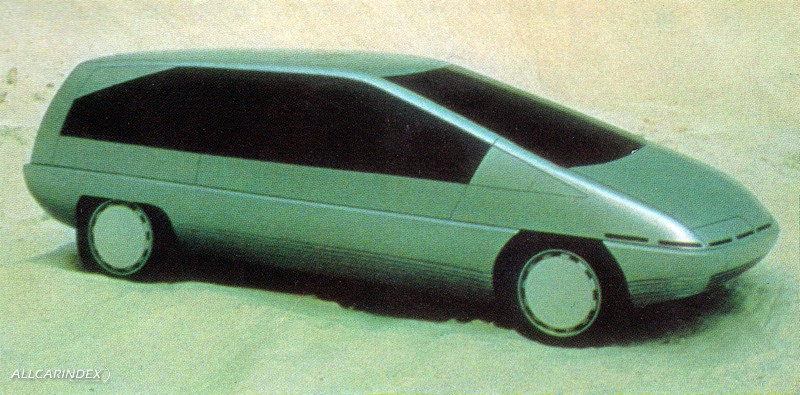
Fiore had earlier created the Karin concept, shown at the 1980 Paris Salon, and the Xenia followed a similarly extreme single-volume body concept. It featured a low, fully horizontal lower window line and a framed, upright tailgate that gave its rear end the look of a sporting estate. The technical basis assumed was the front-wheel-drive Citroën GSA with hydropneumatic suspension, fitted with a 1299cc air-cooled four-cylinder boxer engine producing 65 hp at 5500 rpm and 98 Nm of torque at 3500 rpm, though the show car itself was never built as a running vehicle. Long, low-reaching gullwing doors were meant to provide easy access, at least in theory, while flush-fitted glazing and a steeply raked windscreen contributed to aerodynamic efficiency, though no drag coefficient was ever released; the GSA's figure of 0.35 may not have been improved upon significantly.
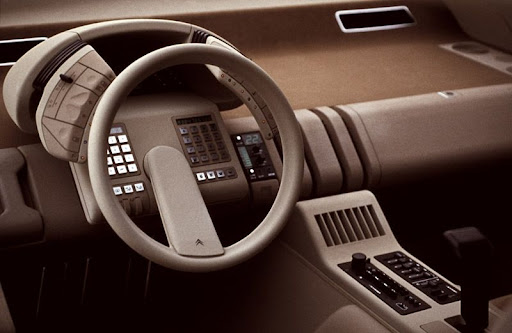
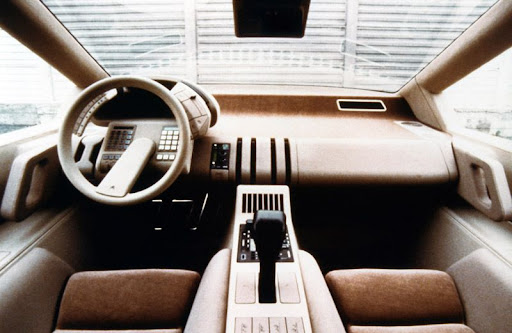
Considerable attention was given to a driver-friendly, forward-looking cockpit design, with a bright-colored dashboard that would have been impractical in everyday use. True to Citroën tradition, it used a single-spoke steering wheel with satellite switches positioned around a semicircular instrument display. Solar cells beneath the windscreen were intended to power automatic climate control for the glazed interior while the car was parked. The Xenia matched the GSA in length but was notably wider and lower, measuring 420 cm long, 175 cm wide, and 123 cm high, on a 255 cm wheelbase. Fiore had envisioned it as a GT for the year 2000, but the concept was never developed further, and Citroën did not pursue a single-volume production car until the later Evasion/Synergie.