aci-logo

Elva

1958-1968

Brand Data

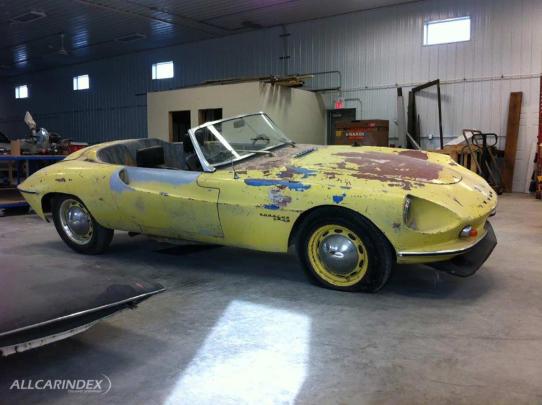
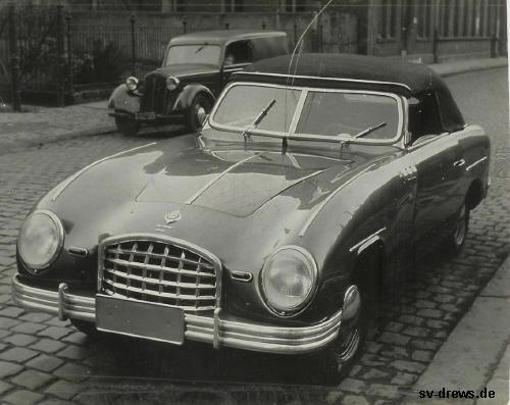
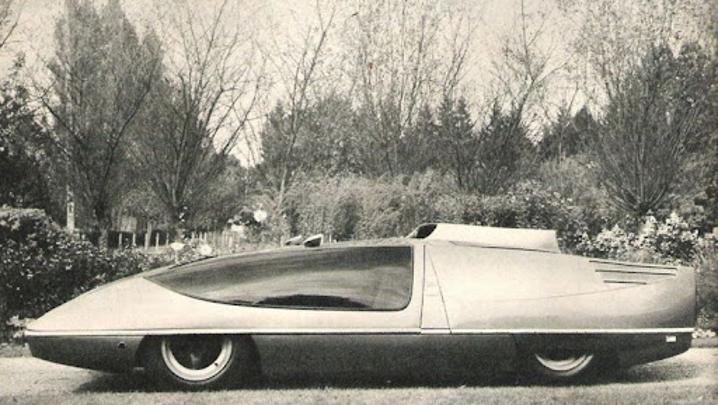
Elva was a British sports car manufacturer that operated between 1958 and 1968, initially based in Bexhill, Sussex, before moving to Croydon, Surrey, and later to Shenley, Hertfordshire, under successive ownership.

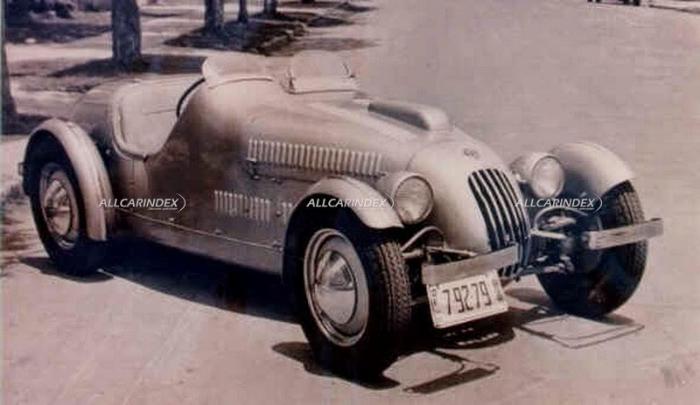
The marque originated with Frank Nichols, who ran a garage business in the early 1950s and commissioned Mike Chapman to build him a competition car, the C.S.M., a 1172cc Ford-powered, cycle-winged sports car similar in concept to the Lotus Mk VI. Encouraged by its performance, Nichols worked with his mechanic 'Mac' Witts to develop an improved version, which was named Elva, derived from the French phrase "elle va", meaning "she goes." Witts also designed an overhead inlet valve conversion for the Ford 1172cc side-valve engine used in the car.

The resulting Elva Mk 1 followed a similar spaceframe layout to the C.S.M. and the Lotus Mk VI, prompting a legal threat from Colin Chapman, though it differed by using Standard Ten front suspension instead of swing axles, along with a semi-enveloping aluminium body. Around two dozen examples were built, and the car achieved some success in British club racing. Subsequent sports-racing models proved particularly popular in the United States due to their forgiving handling characteristics.

In 1958, Elva expanded its range with the Courier, a road car built on a ladder frame using MGA running gear and a fibreglass body. Positioned as an affordable alternative to mainstream cars, it also achieved racing success. Approximately 700 units were sold between 1958 and 1961, although the model was not available in Britain until 1960, when it was offered as a kit.

Elva found early success in Formula Junior racing before being overtaken by rivals such as Lotus and Cooper. The company's American operations, which had seemed promising, collapsed after its importer was imprisoned for financial irregularities, severely damaging the business.

Following this setback, the Courier project was sold to Trojan Ltd, which produced around 100 examples of the Courier Mk III and Mk IV. The Mk III addressed complaints about a cramped cockpit by relocating the engine forward, which negatively affected handling; the Mk IV, introduced in 1963 with independent rear suspension and an optional Ford engine, corrected this issue, though by then the model's reputation had already suffered.

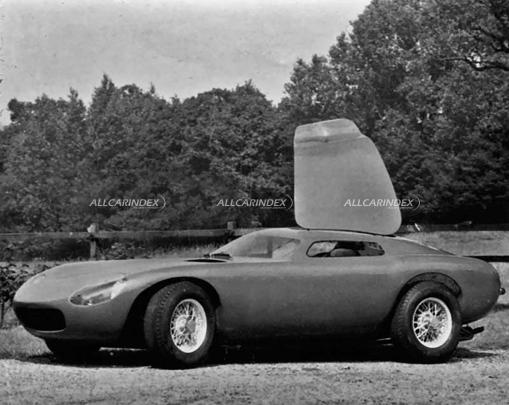
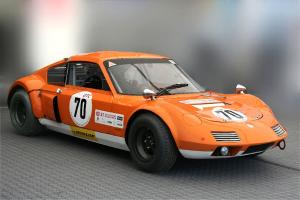
During this period, Elva's designer Keith Marsden developed a series of mid-engined sports cars. The company was noted for introducing BMW to postwar motor racing and for being the first manufacturer to receive engines from Porsche. In 1964, an Elva-BMW Mk VII formed the basis of the 160 GT, featuring bodywork designed by Trevor Fiore (born Trevor Frost) and built by the coachbuilder Fissore. The project was hindered by underestimated production costs, high British import duties, and the excessive weight of the body itself; only three examples were completed, one of which used a Rover V8 engine.

In 1965, Ken Sheppard Sports Cars acquired Elva from Trojan and produced 26 further Couriers, all fitted with 1800cc MG engines. Sheppard also fitted a Rover V8 engine to a GT160 chassis, though it suffered from poor handling, while a 3-litre Ford-powered Mk IV coupé remained only a prototype. Elva ceased production in 1968.

Subscribe for Full Access

  • Brands and models — Full galleries and interactive map
  • Exotic car catalog — Full brand details and model specs
  • Documentation archive — Full scans, plus PDF and ZIP downloads
  • Ad-free browsing

From €9.90/month — or €50/year (save 58%)

Subscribe Now
Models

Test your car knowledge

Take a quick quiz or try the Mystery Car of the Week — can you name the car?