
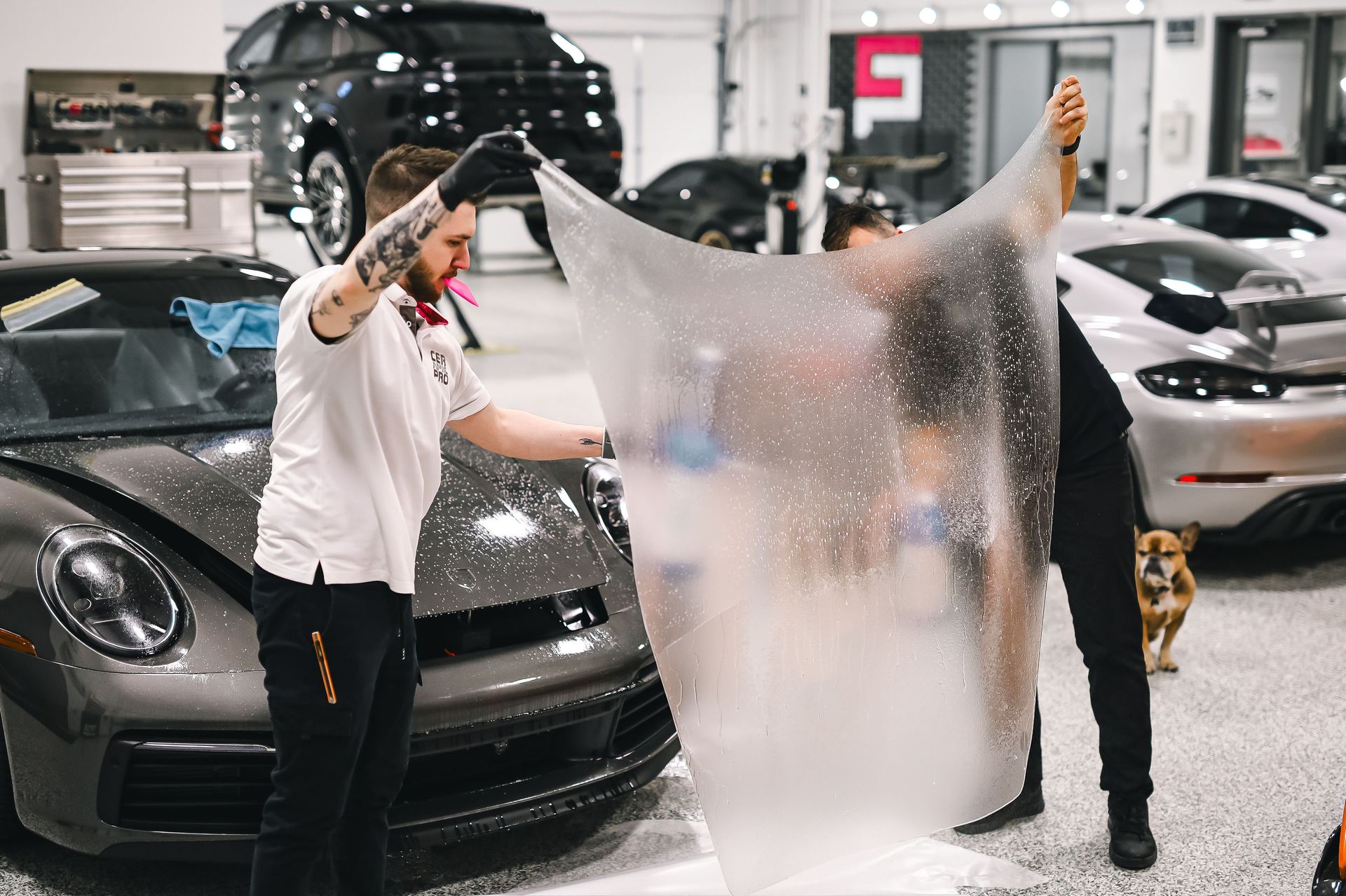

Car enthusiasts are in a constant battle to maintain their factory finish. In Chicago, it's a particularly nasty battle. You're always up against the road salt in the winter, the flying gravel on the Kennedy and the very tight parking spaces across the area. Paint protection film (PPF) helps protect against many of these everyday hazards. But the cost of PPF reaches several thousand dollars, so is it really worth it for a Chicago car?
What PPF Actually Does
PPF is fundamentally different from a wax or ceramic coating (solutions of differing levels of environmental resistance). PPF is a physical barrier – a thick, transparent thermoplastic polyurethane film applied directly to the painted panels of your car. The film softens the impact of road debris (rock chips, gravel, minor scuffs, etc.) and absorbs it so that it doesn't hit your paint. Premium films have a self-healing top coat that makes minor swirl marks and scratches disappear when exposed to the heat of the sun or warm water.
PPF in Chicago – Pros and Cons
Many car owners install PPF in Chicago. Local detailing experts point to two main threats: winter road salt and highway debris. Salt and brine can slowly etch into clear coats, leading to corrosion and dullness. Also, the constant construction and high-speed traffic on interstates like I-90 and I-94 turn the front of your car into a target for stone chips. PPF creates a protective layer that takes all that abuse instead of your paint. If you plan to keep your car long-term or preserve its resale value in a competitive market, PPF is a rational financial decision.
PPF has limitations, of course. It won't stop a major collision or a deep scratch from causing damage. The installation itself is labour-intensive and expensive. For a full front end (bumper, hood, fenders, mirrors), you're looking at $1,000 to $3,500. That price will vary depending on the quality of the film and the skill of the installer, and full body wraps are going to be significantly more expensive. For a city commuter, someone who's just driving around in the city and is going to be a car for a few years only, the ROI may be very difficult to justify.
A Strategic Approach for the Chicago Driver
The smartest strategy is rarely “all or nothing.” Consider a targeted approach based on your driving habits and exposure. If you commute on the highway daily, focus on the high-impact zones – the front bumper, a portion of the hood, headlights, side mirrors, and the lower rocker panels behind the wheels. These are the areas that take the brunt of Chicago's debris and salt spray.
For the rest of the vehicle, a good quality ceramic coating will provide excellent chemical resistance, UV protection and easier washing (all of which complement the physical protection of the PPF). This hybrid approach gives you the maximum protection where it's needed without the premium of a full wrap.
Is PPF worth it for a Chicago car owner?
If you've got a car you're going to keep, or if you're one of those people who jump up at the thought of a pitted front bumper, then yes, it is. It's a sensible investment in the face of the very specific hazards that Chicago presents. But if you're on a very tight budget or you're leasing and/or doing all your driving in the city, then you may be fine with no wrap at all. At the very least, you should consider some form of protection on the front impact areas (your paint will be very grateful when the first spring thaw comes and you see the salt and gravel damage that the Chicago winter has done to your car).