
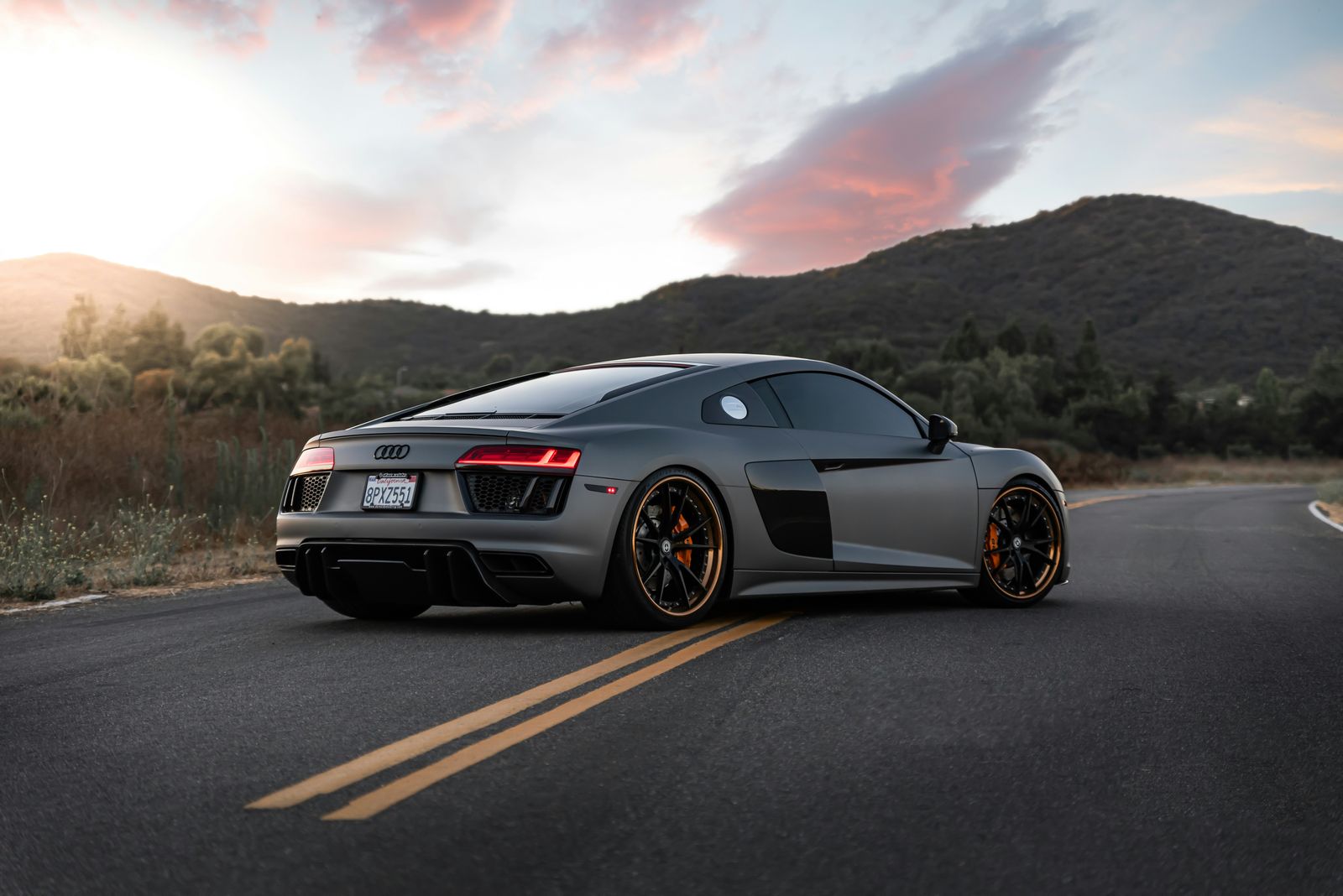

Some cars earn their place in history through sales figures. It is evident that these models offer good comfort and mileage, making them appealing to buyers.
Some of the best-selling cars and trucks of 2025 are the Ford F-Series, Chevy Silverado, Toyota RAV4, and Honda CR-V. They sold 801,525; 577,434; 479,288; and 403,768 units, respectively.
However, some cars achieve lasting recognition through design, storytelling, and cultural impact. A small group of vehicles never reached large-scale production, yet they continue to influence enthusiasts, designers, and collectors. These cars stand as reminders that rarity and bold vision can outweigh commercial success.
Limited production often allowed designers and engineers to experiment without restrictions. As a result, many of these cars introduced ideas that later shaped mainstream automotive design.
The DeLorean DMC-12
Few cars illustrate cultural impact better than the DeLorean DMC-12. Produced in limited numbers during the early 1980s, it struggled commercially due to performance issues and company instability.
However, its appearance in the Back to the Future film trilogy transformed the DMC-12 into a global icon. The stainless-steel body and gullwing doors gave it a futuristic identity that stood apart from its contemporaries.
The DMC-12 also gained renewed attention as conversations around electric mobility grew. A UK-based company developed a “drop-in” electric conversion kit for the model.
This need arises because of the growing demand for electric vehicles. According to LilyPad EV, almost every manufacturer is now selling electric vehicles (EVs).
The International Energy Agency notes strong global momentum in electric car adoption. Over 4 million units were sold in the first quarter of 2025 alone, a 35% increase over 2024. This has also led many businesses, schools, cities, etc., to install EV charging stations to accommodate electric car owners.
What design elements made the DeLorean visually distinctive?
The DeLorean’s stainless-steel body panels and gullwing doors gave it a futuristic and unconventional look compared to other cars. These features were rarely seen in production vehicles at the time. This makes the car instantly recognizable and visually appealing in both real life and on screen.
Ferrari 250 GTO
The Ferrari 250 GTO never aimed for mass production. Built in extremely limited numbers in the early 1960s, it was designed primarily for racing homologation. Its rarity, combined with racing success, quickly elevated it to legendary status.
Over time, the 250 GTO became one of the most valuable cars in the world. Its presence at prestigious events, auctions, and private collections reinforces its cultural importance. The car represents a blend of performance, craftsmanship, and exclusivity that few vehicles can match.
Beyond the racetrack, it has become a symbol of automotive excellence, often showcased in high-end environments. Besides that, a CarBuzz article highlights the Ferrari 250 GTO as one of the most valuable automotive investments. This is driven by its rarity, racing history, and continued appeal among collectors.
Its historical importance, exclusivity, and sustained demand have steadily pushed its value to record-breaking figures. This steady rise in value positions the 250 GTO as both a prized collectible and a strong long-term investment.
How does ownership of a 250 GTO differ from modern supercars?
Owning a Ferrari 250 GTO is less about daily driving and more about preservation and participation in exclusive events. Owners often showcase these cars at prestigious gatherings, where historical importance and authenticity matter more than modern performance. This model has become a staple in automotive exclusivity.
Bugatti EB110
The Bugatti EB110 emerged in the early 1990s as a technologically advanced supercar. Featuring all-wheel drive and a quad-turbocharged engine, it pushed the boundaries of what was possible at the time.
Despite its innovation, the company's financial challenges led to its collapse, limiting production of the car. However, the EB110 gained recognition for its engineering achievements and striking design.
Today, it is often referenced in discussions about the evolution of high-performance vehicles. Its influence is evident in modern hypercars, making it an important piece of automotive history despite its limited reach.
Many people also use these luxury cars to showcase their comfortable lifestyle and style. For instance, these vehicles are usually seen making an impression at special occasions, such as weddings. People like to arrive at these occasions in style and stand out from others. Therefore, many couples like to book a wedding venue that offers premium parking arrangements to accommodate luxury vehicles.
According to The Madison Event Center, there is a wide range of parking options available. Couples and guests can opt for hourly pay-and-park, free self-park, etc.
McLaren F1 LM
The McLaren F1 LM represents one of the most extreme versions of an already iconic car. Built in very limited quantities, it was designed to celebrate McLaren’s success at Le Mans.
With its lightweight construction and powerful engine, the F1 LM pushed performance boundaries. Its rarity and connection to motorsport success made it highly desirable among collectors.
The car’s influence extends beyond its production run. It continues to inspire modern supercars, proving that limited production does not limit long-term impact.
The McLaren F1 LM also stands out for its purity of purpose. It avoids many of the compromises typically associated with road cars. Moreover, its stripped-down interior, enhanced aerodynamics, and focus on weight reduction made it closer to a race car than a conventional supercar.
This approach appealed to a niche group of enthusiasts who valued performance and engineering precision over comfort. This further reinforced its identity as a driver-focused machine.
Over the years, the F1 LM has become a benchmark for what limited-production performance cars can achieve. Its influence can be seen in modern hypercars that prioritize lightweight construction and raw driving experience.
What makes the F1 LM different from the standard McLaren F1?
The F1 LM was a more extreme version, featuring increased power, reduced weight, and track-focused enhancements. These changes made it closer to a race car while still being road-legal. This helps offer a unique driving experience compared to the standard model.
Cars that never achieved mass production can still leave a powerful legacy. Whether through film, racing success, groundbreaking design, or technological innovation, these vehicles have secured their place in automotive culture.
Their stories highlight an important idea that influence is not measured by volume. Instead, it comes from originality, timing, and the ability to capture imagination. These cars remain relevant because they represent moments when creativity took priority over convention. This leaves behind icons that continue to shape the automotive narrative.