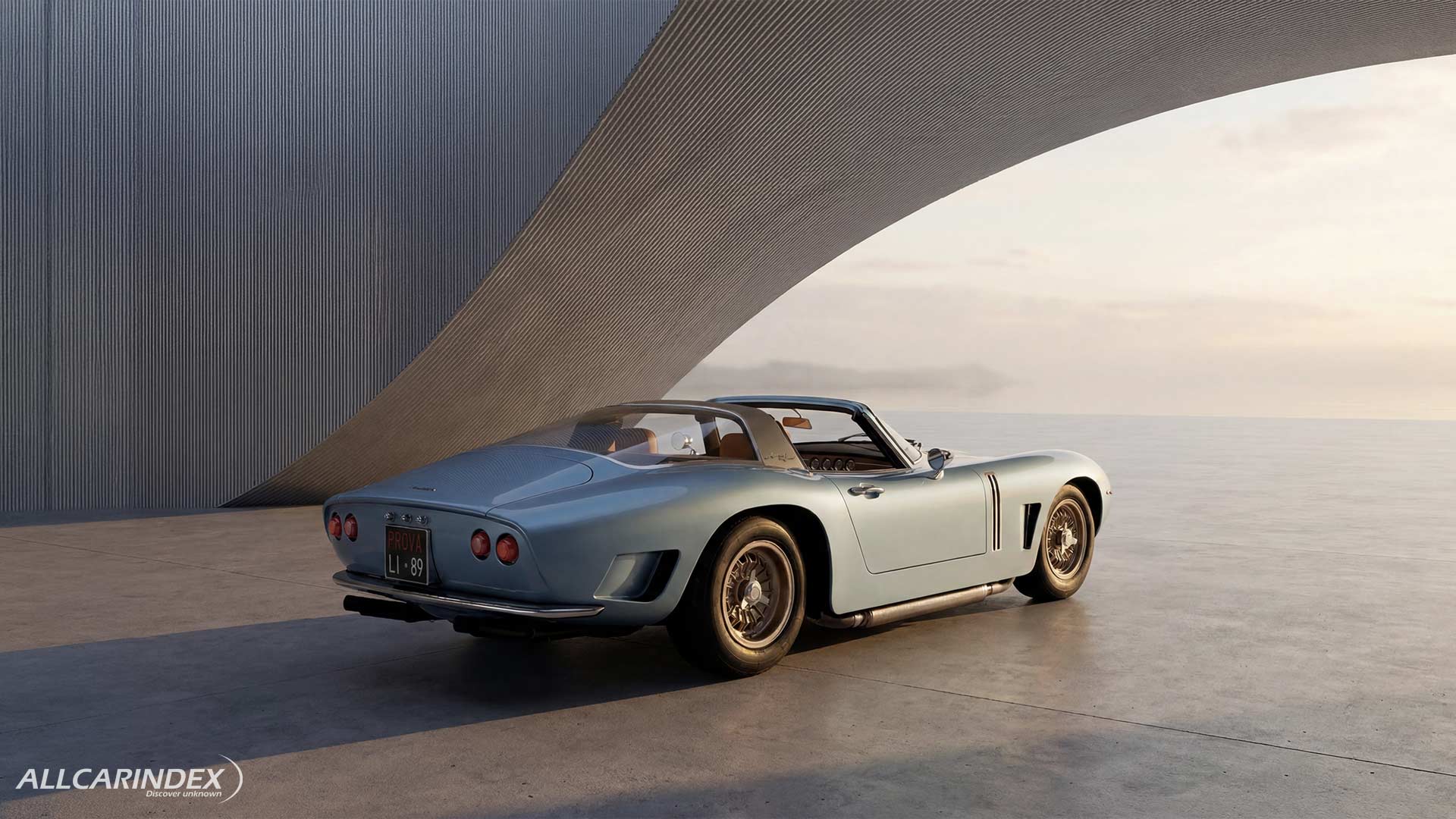
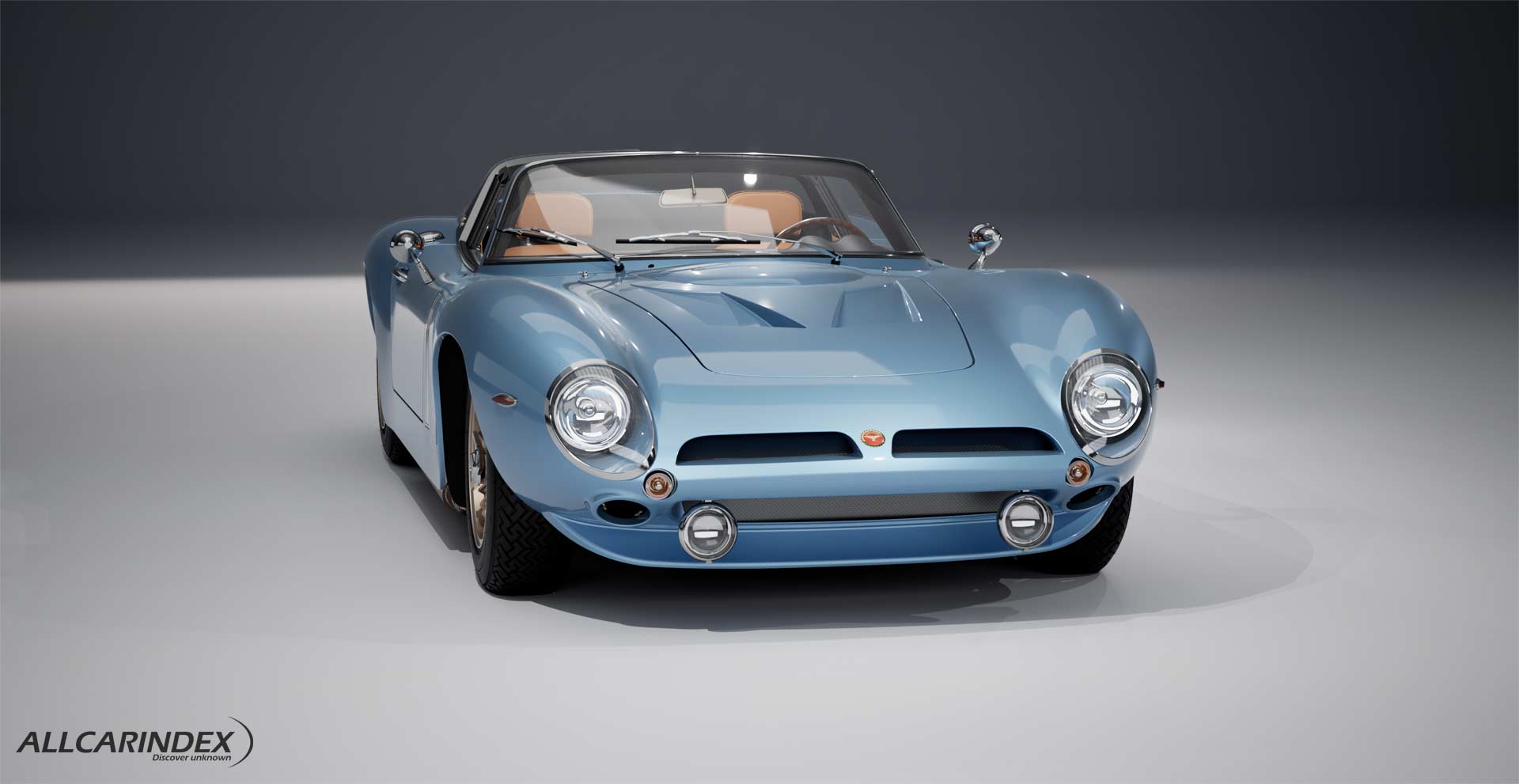
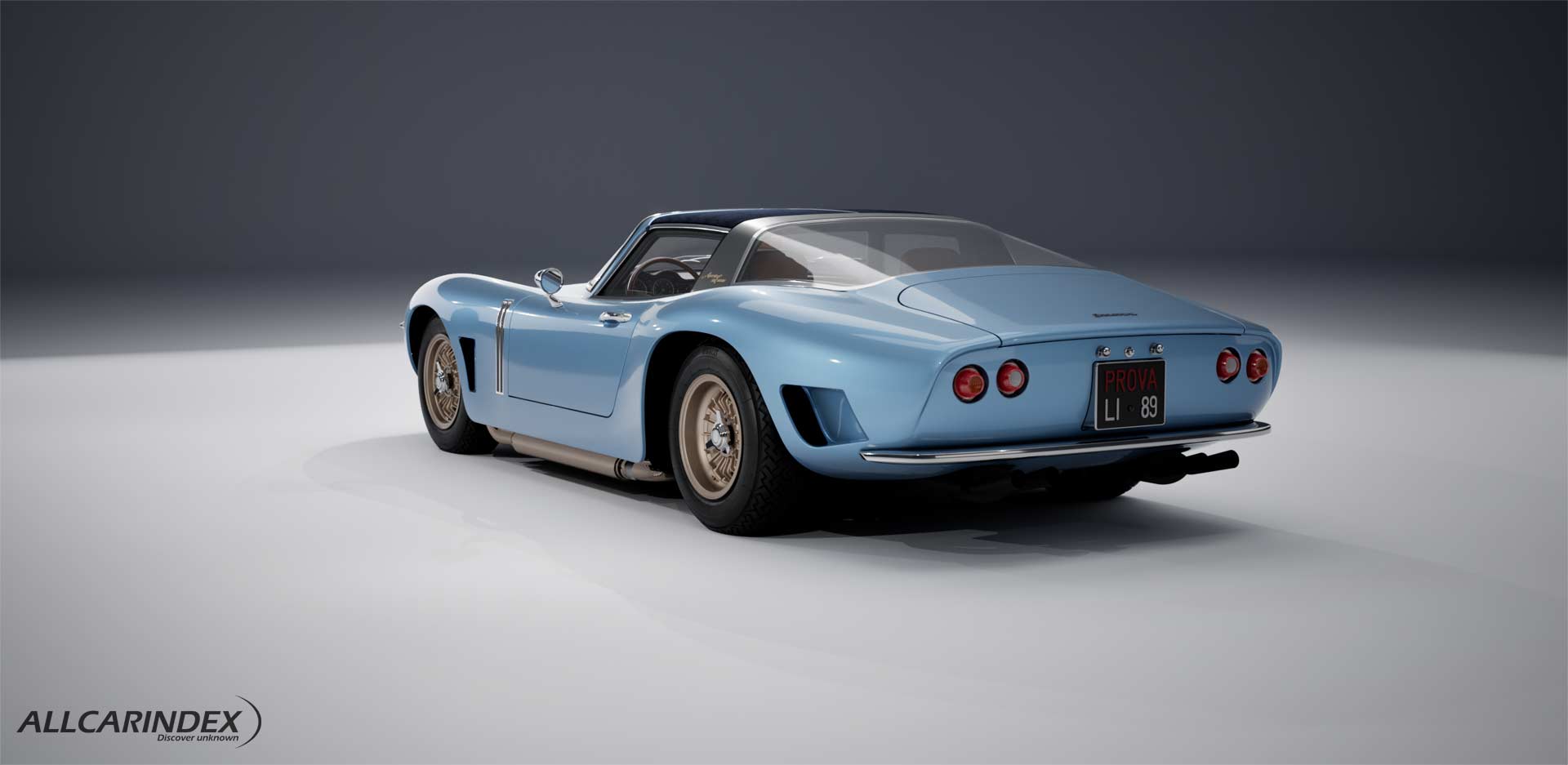
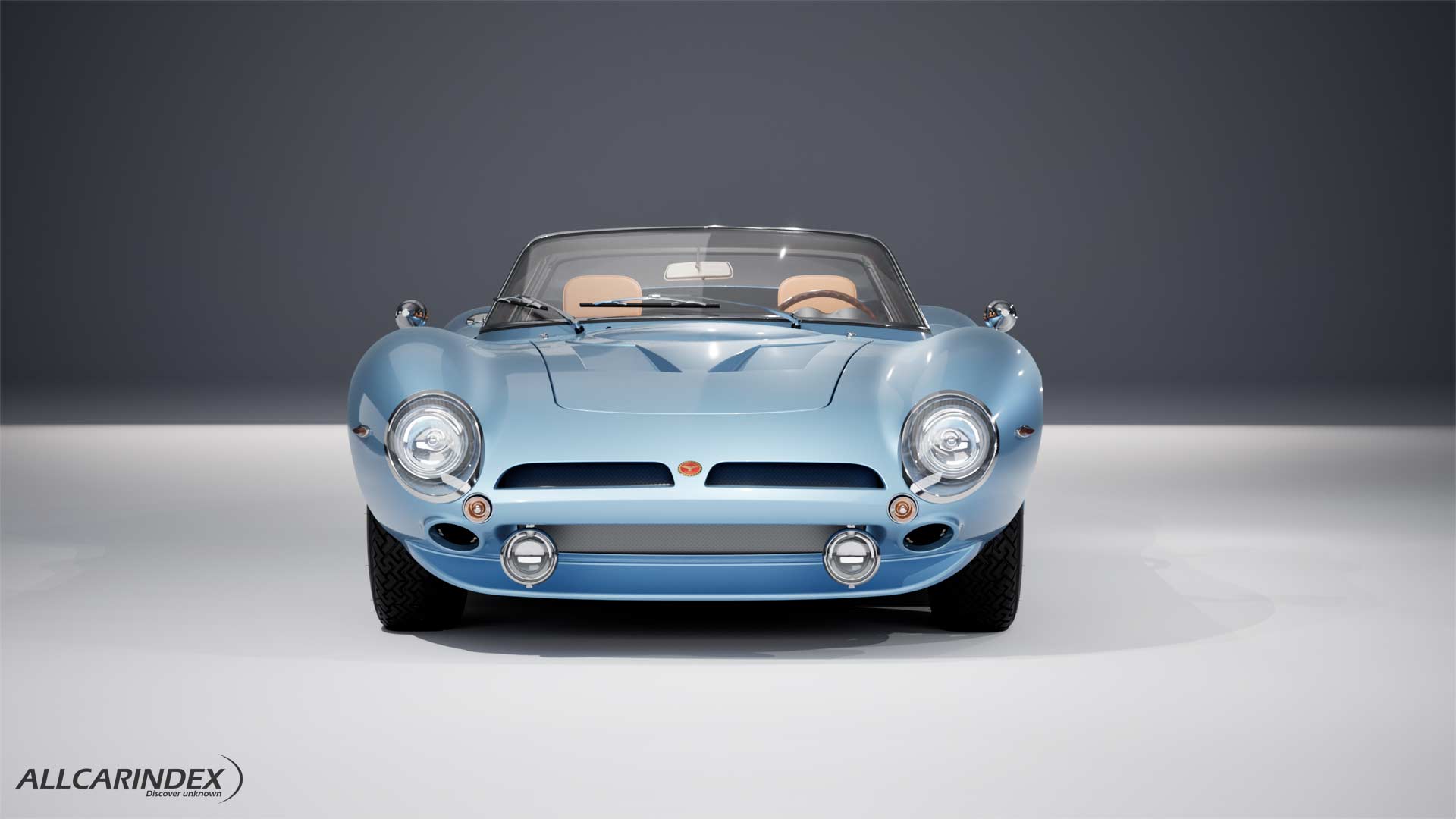
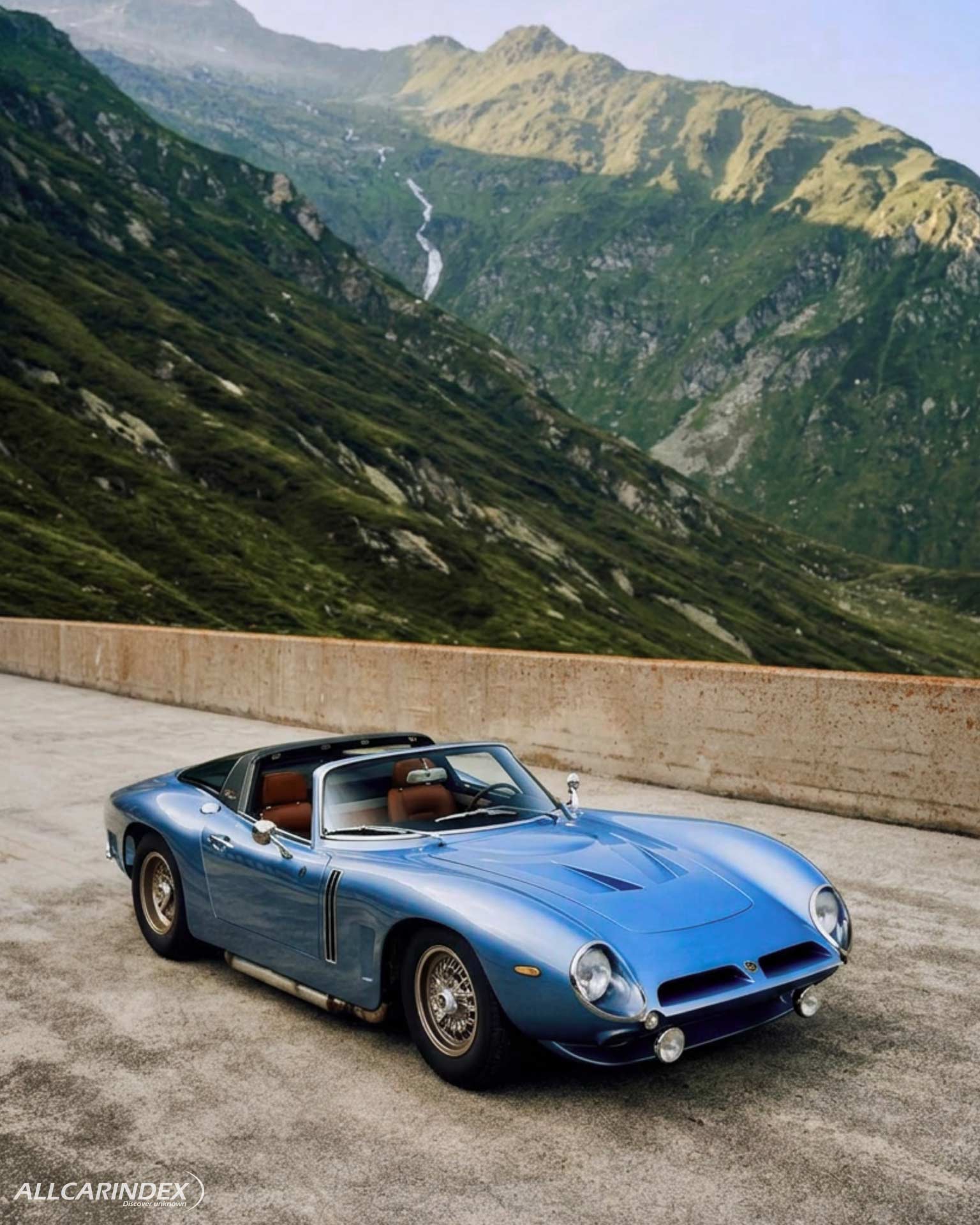

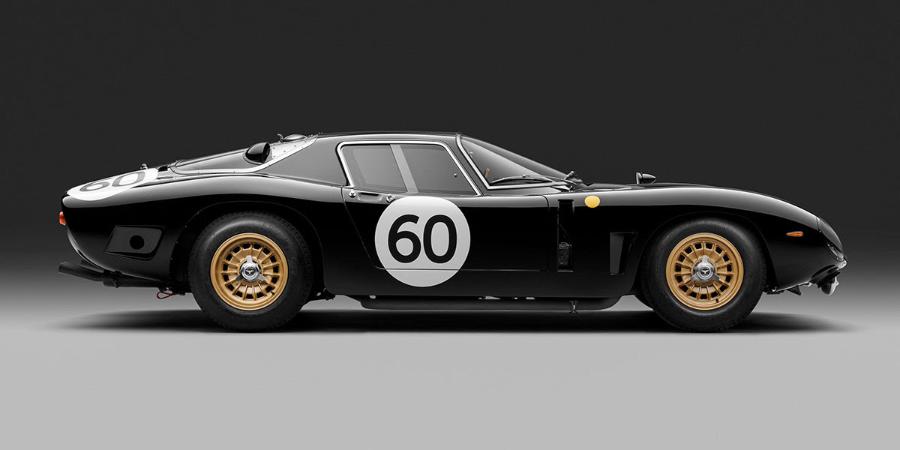
More than six decades after it was first imagined, the open-top Bizzarrini 5300 has finally moved from archive drawing to finished automobile. Presented at the 2026 Goodwood Festival of Speed, the Bizzarrini 5300 Aperta Lusso brings back one of the most intriguing unrealised ideas from the early history of Giotto Bizzarrini’s company.
The car is not a continuation of the 5300 GT Corsa in the usual sense. It is a newly built interpretation of a concept that Giorgetto Giugiaro created during the period when he worked with Giotto Bizzarrini. In the early 1960s, the idea of an open 5300 with a removable roof section and a structural arch had already appeared, but the original company was more occupied with competition machinery than with such a road-oriented version. The drawings stayed in the archive after Bizzarrini closed in 1969.
Now the same idea has been used as the starting point for the 5300 Aperta Lusso. Bizzarrini describes it as a Nuova Classica, and that description fits the structure of the project rather directly. The exterior follows the visual language of the 1960s, while the body, chassis engineering, cabin sealing and convenience features belong to a modern low-volume car.
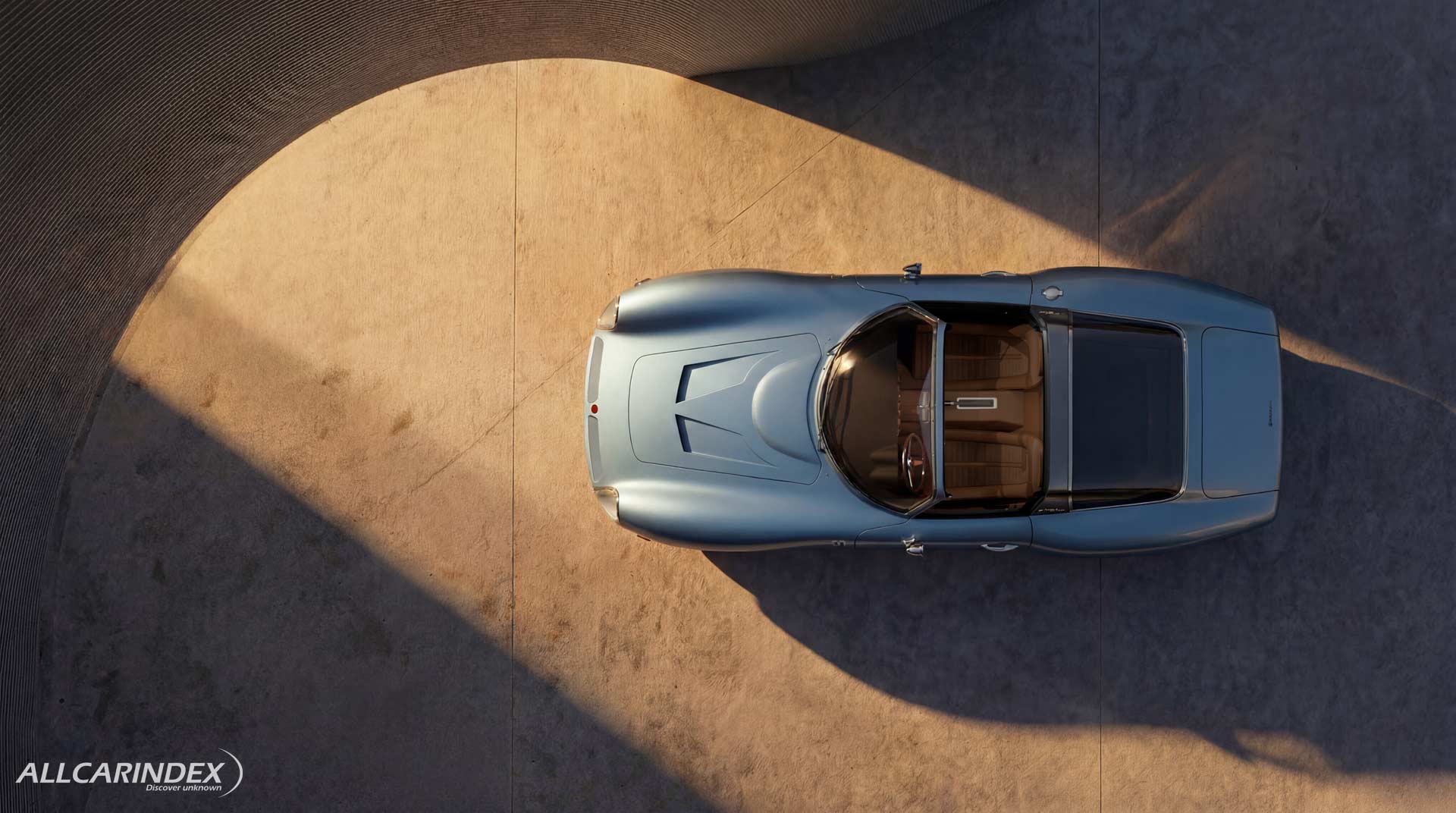
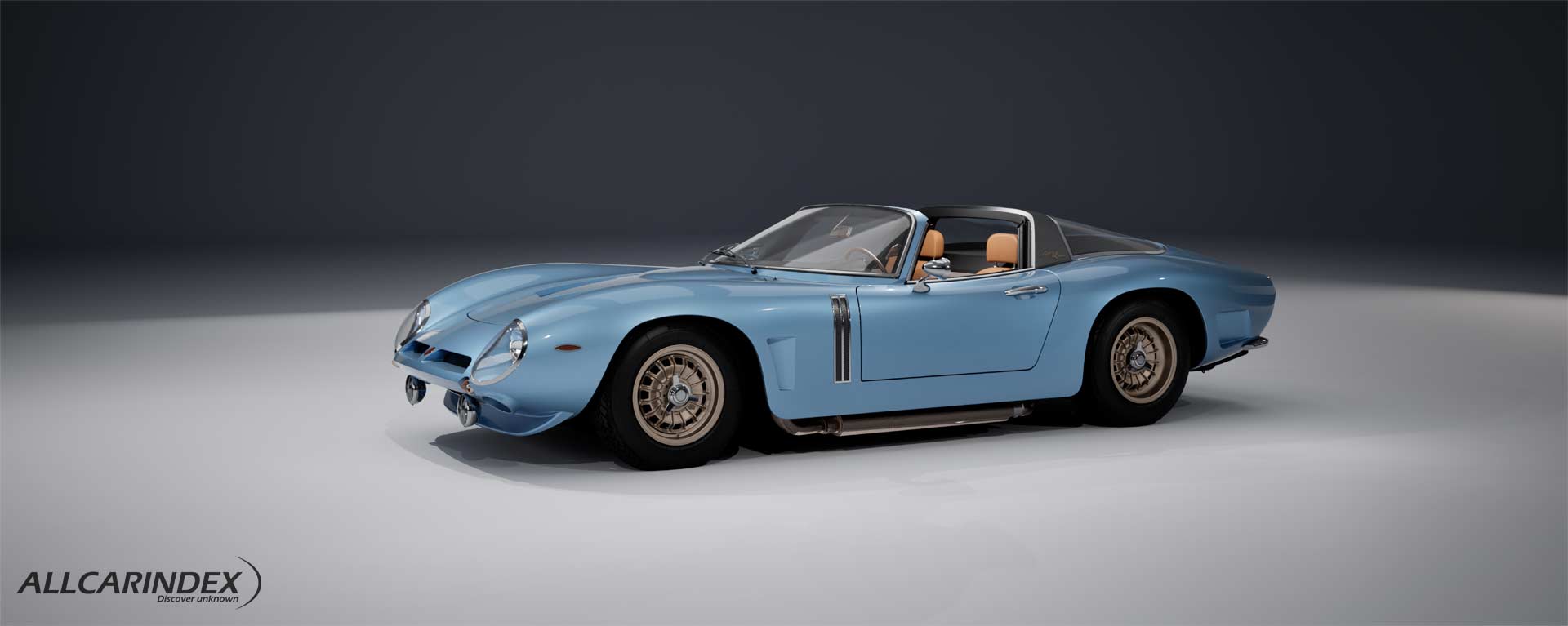
The first completed example is named La Dolce Vita. It was commissioned around the idea of leaving the city and driving towards the coast, rather than simply owning a static collector object. Its colour, Azzurro Gaia, was created for the owner and named after his daughter. The pale blue finish takes inspiration from the Ligurian Sea, with gold metallic detail in the paint to add depth under changing light.
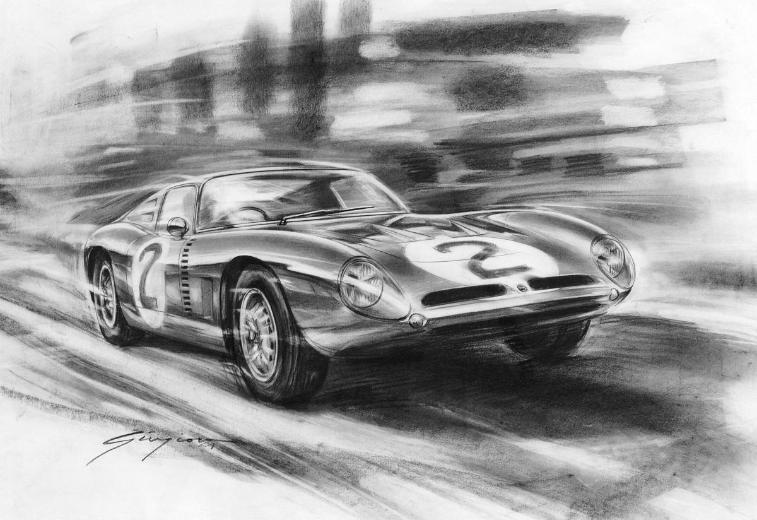
This connection with the Italian Riviera suits the character of the car more than a race paddock would. The 5300 GT Corsa has its own place in endurance racing history, including a class victory at Le Mans in 1965, but the Aperta Lusso is aimed at road use. It takes the silhouette and mechanical theme of the original Bizzarrini era and shifts the emphasis toward open-air touring, traditional driver control and discreet modern usability.
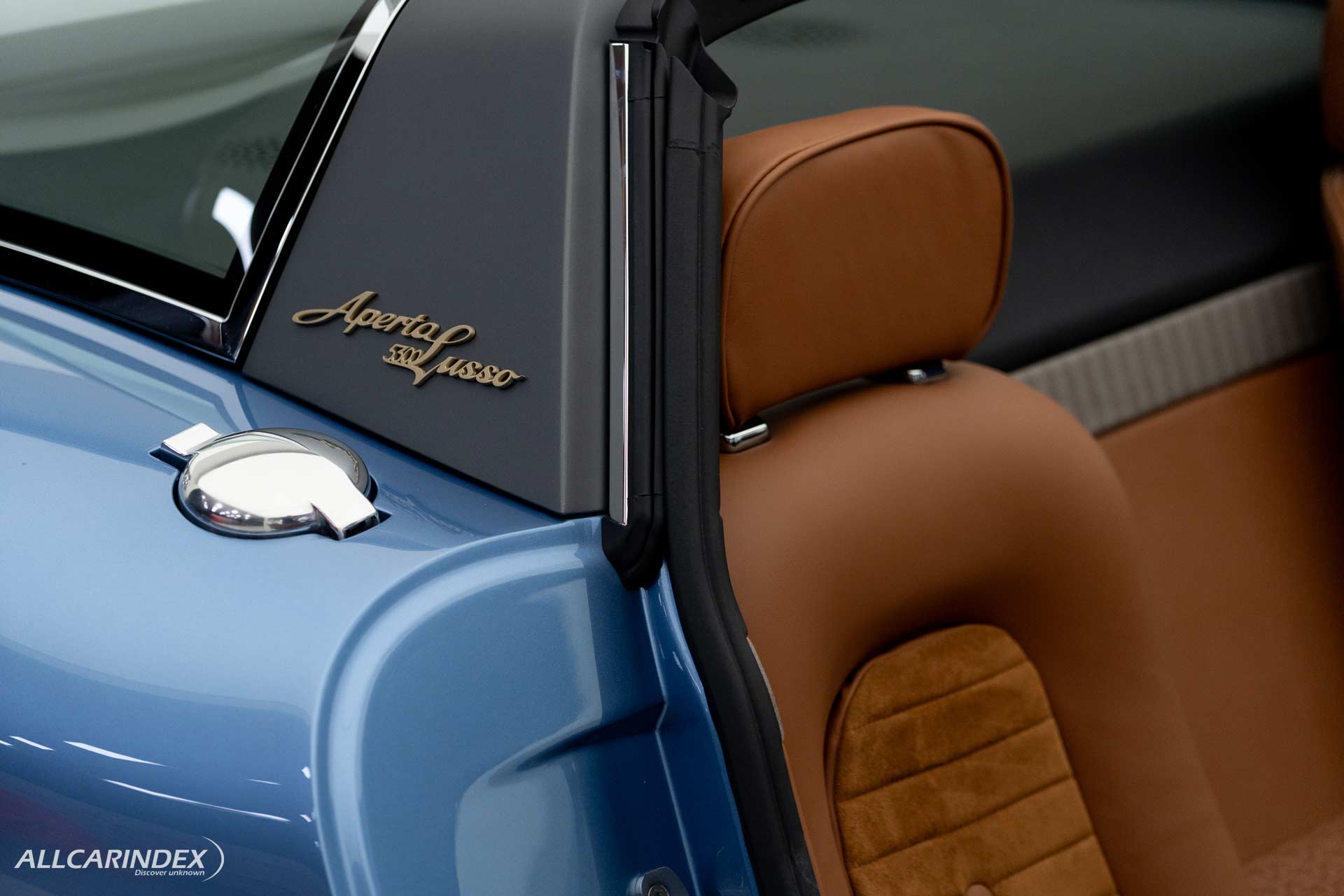
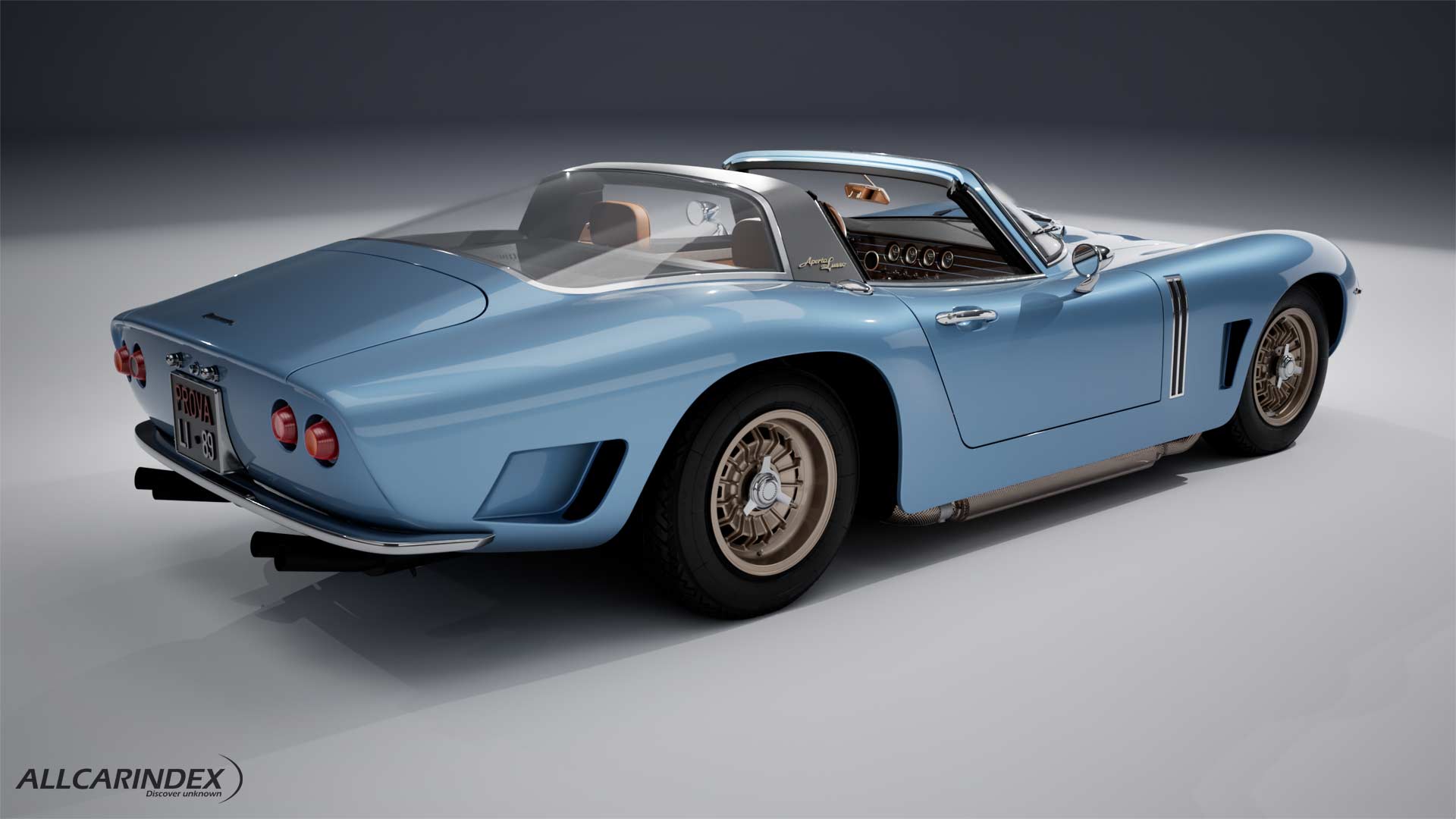
The roof arrangement is central to the car’s identity. Instead of a conventional folding hood, the Aperta Lusso uses two removable carbon-fibre roof panels. These can be stowed in the luggage area, while the arch gives the design a very distinct profile. It also connects the new car with Giugiaro’s early idea, which was lighter and cleaner than a typical soft-top solution of the period.
Structurally, this is not an old chassis with modern trimming. The body is a single-piece carbon-fibre composite structure, supported by a semi-monocoque bonded chassis concept. Because removing a fixed roof usually brings serious torsional problems, Bizzarrini has added a steel reinforcement assembly through the transmission tunnel, with a cross-body bar used to increase stiffness. The roof panels are also carbon fibre, and the sealing system around the frameless glass was developed specifically for the car.
The engineering detail continues beneath the surface. Suspension is by double wishbones all round, with Koni adjustable dampers developed for this application. The magnesium Campagnolo centre-lock wheels keep a strong period reference, while the Pirelli tyres give the car a broader performance envelope than an original 1960s machine. The brakes use ventilated discs on all four corners, with inboard rear discs in line with racing practice. Four-piston Alcon calipers are fitted at the front and two-piston Brembo calipers at the rear, without servo assistance.
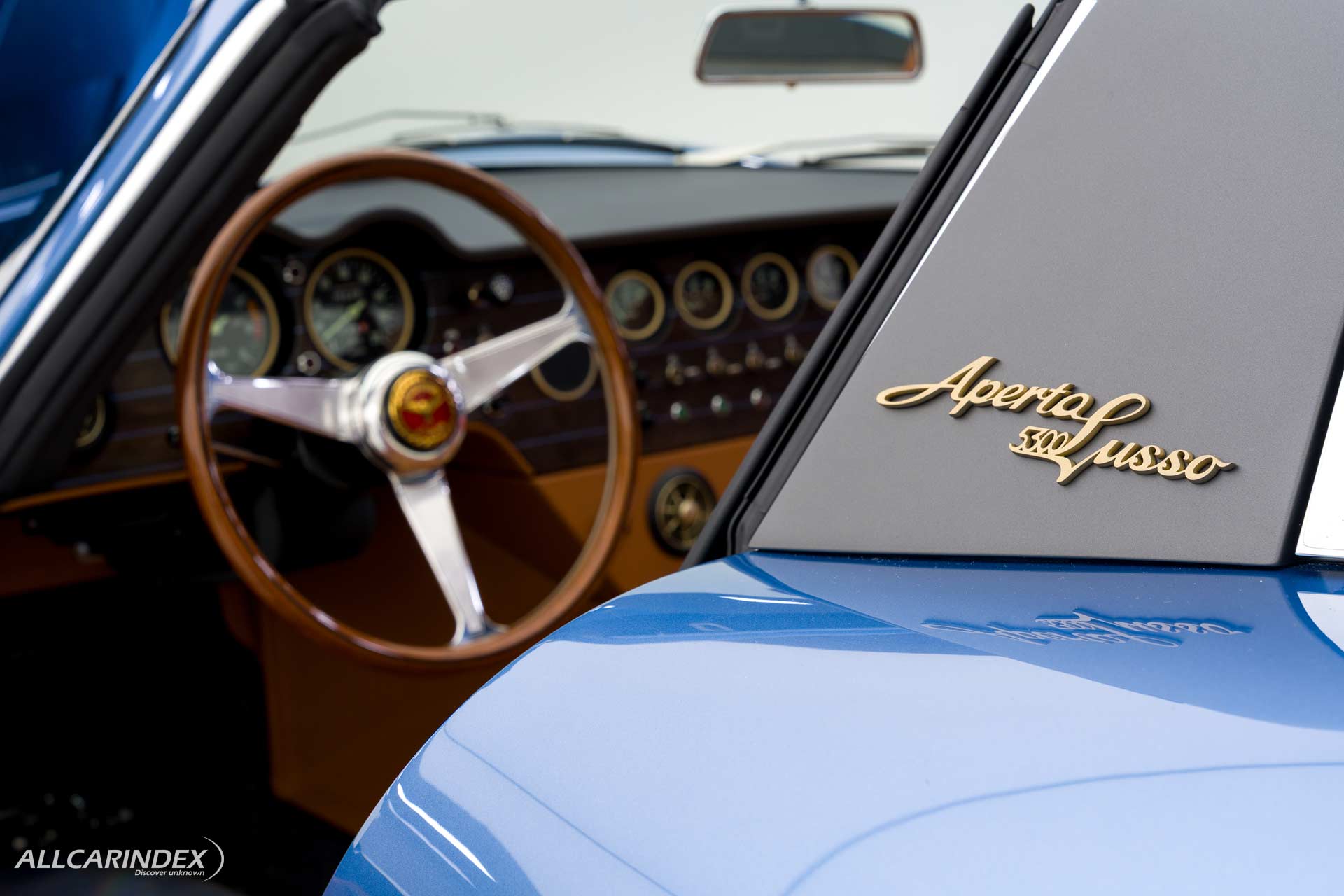
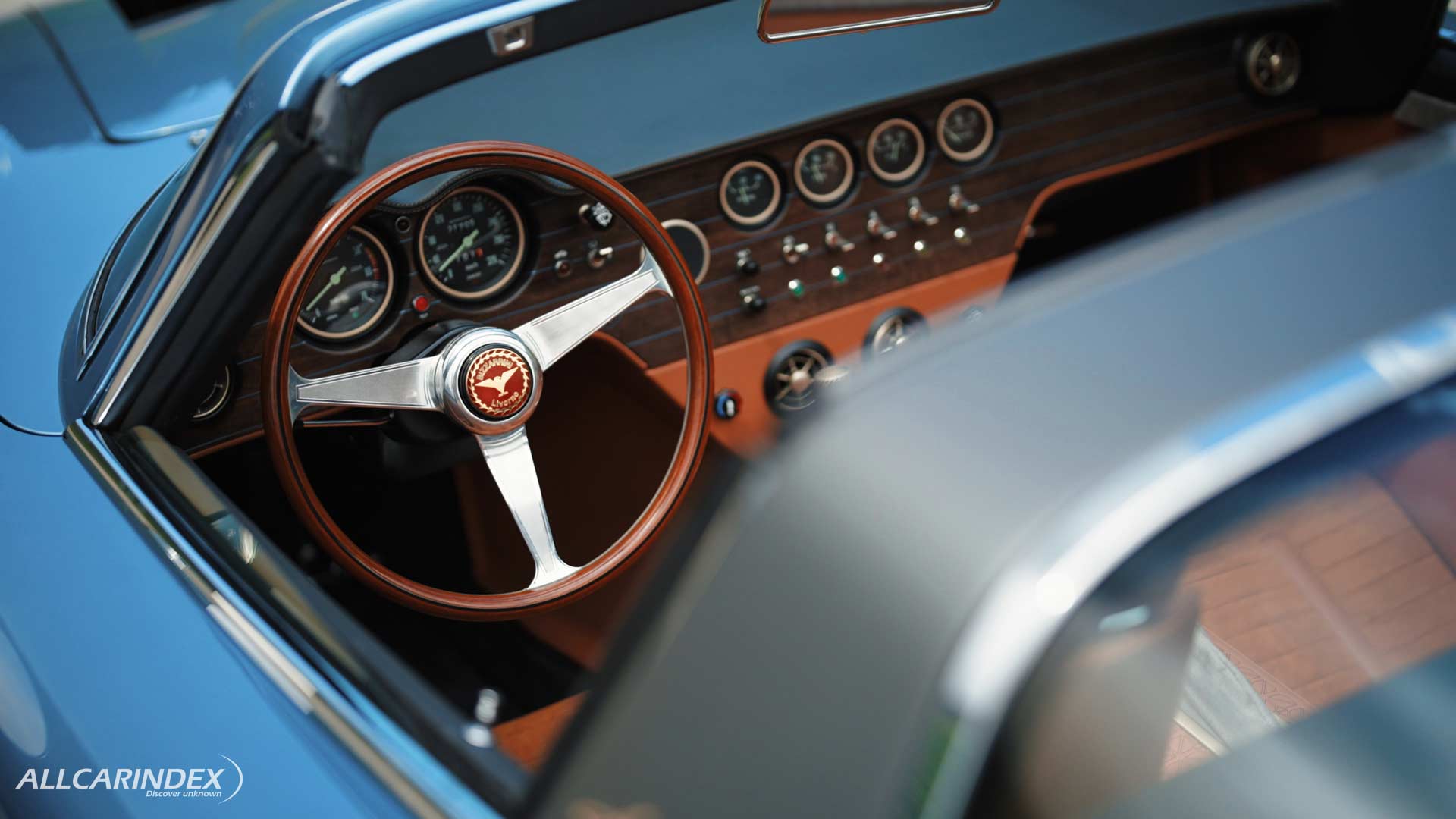
The steering setup also shows the balance between old character and new usability. The car uses rack-and-pinion steering rather than the steering box of the original 5300, with electrohydraulic assistance applied at the rack. Assistance reduces progressively above 40 mph, leaving lighter control at low speed and more direct weighting once the car is moving properly. The steering column adjusts for reach and rake, with a Nardi wood-rimmed wheel placed in front of the driver.
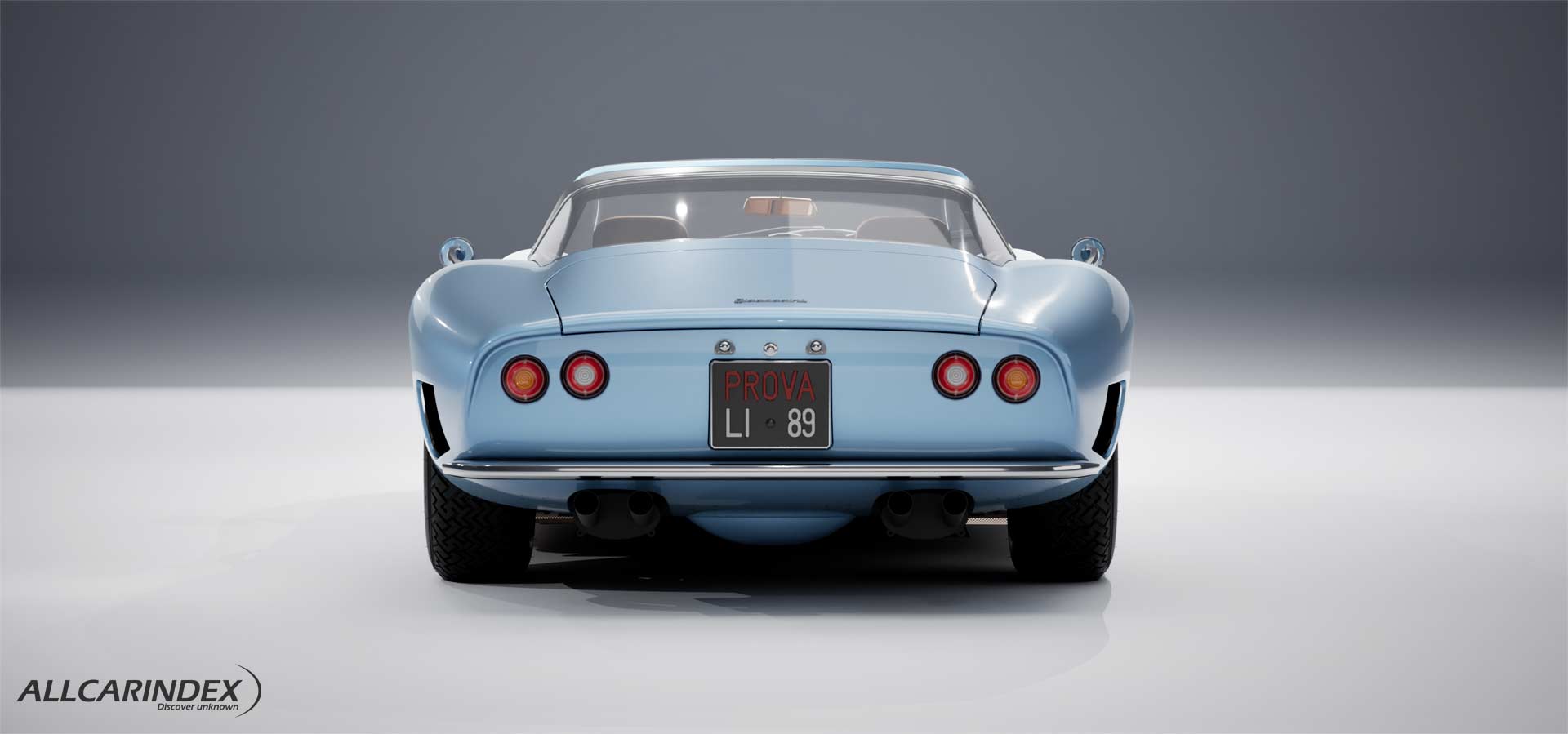
Power comes from a 5.3-litre front-mid V8, positioned behind the front axle line. This follows the same general engine philosophy selected by Giotto Bizzarrini in the 1960s, but the execution is updated for present-day use. Output is quoted at more than 400 bhp, with drive sent through a Tremec TKX five-speed manual gearbox and a limited-slip differential. A six-speed manual is also available for owners who want a more relaxed high-speed ratio. Bizzarrini states a top speed of more than 175 mph.
Instead of the Weber carburettors associated with the GT Corsa Revival, the Aperta Lusso uses port fuel injection. The system has been designed so that it does not visually disturb the period appearance of the engine bay. The exhaust is made from Inconel and uses valves, with catalytic converters fitted as standard. The result is a powertrain specified for road reliability and usability, while still keeping the basic layout and mechanical atmosphere expected from a front-mid-engined Bizzarrini.
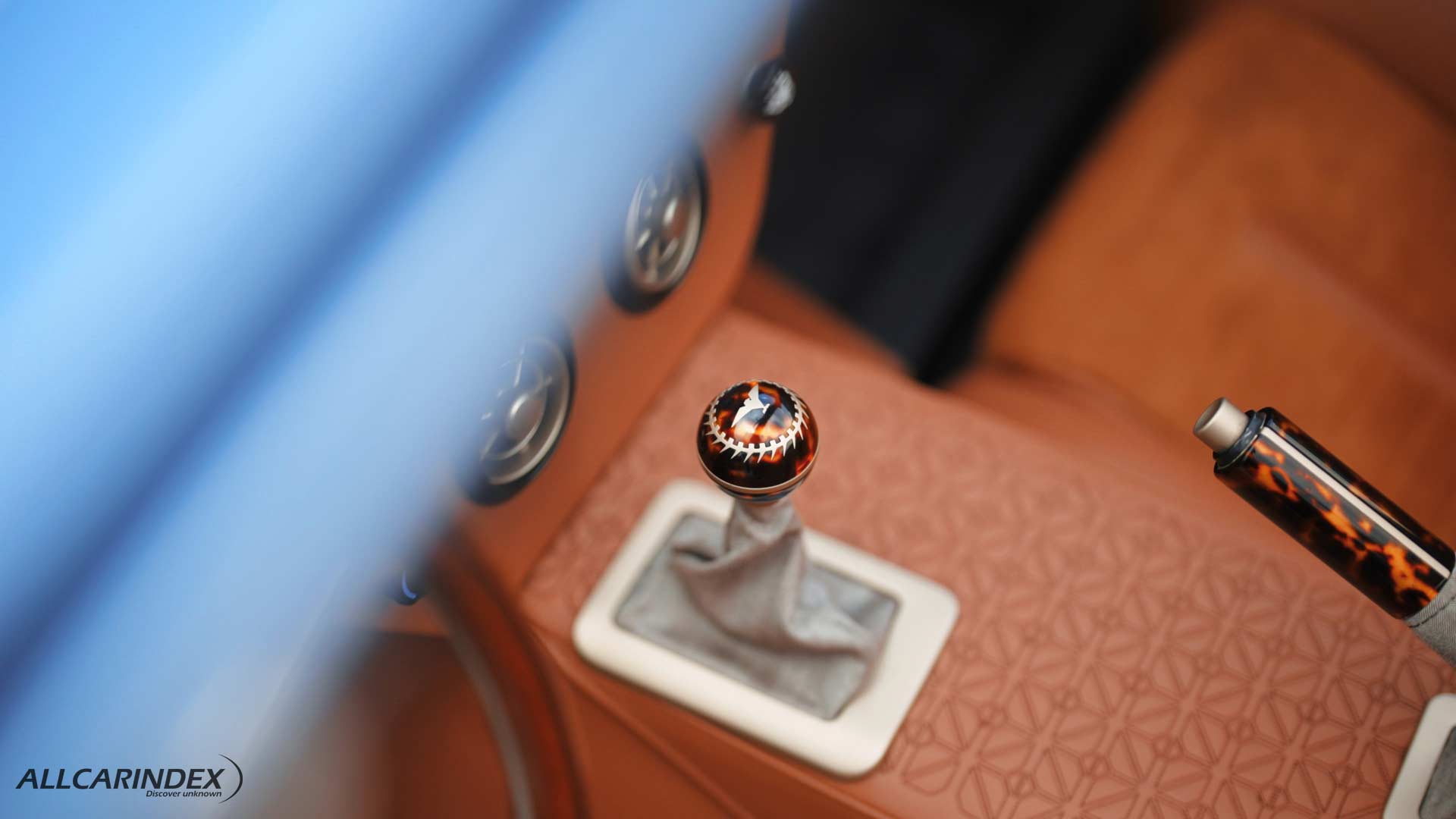
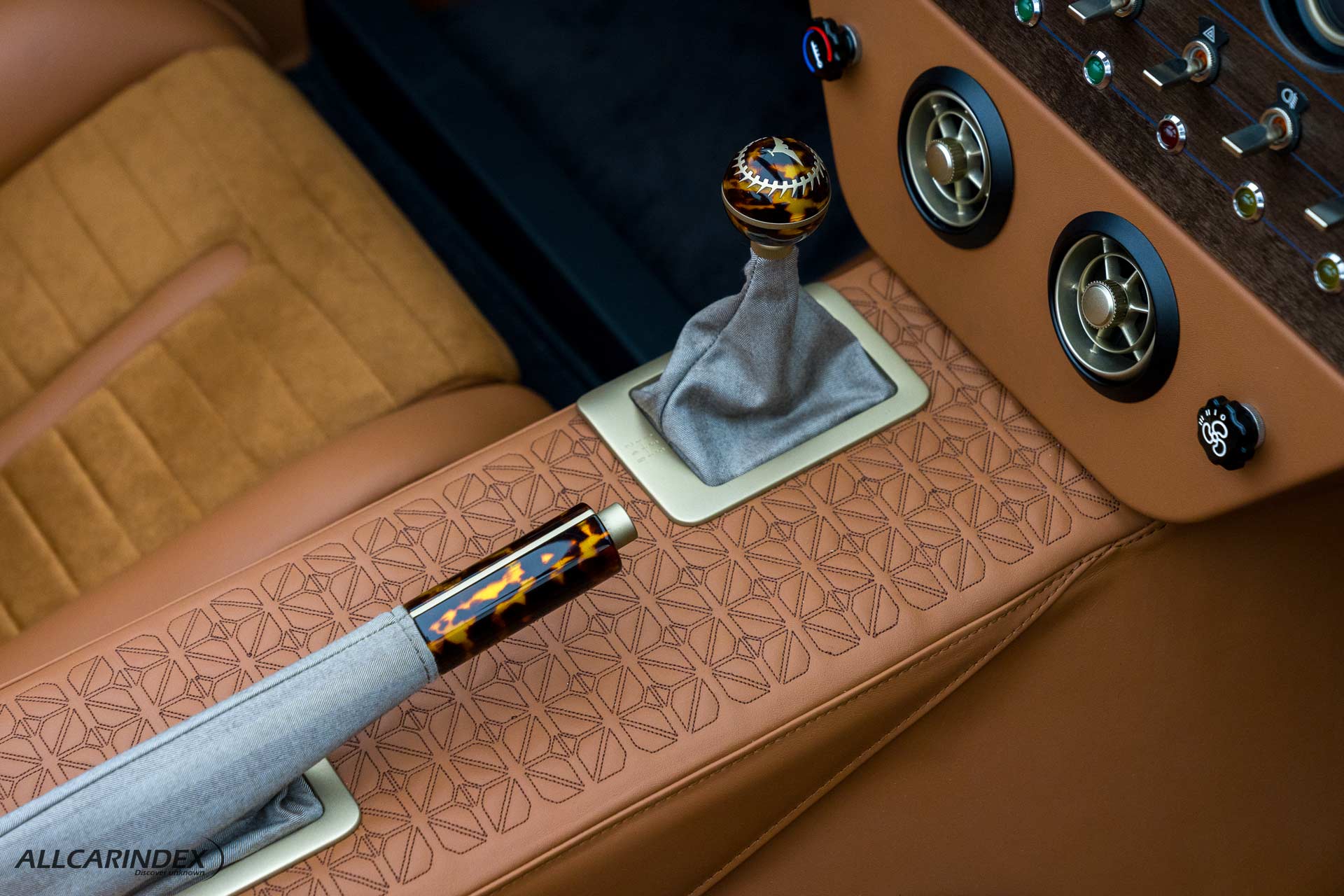
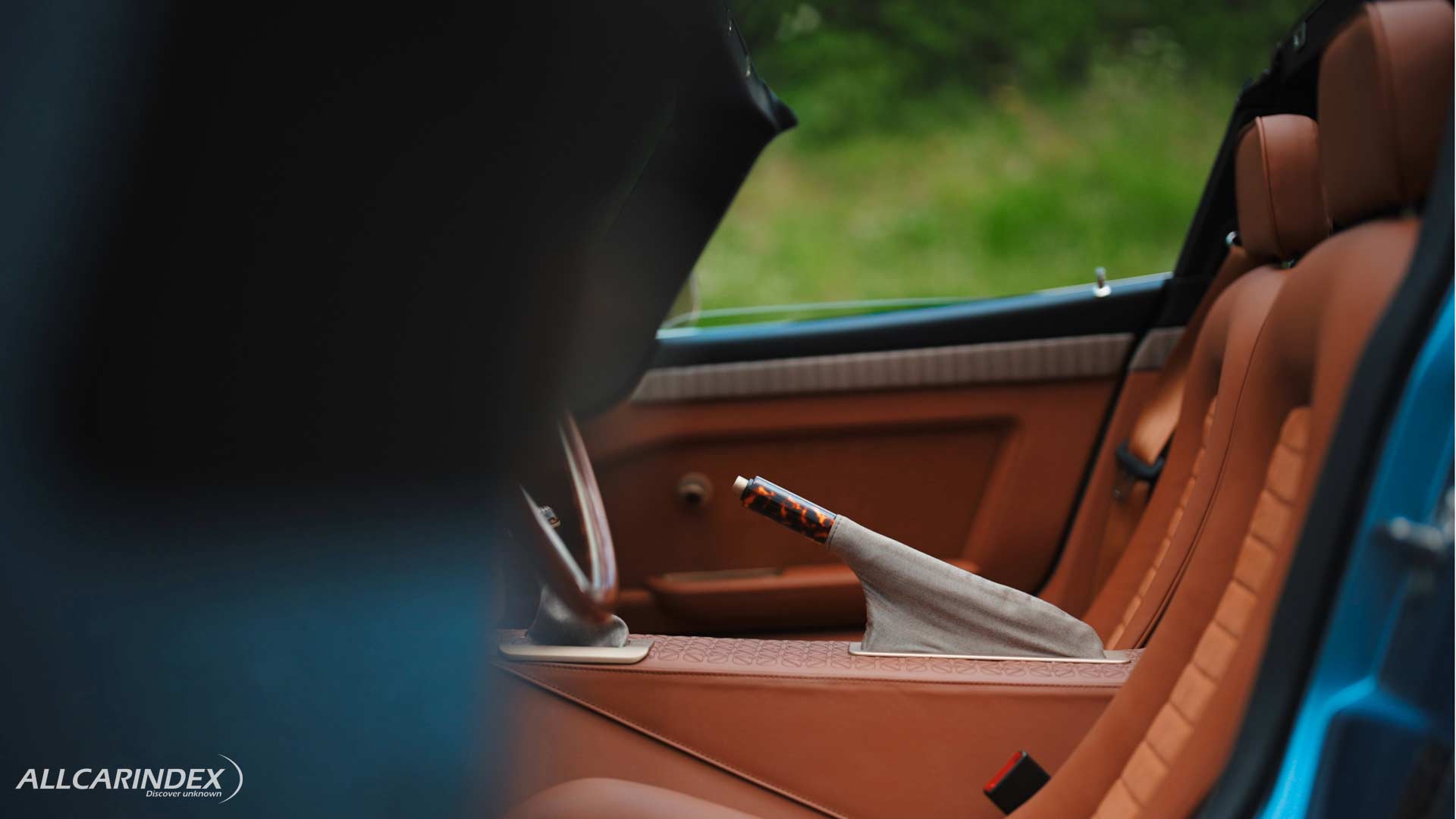
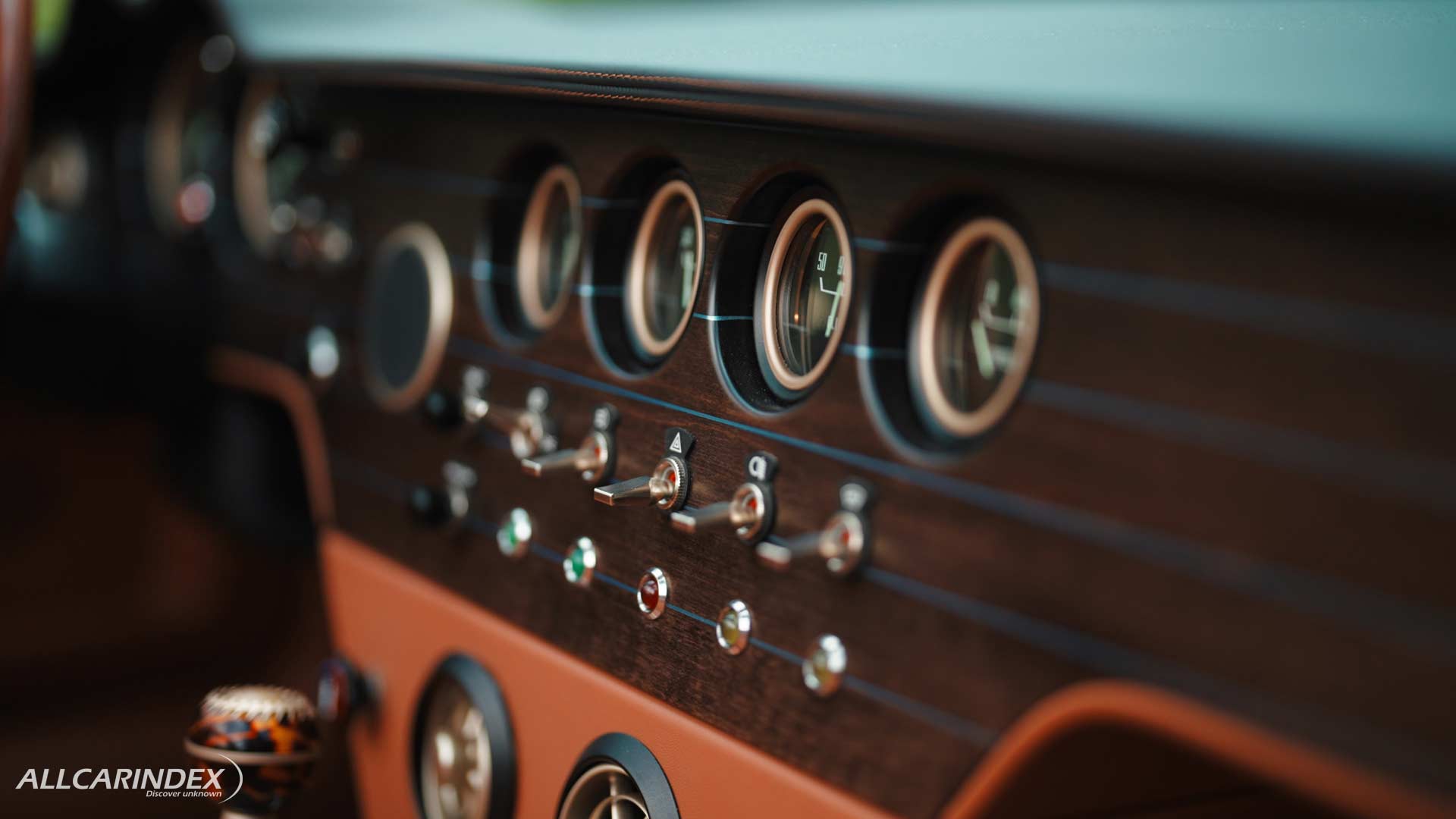
Inside, the Aperta Lusso avoids the look of a modern restomod cockpit. The first car uses leather, Zegna fabric and a single-piece European maple instrument panel. The gear knob is made from Italian tortoiseshell with gold detailing forming the Bizzarrini logo, a personal reference to the commissioner’s sunglasses. The cabin equipment includes air conditioning, MagSafe charging, a concealed sound system with CarPlay integration, an adjustable steering column and modern frameless windows with proper sealing.
The important point is that these details are not presented as visible technology. They are integrated so that the cabin keeps the atmosphere of a 1960s Italian gran turismo. The driver gets modern convenience and weather protection without a dashboard full of contemporary displays. For this type of car, that restraint is as significant as the carbon body or the V8.
Only ten initial examples of the Bizzarrini 5300 Aperta Lusso are planned, each one commissioned to individual specification. Further cars are expected to arrive from 2027. For Bizzarrini, the model also sits between the company’s historic identity and its future Giotto Hyper GT project, using one of its earliest unrealised ideas as the first all-new production Bizzarrini since the 1960s.