Honda Motor Co., Ltd. was a Japanese multinational automotive and engine manufacturer headquartered in the Toranomon district of Minato, Tokyo. The company traced its origins to the entrepreneurial career of Soichiro Honda, who in 1937 founded Tokai Seiki, a maker of piston rings that supplied Toyota. After the company's facilities were destroyed during the Second World War, Honda sold the remnants of the business to Toyota and used the proceeds to establish the Honda Technical Research Institute in October 1946. Working with a small staff, the fledgling operation built motorized bicycles using surplus wartime engines, later producing its own version once the surplus supply was exhausted.
In 1949, the institute was reorganized as Honda Motor Co., Ltd., with Soichiro Honda joined by engineer Kihachiro Kawashima and businessman Takeo Fujisawa, whose partnership shaped the company's early growth. That same year, Honda released the D-Type, its first complete motorcycle featuring both a Honda-built frame and engine, marketed under the Dream name. The company's motorcycle business expanded rapidly, and by 1959 Honda had become the world's largest motorcycle manufacturer, a position it maintained into the twenty-first century, with cumulative production surpassing 500 million units by 2025.
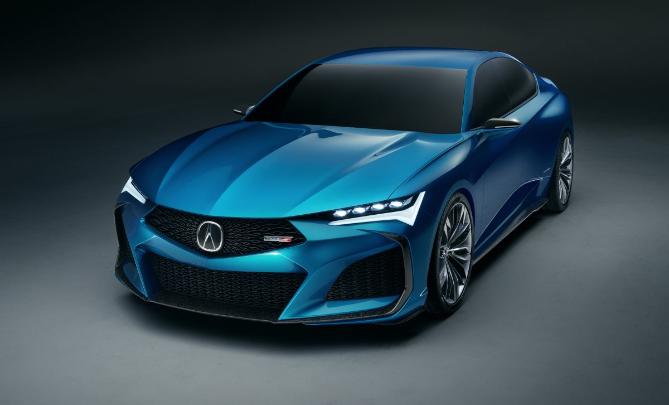
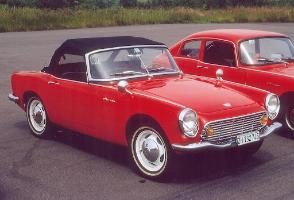
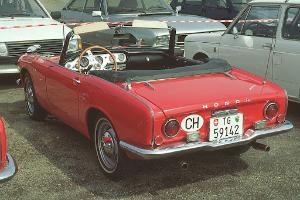
Honda entered automobile production in 1963 with the T360 mini pickup truck, followed shortly afterward by the S500 sports car, which reflected the company's motorcycle heritage through its chain-driven rear wheels. Over the following decades, Honda broadened its vehicle lineup and expanded manufacturing and sales operations internationally, becoming the second-largest Japanese automaker by 2001. In 1986, it launched Acura, the first dedicated luxury brand introduced by a Japanese automaker, aimed primarily at the North American market. Five years later, Honda introduced the NSX supercar, notable as the first production vehicle with an all-aluminum monocoque body paired with a mid-mounted V6 engine featuring variable valve timing.
Beyond automobiles and motorcycles, Honda diversified into products such as garden equipment, marine engines, personal watercraft, and power generators, and became the world's largest manufacturer of internal combustion engines by unit volume. The company also pursued research in robotics and artificial intelligence, unveiling its ASIMO humanoid robot in 2000, and expanded into aerospace through the 2004 founding of GE Honda Aero Engines and the development of the HondaJet, which entered production in 2012. In China, Honda operated through several joint ventures, including Dongfeng Honda and GAC Honda.
Honda's global manufacturing footprint grew substantially in the following decades, particularly in North America, where its Marysville, Ohio plant became a key production hub. The Honda Super Cub, first introduced in 1958, went on to become the best-selling motor vehicle in history. Through sustained investment in research and development and a broad portfolio spanning motorcycles, automobiles, engines, and robotics, Honda established itself as one of the major manufacturers in the global automotive industry.