aci-logo

DB

1938-1961

Brand Data

D.B. (Automobiles D.B.) was a French car manufacturer based in Champigny-sur-Marne, in the Seine region. The company originated from an unofficial partnership between Charles Deutsch and René Bonnet. Their arrangement remained informal because Deutsch, a civil servant who eventually oversaw all French roads, was not permitted to enter into a formal business venture. Deutsch had inherited a workshop from his father and sold it to Bonnet in 1932. Bonnet was an entrepreneur and skilled mechanical engineer, while Deutsch, trained in civil engineering, had a natural aptitude for aerodynamics.

The two men shared an interest in motor sport, and in 1936 they secured an entry in the French sports car Grand Prix. When the car they had arranged to hire failed to arrive, they decided to build their own. The result, the D.B.1, was based on Citroën 11CV traction avant mechanicals with bodywork inspired by George Eyston's Thunderbolt. It was completed in 1938, and Bonnet competed with it in several events before the outbreak of the Second World War, by which time the D.B.2 had also been built.

In 1945 their cars took part in the first postwar race meeting in Paris, while a more advanced design, begun secretly during the German occupation, was nearing completion. This model established the formula that would define all later D.B. cars: low weight, low drag, and a tuned production engine.

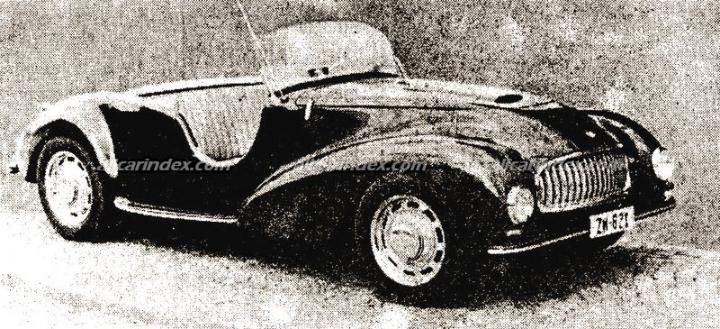
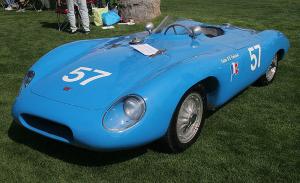
Deutsch and Bonnet built a series of Citroën-based single-seaters and sports cars on a distinctive forked backbone chassis, but when Citroën declined to continue supplying new components, they turned to Panhard, which was willing to cooperate. Automobiles D.B., formally established in 1949, then relied almost exclusively on Panhard components. The company built a range of competition cars, including a 500cc Formula Three car in 1950 that formed the basis for a Formula Two car, a twin-engined car, a supercharged 750cc Formula One car, an 850cc school car, and eventually a Formula Junior car produced until 1960. While these single-seaters achieved little success, the sports and GT cars proved far more capable, benefiting from extensive use of Panhard components and notably efficient aerodynamics.

D.B. entered cars at Le Mans from 1949 onward, though success did not come until the mid-1950s, when the marque began to dominate the 750cc class in international competition. The cars recorded numerous class victories at Le Mans, Sebring, and the Mille Miglia, and achieved an outright win in the 1954 Tourist Trophy, a handicap event.

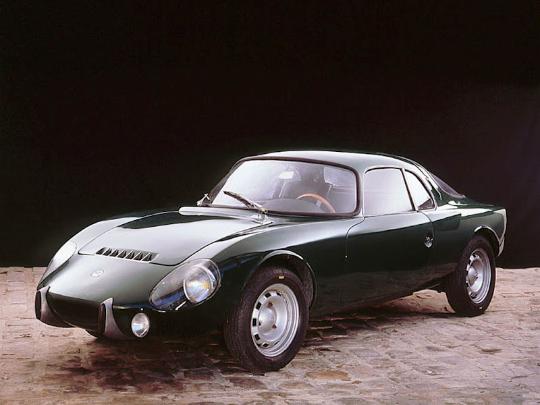
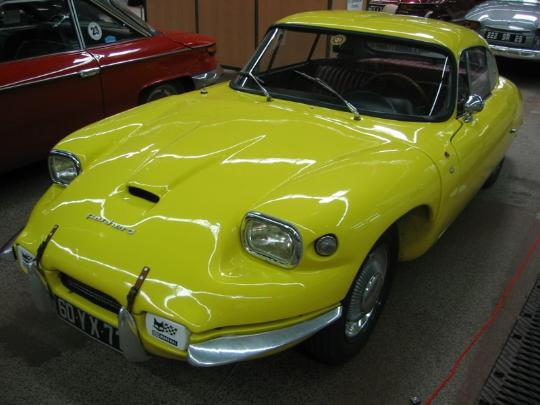
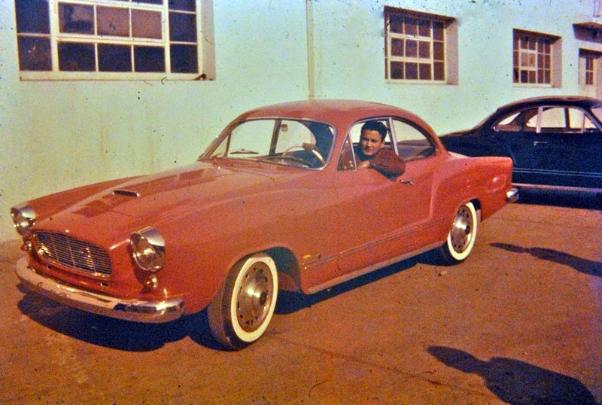
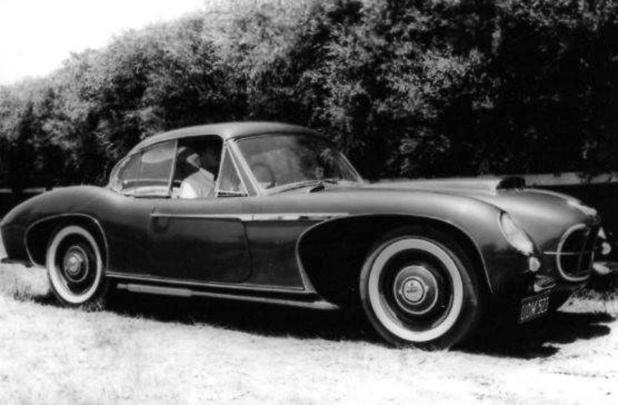
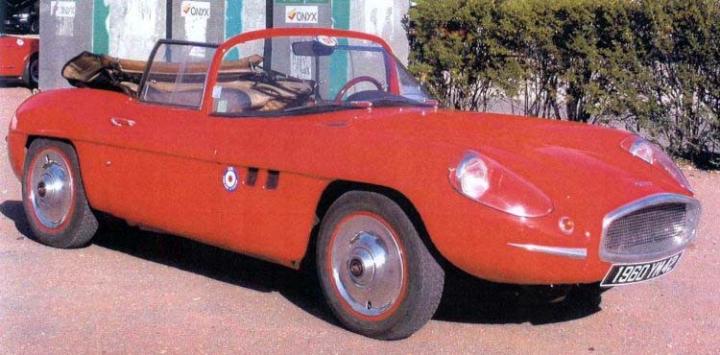
At the 1952 Paris Salon, D.B. presented a road-going coupé built on a box-section chassis with Panhard Dyna suspension front and rear. Engine options ranged from a 30bhp 610cc unit to a supercharged 850cc engine producing 55bhp, introduced in 1954. Early bodies were made of aluminium, though fibreglass shells were adopted from 1955. By that year, front disc brakes were offered as an option, and larger 1000cc and 1300cc engines became available. Customers could specify their cars from a wide range of options, and D.B. developed an all-synchromesh version of the Panhard gearbox before Panhard itself did so. Bodywork evolved to become slimmer over time, but production of the road cars remained very limited, and because each customer selected individual specifications, few cars were identical.

In 1961 the partnership dissolved after a disagreement over future direction: Bonnet wished to use Renault running gear, while Deutsch preferred to continue with Panhard components. Cars built under both approaches continued to compete, including a 750cc CD-Panhard, bearing Deutsch's initials, and a 1-litre Bonnet-Renault, both of which won their classes at Le Mans in 1962, the final year in which a 750cc class was contested there.

Following the split, René Bonnet continued building cars under his own name until his company was taken over by Matra, while Charles Deutsch became an independent engineering consultant, whose later work included involvement with the Bugatti circuit at Le Mans.

Subscribe for Full Access

  • Brands and models — Full galleries and interactive map
  • Exotic car catalog — Full brand details and model specs
  • Documentation archive — Full scans, plus PDF and ZIP downloads

  • Ad-free browsing

From €9.90/month — or €50/year (save 58%)

Subscribe Now
Test your car knowledge

Take a quick quiz or try the Mystery Car of the Week — can you name the car?