- Company name
- Zbrojovka Ing. G. Janecek, a.s.
- Place
- Praha-Nusle
- Country
- Czechia

Jawa originated from Zbrojovka Ing. F. Janecek, a.s., a Czech arms manufacturing company based in Praha-Nusle and Tynec nad Sazavou. The firm was founded by Frantisek Janecek (1878–1941), an arms manufacturer who, following the decline of the armament industry in 1929, decided to move into motorcycle production. Lacking the time to develop an engine of his own, Janecek acquired a licence to build Wanderer motorcycles, obtaining not only the rights but also the complete production set-up and many finished parts, since the German Wanderer company had ceased its own motorcycle output amid the collapse of the German motor industry. The Jawa name, patented in August 1929, was formed from the first letters of Janecek and Wanderer.
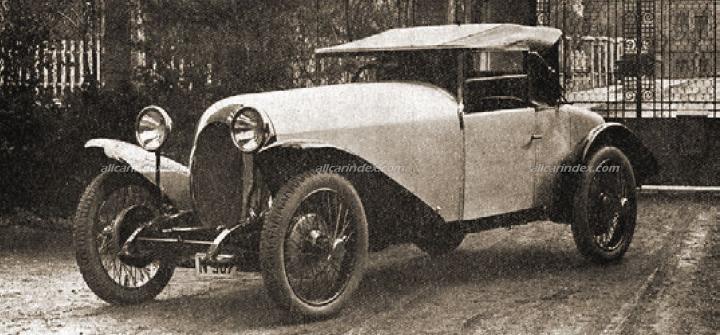
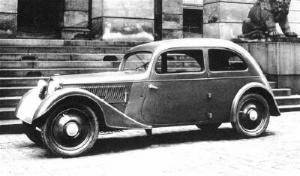
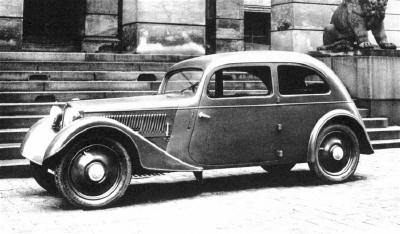
Motorcycle production expanded steadily through the following years, and by the mid-1930s the company also entered car manufacturing. In 1934 Jawa acquired another foreign licence, this time from DKW for the F4 Meisterklasse, which formed the basis of the new front-wheel-drive Jawa 700. This model used a two-stroke, two-cylinder 692cc engine producing 20bhp, mounted ahead of a backbone pressed frame with independent suspension on all four wheels. Two-door wooden bodies, initially covered in leatherette and later in tin plating, were offered with either a removable top or as a closed hatchback-style body. Engines were produced in Prague, while the bodies were assembled and the cars completed at Tynec nad Sazavou. The Jawa 700 could reach 56mph (90km/h), and between May and December 1934 some 203 units were sold.
A tuned version with a 750cc engine producing 27bhp, capable of 68mph (109km/h), was fitted with a Jaray-type streamlined body and entered in the 1935 "1000 Miles of Czechoslovakia" race. Another example, bodied as an open roadster, continued to compete in races until 1937.
Alongside these licensed designs, Jawa developed its own light car. In 1935, aircraft engineer Zdenek Pilat, who had joined from Walter, designed a car with its engine mounted ahead of the front axle but offset from the centreline. A separate design by Rudolf Vykoukal, who had come from Praga, placed the engine behind the front axle; this configuration was eventually put into production as the Jawa Minor, introduced in the autumn of 1937.
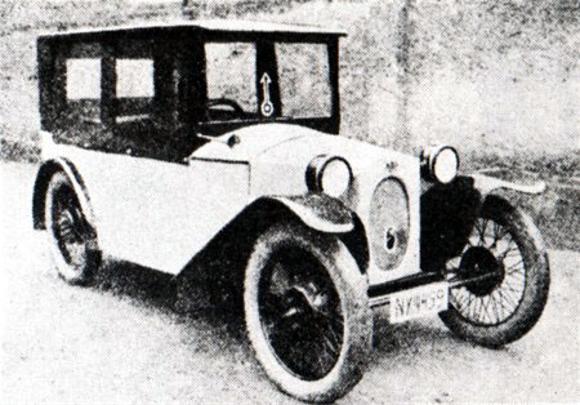
The Jawa Minor featured a square-section backbone frame with swinging axles and a water-cooled, two-stroke, two-cylinder engine of 615cc producing 20bhp. Its bodies, which included two- and four-seat cabriolets, roadsters, and sedans, were built at the Kvasiny works before the cars were completed at Tynec nad Sazavou. Production continued until 1939, when car assembly was halted in favor of wartime production, by which time 1,990 Jawa Minors had been built.
Some components survived the war, allowing a final series of 710 Jawa Minor cars to be sold in July 1945. A completely new car, initially designated the Jawa Minor II, was launched in January 1947 but was ultimately renamed the Aero Minor. This model was assembled across three or four different automobile works.
From €9.90/month — or €50/year (save 58%)
Subscribe Now