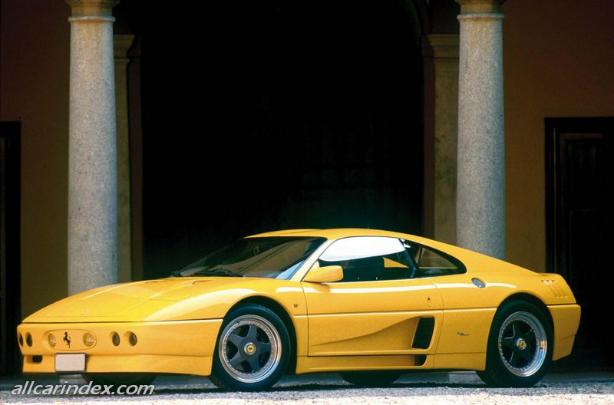



The Ferrari 408 Integrale was an experimental sports car built by Ferrari toward the end of the 1980s, one of two related prototypes developed to explore permanent four-wheel drive. It was the only one of these research vehicles that Ferrari allowed to become publicly known. Its designation combined the 4-liter engine and four-wheel-drive layout with the 8, referring to the cylinder count in Ferrari tradition. The styling, of unknown authorship, differed noticeably from contemporary Pininfarina designs, giving the car a distinct, angular character marked by sharply cut air intakes and outlets along its wedge-shaped flanks, sliding sections in fixed door windows, a large engine air intake ahead of the panoramic rear window, a rear wing set between the upper wheel arches, and a full-width taillight band split by the license plate holder.
Conceived primarily as a technology test bed rather than a design study, the 408 used computer-aided structural calculations. The first example had a steel structure, while the second was built using a new aluminum construction method that reduced weight while increasing stiffness. Composite panel skins were also evaluated before Ferrari settled on a double-layer 4.5 mm fiberglass body with injected foam between the layers, described as highly resistant.
The car featured permanent four-wheel drive paired with traction control and a high-performance braking system. Its mid-mounted V8, based on the Ferrari 328 unit with double overhead camshafts and 24 valves, used new electronic fuel injection and produced 300 hp. It measured 422 cm long, 188.5 cm wide and 120 cm high, weighed 1260 kg, and reached a top speed of 300 km/h. The same power output, from a smaller 3.4-liter engine, later appeared in the production Ferrari 348, which replaced the 328 range in autumn 1989.