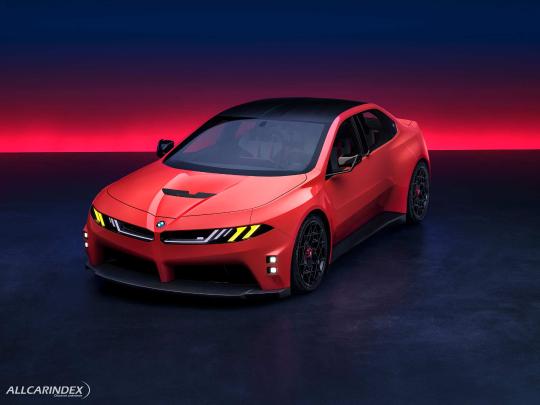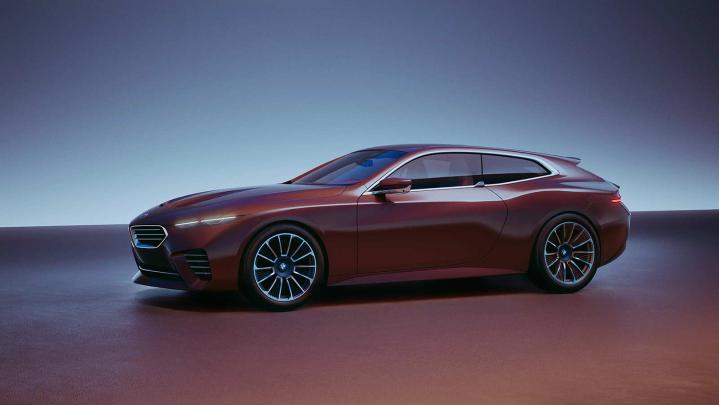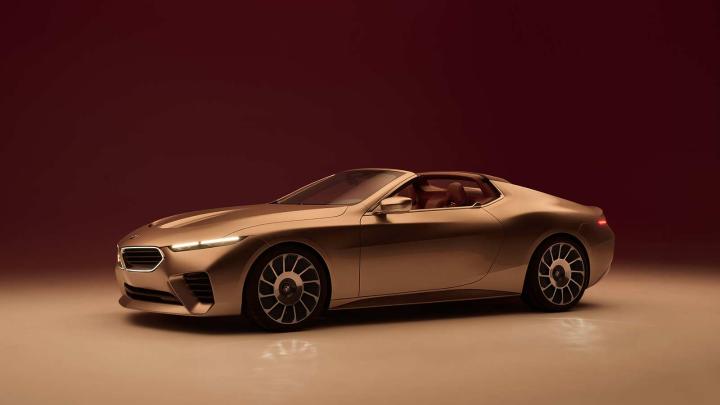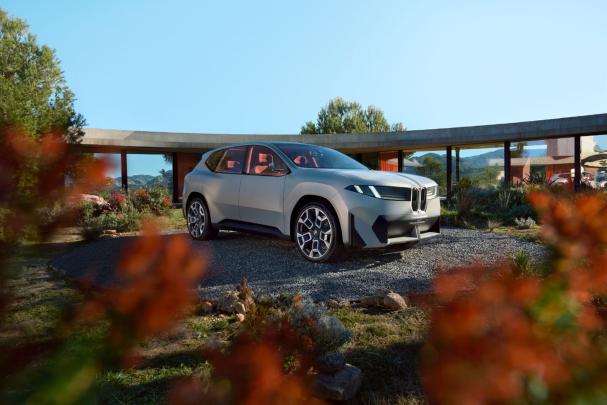



Festival of innovations: The BMW Z22.
The BMW Z22 was among the most sophisticated technology platforms that BMW Technik GmbH ever created. The study was presented in 1999, and it bristled with no less than 70 innovations and 61 registered inventions in areas ranging across body concept, lightweight construction, power unit, safety, mechanical systems and controls. The use of carbon-fibre reinforced plastic in an innovative processing procedure permitted compliance with the highest crash safety standards while at the same time significantly reducing weight. Power steering, an electromechanical braking system, cameras instead of wing and rear mirrors, and a cockpit design reduced to the bare essentials defined the mould-breaking, future-proof character of the BMW Z22. Adaptive headlights, Head-up Display and central control unit enabled the prototype to offer innovative functions that were soon implemented further down the line in BMW series vehicles.
source: BMW
BMW Z22: a masterpiece in mechatronic design.
Towards the end of the 20th century, electronic and mechanical functions in automobiles were experiencing a trend towards a harmonized unity. The technology grouped under the concept of mechatronics (mechanical systems with electronic controls) permitted completely new functions. The engineers at BMW Technik GmbH were looking far into the future in this area. The BMW Z22 mechatronic ideas platform was presented in 1999 with a total of 70 technical innovations and 61 pioneering inventions. It represents one of the most sophisticated projects ever put together by the think tank at the BMW Group.
The steering wheel and the brake pedal do not operate mechanically in the BMW Z22, but use electric impulses (steer-by-wire, brake-by-wire) to transfer the commands from the driver. Cameras replace the rear view mirror and the images obtained are integrated in a panoramic view on a central display instead of being seen in an interior mirror. A fingerprint scanner replaces the conventional ignition key. Important information about speed and instructions from the navigation system are projected into the driver’s field of vision on a Head-up Display on the windscreen. This enables the instrumentation in the BMW Z22 to be restricted to two monitors. The rectangular shape of the multifunction steering wheel makes the interior compartment seem almost like an aircraft cockpit. The driver is able to select different shift patterns using an electric rotary switch. The prototype was also fitted with adaptive headlights governed by the steering angle – precursor for the adaptive headlights fitted in today’s BMW series models. The Head-up Display and camera functions, such as Side View and Top View are now available in the series vehicles manufactured by the BMW Group – only the rear view mirrors remain a statutory requirement.
A four-cylinder petrol engine generating 100 kW/136 hp was selected as the power unit. The conventional gearbox has been replaced by an automatic CVT drive with variable transmission of power. The engineers took a completely new approach in designing the body structure. They introduced a horizontal separation between the functional framework and the passenger cell. In the BMW Z22, the passenger cell resembles the monocoque chassis found in a Formula 1 racing car and is made entirely of carbon-fibre reinforced plastic. This achieves superlative crash safety, and the ultra-lightweight composite material – weighing some 30 percent less than aluminium – also significantly reduces the vehicle weight.
The wheelbase of a BMW 7 Series car combined with the exterior length of a BMW 3 Series automobile also facilitated a completely new concept for the interior. While the same amount of space was available in the interior, the BMW Z22 weighed around one third less than a BMW 528i touring manufactured in 1999. This innovative design enabled the four-door concept vehicle to set new benchmarks in the area of lightweight construction that is perceived to be a key technology. Average fuel consumption of around 6 litres per 100 kilometres was the quantifiable result of consistent weight optimisation.
Although the vehicle was a feasibility study intended to test the boundaries of technical limits, the BMW Z22 was designed as a fully roadworthy automobile which did not require a greater settling-in period for a driver new to the car than any series vehicle. The revolutionary operating concept was simple and intuitive guaranteeing effortless and relaxed driving pleasure right from the start.
source: BMW